

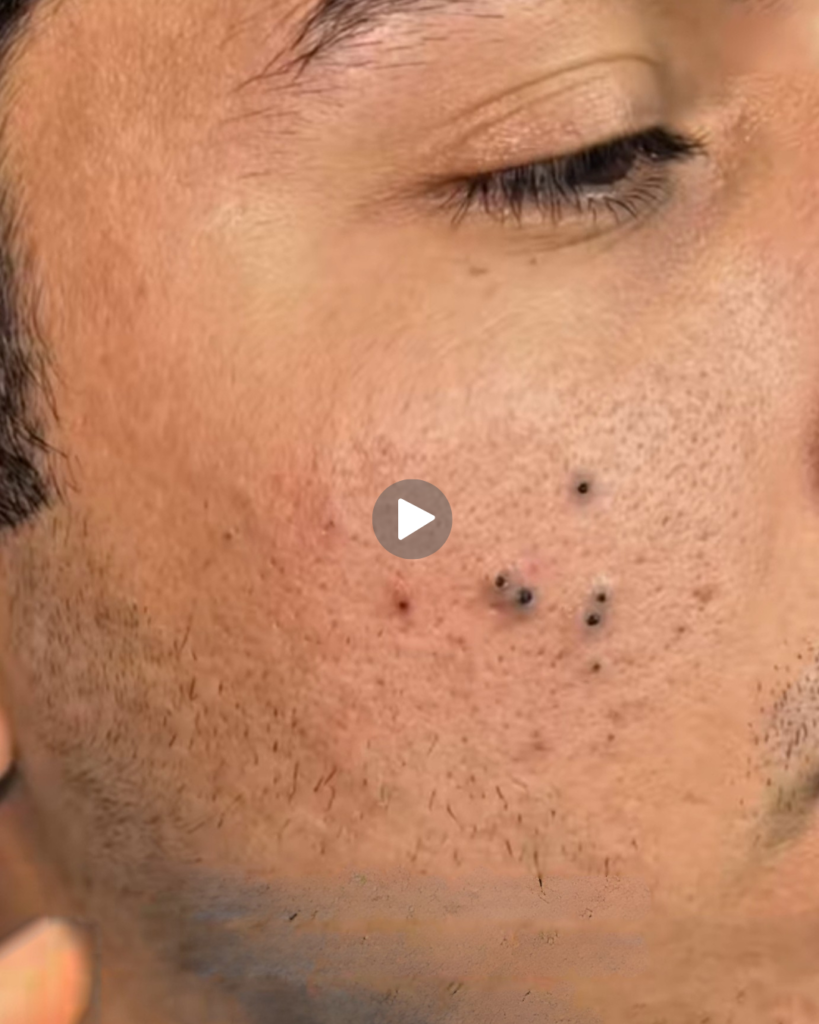
Facial skin problems are extremely common, and one of the most noticeable concerns is the appearance of dark pore spots on areas such as the cheeks, nose, chin, and jawline. The image above shows a close-up of the cheek area where dark pore spots, clogged pores, and mild acne lesions are clearly visible. These skin issues may seem small, but they can significantly affect skin texture, appearance, and self-confidence.
Dark pore spots are not just a cosmetic problem; they are often a sign that the skin’s pores are congested and need proper care. Understanding why these spots form and how to treat them correctly is essential for maintaining healthy, clear skin.
What Are Dark Pore Spots?
Dark pore spots are open pores filled with oil, dead skin cells, and impurities. When this material is exposed to air, it oxidizes and turns dark, giving the pores their characteristic black or dark brown appearance. Unlike inflamed acne, dark pore spots are usually flat and painless, but they make the skin look rough and uneven.
They commonly appear on:
- Cheeks
- Nose
- Chin
- Forehead
- Beard area in men
As seen in the image, dark pore spots can occur alongside small pimples, redness, and uneven skin tone.
Causes of Dark Pore Spots
Several factors contribute to the formation of dark pore spots on the face. Understanding these causes helps in preventing and managing them effectively.
1. Excess Oil Production
The skin naturally produces oil to stay moisturized. However, when oil production becomes excessive, it can mix with dead skin cells and clog pores, leading to dark pore spots.
2. Poor Skin Cleansing
Not cleaning the face properly allows dirt, sweat, pollution, and oil to build up on the skin. Over time, this buildup blocks pores and causes dark pore spots to form.
3. Dead Skin Cell Accumulation
The skin continuously sheds dead cells. If these cells are not removed through gentle exfoliation, they can collect inside pores and cause visible dark spots.
4. Hormonal Changes
Hormonal fluctuations, especially during puberty, stress, or certain medical conditions, can increase oil production, making dark pore spots more likely.
5. Shaving and Ingrown Hairs
In men, frequent shaving can irritate the skin and lead to clogged pores. Ingrown hairs may also trap oil and bacteria, worsening the appearance of dark pore spots, particularly on the cheeks and jawline.
6. Environmental Factors
Pollution, dust, and exposure to harmful environmental elements can settle on the skin and block pores if not removed properly.
Are Dark Pore Spots Harmful?
Dark pore spots are generally not dangerous, but they should not be ignored. If left untreated, they can:
- Enlarge pores over time
- Lead to inflammatory acne
- Cause uneven skin texture
- Increase the risk of skin infections
In some cases, squeezing or picking at dark pore spots can cause redness, scarring, and permanent marks on the skin.
Difference Between Dark Pore Spots and Pimples
While dark pore spots and pimples may appear together, they are not the same.
- Dark pore spots: Open pores filled with oxidized oil and debris; usually painless and flat.
- Pimples: Inflamed, red, and sometimes painful bumps caused by bacterial infection inside clogged pores.
The image shows both dark pore spots and mild acne lesions, indicating the importance of proper skincare to prevent worsening.
How to Prevent Dark Pore Spots
Prevention is the key to maintaining healthy skin. Simple daily habits can significantly reduce the appearance of dark pore spots.
1. Cleanse Your Face Twice Daily
Use a gentle, non-comedogenic cleanser in the morning and at night to remove oil and impurities without stripping the skin.
2. Exfoliate Regularly
Exfoliation helps remove dead skin cells that clog pores. Use a mild exfoliant 1–2 times per week to avoid irritation.
3. Use Oil-Free Skincare Products
Choose skincare and cosmetic products labeled “oil-free” or “non-comedogenic” to prevent pore blockage.
4. Avoid Touching Your Face
Touching your face frequently transfers bacteria and oil from your hands to your skin, increasing the risk of clogged pores.
5. Maintain Proper Shaving Hygiene
For men, using clean razors and shaving in the direction of hair growth can reduce irritation and pore blockage.
Effective Treatments for Dark Pore Spots
Treating dark pore spots requires consistency and the right skincare approach.
1. Salicylic Acid
Salicylic acid penetrates deep into pores, dissolving oil buildup and helping clear dark pore spots effectively.
2. Retinoids
Retinoid-based products promote cell turnover and prevent pores from becoming clogged. They are highly effective but should be used carefully to avoid irritation.
3. Clay Masks
Clay masks absorb excess oil and draw out impurities from pores, making them useful for reducing dark pore spots.
4. Professional Treatments
Dermatological treatments such as chemical peels, microdermabrasion, or professional extractions can provide faster and more visible results.
5. Natural Remedies (With Caution)
Ingredients like aloe vera, green tea, and tea tree oil may help soothe the skin, but they should be patch-tested before use.
Common Mistakes to Avoid
Many people worsen their skin condition by making these common mistakes:
- Squeezing or picking at dark pore spots
- Over-washing the face
- Using harsh scrubs daily
- Skipping moisturizer (even oily skin needs hydration)
Avoiding these habits can prevent irritation and scarring.
When to See a Dermatologist
If dark pore spots:
- Persist despite regular care
- Are accompanied by painful acne
- Cause scarring or discoloration
It is best to consult a dermatologist for personalized treatment and professional advice.
Conclusion
Dark pore spots are a common but manageable skin concern. As shown in the image, they often appear on the cheeks and can coexist with mild acne and redness. While they are not harmful, neglecting them can lead to more severe skin problems over time.
