
Blackheads vs. Whiteheads: What’s the Difference? Causes, Treatments, and Prevention
Introduction
Blackheads and whiteheads are two common types of acne that affect people of different ages. They often appear on the nose, forehead, chin, cheeks, and other areas where the skin produces more oil. Although they may look similar at first, blackheads and whiteheads have important differences in appearance, causes, and treatment.
You can choose the best skincare products and create a routine that keeps your pores clean by knowing the difference between blackheads and whiteheads. Oil and dead skin cells restrict hair follicles in both cases, but the way the clogged pores are exposed to the air is different.
The good news is that with regular skincare, blackheads and whiteheads may frequently be controlled. This book will teach you how to recognize each type, what causes them, what treatments can be helpful, and how to stop new blemishes from appearing.
What Are Blackheads?
Blackheads are a type of acne known as open comedones. They develop when excess sebum, dead skin cells, and other debris accumulate inside a hair follicle and block the pore.
The opening of the clogged pore remains exposed to the air. When the material inside interacts with oxygen, it undergoes chemical changes that contribute to its dark appearance.
Why are blackheads black?
Blackheads are not simply dirt trapped inside the skin. Their dark color mainly results from oxidation and changes in the substances inside the open pore. Washing your face more aggressively will not necessarily remove them and may irritate your skin.
Blackheads commonly appear on the nose, chin, forehead, and cheeks. They usually look like tiny dark dots and are generally not inflamed. However, squeezing them can cause redness, irritation, and sometimes scarring.
What Are Whiteheads?
Whiteheads are another type of acne called closed comedones. They also form when oil and dead skin cells accumulate inside a hair follicle.
Unlike blackheads, whiteheads have a closed or very narrow opening. The trapped material is not exposed to the air in the same way, so the blemish usually appears white, cream-colored, or skin-colored.
Whiteheads often appear on the forehead, cheeks, chin, and around the mouth. They may look like small, raised bumps beneath the surface of the skin.
Whiteheads are not necessarily filled with pus. A typical whitehead is a clogged pore rather than an infected pimple. If a bump becomes red, painful, or filled with visible pus, it may be another form of acne.
Because whiteheads are covered by a thin layer of skin, trying to squeeze them can push material deeper into the follicle and increase the risk of inflammation, infection, and scarring.
Youtube Video
Blackheads vs. Whiteheads: Key Differences
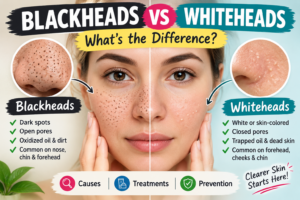
The primary difference between blackheads and whiteheads is whether the clogged pore remains open or closed.
| Feature | Blackheads | Whiteheads |
|---|---|---|
| Medical name | Open comedones | Closed comedones |
| Appearance | Dark brown or black dots | White or skin-colored bumps |
| Pore opening | Open | Closed or very narrow |
| Main cause | Oil and dead skin cells clogging an open pore | Oil and dead skin cells trapped beneath the skin |
| Common locations | Nose, chin, forehead | Forehead, cheeks, chin |
| Inflammation | Usually minimal | Usually minimal, but can develop into inflamed acne |
| Helpful ingredients | Salicylic acid, retinoids | Salicylic acid, retinoids, benzoyl peroxide when appropriate |
| Risk from squeezing | Irritation and scarring | Irritation, inflammation, and scarring |
Although their appearance differs, both conditions can improve with appropriate skincare and patience.
What Causes Blackheads and Whiteheads?
Several factors contribute to clogged pores. In many cases, more than one factor is involved.
1. Excess Oil Production
Sebum is a natural oil produced by the skin’s sebaceous glands. It helps protect the skin barrier and prevent excessive moisture loss.
However, excess sebum can mix with dead skin cells and block hair follicles. People with oily skin may be more prone to both blackheads and whiteheads.
2. Dead Skin Cell Buildup
Your skin naturally sheds dead cells. When these cells accumulate inside hair follicles instead of shedding normally, they can combine with oil and form comedones.
Ingredients that support normal skin-cell turnover may help reduce this buildup.
3. Hormonal Changes
Hormonal fluctuations during puberty, menstruation, pregnancy, and other stages of life can affect oil production. Increased oil production may make clogged pores more likely.
Hormones are one reason acne can occur even when someone follows a good skincare routine.
4. Skincare and Makeup Products
Heavy creams, oily cosmetics, and certain hair products may contribute to clogged pores in some people. Products that are labeled non-comedogenic are designed to be less likely to block pores.
However, individual skin responses vary, and even products marketed for acne-prone skin may not suit everyone.
5. Inconsistent Skincare Habits
Not removing makeup before bed, using unsuitable products, or frequently touching the face may contribute to skin problems.
On the other hand, excessive cleansing, harsh scrubbing, and using too many active ingredients can damage the skin barrier and worsen irritation.
6. Genetics and Environmental Factors
Genetics can influence oil production, pore characteristics, and susceptibility to acne. Heat, humidity, sweat, and friction may also aggravate breakouts in some individuals.
Best Treatments for Blackheads
Treating blackheads involves reducing clogged pores and preventing new blockages.
1. Use Salicylic Acid
Salicylic acid is a beta-hydroxy acid (BHA) that helps loosen dead skin cells and penetrate oil within pores. It is commonly used to treat blackheads and other forms of comedonal acne.
Start with a low-strength over-the-counter product, often around 0.5% to 2%, according to the product instructions. Apply it gradually, such as a few times per week, and increase use only if your skin tolerates it.
Avoid combining several irritating acne treatments at once.
2. Consider a Topical Retinoid
Topical retinoids, such as adapalene, help normalize skin-cell turnover and prevent clogged follicles. They can be useful for both blackheads and whiteheads.
Use them according to the label or a healthcare professional’s instructions. Dryness, peeling, and irritation may occur, particularly when treatment begins.
Topical retinoids should generally be avoided during pregnancy or when trying to conceive unless a qualified clinician advises otherwise.
3. Choose Non-Comedogenic Products
Look for moisturizers, sunscreens, and makeup labeled non-comedogenic. These products are formulated to be less likely to clog pores.
Even oily skin needs moisturizer. Choose a lightweight formula that helps maintain the skin barrier without leaving your face feeling excessively greasy.
4. Avoid Squeezing Blackheads
Squeezing blackheads with your fingers or using sharp tools can damage the surrounding skin. It may also cause inflammation, infection, or lasting marks.
If blackheads are persistent, a dermatologist or appropriately trained skincare professional can advise whether professional extraction is suitable.
Best Treatments for Whiteheads
Whiteheads often respond to treatments that help prevent dead skin cells and oil from accumulating inside hair follicles.
1. Apply Salicylic Acid
Salicylic acid may help reduce whiteheads by loosening the buildup that contributes to clogged pores. Use it consistently, but avoid overusing it if your skin becomes dry or irritated.
It may take several weeks to notice meaningful improvement.
2. Use Adapalene or Another Recommended Retinoid
Adapalene helps prevent the formation of new clogged pores and can gradually improve existing comedonal acne.
Introduce it slowly and use a gentle moisturizer. Some people experience temporary dryness or irritation during the first few weeks.
Ask a healthcare professional which treatment is suitable if you have sensitive skin or other skin conditions.
3. Use Benzoyl Peroxide When Appropriate
Benzoyl peroxide primarily targets acne-causing bacteria and is especially helpful for inflammatory acne, such as red pimples. It is not usually the first choice for whiteheads alone.
If you have both clogged pores and inflamed pimples, it may be part of a broader acne treatment plan. It can cause dryness and bleach fabrics, so follow product instructions carefully.
4. Do Not Pop Whiteheads
Whiteheads can be tempting to squeeze because they look like small bumps beneath the skin. However, squeezing can worsen inflammation and cause post-acne marks or scars.
Give treatments time to work instead of trying to remove each bump manually.
A Simple Skincare Routine for Blackheads and Whiteheads
A consistent routine can help control clogged pores without irritating your skin.
Morning routine
- Cleanse with a gentle, non-abrasive face wash.
- Apply a lightweight moisturizer suitable for your skin type.
- Use broad-spectrum sunscreen with SPF 30 or higher.
Evening routine
- Remove makeup and sunscreen.
- Wash your face gently.
- Apply one suitable acne treatment, such as salicylic acid or a recommended topical retinoid.
- Finish with a moisturizer to support the skin barrier.
You do not need to use every acne ingredient at once. Start with one active ingredient and introduce additional products only when necessary and well tolerated.
Avoid rough scrubs, frequent cleansing, and alcohol-heavy products that leave your skin feeling tight or burning.
Natural Remedies: What Really Helps?
Many people look for natural remedies to remove blackheads and whiteheads. Gentle skincare habits can support skin health, but natural ingredients are not automatically safer or more effective than tested acne treatments.
Aloe Vera
Aloe vera may provide a soothing effect for some people, especially when the skin feels irritated. However, it is not a proven standalone treatment for clogged pores.
Choose a simple product and test it on a small area first.
Green Tea
Some skincare products containing green tea may help support the skin and have antioxidant properties. Evidence for treating blackheads and whiteheads specifically is limited, so green tea should not replace established acne treatments.
Honey
Honey can help moisturize the skin, but there is insufficient evidence that applying household honey reliably removes clogged pores.
Avoid using it if you have an allergy or notice irritation.
What to Avoid
Do not apply lemon juice, baking soda, toothpaste, or undiluted essential oils to your face as acne treatments. These substances can irritate the skin and may cause burns or discoloration.
Avoid harsh DIY pore strips and aggressive scrubbing, which can temporarily change the appearance of your skin without addressing the underlying cause of clogged pores.
How to Prevent Blackheads and Whiteheads
Prevention is often easier when you follow a simple routine consistently.
- Wash gently: Cleanse your face twice daily and after heavy sweating.
- Remove makeup: Take off makeup before sleeping.
- Choose suitable products: Prefer non-comedogenic skincare, sunscreen, and makeup.
- Avoid touching your face: Repeated touching and picking can irritate blemishes.
- Keep hair products away from your face: Heavy oils may contribute to clogged pores around the hairline.
- Use active ingredients carefully: Salicylic acid and topical retinoids can help prevent new clogged pores when used appropriately.
- Protect your skin barrier: Use moisturizer and avoid excessive exfoliation.
- Be patient: Give a new acne routine several weeks to show improvement.
You do not need to scrub your skin until it feels completely clean. Healthy skin requires a balanced barrier, not aggressive oil removal.
When Should You See a Dermatologist?
Consider seeing a dermatologist if blackheads and whiteheads persist despite consistent treatment, become painful or inflamed, or begin leaving scars or dark marks.
A dermatologist can confirm whether the bumps are comedonal acne or another condition and recommend an appropriate treatment plan. Prescription medications or professional procedures may be helpful in some cases.
Seek medical advice sooner if a rash develops suddenly, the skin becomes severely swollen or painful, or you experience signs of infection.
If you are pregnant, planning pregnancy, or breastfeeding, ask a healthcare professional before starting acne medication, particularly retinoids.
Frequently Asked Questions
1. Which Is Worse: Blackheads or Whiteheads?
Neither is automatically worse. Both are forms of comedonal acne. Their severity depends on how many lesions develop, whether inflammation occurs, and how the skin responds to treatment.
2. Can Blackheads Turn Into Whiteheads?
Blackheads and whiteheads develop through similar processes, but their appearance depends on whether the follicle opening is open or closed. A clogged pore may change over time, but blackheads do not necessarily turn directly into whiteheads.
3. How Long Does It Take to Remove Blackheads and Whiteheads?
Some people notice improvement within four to eight weeks, while others need longer. Many acne treatments require approximately six to twelve weeks of consistent use to assess their full benefit.
4. Does Washing Your Face More Often Prevent Blackheads?
No. Washing more than necessary may irritate your skin and disrupt its protective barrier. Gentle cleansing twice daily is generally sufficient for most people.
5. Can Toothpaste Remove Blackheads?
Toothpaste is not a recommended blackhead treatment. Its ingredients can irritate or dry out the skin without effectively addressing clogged pores.
6. Are Blackheads and Whiteheads Caused by Poor Hygiene?
No. They mainly develop because of oil production and the buildup of dead skin cells within hair follicles. Proper cleansing can help, but blackheads and whiteheads can occur even when someone has excellent hygiene.
Conclusion
Understanding blackheads vs. whiteheads makes it easier to choose the right skincare approach. Blackheads are open clogged pores that appear dark because of changes in the material inside them, while whiteheads are closed clogged pores that usually appear as small, pale bumps.
Both can often be managed with gentle cleansing, non-comedogenic products, salicylic acid, and appropriate topical retinoids. The key is to avoid squeezing blemishes, introduce treatments gradually, protect your skin from the sun, and give your routine enough time to work.
If your acne persists or causes scarring, consult a dermatologist for personalized treatment. With patience and consistent care, you can reduce clogged pores and support clearer, healthier-looking skin.