
Sunscreen is one of the most important skincare products you can use every day. Dermatologists agree that daily sunscreen application is essential for preventing sunburn, premature aging, hyperpigmentation, and skin cancer. Whether you’re spending hours outdoors or just walking to your car, harmful ultraviolet (UV) rays can damage your skin.
With hundreds of sunscreen products available, choosing the right one can feel overwhelming. In this guide, you’ll discover the best sunscreen recommended by dermatologists, understand the different types of sunscreen, and learn how to select the perfect SPF for your skin type.
Why Dermatologists Recommend Sunscreen Every Day
Many people think sunscreen is only necessary during summer. However, UV rays are present all year long—even on cloudy days.
Daily sunscreen helps protect against:
- Sunburn
- Premature wrinkles
- Fine lines
- Dark spots
- Uneven skin tone
- Hyperpigmentation
- Skin cancer
- Collagen breakdown
- Age spots
Studies show that regular sunscreen use significantly reduces visible signs of aging while lowering the risk of melanoma and other skin cancers.
What SPF Do Dermatologists Recommend?
Most dermatologists recommend:
- SPF 30 for daily use
- SPF 50 for extended outdoor activities
- Broad-spectrum protection
- Water-resistant formulas if swimming or sweating
Broad-spectrum sunscreen protects against both:
- UVA Rays
- Cause aging
- Wrinkles
- Pigmentation
- UVB Rays
- Cause sunburn
- Increase skin cancer risk
Both types are harmful, making broad-spectrum protection essential.
Types of Sunscreen
1. Mineral Sunscreen
Also called physical sunscreen.
Active ingredients include:
- Zinc Oxide
- Titanium Dioxide
Benefits
- Gentle on sensitive skin
- Works immediately
- Safe for children
- Less irritating
- Reflects UV rays
Best for:
- Sensitive skin
- Rosacea
- Eczema
- Pregnancy
2. Chemical Sunscreen
Contains ingredients like:
- Avobenzone
- Octinoxate
- Homosalate
- Octisalate
Benefits
- Lightweight
- Invisible finish
- Easy to wear under makeup
- Comfortable for daily use
Best for:
- Normal skin
- Oily skin
- Combination skin
Best Sunscreen Recommended by Dermatologists
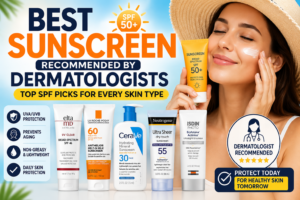
1. EltaMD UV Clear SPF 46
This sunscreen is consistently recommended by dermatologists worldwide.
Why Dermatologists Love It
- Lightweight
- Oil-free
- Contains Niacinamide
- Great for acne-prone skin
- Suitable for rosacea
- Doesn’t clog pores
Best For:
- Acne-prone skin
- Sensitive skin
- Oily skin
2. La Roche-Posay Anthelios Melt-in Milk SPF 60
One of the most trusted sunscreens for high UV protection.
Benefits
- SPF 60
- Broad-spectrum protection
- Water-resistant
- Suitable for face and body
- Lightweight texture
Ideal For
- Outdoor activities
- Beach trips
- Sports
3. CeraVe Hydrating Mineral Sunscreen SPF 30
A dermatologist favorite for dry and sensitive skin.
Features
- Ceramides
- Hyaluronic Acid
- Zinc Oxide
- Fragrance-free
Perfect For
- Dry skin
- Sensitive skin
- Daily moisturizing
4. Neutrogena Ultra Sheer Dry-Touch SPF 55
Affordable and widely available.
Advantages
- Lightweight
- Non-greasy
- Fast absorption
- Matte finish
- Water-resistant
Ideal For
- Oily skin
- Active lifestyles
- Daily wear
5. ISDIN Eryfotona Actinica SPF 50+
Often recommended after skin procedures.
Benefits include:
- DNA repair enzymes
- Mineral filters
- Anti-aging support
- High UVA protection
Suitable for:
- Mature skin
- Sun-damaged skin
- High-risk patients
Best Sunscreen for Oily Skin
People with oily skin often avoid sunscreen because they fear it will make their skin greasy.
Dermatologists recommend looking for:
- Oil-free
- Matte finish
- Non-comedogenic
- Lightweight gel
- Fast absorbing
Top choices include:
- EltaMD UV Clear SPF 46
- Neutrogena Ultra Sheer SPF 55
- La Roche-Posay Anthelios Oil Control
Best Sunscreen for Dry Skin
Dry skin needs hydration along with sun protection.
Look for ingredients such as:
- Hyaluronic Acid
- Ceramides
- Glycerin
- Squalane
Recommended products include:
- CeraVe Hydrating Mineral Sunscreen
- Vanicream SPF 50
- La Roche-Posay Toleriane UV Moisturizer
Best Sunscreen for Sensitive Skin
Sensitive skin benefits most from mineral sunscreens.
Look for:
- Zinc Oxide
- Titanium Dioxide
- Fragrance-free
- Alcohol-free
- Dye-free
Dermatologist favorites include:
- EltaMD UV Physical
- Blue Lizard Sensitive SPF 50
- CeraVe Mineral Sunscreen
Best Sunscreen for Acne-Prone Skin
Acne sufferers should choose non-comedogenic products.
Important features include:
- Oil-free
- Lightweight
- Gel formula
- Fragrance-free
- Niacinamide
Excellent options:
- EltaMD UV Clear SPF 46
- La Roche-Posay Anthelios Clear Skin
- Neutrogena Clear Face SPF 50
How Much Sunscreen Should You Apply?
Most people apply only half the amount they actually need.
Dermatologists recommend:
- Face: Two-finger rule
- Neck: One finger length
- Entire body: About one ounce (a shot glass full)
Apply sunscreen 15 minutes before sun exposure and reapply every two hours, or immediately after swimming or heavy sweating.
Best Sunscreen for Dark Skin
People with darker skin tones often believe they don’t need sunscreen because melanin provides some natural protection. While melanin can reduce the risk of sunburn, it does not protect against UV damage, premature aging, or skin cancer. Daily sunscreen is still essential.
What to Look For
- Invisible finish
- No white cast
- Lightweight formula
- Broad-spectrum SPF 30 or higher
- Non-greasy texture
Dermatologist-Recommended Options
- EltaMD UV Clear SPF 46
- Black Girl Sunscreen SPF 30
- La Roche-Posay Anthelios Invisible Fluid SPF 50+
- Supergoop! Unseen Sunscreen SPF 40
Best Sunscreen Under Makeup
If you wear makeup daily, sunscreen should always be the first step after your moisturizer.
Features to Look For
- Lightweight
- Fast absorbing
- Non-pilling
- Matte or natural finish
- Oil-free
Top Picks
- Supergoop! Unseen Sunscreen SPF 40
- EltaMD UV Clear SPF 46
- La Roche-Posay Anthelios Invisible Fluid
- Beauty of Joseon Relief Sun SPF 50+
Best Sunscreen for Kids and Babies
Children have delicate skin that requires extra protection from the sun.
Dermatologists recommend:
- Mineral sunscreen
- Zinc Oxide
- Titanium Dioxide
- Fragrance-free
- Water-resistant
Recommended Products
- Blue Lizard Kids SPF 50+
- Thinkbaby Safe Sunscreen SPF 50+
- CeraVe Baby Mineral Sunscreen SPF 45
- Aveeno Baby Continuous Protection SPF 50
Tip: Babies younger than six months should be kept out of direct sunlight whenever possible rather than relying on sunscreen.
Spray vs. Lotion Sunscreen
Both forms protect against UV rays when applied correctly.
Spray Sunscreen
Pros
- Easy to apply
- Great for body use
- Convenient for travel
- Quick coverage
Cons
- Easy to miss areas
- Wind can reduce application
- Should be rubbed in for even coverage
Lotion Sunscreen
Pros
- More reliable coverage
- Better moisturizing
- Easier to measure the correct amount
- Dermatologist preferred
Cons
- Takes slightly longer to apply
Common Sunscreen Mistakes
Even the best sunscreen won’t work if it’s used incorrectly.
Avoid these common mistakes:
- Applying too little sunscreen
- Forgetting the ears and neck
- Skipping the hands and feet
- Not reapplying every two hours
- Using expired sunscreen
- Applying only once in the morning
- Missing cloudy-day protection
- Ignoring lip protection (use SPF lip balm)
How to Read Sunscreen Labels
Understanding sunscreen labels helps you choose the right product.
Broad Spectrum
Protects against both UVA and UVB rays.
SPF Number
- SPF 30 blocks about 97% of UVB rays.
- SPF 50 blocks about 98%.
- SPF 100 offers only a small increase in protection.
Water Resistant
- 40 minutes
- 80 minutes
Remember, water-resistant does not mean waterproof.
Non-Comedogenic
Designed not to clog pores, making it ideal for acne-prone skin.
Fragrance-Free
A better choice for sensitive skin to reduce irritation.
Daily Sunscreen Tips from Dermatologists
- Wear sunscreen every day, even indoors if you’re near windows.
- Reapply every two hours during outdoor activities.
- Use sunscreen in every season.
- Combine sunscreen with hats, sunglasses, and protective clothing.
- Apply sunscreen to exposed areas such as the face, neck, ears, chest, and hands.
- Store sunscreen in a cool, dry place to maintain effectiveness.
Frequently Asked Questions (FAQs)
Is SPF 50 better than SPF 30?
Yes. SPF 50 blocks slightly more UVB rays than SPF 30, making it a better choice for extended outdoor exposure. However, proper application and reapplication matter more than choosing a higher SPF.
Should I wear sunscreen indoors?
Yes. UVA rays can pass through windows and contribute to skin aging and pigmentation.
Can sunscreen prevent wrinkles?
Yes. Daily sunscreen helps protect collagen and elastin, reducing premature wrinkles and fine lines caused by UV exposure.
Is mineral sunscreen better than chemical sunscreen?
Both are effective. Mineral sunscreen is generally preferred for sensitive skin, while chemical sunscreen often feels lighter and blends more easily.
How often should sunscreen be reapplied?
Every two hours, or immediately after swimming, sweating, or towel drying.
Can sunscreen cause acne?
Some products can clog pores, but non-comedogenic sunscreens are formulated to minimize breakouts and are suitable for acne-prone skin.
Conclusion
Using the best sunscreen recommended by dermatologists is one of the easiest and most effective ways to protect your skin. Whether you have oily, dry, sensitive, or acne-prone skin, there is a sunscreen designed to meet your needs. Choose a broad-spectrum sunscreen with at least SPF 30, apply it generously every morning, and reapply throughout the day for maximum protection.
Consistent sunscreen use helps prevent sunburn, reduces signs of aging, minimizes hyperpigmentation, and lowers the risk of skin cancer. Making sunscreen a daily habit is a simple step that can have long-lasting benefits for your skin.