
Introduction
Choosing the best retinol serum for beginners can feel overwhelming, especially when skincare products advertise different strengths, prices, and anti-aging benefits. Retinol is a popular vitamin A derivative used to improve the appearance of fine lines, uneven skin tone, rough texture, and certain types of acne. However, starting with the wrong formula or applying it too frequently can cause dryness, redness, and peeling.
Fortunately, novices can create a successful skincare regimen without the most potent or costly retinol serum. You can introduce retinol gradually while lowering the chance of discomfort by using a low-strength product, a mild moisturiser, and regular sunscreen.
This article will teach you how retinol works, which strength is best for novices, what to look for when comparing pricing, and how to use retinol serum effectively for skin that looks healthier.
What Is Retinol Serum?
Retinol is a form of vitamin A commonly used in over-the-counter skincare products. It belongs to a larger family of ingredients called retinoids, which are used to address concerns such as uneven skin texture, fine lines, and acne.
When applied to the skin, retinol is converted into its active form through natural processes. It influences skin-cell turnover and supports processes involved in maintaining collagen, a protein that helps skin remain firm and resilient.
A retinol serum delivers this ingredient in a lightweight skincare formula. Depending on its formulation, it may also contain moisturizing and soothing ingredients to improve comfort during use.
Retinol is not an overnight solution. Some people notice improvements in skin texture after several weeks, while changes in fine lines or uneven pigmentation may take several months. Results depend on the product, consistency, skin type, and the concern being treated.
Benefits of Retinol Serum for Beginners
1. Helps Improve Fine Lines
Retinol is widely used in anti-aging skincare because it can help improve the appearance of fine lines over time. With consistent use, an appropriate formula may make some wrinkles look less noticeable.
However, retinol cannot completely remove deep wrinkles or reverse every sign of aging. Daily sun protection remains essential for preventing additional sun-related skin damage.
2. Supports Smoother Skin Texture
Rough texture and dull-looking skin can develop for several reasons, including dryness, accumulated dead skin cells, and sun exposure. Retinol may help improve the appearance of uneven texture by influencing normal skin renewal.
Beginners should introduce it slowly rather than combining it immediately with multiple exfoliating products.
3. Helps With Uneven Skin Tone
Retinol may gradually improve the appearance of some dark spots and uneven pigmentation. It can be useful for people concerned about sun-related discoloration and post-acne marks.
Dark spots have different causes, however, and retinol does not work equally well for every type of pigmentation. Persistent or changing spots should be assessed by a qualified healthcare professional.
4. May Help Acne-Prone Skin
Retinoids can help manage acne by influencing clogged pores and skin-cell turnover. Nevertheless, ordinary cosmetic retinol is not the same as prescription acne treatments, and it may not be sufficient for moderate or severe acne.
People with persistent inflammatory acne should consult a dermatologist about the most appropriate treatment.
5. Improves the Appearance of Dull Skin
By gradually improving texture and uneven tone, retinol may help skin look brighter and smoother. The results develop with consistent use rather than through an immediate whitening effect.
Retinol should not be used to bleach naturally occurring skin color. Its goal is to improve specific skin concerns while maintaining healthy skin.
What Retinol Strength Should Beginners Choose?
Retinol strength is one of the most important factors to consider when selecting a serum. A higher percentage is not automatically better, especially for someone who has never used a retinoid.
Low-Strength Retinol: Around 0.1% to 0.2%
A low-strength serum is often a sensible starting point for people new to retinol. It allows them to introduce the ingredient gradually and observe how their skin responds.
This range may be suitable for beginners who want to address early signs of aging, uneven texture, or mild discoloration. People with very sensitive skin may need a gentler product or professional guidance before starting.
Moderate-Strength Retinol: Around 0.3%
A 0.3% retinol serum may suit people whose skin has already adjusted to a lower concentration. It can be an option for those seeking a more established retinol routine.
However, beginners should not assume they must start at 0.3% to achieve results. A lower concentration used consistently and comfortably may be a better choice than a stronger formula that causes repeated irritation.
Higher-Strength Retinol: 0.5% to 1%
Higher-strength products are generally better suited to experienced users who already tolerate retinol. They may produce more irritation, especially when introduced too quickly.
If you are starting retinol for the first time, there is usually no need to begin with 0.5% or 1%. Build tolerance first, and only consider increasing strength if your skin handles the current product comfortably.
Important: Percentages cannot be compared directly across retinol, retinaldehyde, and other retinoids. Formulation, delivery system, and the type of active ingredient also affect how a product behaves on the skin.
Best Retinol Serum for Beginners: Products to Consider
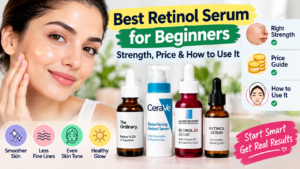
The best product depends on your skin type, budget, and sensitivity. The following options represent different approaches to beginner-friendly retinol skincare rather than a guarantee that one serum will suit everyone.
1. The Ordinary Retinol 0.2% in Squalane
This serum is worth considering if you prefer a clearly labeled, low-strength retinol product. Its squalane-based formula offers an oil-based option for people who want additional emollient support.
Best for: Beginners who prefer a low-strength retinol and do not mind an oil-based texture.
Price: Check the current price through an authorized retailer because imported-product prices and availability vary by country.
Things to consider: The formula may feel too oily for some people, particularly those who prefer lightweight, fast-absorbing serums. Introduce it gradually and follow the manufacturer’s storage instructions.
2. CeraVe Resurfacing Retinol Serum
CeraVe Resurfacing Retinol Serum is another product to investigate, particularly if your routine focuses on post-acne marks and uneven skin texture. Its formula includes encapsulated retinol and ingredients intended to support the skin barrier.
Best for: People interested in a retinol product with barrier-supporting ingredients.
Price: Varies by market, retailer, and bottle size.
Things to consider: The exact retinol concentration is not prominently disclosed in the standard product information, so do not assume it is equivalent to a serum labeled 0.2% or 0.3%. Product availability may differ by region.
3. La Roche-Posay Retinol B3 Serum
La Roche-Posay Retinol B3 Serum combines retinol with vitamin B3, also known as niacinamide. Niacinamide is commonly used in skincare to support the skin barrier and improve the appearance of uneven tone.
Best for: People seeking a retinol serum from an established skincare brand with complementary ingredients.
Price: Generally positioned above many budget skincare products, although local pricing varies.
Things to consider: Check the product’s current formulation and ingredient list in your country. A product containing soothing ingredients can still cause irritation, particularly if you use it too frequently.
4. A Budget-Friendly, Low-Strength Retinol Serum
If your budget is limited, look for a reputable brand that clearly identifies the active ingredient, provides usage instructions, and uses suitable packaging to help protect the formula.
Best for: Beginners who want to establish a routine without spending heavily.
Price: Depends on the brand, size, and local market.
Things to consider: Avoid choosing a serum simply because it promises instant wrinkle removal or dramatic skin whitening. Be cautious of products with unclear ingredients, missing manufacturer information, or suspiciously low prices from unverified sellers.
No single serum is best for every beginner. A trustworthy, appropriately formulated product that you can use consistently is usually a better investment than an expensive formula that irritates your skin.
How Much Does Retinol Serum Cost?
Retinol serum prices vary considerably depending on the brand, concentration, formula, packaging, and retailer.
For shoppers in Pakistan, imported products may cost more because of shipping, taxes, exchange rates, and retailer markups. Local brands may be less expensive, but the ingredient list and product quality should still be checked carefully.
When comparing prices, consider the following factors:
- Ingredient transparency: Look for a clear ingredient list and reliable product information.
- Formula quality: Supporting ingredients such as glycerin, ceramides, or squalane may improve comfort.
- Packaging: Retinol can degrade with exposure to light, air, and unsuitable storage conditions. Packaging designed to protect the formula is helpful.
- Bottle size: Compare the price per milliliter instead of looking only at the total price.
- Seller reliability: Buy from an authorized retailer or a reputable pharmacy where possible.
A higher price does not guarantee better results. Concentration, formulation, proper use, and your skin’s tolerance matter more than luxury packaging.
How to Use Retinol Serum for the First Time
Using retinol correctly can help reduce the chance of irritation. Follow these steps when introducing a new product.
Step 1: Cleanse Your Face Gently
Wash your face with a mild cleanser that does not leave your skin feeling tight or stripped. Avoid harsh scrubs and aggressive cleansing brushes.
Pat your face dry with a clean towel. If your skin is easily irritated, allow it to dry completely before applying retinol.
Step 2: Apply a Small Amount
At night, apply a thin layer of retinol according to the product instructions. For many facial retinol products, a pea-sized amount is enough for the entire face.
Avoid the eyelids, corners of the nose, lips, and broken or irritated skin unless a healthcare professional specifically advises otherwise.
Using extra serum will not make results appear faster. It may simply increase the risk of redness, dryness, and peeling.
Step 3: Use Moisturizer
Apply a gentle moisturizer after retinol to help maintain skin hydration. Products containing ceramides, glycerin, or other moisturizing ingredients can be useful.
If you have sensitive skin, you may try the sandwich method: apply moisturizer first, allow it to settle, use a small amount of retinol, and then apply another layer of moisturizer if needed.
Step 4: Start Slowly
Begin with one or two nights per week, depending on your skin sensitivity and the product instructions. If your skin remains comfortable, gradually increase the frequency over several weeks.
Do not increase both the strength and frequency at the same time. Give your skin enough time to adjust before making changes.
Step 5: Wear Sunscreen Every Morning
Use a broad-spectrum sunscreen with SPF 30 or higher every morning. Apply enough to cover exposed skin and reapply as directed, especially during extended outdoor exposure.
Sun protection is important for everyone, but it is particularly important when using retinol to address visible signs of sun damage.
A Simple Beginner Retinol Routine
A straightforward routine can help you introduce retinol without overwhelming your skin.
Morning routine
- Use a gentle cleanser or rinse with water if appropriate for your skin.
- Apply a moisturizer suited to your skin type.
- Finish with broad-spectrum SPF 30 or higher sunscreen.
Evening routine on retinol nights
- Cleanse gently.
- Allow your skin to dry completely.
- Apply a small amount of retinol.
- Follow with moisturizer.
Evening routine on non-retinol nights
- Cleanse gently.
- Apply a moisturizer.
- Skip retinol and other potentially irritating treatments if your skin needs recovery.
During the adjustment period, avoid introducing several new active ingredients at once. This makes it easier to identify the cause if irritation develops.
Common Retinol Mistakes Beginners Should Avoid
Starting With a Strong Formula
A strong product may sound more effective, but it can make it harder to establish a consistent routine. Start with a lower concentration and increase only if necessary and well tolerated.
Applying Retinol Every Night Immediately
Daily use from the beginning can increase irritation. Gradual introduction gives you an opportunity to assess your skin’s response.
Using Too Much Product
A thick layer does not guarantee better results. Follow the recommended amount and frequency.
Combining Too Many Active Ingredients
Using retinol alongside strong exfoliating acids, benzoyl peroxide, or other retinoids can increase irritation. Some combinations are appropriate in specific routines, but beginners should avoid adding them all at once.
Skipping Moisturizer and Sunscreen
Retinol is not a complete skincare routine. Moisturizer supports the skin barrier, while sunscreen helps protect against ultraviolet damage.
Expecting Instant Results
Retinol works gradually. Texture changes may become noticeable after several weeks, while improvements in fine lines and discoloration often require consistent use over a few months.
Possible Side Effects and Safety Precautions
Mild dryness, tightness, redness, and flaking can occur when beginning retinol. These effects are not a requirement for the product to work, and severe irritation should not be ignored.
If your skin becomes persistently red, painful, swollen, or intensely itchy, stop using the product and seek medical advice. Do not apply retinol to sunburned, cracked, or actively irritated skin.
People with eczema, rosacea, or a severely compromised skin barrier should seek advice from a dermatologist before starting retinol.
As a precaution, retinoids should normally be avoided during pregnancy. Instead of beginning retinol on your own, talk to your healthcare provider about appropriate skincare alternatives if you are pregnant, attempting to conceive, or nursing.
Ask your doctor or chemist if retinol is suitable for your regimen if you take prescription acne medication or other skin treatments.
Frequently Asked Questions
Which retinol serum is best for absolute beginners?
A low-strength formula, often around 0.1% to 0.2% retinol, is a reasonable starting point for many people. Those with sensitive skin may need a gentler option or professional guidance. The best choice depends on your skin and the product’s formulation.
Can I use retinol every day?
Not at first. Begin with one or two nights per week and gradually increase only if your skin tolerates it. Some people do well with less frequent use, and nightly application is not necessary for everyone.
How long does retinol take to show results?
Some people notice changes in texture after several weeks. Fine lines, uneven pigmentation, and other concerns may take approximately three months or longer to improve. Results vary, and sunscreen use is important.
Can beginners use retinol for acne?
Retinol may help some acne-related concerns, but it is not always the most effective treatment for persistent acne. A dermatologist can recommend an appropriate retinoid or another treatment based on the type and severity of breakouts.
Is expensive retinol better than affordable retinol?
Not necessarily. A well-formulated, affordable product may work well when used correctly. Compare the active ingredient, supporting ingredients, packaging, product information, and seller reliability before purchasing.
Can I use retinol with vitamin C?
Some people can use both ingredients in the same overall routine, but beginners may find it easier to use vitamin C in the morning and retinol at night. If irritation develops, simplify the routine and introduce products separately.
Should I stop retinol if my skin starts peeling?
If peeling is mild, reduce frequency and use a gentle moisturizer. If you experience significant burning, pain, swelling, or persistent redness, stop using the product and seek professional advice. Do not try to push through severe irritation.
Final Thoughts
The best retinol serum for beginners is not necessarily the strongest or most expensive product on the shelf. It is a well-formulated serum that suits your skin, fits your budget, and can be introduced gradually into a consistent skincare routine.
For many first-time users, a low-strength retinol serum combined with a gentle cleanser, moisturizer, and daily sunscreen is a practical starting point. Products such as The Ordinary Retinol 0.2% in Squalane, CeraVe Resurfacing Retinol Serum, and La Roche-Posay Retinol B3 Serum are options to research, but their suitability depends on your skin type and preferences.
Start slowly, avoid combining too many active ingredients, and give your routine time to work. With realistic expectations and appropriate sun protection, retinol may help improve the appearance of fine lines, uneven texture, and certain forms of discoloration over time.
Healthy skincare is about consistency, comfort, and informed choices—not chasing the highest percentage or expecting overnight transformation.