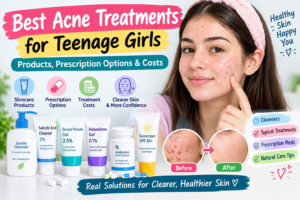

Best Acne Treatments for Teenage Girls: Products, Prescription Options & Costs
Introduction
Acne is one of the most common skin problems during the teenage years. Many teenage girls experience pimples, blackheads, whiteheads, and painful bumps on the forehead, cheeks, chin, and jawline. These skin changes can affect confidence and make teenagers feel uncomfortable about their appearance.
The good news is that acne can frequently be managed with appropriate skincare practices and treatments. While some ladies benefit from over-the-counter remedies, others require a dermatologist’s prescription medication. The kind of acne, skin sensitivity, severity, and personal needs all influence the optimal course of action.
The top acne treatments for teenage girls, useful skincare products, prescription options, approximate costs, and doable strategies to avoid breakouts in the future are all included in this guide.
What Causes Acne in Teenage Girls?
Acne usually develops when pores become clogged with oil, dead skin cells, and bacteria. During puberty, hormonal changes increase oil production, making breakouts more likely.
Several factors can contribute to teenage acne.
1. Hormonal Changes
Hormones called androgens increase during puberty and stimulate the skin’s oil glands. Extra oil can mix with dead skin cells and block pores, leading to pimples and blackheads.
Some girls notice more acne before their menstrual periods because of hormonal fluctuations.
2. Excess Oil Production
Oily skin can contribute to clogged pores. However, acne can also affect teenagers with normal or dry skin, so using harsh products to remove all the oil is not a good solution.
3. Skincare and Makeup Products
Heavy makeup, oily moisturizers, and certain hair products may clog pores in some people. Choose products labeled non-comedogenic, which means they are formulated to be less likely to block pores.
4. Stress and Lack of Sleep
Stress does not directly cause every pimple, but it may worsen existing acne. Poor sleep and inconsistent skincare habits can also make it harder to manage breakouts.
5. Picking or Squeezing Pimples
Squeezing pimples can increase inflammation and raise the risk of infection, dark marks, and permanent scars. It is better to use appropriate treatments and allow blemishes to heal.
Best Acne Treatments for Teenage Girls
The most effective acne treatment depends on whether the skin has blackheads, whiteheads, inflamed pimples, or deep painful lesions.
1. Benzoyl Peroxide
Benzoyl peroxide is a well-established acne treatment available without a prescription in many countries. It helps reduce acne-causing bacteria and inflammation.
It can be useful for red pimples and mild to moderate inflammatory acne.
How to use it:
- Start with a low concentration, such as 2.5%, if available.
- Apply a thin layer according to the product instructions.
- Begin every other day or less frequently if your skin is sensitive.
- Use a gentle moisturizer to reduce dryness.
Benzoyl peroxide may cause redness, peeling, or irritation. It can also bleach towels, pillowcases, and clothing. Avoid applying it near the eyes and lips.
2. Salicylic Acid
Salicylic acid helps loosen dead skin cells and clear blocked pores. It is often found in acne cleansers, toners, and leave-on treatments.
It may be especially helpful for blackheads, whiteheads, and mild clogged-pore acne.
Teenage girls with sensitive skin should start with a low-strength product and avoid combining multiple exfoliating treatments at once.
3. Adapalene
Adapalene is a topical retinoid that helps prevent clogged pores and reduce new acne lesions. It is particularly useful for blackheads, whiteheads, and recurring breakouts.
In some countries, adapalene 0.1% is available without a prescription, while access varies by location.
Apply it as directed, usually in a thin layer over the acne-prone area rather than only on individual pimples. Start slowly to reduce irritation, and use moisturizer and sunscreen.
Topical retinoids can cause dryness and peeling during the first few weeks. They should generally be avoided during pregnancy or when planning pregnancy unless a clinician advises otherwise.
4. Azelaic Acid
Azelaic acid can help reduce acne, inflammation, and post-acne dark marks. It may be a useful option for teenagers whose skin develops brown or dark spots after pimples heal.
Lower-strength products are available over the counter in some markets, while stronger formulations may require a prescription.
Start gradually because even gentle treatments can irritate sensitive skin.
5. Gentle Cleanser and Moisturizer
An effective acne routine does not need dozens of products. A mild cleanser and a lightweight, non-comedogenic moisturizer help support the skin barrier.
Wash your face twice daily and after sweating. Avoid rough scrubs, strong soaps, and frequent washing because these can irritate the skin and make acne harder to manage.
Choose a moisturizer that feels comfortable and does not leave your skin excessively greasy.
6. Sunscreen for Acne-Prone Skin
Daily sunscreen is important, especially when using acne treatments that cause dryness or irritation. Sun exposure can also make dark marks left by pimples more noticeable.
Choose a broad-spectrum sunscreen with SPF 30 or higher. A non-comedogenic formula may be more comfortable for acne-prone skin.
If your skin is sensitive, try a fragrance-free product and introduce new skincare items one at a time.
Best Prescription Acne Treatments for Teenage Girls
When over-the-counter products do not provide enough improvement, a dermatologist may recommend prescription treatment. These medications are selected according to acne severity, medical history, and the possibility of side effects.
1. Prescription Topical Retinoids
Prescription retinoids, such as tretinoin, help unclog pores and encourage normal skin-cell turnover. They are often prescribed for persistent blackheads, whiteheads, and inflammatory acne.
A doctor may recommend applying the medication at night and starting with a lower strength to reduce irritation.
Important: Using more medication does not make acne disappear faster. Follow the prescribed instructions and report severe irritation to your healthcare provider.
2. Topical Antibiotics
Clindamycin is a topical antibiotic sometimes used for inflammatory acne. It helps reduce acne-related bacteria and inflammation.
Doctors generally recommend combining topical antibiotics with benzoyl peroxide to reduce antibiotic resistance. Antibiotics should not be used unnecessarily or for longer than recommended.
3. Oral Antibiotics
For moderate to severe inflammatory acne, a dermatologist may prescribe an oral antibiotic, such as doxycycline, for a limited period.
Oral antibiotics are usually combined with topical treatments rather than used alone. They may cause side effects, including stomach discomfort and increased sensitivity to sunlight.
Doxycycline is generally unsuitable during pregnancy and requires particular consideration in younger patients. A healthcare professional should determine whether it is appropriate.
4. Hormonal Treatments
Some teenage girls experience persistent acne around the chin and jawline, particularly around their periods. In selected cases, a doctor may consider hormonal treatment.
Combined oral contraceptive pills can help certain patients with acne. Spironolactone may also be prescribed to some adolescent girls and women when appropriate.
These treatments require medical assessment. They are not suitable for everyone, and the doctor should explain possible side effects, contraindications, and monitoring requirements.
5. Isotretinoin for Severe Acne
Isotretinoin is a powerful prescription medication used for severe, scarring, or treatment-resistant acne. It can produce substantial improvement, but it requires careful specialist supervision.
Potential side effects include very dry lips and skin, changes in blood lipid levels, and liver-related laboratory abnormalities. Pregnancy prevention and strict pregnancy-safety requirements are essential because isotretinoin can cause severe birth defects.
It should never be taken without specialist supervision or obtained from unverified online sellers.
Acne Treatment Costs for Teenage Girls
The cost of acne treatment depends on the country, brand, product strength, prescription requirements, and treatment duration. Below are approximate costs to help families plan their skincare budget.
Estimated Costs in Pakistan
| Treatment | Approximate cost |
|---|---|
| Gentle facial cleanser | PKR 500–2,000 |
| Basic moisturizer | PKR 500–2,500 |
| Sunscreen SPF 30+ | PKR 800–3,000 |
| Salicylic acid product | PKR 500–2,000 |
| Benzoyl peroxide treatment | PKR 400–1,500 |
| Adapalene gel | PKR 500–2,000 |
| Azelaic acid product | PKR 800–3,000 |
| Dermatologist consultation | PKR 1,500–5,000+ |
| Prescription medication | Varies by medicine and brand |
These are illustrative estimates, not verified current pharmacy prices. Actual costs may differ considerably between cities, pharmacies, and imported brands.
Prescription acne treatments, follow-up appointments, and laboratory tests can add to the total cost. For severe acne, the overall treatment expense may be higher.
A basic routine consisting of a cleanser, moisturizer, sunscreen, and one suitable acne treatment may be more affordable than purchasing multiple serums and masks.
Simple Morning and Night Skincare Routine
Teenage girls do not need an expensive skincare routine to manage acne. Consistency is more important than the number of products used.
Morning Routine
- Wash your face with a gentle cleanser.
- Apply a lightweight moisturizer.
- Use broad-spectrum SPF 30 or higher sunscreen.
- Choose non-comedogenic makeup if you want to wear it.
Night Routine
- Remove makeup and sunscreen.
- Wash your face gently.
- Apply your chosen acne treatment according to its instructions.
- Use moisturizer to help reduce dryness.
Introduce one active ingredient at a time. Avoid starting benzoyl peroxide, salicylic acid, and a retinoid together because this may cause significant irritation.
If your skin becomes painful, swollen, or very irritated, stop the irritating product and seek advice from a healthcare professional.
Natural Ways to Support Healthy Skin
Home care can support acne treatment, but natural remedies are not a guaranteed cure.
Keep Pillowcases Clean
Change pillowcases regularly, especially if they become oily or dirty. This is a simple hygiene habit, although frequent washing alone will not cure acne.
Avoid Touching Your Face
Hands can transfer oil and dirt to the skin. Try not to pick pimples, scratch blemishes, or repeatedly touch acne-prone areas.
Choose a Balanced Diet
Eat a varied diet containing vegetables, fruits, whole grains, protein, and healthy fats. Some research suggests that a high-glycemic diet may worsen acne in certain people, but dietary effects vary.
There is no single food that causes every breakout, and teenagers should not follow restrictive diets without a medical reason.
Get Enough Sleep
Regular sleep supports overall health and may help with stress management. Although good sleep cannot replace acne treatment, it is a useful part of a healthy routine.
Avoid Harsh DIY Remedies
Do not apply lemon juice, toothpaste, baking soda, or undiluted essential oils to acne. These remedies can irritate the skin and cause burns or dark marks.
How Long Does Acne Treatment Take to Work?
Acne treatments need time to produce results. Some people notice early improvement within four to six weeks, but meaningful improvement often takes eight to twelve weeks or longer.
During the first few weeks, certain treatments may cause dryness, peeling, or temporary irritation. This does not mean that using more product will improve the outcome.
Take photos every few weeks under similar lighting to track changes. If acne continues to worsen or does not improve after a consistent treatment period, consult a dermatologist rather than repeatedly switching products.
When Should a Teenage Girl See a Dermatologist?
Professional care is important if acne is severe, painful, persistent, or leaving scars.
Arrange a medical appointment if you notice:
- Deep, painful lumps or cysts.
- Scars or persistent dark marks.
- Acne that affects your confidence or emotional well-being.
- Breakouts that do not improve with appropriate over-the-counter treatment.
- Sudden, severe acne or acne accompanied by irregular periods or other hormonal symptoms.
A dermatologist can determine whether the problem is acne or another skin condition and recommend the most appropriate treatment.
Frequently Asked Questions
1. What is the best acne treatment for teenage girls?
Benzoyl peroxide, salicylic acid, adapalene, and azelaic acid are common options. The best choice depends on whether acne mainly consists of clogged pores, inflamed pimples, or deeper lesions.
2. Can teenage acne disappear naturally?
Acne may improve as hormone levels change with age, but it does not always disappear on its own. Effective treatment can reduce breakouts and help prevent scarring.
3. What is the cheapest effective acne treatment?
A gentle cleanser, an affordable moisturizer, sunscreen, and one suitable acne treatment can form a practical routine. Benzoyl peroxide may be an economical option for inflammatory acne, depending on local prices.
4. Is salicylic acid safe for teenage skin?
Salicylic acid is commonly used to treat mild acne. However, excessive use may cause dryness and irritation. Follow the product instructions and reduce use if irritation develops.
5. Does toothpaste remove pimples overnight?
No. Toothpaste is not a recommended acne treatment. Its ingredients can irritate the skin and potentially make redness or dark marks worse.
6. Can makeup cause teenage acne?
Some makeup products may clog pores or irritate sensitive skin. Choose non-comedogenic products, remove makeup before sleeping, and clean makeup brushes regularly.
7. How can teenage girls prevent acne scars?
Avoid squeezing pimples, treat acne early, and seek medical help for deep or painful breakouts. Controlling inflammation promptly can lower the risk of permanent scarring.
8. Should teenage girls use several acne products together?
Not necessarily. Starting with one active ingredient is often safer and makes it easier to identify irritation. A dermatologist can recommend combinations when needed.
Conclusion
The best acne treatments for teenage girls combine effective skincare, patience, and appropriate medical care. Benzoyl peroxide, salicylic acid, adapalene, and azelaic acid can help with different types of acne, while prescription treatments may be necessary for persistent or severe breakouts.
You do not need an expensive skincare collection to achieve healthier-looking skin. Start with a gentle cleanser, moisturizer, sunscreen, and one suitable acne treatment. Give the routine enough time to work, avoid harsh home remedies, and consult a dermatologist if acne is painful or leaves scars.
With the right approach, teenage girls can manage breakouts, protect their skin, and feel more confident throughout their teenage years.
Medical disclaimer: This article provides general educational information and is not a substitute for professional medical advice. Consult a qualified healthcare professional before starting prescription acne medication.