
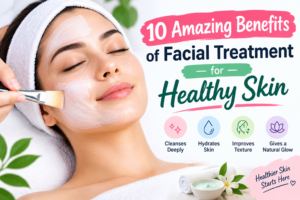

Healthy, glowing skin is something many people want, but daily exposure to pollution, dust, makeup, sunlight, stress, and environmental changes can make the skin look dull and tired. A good skincare routine at home is important, but professional facial treatments can provide additional care that may be difficult to achieve with everyday cleansing and moisturizing.
Facials are designed to cleanse, exfoliate, hydrate, and nourish the skin. Depending on your skin type and the treatment you choose, a facial may also help improve the appearance of clogged pores, uneven texture, dryness, and dullness.
In this article, we’ll explore the 10 amazing benefits of facial treatment for healthy skin, how often you may need one, and how to choose the right facial for your skin type.
What Is a Facial Treatment?
A facial is a cosmetic skincare treatment that typically involves several steps designed to improve the appearance and feel of the skin.
A traditional facial may include:
- Cleansing
- Exfoliation
- Steam or warm compresses
- Extraction of clogged pores
- Facial massage
- Mask application
- Moisturizing
- Sun protection
Modern facial treatments can also include specialized procedures such as chemical exfoliation, hydrating treatments, LED light therapy, or other professional skincare techniques.
The exact treatment should be selected according to your skin type, concerns, and sensitivity.
10 Benefits of Facial Treatment
1. Deeply Cleanses the Skin
One of the biggest benefits of facial treatment is thorough cleansing.
Throughout the day, your skin can accumulate sweat, oil, makeup residue, sunscreen, and environmental pollutants. A professional facial can provide multiple cleansing steps that help remove surface buildup.
Deep cleansing can leave the skin feeling:
- Fresher
- Smoother
- Cleaner
- Softer
- Less congested
However, a facial does not replace your daily skincare routine. Regular cleansing at home remains essential.
2. Removes Dead Skin Cells
Your skin naturally sheds dead cells, but they can sometimes accumulate on the surface. This buildup may make your complexion appear dull or rough.
Facial treatments often include exfoliation to help remove some of these dead surface cells.
Depending on the facial, exfoliation may involve:
- Gentle scrubs
- Enzyme exfoliants
- Alpha hydroxy acids
- Beta hydroxy acids
- Other professional exfoliating treatments
Removing excess dead skin can temporarily make the skin look brighter and feel smoother.
It is important not to over-exfoliate because excessive exfoliation can cause irritation and dryness.
3. Helps Improve Skin Hydration
Dehydrated skin can look dull, tight, flaky, or uncomfortable.
Many facial treatments include hydrating ingredients such as:
- Hyaluronic acid
- Glycerin
- Aloe vera
- Ceramides
- Moisturizing oils
A professional facial can provide a concentrated hydration treatment that leaves the skin feeling softer and more comfortable.
For people with dry or dehydrated skin, choosing a gentle hydrating facial may be more appropriate than an aggressive exfoliating treatment.
4. Can Improve the Appearance of Clogged Pores
Clogged pores are caused by a buildup of oil, dead skin cells, and other material inside hair follicles.
They commonly appear as:
- Blackheads
- Whiteheads
- Small bumps
- Enlarged-looking pores
Some professional facials include carefully performed extractions to remove certain types of congestion.
However, extractions should be performed gently and appropriately. Aggressive squeezing at home can cause inflammation, skin damage, and post-inflammatory marks.
If you have significant acne or painful lesions, it is better to consult a dermatologist rather than relying on routine facial extractions.
5. Gives Skin a Temporary Brighter Appearance
One of the most noticeable benefits after a facial can be a brighter-looking complexion.
Exfoliation removes some surface buildup, while hydration can make the skin appear plumper and smoother. Together, these effects can give the face a fresh and radiant appearance.
This is one reason people often schedule facials before:
- Weddings
- Parties
- Photoshoots
- Special events
- Vacations
Keep in mind that the glow from a facial is not necessarily permanent. Maintaining healthy skin requires consistent skincare and sun protection.
6. May Improve the Look of Skin Texture
Uneven skin texture can make the face feel rough or appear less smooth.
Dead skin buildup, dehydration, clogged pores, and environmental damage can all contribute to an uneven appearance.
A suitable facial may help temporarily improve the look and feel of skin texture through cleansing, exfoliation, and hydration.
For more persistent texture concerns, professional dermatological treatments may be more appropriate.
7. Supports a Relaxing Self-Care Routine
A facial isn’t only about skincare. It can also provide a relaxing self-care experience.
Facial massage and a calm treatment environment may help you relax and take a break from daily stress.
While relaxation does not directly “cure” skin problems, managing stress is an important part of overall well-being. High stress levels can also worsen some existing skin conditions in certain people.
Taking time for yourself can therefore be beneficial for both your mental well-being and your skincare routine.
8. Helps Skincare Products Apply More Smoothly
When the surface of your skin has excess dead cells and buildup, skincare products may not spread as evenly.
After appropriate cleansing and exfoliation, the skin may feel smoother, allowing moisturizers and other products to apply more comfortably.
However, professional exfoliation does not mean that stronger skincare products should automatically be used afterward.
Your skin may be temporarily more sensitive following certain treatments, so following aftercare instructions is important.
9. Can Target Specific Skin Concerns
Not every facial is designed for the same purpose.
Depending on your skin’s needs, a skincare professional may recommend treatments aimed at concerns such as:
- Dryness
- Dullness
- Excess oil
- Mild congestion
- Uneven texture
- Dehydration
- Signs of environmental stress
For example, someone with dry skin may benefit more from a hydrating treatment, while someone with oily and congested skin may require a different approach.
The best facial is therefore not necessarily the most expensive or intensive one. It is the one that suits your skin.
10. Encourages Better Skincare Habits
Regular professional skincare appointments can help you understand what your skin needs.
A qualified skincare professional may help you identify:
- Your general skin type
- Products that may be irritating your skin
- Whether you are over-exfoliating
- How frequently you should cleanse
- The importance of moisturizing
- Why daily sunscreen matters
A facial should complement your home skincare routine rather than replace it.
For long-term healthy skin, daily habits are much more important than occasional treatments.
Different Types of Facial Treatments
There are many different types of facials available today.
Hydrating Facial
Designed primarily to replenish moisture and support comfortable, soft-looking skin.
Deep-Cleansing Facial
Focuses on cleansing and removing surface buildup. It may be suitable for people who experience excess oil or congestion.
Exfoliating Facial
Uses exfoliating ingredients or techniques to remove surface dead skin cells.
Acne-Focused Facial
May include gentle cleansing and carefully selected treatments for acne-prone skin. People with moderate or severe acne should consult a dermatologist.
Anti-Aging Facial
Often focuses on hydration, exfoliation, antioxidants, and improving the appearance of fine lines and dullness.
Chemical Peel
A chemical peel uses a chemical solution to exfoliate the skin. Different types and strengths are available, and professional assessment is important to determine whether a peel is appropriate.
How Often Should You Get a Facial?
There is no single schedule that works for everyone.
Some people may choose to have a facial every 4 to 6 weeks, while others may only get one occasionally for special events.
Your ideal frequency depends on:
- Skin type
- Skin sensitivity
- Treatment type
- Skin concerns
- Professional recommendations
- Your home skincare routine
More frequent treatments are not automatically better. Over-treatment can irritate the skin and compromise its protective barrier.
Facial Treatment vs. Daily Skincare
A facial can improve the appearance of your skin temporarily, but daily skincare is the foundation of long-term skin health.
A basic routine usually includes:
Morning:
- Gentle cleanser
- Moisturizer
- Broad-spectrum sunscreen
Night:
- Cleanser
- Appropriate treatment product
- Moisturizer
Depending on your skin concerns, ingredients such as vitamin C, niacinamide, salicylic acid, or retinoids may be incorporated into a routine.
Introduce active ingredients carefully, particularly if you have sensitive skin.
Who Should Avoid Certain Facial Treatments?
Not every facial is suitable for everyone.
People with very sensitive skin, active skin infections, open wounds, severe inflammatory acne, or certain dermatological conditions may need to avoid specific treatments.
If you have a chronic or unexplained skin problem, consult a dermatologist before booking an aggressive facial.
Pregnant individuals should also discuss certain professional treatments and skincare ingredients with an appropriate healthcare professional before use.
How to Care for Your Skin After a Facial
After a facial, your skin may be temporarily more sensitive.
For the first day or so, consider:
- Avoiding harsh exfoliants
- Avoiding unnecessary touching
- Using gentle skincare products
- Keeping the skin moisturized
- Applying sunscreen
- Avoiding excessive heat if advised by your provider
- Following the professional’s aftercare instructions
If you experience severe swelling, blistering, intense burning, or other concerning reactions, seek medical advice.
Are Facial Treatments Worth It?
For many people, facials can be a pleasant addition to their skincare routine. They can provide cleansing, exfoliation, hydration, relaxation, and temporary improvements in the appearance of the skin.
However, facials are not a substitute for medical treatment.
If you have persistent acne, rosacea, eczema, significant pigmentation, suspicious skin changes, or severe irritation, a dermatologist can provide a more appropriate diagnosis and treatment plan.
Final Thoughts
The benefits of facial treatment can include deeper cleansing, removal of dead skin cells, improved hydration, smoother-looking texture, temporary radiance, and relaxation.
The key is choosing a facial that matches your skin type and concerns rather than simply selecting the most intensive treatment available.
For healthy skin over the long term, combine occasional professional treatments with a simple daily routine, adequate moisturization, and consistent sunscreen use.
Remember, healthy skin does not have to be perfectly clear or flawless. The goal should be skin that is comfortable, protected, and well cared for.