

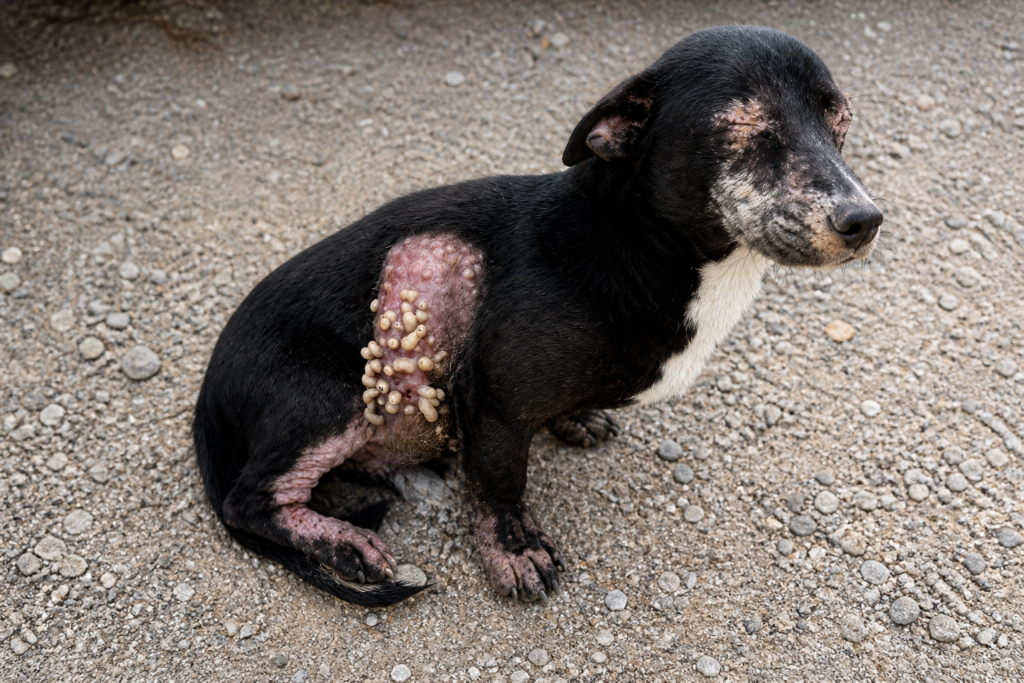
On a quiet stretch of gravel road, where dust rises with every passing breeze and the world seems to move on without noticing, a frail stray dog sits curled into itself, embodying a story that too often goes untold. Its thin frame, marked by patches of missing fur and inflamed skin, reflects weeks—perhaps months—of silent suffering. The once-glossy coat that might have signaled vitality is now dulled by neglect, and its eyes, though still alert, carry a heaviness that speaks of exhaustion rather than rest. Every movement appears deliberate, as if even the simplest action requires effort, and the way it shifts its weight suggests discomfort that never quite fades. This dog is not just an animal wandering aimlessly; it is a living testament to the harsh realities faced by countless strays who exist on the margins of human society.
The gravel beneath it offers no comfort, only a rough surface that mirrors the difficulty of its existence. Around it lies an environment indifferent to its pain—no shelter from the sun’s harsh glare during the day, no protection from the cold bite of night. Food is uncertain, often scavenged from discarded scraps that may not even be safe to eat. Water, too, is a luxury, found only when chance allows. In such conditions, illness is not just common; it is inevitable. The dog’s skin condition, visible in irritated patches and unusual growths, could be the result of untreated infections, parasites, or prolonged exposure to unsanitary surroundings. Without medical care, what might have been a minor issue has grown into something far more severe, affecting not only its physical health but its overall quality of life.
Yet, despite everything, there is a quiet resilience in the way the dog holds itself. It has learned to survive in a world that offers it little kindness. Each day it wakes up is a small victory, a continuation of a struggle that demands endurance and instinct. It watches cautiously, perhaps wary of humans who might shoo it away or worse, yet there is also a faint trace of hope—an almost imperceptible willingness to trust if given a reason. This duality, fear mixed with longing, is what makes the situation so poignant. Stray animals often exist in this delicate balance, shaped by both cruelty and occasional compassion.
The presence of such a dog raises uncomfortable questions about responsibility and awareness. How does an animal end up in this condition? Was it once someone’s pet, abandoned when it became inconvenient or costly to care for? Or was it born into a cycle of neglect, never knowing what it means to be safe and cared for? In many places, stray populations grow due to a lack of proper animal welfare systems, limited access to veterinary care, and insufficient public awareness about responsible pet ownership. The result is a visible, ongoing crisis that manifests in scenes like this—an animal suffering quietly in plain sight.
At the same time, the story does not have to end in despair. Across the world, individuals and organizations dedicate themselves to helping animals like this one. Rescue groups, volunteers, and compassionate passersby often step in to provide food, medical treatment, and, when possible, a chance at a better life. Even small actions—offering clean water, contacting local animal services, or spreading awareness—can make a meaningful difference. For this dog, a single act of kindness could mark the turning point between continued suffering and the beginning of recovery.
There is also a broader lesson embedded in this scene. It serves as a reminder of the interconnectedness between humans and animals, and the impact of our choices on the lives around us. Neglect, whether intentional or not, has consequences that ripple outward, affecting not just individual animals but entire communities. Conversely, compassion has the power to create positive change, inspiring others to act and fostering a culture where care and responsibility are valued.
As the dog remains on the gravel, its story continues, shaped by both hardship and the possibility of hope. It may not have a voice to express its pain or its needs, but its condition speaks clearly enough for those willing to listen. In that silent communication lies an opportunity—for empathy, for action, and for change. Whether its future holds continued struggle or a chance at healing depends largely on the world around it, and on whether someone chooses to see not just a stray animal, but a life worth saving.
