

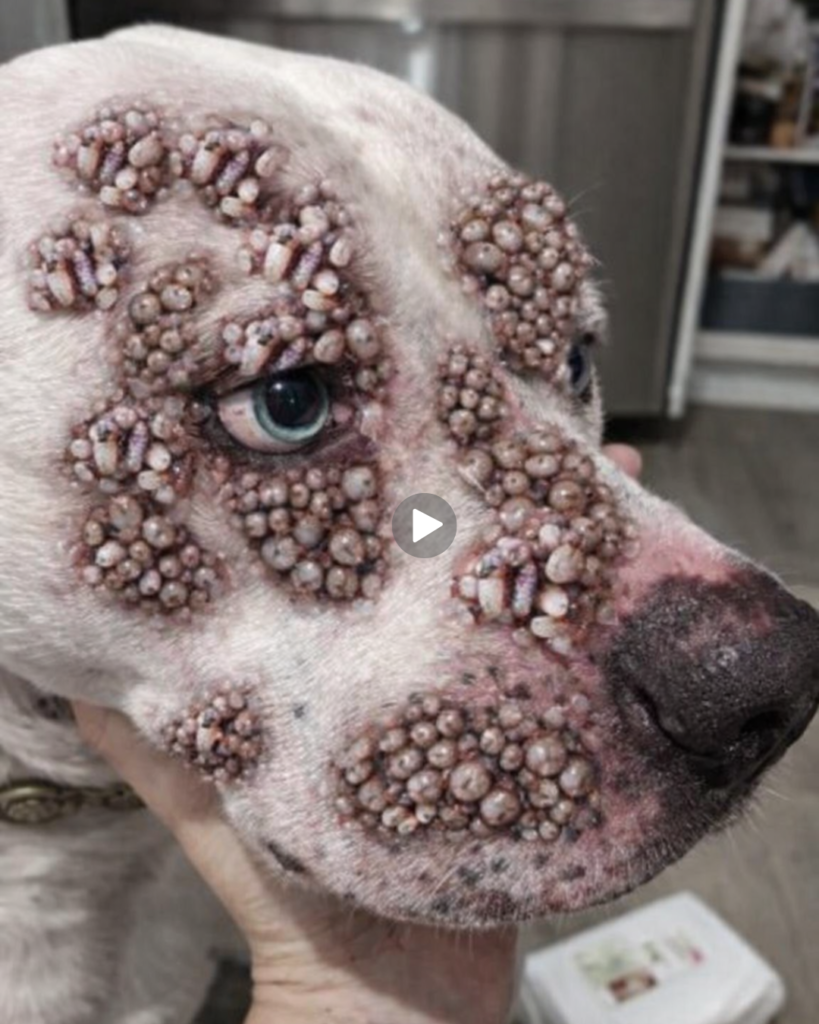
The image above is difficult to look at, and that reaction is entirely justified. It depicts a dog suffering from an extreme and advanced tick infestation, with hundreds of engorged ticks clustered densely across the face, muzzle, and around the eyes. While such cases are not common in attentive households, they do occur—particularly in areas with warm climates, high grasslands, limited veterinary access, or among stray, rescued, or neglected animals. This image serves as a powerful and unsettling reminder of how dangerous parasites can be when left untreated and why prevention, early detection, and responsible pet care are absolutely essential.
Understanding What You’re Seeing
Ticks are external parasites that feed on the blood of mammals, birds, and sometimes reptiles. In the image, the small gray-brown, bead-like organisms attached to the dog’s skin are engorged ticks—ticks that have fed for several days and swelled to many times their original size. The clustering pattern, especially around thin-skinned and warm areas like the eyes, lips, and ears, is typical of heavy infestations where the parasites have been allowed to multiply unchecked.
This level of infestation does not happen overnight. It often develops over weeks or even months, indicating prolonged exposure and lack of effective parasite control.
How Tick Infestations Become This Severe
Several factors can contribute to a case as extreme as the one shown:
- Lack of Preventative Treatment
Dogs that are not on regular tick prevention medication are highly vulnerable, especially in tick-endemic regions. - Environmental Exposure
Rural areas, wooded regions, farms, and places with tall grass create ideal habitats for ticks. Dogs that roam freely are at higher risk. - Neglect or Limited Veterinary Access
Stray dogs, rescue cases, or pets in underserved communities may not receive timely care. - Delayed Detection
Light-colored ticks on light-colored fur, or dogs that resist handling, may go unnoticed until the infestation is advanced.
The Serious Health Risks Involved
A severe tick infestation is not just a skin problem—it is a medical emergency. The dog in the image is at risk of multiple life-threatening complications, including:
- Severe Anemia
Hundreds of blood-feeding ticks can drain a dog’s blood supply, leading to weakness, collapse, or death. - Tick-Borne Diseases
Ticks transmit dangerous pathogens such as Ehrlichiosis, Babesiosis, Lyme disease, and Anaplasmosis. These illnesses can cause fever, organ failure, neurological issues, and long-term complications. - Skin Infections and Necrosis
Tick bites create open wounds that can become infected, leading to abscesses and tissue damage. - Pain and Distress
Constant biting, inflammation, and pressure cause intense discomfort and psychological stress. - Secondary Fly Infestation (Myiasis)
Open wounds can attract flies, leading to maggot infestations, which further worsen the animal’s condition.
Why You Should Never Remove Ticks Like This at Home
Seeing an image like this may trigger an instinct to immediately pull the ticks off. However, in cases this severe, manual removal at home can be extremely dangerous.
- Improper removal can leave mouthparts embedded in the skin.
- Disturbing engorged ticks may cause them to regurgitate pathogens directly into the bloodstream.
- Sudden mass removal can worsen anemia or trigger shock.
In such situations, emergency veterinary intervention is essential. Treatment often includes sedation, medical-grade tick control products, antibiotics, fluids, pain management, and close monitoring.
The Role of Veterinary Care in Recovery
Dogs rescued from infestations like this typically require intensive treatment and follow-up care. A veterinarian may:
- Safely kill and remove ticks using approved medications
- Treat underlying tick-borne diseases
- Administer blood tests to assess anemia and organ function
- Provide wound care and antibiotics
- Support recovery with fluids, nutrition, and supplements
With proper care, many dogs can recover—even from conditions as severe as this—but the process can be long and costly.
Prevention: The Most Important Lesson
The most important message this image delivers is that this suffering is preventable.
Every dog, regardless of breed or lifestyle, should be protected with:
- Monthly or long-acting tick preventatives (oral or topical)
- Regular physical checks, especially after outdoor activity
- Clean, well-maintained living environments
- Prompt veterinary visits at the first sign of skin irritation or lethargy
Tick prevention is far less expensive, far less painful, and far more humane than treating an advanced infestation.
A Broader Animal Welfare Issue
Images like this often circulate online, sometimes without context, shocking viewers and triggering fear or disgust. While the reaction is understandable, it’s important to approach such cases with compassion rather than judgment. Many animals suffering this way are victims of circumstance, not cruelty—rescued from the streets, abandoned properties, or regions without adequate veterinary resources.
Raising awareness, supporting animal welfare organizations, and educating pet owners are key steps in preventing future cases.
Final Thoughts
This image is disturbing because it represents prolonged suffering—but it is also important because it tells a story that needs to be heard. It reminds us that parasites are not a minor inconvenience; they are a serious health threat. It highlights the responsibility that comes with caring for animals and the critical role of preventative veterinary medicine.
