
Key Takeaways
- Crepey neck skin develops when collagen, elastin, and moisture levels decrease over time.
- Sun exposure, aging, smoking, and dehydration can contribute to a crepey appearance.
- Moisturizers, sunscreen, and gentle skincare may improve the appearance of neck skin.
- Professional treatments, including microneedling and certain laser procedures, may help improve skin texture and firmness.
- Consistent skincare and healthy lifestyle habits can help protect the neck from further damage.
- Severe skin laxity may require a consultation with a qualified dermatologist or plastic surgeon.
Introduction
The skin on your neck is often one of the first areas to show visible signs of aging. While many people focus on caring for their face, the neck is frequently overlooked. Over time, the skin may become thinner, drier, and less elastic, creating a delicate, wrinkled appearance commonly known as crepey skin.
If you have noticed fine lines, loose skin, or a tissue-paper-like texture around your neck, you are not alone. These changes are common and can occur because of natural aging, environmental damage, and lifestyle factors.
The good news is that several skincare habits and professional treatments may help improve the appearance of crepey neck skin.
Understanding how to get rid of crepey skin on the neck begins with identifying its causes and choosing the right approach for your skin.
In this guide, we will explore the most common causes of crepey neck skin, effective skincare ingredients, professional treatment options, and simple prevention strategies.
What Is Crepey Skin on the Neck?
Crepey skin is a skin texture that resembles thin, wrinkled tissue paper. It may appear loose, delicate, or slightly crinkled, especially when the neck is stretched or moved.
Unlike individual expression lines, crepey skin often affects a broader area. It can develop on the neck, chest, arms, and other parts of the body.
The appearance of crepey skin is associated with changes in the skin’s structural components, including collagen and elastin.
Collagen helps provide strength and support, while elastin allows the skin to stretch and return to its original shape. As these proteins decrease or become damaged, the skin may lose some of its firmness.
Crepey skin can also become more noticeable when the skin is dry or dehydrated.
Youtube Video
What Causes Crepey Skin on the Neck?
Several factors may contribute to the development of crepey skin.
1. Natural Aging
Aging is one of the most common causes of crepey neck skin.
As we grow older, the body gradually produces less collagen and elastin. The skin may become thinner, less resilient, and more susceptible to wrinkles.
These changes are a natural part of the aging process, although their severity varies from person to person.
2. Sun Damage
Repeated exposure to ultraviolet (UV) radiation can damage the skin’s structural proteins.
The neck is particularly vulnerable because people often apply sunscreen to their faces but forget to protect the skin below the jawline.
Over time, sun exposure may contribute to:
- Fine lines and wrinkles
- Uneven skin tone
- Loss of elasticity
- Dryness and rough texture
- Premature skin aging
Daily sunscreen use is one of the most important steps in preventing further sun-related damage.
3. Dehydration and Dry Skin
When the skin lacks sufficient moisture, fine lines and wrinkles may become more visible.
The neck has fewer oil-producing glands than some areas of the face, which can make it more susceptible to dryness.
Environmental conditions, hot showers, harsh cleansers, and inadequate moisturizing may also contribute to dry skin.
Although hydration cannot replace lost collagen, it can make the skin appear softer and smoother.
4. Smoking
Smoking exposes the body to chemicals that can affect circulation and damage collagen and elastin.
People who smoke may experience more noticeable signs of premature skin aging.
Avoiding smoking can support overall skin health and may help reduce additional damage.
5. Repeated Neck Movements
Frequent bending of the neck, including looking down at smartphones and computers, can contribute to the appearance of horizontal neck lines.
This is sometimes called “tech neck.”
However, neck lines are not caused by posture alone. Aging, genetics, sun exposure, and skin structure also play important roles.
How to Get Rid of Crepey Skin on the Neck at Home
Home skincare cannot completely reverse significant skin laxity, but a consistent routine may improve dryness, texture, and the overall appearance of the neck.
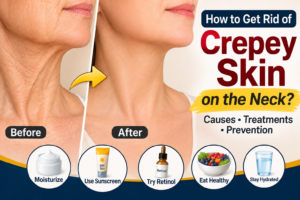
1. Use a Hydrating Moisturizer
Moisturizing is an important step in caring for crepey neck skin.
A good moisturizer helps support the skin barrier and reduce moisture loss.
Look for products containing:
- Hyaluronic acid: Helps attract and retain moisture.
- Glycerin: A humectant that helps hydrate the skin.
- Ceramides: Support the skin’s natural protective barrier.
- Peptides: Commonly used in skincare products designed to support the appearance of aging skin.
- Shea butter: Helps soften dry skin.
Apply moisturizer to your neck and chest after cleansing, preferably while the skin is slightly damp.
2. Apply Sunscreen Every Day
Sun protection is essential when learning how to get rid of crepey skin on the neck.
Choose a broad-spectrum sunscreen with SPF 30 or higher. Apply it to your neck, chest, and any other exposed areas.
Remember to reapply sunscreen approximately every two hours when outdoors, and after swimming or sweating.
Additional sun protection includes wearing protective clothing, seeking shade, and avoiding excessive exposure during peak sunlight hours.
3. Consider Retinol or Retinoids
Retinol is a vitamin A derivative commonly used in anti-aging skincare.
Some retinoids may help improve the appearance of fine lines and support collagen-related changes in the skin over time.
However, the neck can be more sensitive than the face.
If you want to try a retinol product:
- Start with a low concentration.
- Apply it once or twice weekly.
- Use a moisturizer afterward.
- Increase frequency gradually if your skin tolerates it.
- Stop if persistent irritation develops.
Retinoids are not suitable during pregnancy or when trying to become pregnant. Ask a healthcare professional before using them if you are breastfeeding or have a skin condition.
4. Use Vitamin C Skincare
Vitamin C is an antioxidant that helps protect the skin against oxidative stress.
It may also support collagen production and help improve the appearance of uneven skin tone.
A vitamin C serum can be applied in the morning before moisturizer and sunscreen, depending on the product instructions.
Choose a formulation suitable for sensitive skin, especially if your neck is prone to irritation.
5. Avoid Harsh Exfoliation
Exfoliation may help remove dead skin cells, but excessive exfoliation can damage the skin barrier.
Avoid aggressive scrubbing, strong chemical peels, or frequent exfoliating treatments on delicate neck skin.
If you want to use an exfoliating product, choose a gentle formulation and introduce it slowly.
Do not exfoliate skin that is irritated, inflamed, or recovering from a professional procedure.
Professional Treatments for Crepey Neck Skin
If skincare products are not providing the improvement you want, professional treatments may be worth discussing with a dermatologist.
The best treatment depends on your skin’s condition, the degree of looseness, your medical history, and your expectations.
1. Microneedling
Microneedling uses tiny needles to create controlled micro-injuries in the skin.
This process stimulates the body’s natural healing response and may support collagen production.
Professional microneedling may help improve:
- Fine lines
- Mild skin texture concerns
- Certain types of acne scars
- The appearance of mild skin laxity
Multiple sessions may be recommended.
Microneedling should only be performed by a qualified professional using appropriate equipment and sterile techniques.
2. Laser Skin Treatments
Certain laser treatments can improve sun damage, wrinkles, and skin texture.
Some laser procedures stimulate collagen remodeling, which may help improve the appearance of crepey skin.
The type of laser, treatment depth, and number of sessions depend on individual skin needs.
Laser treatments can cause side effects such as redness, swelling, pigmentation changes, or scarring. A dermatologist should assess whether a particular procedure is suitable for your skin tone and condition.
3. Radiofrequency Skin Tightening
Radiofrequency treatments use energy to heat deeper skin tissues.
Some procedures may stimulate collagen remodeling and improve the appearance of mild skin laxity.
Results vary depending on the device, treatment method, and individual response.
Radiofrequency is not a guaranteed replacement for surgery when substantial loose skin is present.
4. Professional Chemical Peels
Chemical peels use carefully selected acids to exfoliate the skin.
Depending on the peel’s strength, they may help improve:
- Uneven skin tone
- Surface texture
- Fine lines
- Certain signs of sun damage
The neck is a delicate area, so professional assessment is important before undergoing a chemical peel.
5. Plasma Pen Treatments
Plasma pen procedures use an electrical arc to create controlled thermal injury on the skin’s surface.
Some providers market these procedures for skin tightening. However, they are not risk-free.
Possible complications include burns, scarring, prolonged pigmentation changes, and infection.
Before considering a plasma pen treatment, consult a qualified medical professional and carefully discuss the potential risks, expected results, and available alternatives.
No single professional treatment is the best choice for everyone.
A Simple Daily Neck Skincare Routine
A consistent skincare routine can help protect the neck and improve its appearance over time.
Morning Routine
Step 1: Gently cleanse your face and neck using a mild cleanser.
Step 2: Apply a hydrating serum containing ingredients such as glycerin or hyaluronic acid.
Step 3: Use a moisturizer suitable for your skin type.
Step 4: Apply broad-spectrum SPF 30 or higher sunscreen to your neck and chest.
Evening Routine
Step 1: Remove sunscreen, makeup, and dirt with a gentle cleanser.
Step 2: Apply a suitable retinol product if your skin tolerates it and it is appropriate for you.
Step 3: Finish with a nourishing moisturizer.
If your neck is sensitive, begin with a simple cleanser, moisturizer, and sunscreen routine before introducing active ingredients.
Lifestyle Habits That Help Prevent Crepey Neck Skin
Skincare products are only one part of maintaining healthy-looking skin.
Stay Hydrated
Drink enough water throughout the day to support normal body functions.
Although drinking extra water will not reverse collagen loss, adequate hydration is important for overall health.
Eat a Balanced Diet
A balanced diet provides nutrients that support normal skin function.
Include foods such as:
- Citrus fruits and berries
- Leafy green vegetables
- Eggs
- Fish
- Nuts and seeds
- Protein-rich foods
Vitamin C, protein, and other nutrients contribute to normal collagen formation and skin health.
Avoid Smoking
Smoking can accelerate visible skin aging. Avoiding tobacco is beneficial for your skin and overall health.
Maintain a Comfortable Sleeping Position
Sleeping positions may influence the appearance of temporary sleep lines, but there is limited evidence that changing your sleeping position can significantly reverse crepey neck skin.
Focus on comfortable sleep and a consistent skincare routine rather than relying on special pillows as a skin-tightening treatment.
Take Care of Your Posture
Keeping your screen at eye level and avoiding prolonged downward neck bending may reduce strain and help prevent discomfort.
Good posture will not eliminate existing crepey skin, but it can support better neck comfort.
When Should You See a Dermatologist?
Crepey skin is usually a cosmetic concern, but some skin changes require medical attention.
Consult a dermatologist if you notice:
- Sudden or unexplained changes in skin texture
- Persistent redness or irritation
- Pain, itching, or unusual skin lesions
- Rapid changes in skin appearance
- Skin concerns that do not improve with gentle skincare
A dermatologist can help distinguish normal aging from other skin conditions and recommend appropriate treatment.
Frequently Asked Questions
Can crepey skin on the neck be reversed?
Crepey skin may improve with consistent moisturizing, sun protection, and certain professional treatments. However, significant skin laxity cannot always be completely reversed. Results depend on age, skin condition, and the severity of the changes.
What is the best moisturizer for crepey neck skin?
A moisturizer containing glycerin, hyaluronic acid, or ceramides can help improve hydration and support the skin barrier. Choose a product that is gentle and suitable for your skin type.
Does drinking water help crepey skin?
Adequate hydration supports overall health and normal skin function. However, drinking more water than your body needs will not restore lost collagen or eliminate significant loose skin.
Does retinol help crepey skin on the neck?
Retinol may help improve the appearance of fine lines and support skin renewal over time. Because neck skin can be sensitive, start slowly and use a low-strength product.
How long does it take to improve crepey neck skin?
Hydration-related improvements may become noticeable within days or weeks. Changes in fine lines from skincare ingredients may take several weeks or months. Professional treatments may require multiple sessions and additional time for collagen remodeling.
Can exercise tighten loose skin on the neck?
Exercise can support overall health and muscle strength, but it cannot directly restore lost skin collagen or remove significant loose skin. Neck exercises should not be considered a guaranteed skin-tightening treatment.
Is crepey neck skin normal as you age?
Yes. Crepey skin is a common part of aging, particularly in areas with thinner skin and frequent sun exposure. Genetics, lifestyle, and environmental factors also influence how it develops.
Conclusion
Crepey skin on the neck is a common concern that can develop because of aging, sun exposure, dryness, and the gradual loss of collagen and elastin.
Although it may not be possible to completely eliminate crepey skin at home, a consistent skincare routine can help improve hydration, texture, and the overall appearance of the neck.
Start with gentle cleansing, a nourishing moisturizer, and daily sunscreen. Consider ingredients such as retinol or vitamin C if they are appropriate for your skin.
For more noticeable skin laxity, professional treatments such as microneedling, laser procedures, or radiofrequency may offer additional benefits. Always consult a qualified dermatologist before choosing a treatment.
The most effective approach to how to get rid of crepey skin on the neck is a combination of realistic expectations, consistent skincare, sun protection, and professional guidance when needed.
Healthy-looking skin takes time, and small daily habits can make a meaningful difference in maintaining your skin’s appearance.