
As we get older, our skin naturally loses some of its firmness and elasticity. You may begin noticing loose skin around your cheeks, jawline, chin, and neck. Fine lines and wrinkles can also become more visible, making your face look less firm than before.
If you are wondering how to tighten face skin naturally at home, the good news is that a consistent skincare routine can help improve your skin’s appearance. Proper hydration, daily sunscreen, gentle skincare products, and healthy lifestyle habits can support smoother and healthier-looking skin.
Although home remedies cannot provide the same lifting results as professional cosmetic procedures, they may help improve skin texture, hydration, and overall appearance.
The most important thing is choosing gentle methods and following them consistently rather than expecting overnight results.
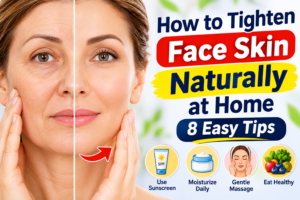
In this guide, you will discover eight practical ways to support firmer-looking facial skin, improve sagging cheeks, and build a simple skincare routine at home.
Key Takeaways
- Aging and sun exposure can contribute to reduced skin firmness and visible wrinkles.
- Daily sunscreen and moisturizers help protect and maintain healthy-looking skin.
- Ingredients such as niacinamide, hyaluronic acid, bakuchiol, and rosehip oil can support different aspects of skincare.
- Gentle facial massage may help with product application, but it cannot permanently lift sagging skin.
- Consistent skincare habits may improve skin hydration and texture over several weeks.
1. Follow a Consistent Daily Skincare Routine
One of the most effective ways to improve the appearance of aging skin is to follow a simple morning and evening skincare routine.
Your skin needs regular cleansing, hydration, and protection. Using too many products or frequently changing your skincare routine may cause irritation, especially if you have sensitive or mature skin.
A simple routine is often easier to maintain and can help your skin look smoother and healthier.
Morning Skincare Routine
Start your day with these basic steps:
Step 1: Cleanse Your Face
Use a gentle facial cleanser to remove overnight oil, sweat, and impurities. Avoid harsh cleansers that leave your face feeling tight or excessively dry.
Step 2: Apply a Hydrating Serum
A lightweight serum containing hyaluronic acid or niacinamide can help support skin hydration and improve the appearance of uneven texture.
Apply a small amount to clean skin according to the product instructions.
Step 3: Use a Moisturizer
Apply a suitable facial moisturizer to help maintain hydration and support your skin barrier.
Look for products that contain ingredients such as glycerin, ceramides, or hyaluronic acid.
Step 4: Apply Sunscreen
Finish your morning routine with broad-spectrum SPF 30 or higher sunscreen.
Sun protection is especially important because ultraviolet exposure contributes to premature skin aging, wrinkles, and changes in skin texture.
Youtube Video
Evening Skincare Routine
Your nighttime routine should focus on cleansing and moisturizing.
- Remove makeup, sunscreen, and daily impurities with a gentle cleanser.
- Apply a suitable hydrating serum if needed.
- Consider a few drops of rosehip oil or a bakuchiol-based product if your skin tolerates it.
- Finish with a moisturizer to help reduce overnight moisture loss.
Avoid introducing several new products at once. Give your skin time to adjust before adding additional ingredients.
2. Protect Your Skin From Sun Damage
Sun exposure is one of the major environmental factors associated with visible skin aging.
Repeated exposure to ultraviolet rays can contribute to collagen damage, wrinkles, uneven skin tone, and reduced skin elasticity.
Even if you follow an expensive skincare routine, skipping sunscreen can undermine your efforts to maintain healthy-looking skin.
How to Protect Your Face
- Apply broad-spectrum SPF 30 or higher every morning.
- Reapply sunscreen approximately every two hours when outdoors, and after swimming or sweating.
- Wear sunglasses and a wide-brimmed hat when spending time outside.
- Seek shade during periods of strong sunlight.
- Avoid unnecessary tanning and excessive sun exposure.
Daily sunscreen does not immediately tighten loose skin, but it helps protect against additional UV-related skin damage.
For anyone concerned about sagging cheeks or wrinkles, sun protection should be an essential part of their skincare routine.
3. Use Bakuchiol for Firmer-Looking Skin
Bakuchiol is a plant-derived ingredient commonly used in anti-aging skincare products.
It has gained popularity as an alternative to retinol, particularly among people who prefer botanical skincare options.
Some research suggests that bakuchiol may help improve the appearance of fine lines, wrinkles, and uneven skin texture.
However, it should not be considered a permanent skin-lifting treatment.
How to Use Bakuchiol
If you want to include bakuchiol in your skincare routine:
- Choose a product formulated for facial use.
- Start with a small amount.
- Follow the manufacturer’s application instructions.
- Use a moisturizer to maintain hydration.
- Monitor your skin for redness, irritation, or discomfort.
Even botanical ingredients can cause reactions in some people. Perform a patch test before applying a new product to your entire face.
4. Try Rosehip Oil for Dry and Mature Skin
Rosehip oil is a popular ingredient in skincare products designed for dry and mature skin.
It contains fatty acids and other naturally occurring compounds that help condition the skin and improve its appearance.
Although rosehip oil cannot physically lift sagging cheeks, it may help dry skin feel softer and look smoother by supporting moisture and reducing dryness-related roughness.
Benefits of Rosehip Oil
Rosehip oil may be useful for:
- Moisturizing dry facial skin.
- Improving the appearance of rough skin texture.
- Supporting a comfortable skin barrier.
- Reducing the feeling of tightness associated with dryness.
How to Apply Rosehip Oil
- Cleanse your face with a gentle cleanser.
- Apply your regular moisturizer if needed.
- Use a few drops of rosehip oil.
- Gently spread it over your face without pulling the skin.
- Use it as part of your evening routine if your skin tolerates it.
Choose a product intended for facial use. If you have acne-prone or sensitive skin, introduce it slowly and monitor how your skin responds.
5. Use Gentle Facial Massage Techniques
Facial massage is another popular technique among people looking for natural ways to improve their skincare routine.
A gentle massage can make applying moisturizer or facial oil more comfortable. It may also temporarily improve the appearance of puffiness in some people.
However, there is limited evidence that facial massage can permanently tighten loose skin or restore lost collagen.
How to Massage Your Face
Follow these simple steps:
- Wash your hands before touching your face.
- Apply a small amount of moisturizer or facial oil to reduce friction.
- Place your fingertips gently on your cheeks.
- Use slow upward movements toward your temples.
- Massage along your jawline without pulling or stretching the skin.
- Continue for a few minutes using gentle pressure.
Avoid aggressive rubbing, especially around your eyes and other delicate areas.
If your skin is irritated, inflamed, or affected by an active skin condition, avoid massage until it has recovered.
6. Add Niacinamide and Hyaluronic Acid to Your Routine
Certain skincare ingredients can help improve the appearance of skin that looks tired, dry, or uneven.
Niacinamide and hyaluronic acid are two popular ingredients that can complement a basic anti-aging skincare routine.
Niacinamide
Niacinamide is a form of vitamin B3 used in many skincare products.
It can help support the skin barrier and improve the appearance of uneven skin tone and texture.
People with mature or dry skin may benefit from including a suitable niacinamide serum in their routine.
Start with a product concentration appropriate for your skin type and follow its directions.
Hyaluronic Acid
Hyaluronic acid is a hydrating ingredient that helps attract and retain water.
When skin becomes dehydrated, fine lines caused by dryness may appear more noticeable.
Using a hyaluronic acid serum followed by a moisturizer can help improve hydration and make the skin look temporarily smoother.
Why Moisturizing Matters
Well-hydrated skin often looks healthier and more supple.
A good moisturizer helps reduce water loss and supports the protective skin barrier.
Remember that hydration improves the appearance of skin but does not reverse significant age-related skin laxity.
7. Exfoliate Gently to Improve Skin Texture
Dead skin cells can accumulate on the surface of your face, making your complexion appear dull or uneven.
Gentle exfoliation can help remove some of this buildup and improve the appearance of skin texture.
However, excessive exfoliation may damage the skin barrier and cause redness, dryness, and irritation.
How Often Should You Exfoliate?
If you are new to exfoliation, begin once a week with a gentle product.
Depending on your skin type and tolerance, you may gradually increase the frequency to twice weekly.
Keep these precautions in mind:
- Avoid combining multiple strong exfoliating products.
- Do not scrub your face aggressively.
- Avoid exfoliating irritated or damaged skin.
- Apply moisturizer after exfoliation.
- Use sunscreen during the day.
People with sensitive or mature skin should be particularly careful with exfoliating products.
More exfoliation does not necessarily mean better results.
8. Follow a Healthy Lifestyle for Better Skin
Your skincare products are only one part of maintaining healthy-looking skin. Daily habits also influence how your skin looks and feels.
A balanced lifestyle can support normal skin function and help maintain your overall appearance.
Get Enough Sleep
Poor sleep can make your face look tired and may emphasize dark circles and dullness.
Try to maintain a regular sleep schedule and give your body enough time to rest.
Eat a Balanced Diet
Your skin needs nutrients to maintain its normal structure and function.
Include foods containing protein, healthy fats, vitamins, and minerals.
Some useful food choices include:
- Eggs and fish.
- Leafy green vegetables.
- Berries and citrus fruits.
- Nuts and seeds.
- Beans and lentils.
- Whole grains.
A balanced diet supports general health, although no individual food can independently tighten sagging facial skin.
Stay Hydrated
Drinking enough fluids helps maintain normal hydration throughout your body.
Dehydration can make your skin appear less comfortable and emphasize dryness.
Drink water regularly throughout the day according to your individual needs.
Avoid Smoking
Smoking is associated with premature skin aging and damage to the skin’s supporting structures.
Avoiding tobacco can help protect your overall health and reduce additional skin-related damage.
An Easy 8-Week Skincare Plan for Firmer-Looking Skin
Consistency is more important than using many different products. You can follow this simple plan to establish healthy skincare habits.
Weeks 1–2: Focus on Hydration
- Use a gentle cleanser every morning and evening.
- Apply a suitable moisturizer.
- Start using broad-spectrum sunscreen daily.
- Avoid harsh scrubs and unnecessary skincare products.
Weeks 3–5: Introduce Targeted Ingredients
- Consider adding niacinamide or hyaluronic acid.
- Introduce rosehip oil or bakuchiol if suitable for your skin.
- Continue your daily sunscreen routine.
- Monitor your skin for irritation.
Weeks 6–8: Maintain Your Routine
- Continue using products that your skin tolerates.
- Consider gentle exfoliation once weekly if appropriate.
- Take progress photographs under similar lighting conditions.
- Simplify your routine if your skin becomes irritated.
You may notice improvements in hydration and comfort within the first few weeks. Changes in texture can take longer, while significant sagging may not respond noticeably to home skincare.
What Should You Avoid When Trying to Tighten Face Skin Naturally?
Some skincare habits can make your skin look worse rather than better.
Avoid these common mistakes:
Expecting overnight results: Natural skincare routines require consistency. No ordinary home moisturizer can provide an immediate permanent facelift.
Using too many active ingredients: Combining multiple strong products may irritate your skin.
Skipping sunscreen: UV exposure can contribute to premature aging and undermine your skincare efforts.
Overwashing your face: Frequent cleansing with harsh products can strip natural oils and increase dryness.
Aggressive facial massage: Pulling and rubbing delicate skin may cause irritation.
Changing products too frequently: Give suitable products enough time to show whether they work for your skin.
Frequently Asked Questions
1. Can I tighten my face skin naturally at home?
You can improve the appearance of skin firmness, hydration, and texture through consistent skincare. However, home treatments cannot provide the same lifting results as professional procedures.
2. How can I tighten sagging cheeks naturally?
Use a gentle skincare routine that includes moisturizer, sunscreen, and suitable hydrating ingredients. Gentle facial massage may temporarily improve the appearance of puffiness, but it cannot permanently lift sagging cheeks.
3. Which oil is best for mature facial skin?
Rosehip oil is a popular option for dry and mature skin because of its moisturizing properties. Bakuchiol-based oils are another option for people interested in botanical anti-aging skincare.
4. Does facial massage help tighten loose skin?
Facial massage may temporarily improve the appearance of puffiness and make skincare application more comfortable. However, strong evidence that it permanently tightens loose skin is limited.
5. How long does it take to see results from a natural skincare routine?
Hydration and skin comfort may improve within one or two weeks. Changes in texture may take approximately 6–12 weeks of consistent care. Results vary depending on your skin type and the products you use.
6. Can moisturizer reduce the appearance of wrinkles?
Yes. Moisturizers can temporarily make fine lines caused by dryness appear less noticeable by improving skin hydration. They cannot completely remove deep wrinkles.
7. Is sunscreen important for preventing sagging skin?
Yes. Ultraviolet exposure contributes to premature skin aging and collagen damage. Daily broad-spectrum sunscreen helps protect the skin from additional UV-related damage.
Final Thoughts
Learning how to tighten face skin naturally at home starts with understanding what your skin actually needs. Hydration, sunscreen, gentle skincare ingredients, and healthy daily habits can all contribute to a smoother and healthier-looking complexion.
You do not need dozens of expensive products to build an effective routine. Start with a gentle cleanser, a suitable moisturizer, and daily sun protection. Add targeted ingredients gradually if your skin tolerates them.
Remember that natural skincare can improve the appearance and comfort of your skin, but it cannot completely reverse significant sagging. Be patient, maintain realistic expectations, and focus on consistent skin care rather than quick fixes.