
Why Does Your Face Feel Itchy? Common Causes, Relief, and Prevention
An itchy face can be uncomfortable, distracting, and sometimes frustrating. You may notice itching on your forehead, cheeks, chin, or around your nose. In some cases, the skin may also look red, dry, irritated, or covered with small bumps.
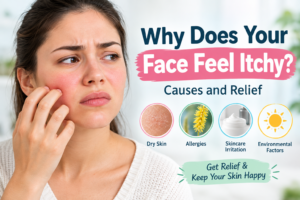
Facial itching can happen for several reasons, including dry skin, allergic reactions, sensitive skin, harsh skincare products, and environmental changes. Sometimes, an underlying skin condition may be responsible for persistent itching.
Understanding what causes facial itching is the first step toward finding the right solution. Although mild irritation may improve with gentle skincare, ongoing or severe symptoms may require medical attention.
What Causes an Itchy Face?
There is no single explanation for facial itching. The cause often depends on your skin type, daily routine, environment, and exposure to potential irritants.
1. Dry Skin
Dry skin is one of the most common reasons your face may feel itchy. When the skin loses too much moisture, its protective barrier can become weakened. This may lead to tightness, flaking, rough patches, and irritation.
Cold weather, low humidity, hot showers, air conditioning, and frequent washing can make facial dryness worse. Using harsh cleansers or skipping moisturizer may also contribute to the problem.
How to help: Use a gentle, fragrance-free cleanser and apply a moisturizer suitable for your skin type. Ingredients such as ceramides and glycerin can help support the skin barrier and retain moisture. Wash your face with lukewarm water rather than hot water.
2. Allergic Reactions
An allergic reaction can cause itching, redness, swelling, or a rash on the face. This may happen after your skin comes into contact with an ingredient in cosmetics, fragrances, hair products, sunscreen, or other substances.
Some people also experience facial symptoms as part of an allergy to foods, medications, or environmental allergens. However, an itchy face alone does not necessarily mean you have a food allergy.
How to help: Stop using any newly introduced product that may be responsible. Avoid applying additional products to irritated skin, and seek medical advice if the reaction persists or worsens. A healthcare professional can help identify possible triggers.
If facial itching occurs with swelling of the lips, tongue, or throat, difficulty breathing, or faintness, seek emergency medical care immediately.
Youtube Video
3. Reactions to Skincare and Cosmetic Products
Your favorite skincare product may not always agree with your skin. Certain cleansers, toners, exfoliants, serums, makeup products, and anti-aging treatments can cause irritation.
Ingredients such as fragrance, strong exfoliating acids, and retinoids may trigger dryness, burning, redness, or itching, particularly when used too frequently or combined with other irritating products.
Contact dermatitis is another possible cause. It can occur when the skin reacts to a substance it touches. Irritant contact dermatitis results from direct damage or irritation, while allergic contact dermatitis involves an immune reaction to a particular substance.
How to help: Temporarily stop nonessential active skincare products and use a simple routine consisting of a gentle cleanser, moisturizer, and sunscreen that your skin tolerates. Introduce new products one at a time after the irritation has settled.
Patch-testing a new product on a small area of skin according to its instructions may help identify irritation before wider use, although it cannot guarantee that an allergic reaction will not occur.
4. Sensitive Skin
People with sensitive skin may experience itching, stinging, burning, or redness after exposure to products or environmental changes that do not bother others.
Sensitive skin is not always a specific medical diagnosis. It can describe a tendency toward irritation associated with a weakened skin barrier or an underlying condition.
Frequent exfoliation, fragranced products, rough fabrics, and changes in temperature may make symptoms worse.
How to help: Keep your skincare routine simple. Choose fragrance-free products, avoid harsh scrubbing, and moisturize regularly. If your skin reacts to many different products, consider consulting a dermatologist to determine whether another condition is responsible.
5. Environmental Changes
Your face is regularly exposed to sunlight, wind, dust, pollution, indoor heating, and air conditioning. These environmental factors can contribute to dryness and irritation.
Hot and humid weather may also trigger heat rash, which can cause small, itchy bumps when sweat becomes trapped in the skin. Sunburn may produce redness, tenderness, peeling, and itching as the skin heals.
How to help: Protect your face from excessive sun exposure by using broad-spectrum sunscreen with SPF 30 or higher. Wear a hat when outdoors, seek shade during strong sunlight, and use a cool compress to soothe irritated skin.
For heat-related irritation, move to a cooler environment and avoid heavy products that worsen discomfort.
6. Eczema and Other Skin Conditions
Certain skin conditions can cause recurring facial itching. Atopic dermatitis, commonly known as eczema, may produce dry, inflamed, itchy patches. It often affects people with sensitive skin and may flare up when exposed to particular triggers.
Seborrheic dermatitis can cause redness and flaky skin, particularly around the eyebrows, sides of the nose, hairline, and scalp. Rosacea may cause facial redness, burning, stinging, and sensitivity, although itching is not its main symptom.
Other conditions, including fungal infections and psoriasis, may also cause facial irritation in some cases.
How to help: The correct treatment depends on the underlying condition. If you have recurring rashes, persistent scaling, or symptoms that do not improve with gentle skincare, consult a healthcare professional. Avoid using steroid creams or antifungal treatments on your face without appropriate medical guidance.
7. Stress and Emotional Triggers
Stress may worsen itching in people who already have sensitive skin or inflammatory skin conditions. It can also increase awareness of itching, making the sensation more difficult to ignore.
Stress does not explain every case of facial irritation, so it is important not to overlook other possible causes.
How to help: Try relaxation techniques, regular physical activity, adequate sleep, and other healthy stress-management habits. If itching continues, investigate possible skincare, environmental, or medical triggers rather than assuming stress is the only cause.
8. Sunburn and Heat Rash
Spending too much time in the sun can damage the skin and lead to redness, tenderness, and itching during recovery. Heat rash may develop in hot, humid conditions and cause clusters of small, prickly bumps.
These conditions require different approaches, so consider the appearance of the rash and the circumstances in which it developed.
How to help: For mild sunburn, use cool compresses and a gentle moisturizer. Avoid further sun exposure while the skin heals. For heat rash, keep the affected area cool and dry and avoid heavy creams that may trap heat.
Do not scratch peeling or irritated skin, as this can increase inflammation and the risk of infection.
How to Relieve an Itchy Face at Home
If your symptoms are mild and there are no warning signs, a few simple steps may help soothe your skin.
Use a Cool Compress
Place a clean, soft cloth dampened with cool water on the itchy area for several minutes. This may temporarily reduce discomfort and calm irritation.
Avoid placing ice directly on your skin because extreme cold can cause additional damage.
Moisturize Regularly
Dry skin often benefits from consistent moisturizing. Choose a fragrance-free product formulated for the face and suitable for your skin type.
Apply moisturizer after washing while your skin is still slightly damp. If a product causes burning or worsening redness, stop using it.
Choose a Gentle Cleanser
Wash your face with lukewarm water and a mild cleanser. Avoid harsh soaps, rough cleansing brushes, scrubs, and strongly fragranced products while your skin is irritated.
Washing too often can remove natural oils and make dryness worse.
Avoid Scratching
Scratching may provide temporary relief, but it can further damage the skin and increase inflammation. Repeated scratching may also lead to sores or infection.
Keep your fingernails short and use a cool compress when the urge to scratch becomes uncomfortable.
Pause Potentially Irritating Products
If itching begins after introducing a new serum, toner, exfoliant, sunscreen, or makeup product, stop using the suspected product temporarily.
Avoid adding several new remedies at once. A simple routine makes it easier to identify possible triggers and gives irritated skin an opportunity to recover.
Be Careful With Home Remedies
Natural ingredients are not automatically safe for sensitive skin. Lemon juice, essential oils, fragranced products, and other homemade treatments may cause irritation or allergic reactions.
Cucumber may feel cool on the skin, but it is not a proven treatment for every cause of facial itching. A clean, cool compress is a simpler option.
How to Prevent Facial Itching
Preventing facial itching often involves protecting the skin barrier and reducing exposure to substances that trigger symptoms.
- Keep your routine simple: Use a gentle cleanser, moisturizer, and broad-spectrum sunscreen.
- Choose fragrance-free products: Fragrance-free is generally a better choice than products labeled only as unscented, although either may contain ingredients that irritate certain people.
- Introduce products gradually: Avoid starting several new skincare treatments at the same time.
- Avoid excessive exfoliation: Frequent scrubbing and strong active ingredients can weaken the skin barrier.
- Protect your skin outdoors: Use sunscreen and limit excessive exposure to intense sunlight.
- Wash fabrics appropriately: If detergents or fabric softeners seem to trigger irritation, consider switching to fragrance-free alternatives.
- Maintain comfortable indoor humidity: Very dry indoor air may worsen skin dryness.
- Track recurring symptoms: Record when itching occurs, which products you used, and whether environmental changes may be involved.
These steps may reduce irritation, but persistent or recurrent itching deserves further evaluation.
When Should You See a Doctor for an Itchy Face?
Occasional mild itching may improve with gentle skincare. However, you should consult a healthcare professional if the itching lasts, repeatedly returns, spreads, or interferes with sleep and everyday activities.
Medical evaluation is especially important if you notice:
- A persistent or worsening rash.
- Significant redness, swelling, or pain.
- Blisters, open sores, or signs of infection.
- Thick scaling or unusual skin changes.
- Symptoms that develop after starting a medication.
- Itching that does not improve after stopping a suspected irritating product.
Seek emergency care if facial itching is accompanied by difficulty breathing, throat tightness, faintness, or sudden swelling of the lips or tongue, as these may be signs of a severe allergic reaction.
A healthcare professional may examine your skin, review your skincare routine, or recommend allergy testing when appropriate. Treatment will depend on the cause rather than the itching alone.
Frequently Asked Questions
Why does my face itch but have no rash?
Facial itching without a visible rash may be associated with dry skin, mild irritation, product sensitivity, or environmental factors. Some skin conditions may also cause itching before obvious changes appear. If the sensation persists or worsens, seek medical advice.
Can moisturizer stop facial itching?
A suitable moisturizer may help when dryness or a weakened skin barrier contributes to itching. Fragrance-free moisturizers containing glycerin or ceramides are common options. However, moisturizer alone may not resolve itching caused by allergies or an underlying skin condition.
Can sunscreen cause an itchy face?
Yes. Some sunscreen ingredients or fragrances can cause irritation or allergic contact dermatitis in susceptible people. If a sunscreen repeatedly causes itching or redness, stop using it and consider asking a healthcare professional about suitable alternatives.
Is an itchy face a sign of an allergy?
It can be, particularly when itching begins after contact with a product or exposure to a possible allergen. However, dryness, eczema, heat rash, and other conditions can cause similar symptoms. The timing and accompanying symptoms can help determine the cause.
Should I wash my face with hot or cold water?
Lukewarm water is generally preferable. Hot water can strip away natural oils and aggravate dryness. A cool compress may provide temporary relief when your face feels itchy or irritated.
How long does facial itching last?
The duration depends on the cause. Mild irritation may settle after the trigger is removed, while eczema, allergic reactions, and other skin conditions may require specific treatment. Seek medical advice if symptoms persist, worsen, or repeatedly return.
Final Thoughts
An itchy face can result from dry skin, allergies, cosmetic products, environmental changes, heat rash, or an underlying skin condition. Identifying the likely trigger is important for choosing the right approach.
Gentle cleansing, regular moisturizing, cool compresses, and avoiding suspected irritants may help relieve mild symptoms. However, persistent itching, worsening rashes, or significant swelling should not be ignored.
Pay attention to how your skin responds to everyday products and environmental changes. When simple skincare measures are not enough, a healthcare professional can help identify the cause and recommend appropriate treatment.