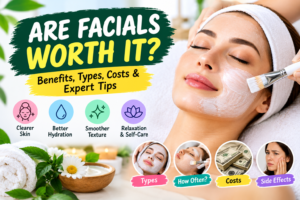

Are Facials Worth It? Benefits, Types, Costs, and How Often You Need
Introduction
Have you ever wondered whether professional facials are worth the time and money? Facials are popular skincare treatments designed to cleanse, exfoliate, hydrate, and improve the overall appearance of your skin. Many people enjoy them as a relaxing self-care experience, but they can also provide practical skincare benefits.
A professional facial typically includes cleansing, exfoliation, extractions when appropriate, a facial mask, and moisturizing products. Depending on your skin type and concerns, a skincare professional may customize the treatment to address dryness, clogged pores, uneven skin tone, or a dull complexion.
However, facials are not a miracle solution for every skin problem. Their results depend on the treatment, your skin condition, and how consistently you follow your daily skincare routine.
In this guide, we will explore whether facials are worth it, their main benefits, different facial types, potential disadvantages, average costs, and tips for getting the best results.
What Is a Facial?
A facial is a professional skincare treatment designed to clean and care for the skin. It is commonly performed by a licensed esthetician or another appropriately qualified skincare professional.
Although treatments vary, a basic facial usually includes several steps.
1. Cleansing
The treatment begins with a gentle cleanser to remove dirt, excess oil, makeup, and other impurities from the skin’s surface.
Cleansing prepares your skin for the following steps and helps the professional assess its condition.
2. Exfoliation
Exfoliation removes dead skin cells from the outer layer of the skin. Depending on the facial, this may involve a gentle physical exfoliant or a chemical exfoliant containing ingredients such as glycolic acid or lactic acid.
Appropriate exfoliation can improve skin texture, but excessive exfoliation may cause redness, irritation, and dryness.
3. Extractions
Some facials include the removal of blackheads and whiteheads using appropriate techniques and sterile instruments.
Extractions should be performed carefully because aggressive squeezing can damage the skin, worsen inflammation, or cause scarring.
4. Facial Mask
A mask is selected according to your skin’s needs. Hydrating masks may help dry skin feel more comfortable, while other products may target oiliness or improve the temporary appearance of dull skin.
5. Moisturizing
The final stage usually involves applying a moisturizer to help maintain hydration and support the skin barrier.
Your professional may also recommend sunscreen, especially if the treatment includes exfoliation.
Are Facials Worth It?
For many people, professional facials can be a worthwhile addition to a regular skincare routine. They provide an opportunity for deeper cleansing, targeted hydration, and personalized skincare advice.
A well-selected facial may leave your skin feeling softer, looking fresher, and appearing smoother. It can also help you identify products that suit your skin type.
However, the value of a facial depends on your individual goals.
If you want temporary hydration, relaxation, or help managing mild surface congestion, a basic facial may be a reasonable choice. If you are dealing with persistent acne, rosacea, melasma, or significant skin damage, a dermatologist may recommend more appropriate treatments.
Facials should complement your everyday skincare habits rather than replace them.
Youtube Video
6 Benefits of Professional Facials
1. Deep Cleansing for Cleaner-Looking Skin
Daily cleansing removes many surface impurities, but a professional facial offers additional steps that may help address buildup and clogged pores.
Cleansing, suitable exfoliation, and carefully performed extractions can improve the appearance of blackheads and whiteheads.
People with oily or congested skin may appreciate these benefits. However, deep cleansing does not permanently shrink pores or prevent every future breakout.
For lasting results, continue using skincare products appropriate for your skin type.
2. Smoother Skin Texture
Dead skin cells can contribute to a rough or dull appearance. Appropriate exfoliation removes some of these cells and can help reveal smoother-looking skin.
Some people notice a fresher complexion after a facial, especially when the treatment includes gentle exfoliation and moisturizing products.
Nevertheless, professional facials should not be confused with intensive resurfacing procedures. Treatments such as microneedling, dermaplaning, microdermabrasion, and stronger chemical peels are distinct procedures, even when offered as additional services.
Choose a treatment that matches your skin’s sensitivity and needs.
3. Improved Skin Hydration
Hydration is one of the most noticeable benefits of many facials. Moisturizing products, serums, and masks can help dry skin feel softer and more comfortable.
A hydrating facial may be particularly appealing during cold weather, after travel, or whenever your skin feels tight or flaky.
Ingredients such as glycerin, hyaluronic acid, and ceramides can support a moisturizing routine.
Keep in mind that the effects may be temporary. Applying moisturizer regularly at home is still essential for maintaining comfortable, hydrated skin.
4. Personalized Skincare Recommendations
Another benefit of professional facials is the opportunity to receive advice about your skincare routine.
A qualified professional may help you understand whether your skin appears dry, oily, sensitive, or congested. They may also suggest suitable cleansers, moisturizers, and other products.
If you have persistent acne, unusual rashes, or a medical skin condition, consult a dermatologist rather than relying on a facial provider for diagnosis.
Personalized guidance can help you avoid buying unnecessary products and make your daily routine more manageable.
5. A Brighter, Fresher Appearance
Facials may temporarily improve the appearance of dull skin by removing surface buildup and increasing hydration.
Brightening facials sometimes include gentle exfoliating acids or ingredients such as vitamin C and niacinamide. These products may help improve the appearance of uneven skin tone when used appropriately.
However, one facial will not necessarily eliminate dark spots, melasma, or deeper pigmentation concerns.
Long-term improvements usually require consistent skincare, sun protection, and sometimes treatments recommended by a dermatologist.
6. Relaxation and Self-Care
Facials are not only about appearance. Many people enjoy the relaxing environment, gentle massage, and opportunity to take a break from daily responsibilities.
Relaxation may help reduce feelings of stress and improve your overall sense of well-being.
Although stress management is beneficial for general health, a relaxing facial should not be considered a guaranteed treatment for stress-related skin conditions.
Different Types of Facials and Their Benefits
Not all facials are designed to achieve the same results. Understanding the available options can help you choose a treatment that fits your skincare goals.
1. Hydrating Facial
A hydrating facial focuses on restoring moisture and soothing dry or tight-feeling skin.
It may include gentle cleansing, mild exfoliation, moisturizing masks, and hydrating serums.
Best for: People experiencing dryness, mild flaking, or temporary dehydration.
If your skin is highly sensitive, ask for a gentle treatment without strong exfoliants or fragrance.
2. Acne Facial
An acne facial is designed to address clogged pores and surface congestion.
Depending on your skin, it may include cleansing, gentle exfoliation, carefully performed extractions, and selected products containing ingredients such as salicylic acid.
Some providers also offer LED light treatments as an additional service.
Best for: People with mild congestion who want help managing blackheads and whiteheads.
Acne facials are not a substitute for medical acne treatment. Inflamed acne, painful cysts, and acne that leaves scars should be evaluated by a dermatologist.
3. Anti-Aging Facial
Anti-aging facials focus on improving the appearance of fine lines, dullness, and uneven texture.
They may include facial massage, moisturizing products, antioxidant serums, peptides, or LED light therapy.
Best for: People seeking a temporary improvement in skin smoothness and hydration.
A facial cannot stop the natural aging process or permanently remove wrinkles. Daily sunscreen use and evidence-based treatments are more important for long-term skin health.
4. Brightening Facial
A brightening facial aims to make the complexion look fresher and more even.
It may include gentle exfoliating ingredients, vitamin C, or niacinamide, depending on the provider’s approach.
Best for: People concerned about dull-looking skin or mild uneven tone.
If you have melasma or persistent dark spots, seek advice from a dermatologist before choosing an intensive brightening treatment.
5. Sensitive-Skin Facial
Sensitive-skin facials use gentle products and techniques intended to minimize irritation.
They may emphasize mild cleansing, soothing moisturizers, and avoiding aggressive extractions or strong exfoliants.
Best for: People whose skin easily becomes irritated or uncomfortable.
Tell your provider about any known allergies, eczema, rosacea, or reactions to skincare products before treatment.
How Often Should You Get a Facial?
There is no single schedule that works for everyone. The ideal frequency depends on your skin type, treatment intensity, budget, and skincare goals.
Some people choose a facial every four to six weeks, while others prefer occasional treatments.
A gap of at least four to six weeks can be a reasonable starting point for routine facials, but it is not a universal medical rule. Your provider may recommend a longer interval if your skin is sensitive or the treatment is intensive.
Consider the following factors:
- Skin type: Dry or sensitive skin may need gentler, less frequent treatments.
- Skin concerns: Acne, uneven tone, or texture concerns may require a personalized plan.
- Daily skincare: Consistent cleansing, moisturizing, and sunscreen use can reduce the need for frequent professional treatments.
- Treatment intensity: Strong exfoliation or additional procedures may require more recovery time.
- Budget: Occasional facials combined with good home care may be more practical than frequent appointments.
If your skin remains red, irritated, or unusually sensitive after a facial, allow it to recover before scheduling another treatment.
How Much Do Facials Cost?
The cost of a professional facial varies according to the location, provider, treatment type, products used, and any additional services.
Basic facials generally cost less than specialized treatments involving advanced equipment or intensive procedures.
Some treatments may cost approximately $75 to more than $300 in certain markets, but these figures are not universal. Prices in Pakistan and other countries may differ considerably.
Before booking, ask about the total cost, the products used, the provider’s qualifications, and whether extractions or additional treatments carry separate fees.
The most expensive facial is not necessarily the best choice. A suitable treatment performed safely is more important than luxury branding.
Facial Do’s and Don’ts
Following a few precautions can help you get more from your appointment.
What You Should Do
- Choose a qualified provider: Look for an appropriately licensed esthetician or dermatologist with relevant training.
- Explain your skin concerns: Discuss dryness, acne, sensitivity, allergies, and any previous reactions.
- Mention your skincare products: Tell your provider if you use retinoids, exfoliating acids, acne medications, or prescription treatments.
- Disclose recent procedures: Recent chemical peels, laser treatments, or significant sun exposure may affect which treatments are suitable.
- Follow aftercare instructions: Use gentle skincare and protect your skin from the sun.
What You Should Avoid
- Do not schedule an intensive facial immediately before a major event. Redness, irritation, or temporary breakouts may occur.
- Avoid excessive exfoliation. Using strong active ingredients immediately before or after treatment may increase irritation.
- Do not pick at your skin. Squeezing blemishes can increase inflammation and the risk of scarring.
- Avoid unfamiliar products after treatment. Give your skin time to settle and introduce products carefully.
What Are the Disadvantages of Facials?
Although many people tolerate facials well, professional treatments can sometimes cause unwanted effects.
Possible disadvantages include:
- Temporary redness or irritation.
- Dryness or increased sensitivity.
- Breakouts after treatment.
- Skin damage from aggressive extractions.
- Allergic reactions to certain ingredients.
- Unnecessary expense if the treatment does not address your actual concern.
People with sensitive skin, active eczema, rosacea, or inflamed acne may need a modified treatment or should avoid certain procedures.
If you experience severe pain, blistering, significant swelling, or worsening inflammation, seek medical advice.
Frequently Asked Questions
1. Are facials worth the money?
Facials may be worth the cost if you want professional cleansing, temporary hydration, relaxation, or personalized skincare advice. However, their value depends on your needs and budget.
2. Is a monthly facial necessary?
No. Monthly facials are not essential for everyone. A consistent home skincare routine may be sufficient for many people, while others may enjoy occasional professional treatments.
3. Can facials remove acne permanently?
No. Facials may help with surface congestion, but they cannot guarantee permanent acne removal. Persistent or severe acne often requires a treatment plan from a dermatologist.
4. Can facials make your skin glow?
A facial may temporarily make your skin look brighter and smoother by improving hydration and removing surface buildup. Results vary and generally require ongoing skincare maintenance.
5. Are at-home facials safe?
Simple at-home facials using a gentle cleanser and moisturizer are generally suitable for many people. Avoid aggressive extractions, harsh scrubs, and strong chemical treatments without appropriate guidance.
6. What should I do after a facial?
Follow your provider’s aftercare instructions. Use a gentle cleanser, apply a suitable moisturizer, wear sunscreen, and avoid strong exfoliants or irritating products until your skin has recovered.
7. Which facial is best for dry skin?
A gentle hydrating facial may be suitable for dry skin. Look for moisturizing ingredients and avoid aggressive exfoliation, especially if your skin is cracked, inflamed, or sensitive.
Conclusion
Professional facials can be a useful addition to your skincare routine when they are chosen according to your skin type and concerns. Benefits may include deeper cleansing, smoother-looking skin, improved hydration, and personalized skincare advice.
However, facials are not a replacement for daily cleansing, moisturizing, sun protection, or medical treatment when needed. They also cannot permanently erase wrinkles, cure acne, or resolve every pigmentation problem in a single session.
Before booking, consider your skincare goals, budget, and skin sensitivity. Choose a qualified provider, communicate your concerns, and follow appropriate aftercare instructions.
Ultimately, the best skincare plan is one that protects your skin, fits your lifestyle, and delivers realistic results over time.