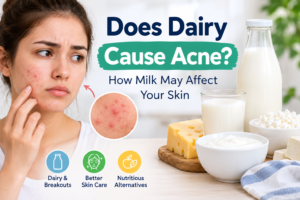

Does Dairy Cause Acne? How Milk May Affect Your Skin
Acne is one of the most common skin conditions, affecting teenagers and adults alike. Although hormones, genetics, and skin care habits play a major role in breakouts, your diet may also influence your skin. One food group that researchers have studied closely is dairy.
So, does dairy cause acne? Some studies suggest that drinking cow’s milk may be associated with a higher risk of acne, but the evidence is not conclusive. Dairy does not affect everyone’s skin in the same way, and eliminating milk products is not guaranteed to clear acne.
Understanding the possible connection between dairy and acne can help you make informed decisions about your diet and skin care routine.
What Causes Acne?
Acne develops when hair follicles become clogged with excess sebum, dead skin cells, and other debris. These blockages can create an environment where Cutibacterium acnes bacteria contribute to inflammation.
Depending on the severity, acne may appear as blackheads, whiteheads, red pimples, or deeper, painful blemishes.
Several factors can contribute to acne, including:
- Hormonal changes, especially during puberty
- Excess oil production
- Genetics and family history
- Certain medications
- Skin care products that clog pores
- Environmental factors
- Dietary patterns that may influence inflammation and hormones
Because acne has multiple causes, identifying one single trigger can be difficult. For some people, however, certain foods may contribute to more frequent or severe breakouts.
Does Dairy Cause Acne?
Research suggests that cow’s milk may be associated with acne in some people. However, this does not prove that dairy directly causes pimples.
A 2018 systematic review and meta-analysis reported an association between dairy consumption and acne, although the strength of the association varied across studies. A separate study published in 2018 also found that adolescents who consumed more cow’s milk tended to have a higher prevalence of acne.
These findings suggest that milk may influence acne development in susceptible individuals. However, many studies rely on observational data, which cannot establish cause and effect.
Other factors, including age, hormones, lifestyle, and overall diet, may also influence the results.
The bottom line: Milk may worsen acne for some people, but there is not enough evidence to recommend that everyone with acne eliminate dairy.
Youtube Video
Why Might Milk Make Acne Worse?
Researchers are still investigating the relationship between dairy products and acne. Several biological mechanisms may help explain the possible connection.
1. Milk May Influence Hormonal Activity
Cow’s milk contains naturally occurring hormones and growth-related compounds. Dairy consumption may also influence hormonal signaling within the body.
Androgens are hormones that can stimulate sebaceous glands to produce more sebum. When excess oil combines with dead skin cells, pores may become clogged, increasing the likelihood of breakouts.
Although this mechanism is biologically plausible, it does not mean that drinking milk will necessarily cause acne in every person.
2. Insulin-Like Growth Factor 1 (IGF-1)
Insulin-like growth factor 1, commonly known as IGF-1, is a hormone involved in growth and development.
IGF-1 signaling is associated with processes that may influence sebum production and the formation of acne lesions. Some research suggests that dairy consumption may affect this pathway in certain individuals.
However, the relationship is complex, and researchers have not established that dairy-related changes in IGF-1 directly cause acne.
3. Increased Sebum Production
Sebum is the natural oil that protects and lubricates your skin. While your skin needs some sebum to remain healthy, excessive production can contribute to clogged pores.
Hormonal activity, genetics, and other biological factors can affect how much oil your skin produces. If dairy influences these processes in a particular person, it may potentially contribute to breakouts.
More research is needed to understand which people are most likely to experience this effect.
Which Dairy Products May Affect Acne?
Not all dairy products have the same nutritional composition, and research findings differ depending on the product being studied.
Cow’s Milk
Cow’s milk has been studied more extensively than many other dairy products in relation to acne.
Some observational studies have found an association between acne and the consumption of whole, low-fat, and skim milk. Certain studies have reported a stronger association with low-fat or skim milk, but the evidence is inconsistent.
There is currently no definitive evidence that one type of cow’s milk is universally better or worse for acne.
Cheese
Research on cheese and acne has produced mixed results. Some studies have reported an association, while others have not found a clear relationship.
Cheese also differs from milk in its protein content, fermentation process, and overall composition. More high-quality research is needed to determine whether cheese meaningfully affects acne risk.
Yogurt
Yogurt contains beneficial bacteria and provides nutrients such as protein and calcium. Some studies have examined whether yogurt consumption is associated with acne, but the findings remain inconsistent.
There is no strong evidence that everyone with acne needs to avoid yogurt.
Whey Protein Supplements
Whey protein is derived from milk and is commonly used by people who want to increase their protein intake.
Some reports and small studies have raised concerns about a possible association between whey protein supplements and acne, particularly in susceptible individuals. However, the evidence remains limited.
If you notice that breakouts become more frequent after starting a whey protein supplement, consider discussing alternative protein sources with a healthcare professional.
Can Other Foods Trigger Acne?
Dairy is not the only dietary factor researchers have investigated. Foods with a high glycemic load may also be associated with acne in some people.
High-glycemic foods can raise blood sugar quickly and may influence insulin-related pathways involved in sebum production and inflammation.
Examples include:
- White bread and refined grains
- Sugary drinks and sweetened juices
- Candy and other sweets
- Cakes, cookies, and pastries
- Some highly processed snack foods
Research suggests that a lower-glycemic eating pattern may help improve acne in some individuals. However, individual responses vary, and no single food explains every breakout.
A balanced diet that includes vegetables, fruits, whole grains, healthy fats, and adequate protein is a sensible starting point for overall health.
Should You Stop Eating Dairy to Improve Acne?
If you suspect that dairy contributes to your breakouts, a structured dietary trial may help you understand whether there is a connection.
However, eliminating dairy is not necessary for everyone with acne. It is best to make changes gradually and evaluate whether your skin actually improves.
Consider the following steps:
- Track your breakouts. Record your skin symptoms, diet, and any changes to your skin care routine.
- Look for patterns. Consider whether you notice a consistent relationship between drinking milk and worsening acne.
- Make a targeted change. If milk appears to be a trigger, consider reducing or temporarily avoiding it rather than eliminating every dairy product at once.
- Give your skin time. Acne changes gradually, so evaluate the pattern over several weeks rather than expecting overnight results.
- Maintain a balanced diet. Replace important nutrients from dairy with suitable alternatives.
- Seek professional advice if needed. A dermatologist or registered dietitian can help you choose an appropriate approach.
Avoid making several major dietary and skin care changes at the same time. Otherwise, it can be difficult to identify which change, if any, made a difference.
How to Get Enough Calcium and Vitamin D Without Dairy
If you choose to reduce or eliminate dairy, make sure your diet still provides enough calcium, vitamin D, protein, and other essential nutrients.
Suitable options include:
- Fortified soy milk or other fortified plant-based drinks
- Calcium-fortified foods and cereals
- Dark leafy greens, such as kale and certain other greens
- Calcium-set tofu
- Canned salmon or sardines with edible bones
- Eggs, oily fish, and vitamin D-fortified foods
Nutrient content varies considerably between products. Check food labels to confirm whether plant-based drinks are fortified with calcium and vitamin D.
Fortified soy milk often provides more protein than almond, rice, or oat drinks, although the exact amount depends on the product.
If you are concerned about nutrient deficiencies or have additional dietary restrictions, a registered dietitian can help you plan a nutritionally complete dairy-free diet.
Skin Care Tips to Help Prevent Acne
Dietary changes alone may not be enough to control acne. A consistent skin care routine and appropriate treatment can make a significant difference.
Cleanse Gently
Wash your face twice daily and after sweating with a gentle cleanser. Avoid aggressive scrubbing, which can irritate the skin and make inflammation worse.
Choose Non-Comedogenic Products
Look for moisturizers, sunscreens, and makeup labeled non-comedogenic. These products are formulated to be less likely to clog pores.
Avoid Picking or Squeezing Pimples
Picking at acne can increase inflammation and raise the risk of scarring and dark marks.
Consider Evidence-Based Acne Treatments
Depending on the type and severity of your acne, treatments such as benzoyl peroxide, topical retinoids, or other prescribed medications may help.
Some treatments are unsuitable during pregnancy or require specific precautions. Consult a healthcare professional or pharmacist about choosing and using an appropriate product.
See a Dermatologist When Necessary
If your acne is painful, persistent, causing scars, or affecting your confidence, consult a dermatologist. Early treatment can help prevent long-term skin damage.
Frequently Asked Questions
Does milk cause pimples?
Cow’s milk may be associated with acne in some people, but research has not proved that it directly causes pimples. Hormones, genetics, skin care, and other factors also play important roles.
Which milk is best for acne-prone skin?
There is no universally best milk for acne-prone skin. If you suspect cow’s milk worsens your breakouts, an unsweetened, calcium- and vitamin D-fortified plant-based alternative may be worth trying.
Is almond milk better than cow’s milk for acne?
Almond milk does not contain the same dairy proteins as cow’s milk, but there is limited direct evidence that switching to almond milk improves acne. Choose a fortified option and check its added sugar and protein content.
Does cheese cause acne?
Evidence linking cheese to acne is inconsistent. Current research does not establish that cheese causes breakouts in everyone, so eliminating it is not automatically necessary.
How long does it take for acne to improve after stopping dairy?
If dairy is contributing to your acne, improvement may take several weeks or longer. Results vary, and there is no guaranteed timeline. Persistent acne may require medical treatment.
Can you have clear skin while drinking milk?
Yes. Many people consume dairy without experiencing acne problems. Acne is influenced by several factors, and avoiding milk is not essential for everyone to achieve clearer skin.
Is a dairy-free diet enough to clear acne?
Usually, diet alone cannot guarantee clear skin. Gentle skin care, evidence-based acne treatments, and professional guidance may be needed, especially for moderate or severe acne.
Final Thoughts
The relationship between dairy and acne is still being studied. Some research links cow’s milk consumption with a greater likelihood of breakouts, but the available evidence does not establish that dairy directly causes acne in everyone.
If you suspect milk is making your skin worse, a carefully monitored dietary trial may help you identify a possible trigger. If you reduce or eliminate dairy, replace its nutrients with suitable alternatives to maintain a balanced diet.
Most importantly, do not rely on dietary changes alone if your acne is persistent or severe. A consistent skin care routine and guidance from a dermatologist can help you find an effective treatment plan for healthier-looking skin.