
Introduction
Honey is more than a natural sweetener. It has been used in traditional skincare for centuries because of its moisturizing, antibacterial, and anti-inflammatory properties. Today, honey is a popular ingredient in facial cleansers, moisturizers, masks, and other beauty products.
Using honey for skin may help improve hydration, soften rough patches, and support the skin’s natural protective barrier. Some research also suggests that honey may help with wound healing and certain acne-related symptoms. However, its effectiveness depends on the type of honey, how it is used, and the skin concern being treated.
Whether you have dry skin, occasional breakouts, or a dull complexion, honey may be a useful addition to your skincare routine. It is important to remember that natural ingredients are not automatically suitable for everyone, and honey should not replace proven treatments for persistent skin conditions.
In this guide, you will learn about the benefits of honey for skin, the best types to choose, how to use honey at home, and important precautions to follow.
Is Honey Good for Your Skin?
Yes, honey may benefit the skin because it contains naturally occurring sugars and other compounds that help retain moisture. It also has properties that may reduce inflammation and limit the growth of certain microorganisms.
Honey acts as both a humectant and an emollient. Humectants attract and retain water, while emollients help soften the skin. These properties can make honey particularly appealing for people who experience dryness or rough skin.
Honey also contains antioxidants and enzymes, although the concentration of these compounds varies according to its floral source and processing method.
However, honey is not a miracle skincare treatment. Scientific evidence supports some of its potential benefits, especially in wound care and moisturization, but more research is needed to establish its effectiveness for many cosmetic concerns.
7 Benefits of Honey for Skin
1. Helps Keep Skin Hydrated
One of the main benefits of honey for skin is its ability to attract and retain moisture. Its natural sugars can help form a protective layer that reduces water loss from the skin’s surface.
Proper hydration helps skin feel softer, smoother, and more comfortable. It may also improve the appearance of fine lines associated with temporary dehydration.
Honey may be especially helpful for people experiencing dry or rough skin. When used as a short-contact face mask or in a formulated moisturizer, it can support a more comfortable skin feel.
Skincare tip: Apply a suitable moisturizer after rinsing off a honey mask. Moisturizer helps maintain hydration and supports the skin barrier.
Youtube Video
2. May Help Reduce Acne-Related Inflammation
Honey has antibacterial and anti-inflammatory properties that have attracted interest in acne care. Acne develops through several interacting factors, including excess oil production, clogged pores, inflammation, and the activity of Cutibacterium acnes bacteria.
Certain types of honey may help limit the growth of some microorganisms under specific conditions. Its soothing properties may also help reduce the appearance of temporary redness.
However, household honey has not been established as a reliable standalone treatment for acne. It may not clear blackheads, prevent all breakouts, or treat deep, painful acne.
Skincare tip: If you have acne-prone skin, use a gentle cleanser and a non-comedogenic moisturizer. Proven acne ingredients, such as benzoyl peroxide or salicylic acid, may be more effective for treating breakouts.
3. Supports Wound Healing
Medical-grade honey has been studied and used in certain wound-care settings because of its antimicrobial activity and ability to maintain a moist wound environment.
It may help support the healing process by protecting the wound surface and influencing inflammation. Some evidence also suggests that honey-based wound products may help with selected types of wounds.
However, medical-grade honey is specially prepared and tested for clinical use. Honey purchased from a grocery store is not sterile and should not be applied to serious wounds, surgical incisions, or burns as a substitute for medical care.
Important: Seek professional advice for deep wounds, infected skin, or wounds that are not healing properly.
4. Helps Soften Rough and Dry Skin
Dry skin can feel tight, flaky, itchy, or rough. Because honey attracts moisture and helps soften the skin’s surface, it may temporarily improve the feel and appearance of dry areas.
It can be used as part of a gentle skincare routine for areas such as the cheeks, hands, and elbows, provided it does not cause irritation.
For lasting improvement, honey should be combined with a consistent moisturizing routine. Ingredients such as ceramides, glycerin, and petrolatum can help support the skin barrier and reduce moisture loss.
5. Provides Antioxidant Compounds
Honey contains naturally occurring antioxidant compounds, including certain phenolic substances. Antioxidants can help neutralize free radicals, which are unstable molecules associated with oxidative stress.
Environmental factors such as ultraviolet radiation and pollution contribute to oxidative stress in the skin. Honey’s antioxidant content makes it an interesting ingredient in cosmetic formulations.
Nevertheless, there is limited evidence that applying household honey directly to the face prevents wrinkles, reverses skin aging, or protects against sun damage.
Best practice: Use a broad-spectrum sunscreen with SPF 30 or higher every day to protect your skin from ultraviolet radiation.
6. May Soothe Certain Skin Conditions
Honey has been investigated as a possible supportive treatment for inflammatory skin conditions, including eczema, psoriasis, dandruff, and rosacea.
Its moisturizing and antimicrobial properties may be helpful in some situations, but the evidence varies by condition and honey type. It should not be considered a proven treatment for these disorders.
For example, eczema often requires fragrance-free moisturizers and, when appropriate, prescription medication. Rosacea may need specific treatments to control redness and inflammation.
If you have a persistent rash, itching, scaling, or facial redness, consult a dermatologist before experimenting with homemade remedies.
7. May Improve the Appearance of Dull Skin
Dehydrated skin can look dull and feel uneven. By helping the skin retain moisture, honey may temporarily improve its softness and give it a healthier-looking appearance.
However, honey is not a proven skin-lightening ingredient. It should not be relied upon to remove dark spots, treat melasma, or permanently change your natural skin tone.
For a brighter-looking complexion, focus on gentle cleansing, regular moisturizing, daily sunscreen, and suitable ingredients such as vitamin C or niacinamide when appropriate for your skin.
How to Use Honey for Skin at Home


There are several ways to incorporate honey into a skincare routine. Start with a simple method rather than combining multiple ingredients at once.
1. Simple Honey Face Mask
A honey mask is one of the easiest ways to try honey for dry skin.
How to use it:
-
Wash your face with a gentle cleanser.
-
Apply a thin layer of honey to clean, slightly damp skin.
-
Leave it on for approximately 10–15 minutes.
-
Rinse thoroughly with lukewarm water.
-
Apply your usual moisturizer.
Avoid the eye area, and do not leave the mask on if you experience burning, itching, or redness.
Start once a week to see how your skin responds. There is no need to use a honey mask every day.
2. Honey for Dry Skin
If your skin feels dry or tight, you can try a short-contact honey mask before applying moisturizer.
After rinsing the honey away, gently pat your skin dry and apply a fragrance-free moisturizer. This combination can help improve comfort without relying on honey alone.
Avoid mixing honey into a product unless its manufacturer recommends doing so. Adding food ingredients to commercial skincare products can affect the formula and introduce contamination.
3. Honey for Acne-Prone Skin
If you want to try honey for acne, apply a small amount to a limited area first. Rinse it off after 10–15 minutes and monitor your skin for irritation.
Do not squeeze pimples or scrub inflamed areas. Avoid treating honey as a replacement for acne medication, particularly if you have painful cysts, scarring, or frequent breakouts.
If acne persists, a dermatologist can help you choose an effective treatment plan.
4. Honey and Brown Sugar Scrub
Some homemade skincare recipes combine honey with brown sugar. However, sugar crystals can be too abrasive for delicate facial skin and may worsen irritation, especially when acne or rosacea is present.
For facial exfoliation, a gentle chemical exfoliant formulated for your skin type may be a better option. If your skin is sensitive, skip physical scrubs altogether.
What Type of Honey Is Best for Skin?
Not all honey is identical. Its properties can vary depending on the flowers visited by bees, processing methods, storage, and other factors.
Here are some commonly discussed varieties.
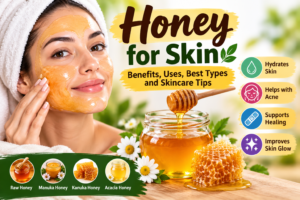
| Honey type | Key characteristics |
|---|---|
| Raw honey | Generally undergoes less processing than conventional honey, although quality varies. |
| Manuka honey | Produced in New Zealand and known for research into its antimicrobial properties. |
| Kanuka honey | Another New Zealand honey studied for potential skin-related applications. |
| Acacia honey | Often light in color and mild in flavor; its composition depends on the floral source. |
Raw and Manuka honey are popular choices for homemade skincare, but neither guarantees better cosmetic results. Evidence from medical-grade honey studies should not automatically be applied to ordinary retail products.
If you prefer a ready-made skincare product, look for a reputable formulation with clear ingredient labeling. Products containing honey may be easier to use consistently and may include other ingredients designed to support the skin barrier.
Who Should Avoid Using Honey on the Skin?
Honey is generally tolerated by many people, but it is not suitable for everyone.
People With Bee or Pollen Allergies
People with allergies to bee-related products or pollen may be at risk of a reaction. If you have a history of serious allergic reactions, seek medical advice before applying honey to your skin.
People With Sensitive Skin
Honey may cause irritation or redness in some individuals. Test a small amount on a limited area of skin first and observe it for 24 hours. A patch test cannot guarantee that a reaction will not occur later.
People With Active Skin Conditions
If you have severe acne, eczema, rosacea, or an unexplained rash, homemade honey treatments may irritate your skin or delay appropriate treatment. Speak with a healthcare professional if symptoms are persistent or worsening.
Never apply honey near the eyes or to a wound that requires medical treatment without professional guidance.
Honey for Skin: Common Mistakes to Avoid
To use honey more safely, avoid these common mistakes:
-
Using processed honey without checking the label: Products vary in composition, and not all have been studied for skincare benefits.
-
Leaving honey on for too long: Longer application does not necessarily produce better results.
-
Scrubbing the face aggressively: Sugar scrubs and harsh rubbing can damage the skin barrier.
-
Expecting immediate acne results: Honey is not a proven replacement for established acne treatments.
-
Skipping sunscreen: Honey does not provide adequate protection against ultraviolet radiation.
-
Ignoring irritation: Rinse immediately and stop using the product if you develop burning, swelling, itching, or a rash.
A simple, consistent routine is usually more useful than trying many home remedies at the same time.
Frequently Asked Questions
Does honey make your skin glow?
Honey may temporarily improve the appearance of dull skin by helping it retain moisture and feel smoother. However, results vary, and honey is not a guaranteed treatment for uneven skin tone or dark spots.
Can I apply honey to my face every day?
Daily use is not necessary. Start with occasional, short-contact applications and monitor your skin’s response. Stop if irritation develops.
Is raw honey better than regular honey for skin?
Raw honey generally undergoes less processing, but that does not mean it will always produce better skincare results. The composition and quality of honey vary, and evidence for many cosmetic uses remains limited.
Does honey remove acne scars?
There is insufficient evidence that ordinary honey reliably removes acne scars. Established treatments depend on whether the marks are flat and discolored or involve depressed or raised scars.
How long should I leave honey on my face?
For a simple homemade mask, approximately 10–15 minutes is a reasonable starting point. Rinse it off thoroughly and stop sooner if your skin becomes irritated.
Can honey lighten the skin naturally?
Honey is not a proven skin-lightening treatment. For dark spots or uneven pigmentation, sunscreen and evidence-based skincare ingredients may be more effective.
Conclusion
Honey for skin is a popular natural skincare option because of its moisturizing properties and potential antibacterial and anti-inflammatory effects. It may help soften dry skin, improve temporary hydration, and support certain wound-care applications when specially prepared medical-grade products are used.
Raw honey, Manuka honey, and other varieties are often discussed in skincare, but no type guarantees results for acne, wrinkles, or pigmentation. Homemade honey masks should be used cautiously, particularly if you have sensitive skin or allergies.
For healthier-looking skin, combine gentle cleansing, regular moisturizing, and daily sunscreen with treatments suited to your specific concerns. If you have persistent acne or an inflammatory skin condition, consult a dermatologist for evidence-based care.