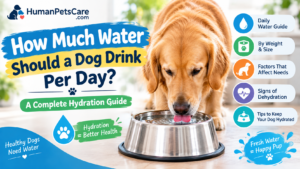

How Much Water Should a Dog Drink Per Day? A Complete Hydration Guide
Introduction
Water is essential for keeping your dog healthy, active, and comfortable. Just like humans, dogs need enough water every day to support digestion, regulate body temperature, transport nutrients, and remove waste from the body. Without adequate hydration, dogs can develop dehydration, which may become dangerous if left untreated.
But how much water should a dog drink per day? The answer depends on several factors, including body weight, age, activity level, diet, weather conditions, and overall health.
As a general guideline, many healthy dogs need approximately one fluid ounce of water per pound of body weight daily. However, this is only an estimate, and individual requirements can vary.
In this complete guide, we explain how much water dogs need, how to recognize dehydration, why some dogs drink more than others, and how to encourage your pet to stay hydrated.
How Much Water Should a Dog Drink Per Day?
Most healthy dogs need regular access to fresh, clean water throughout the day. A commonly used estimate is approximately 1 ounce of water per pound of body weight per day.
For example, a 20-pound dog may need around 20 fluid ounces of water daily, while a 60-pound dog may need approximately 60 fluid ounces.
However, this estimate is not a strict requirement for every dog. Dogs eating wet food receive some water through their meals, while dogs eating dry kibble generally obtain more of their daily water directly from their water bowls.
Dogs may also need additional fluids after exercise or during hot weather.
Daily Water Intake Chart for Dogs
Use the following chart as a starting point for estimating your dog’s daily water needs.
| Dog’s Weight | Estimated Daily Water | Approximate Cups |
|---|---|---|
| 5 pounds | 5 fluid ounces | ⅝ cup |
| 10 pounds | 10 fluid ounces | 1¼ cups |
| 20 pounds | 20 fluid ounces | 2½ cups |
| 30 pounds | 30 fluid ounces | 3¾ cups |
| 50 pounds | 50 fluid ounces | 6¼ cups |
| 75 pounds | 75 fluid ounces | 9⅜ cups |
| 100 pounds | 100 fluid ounces | 12½ cups |
These estimates use 8 fluid ounces per US cup. Actual water requirements may be higher or lower depending on your dog’s diet, environment, activity, and health.
For example, a 50-pound dog may need around 6¼ cups of water daily under ordinary conditions. If the dog exercises extensively or spends time in hot weather, its needs may increase.
If your veterinarian has recommended a specific fluid intake because of a medical condition, follow that individualized advice rather than relying on a general chart.
Youtube Video
Why Is Water Important for Dogs?
Water supports nearly every major bodily function. Even a relatively small loss of body fluids can affect how a dog feels and behaves.
Here are some of the most important benefits of proper hydration.
1. Regulates Body Temperature
Dogs primarily cool themselves through panting. This process helps release heat, but it also increases moisture loss.
During hot weather or exercise, your dog may need more opportunities to drink water and rest in a cool environment. Adequate hydration supports normal temperature regulation and helps reduce the risk of heat-related illness.
2. Supports Healthy Digestion
Water helps move food through the digestive system and supports normal bowel movements. When a dog does not consume enough fluids, dehydration can contribute to constipation and harder stools.
3. Protects Joints and Tissues
Water contributes to the normal function of joints and helps maintain the body’s tissues. Proper hydration supports comfortable movement and overall physical function.
4. Transports Nutrients
Blood contains a large amount of water. It helps transport oxygen, nutrients, and other substances throughout the body so that cells and organs can function properly.
5. Helps Remove Waste
The kidneys use water to filter waste products from the blood and produce urine. Adequate hydration supports normal kidney function and helps maintain the body’s fluid balance.
6. Maintains Normal Cellular Function
Water helps regulate electrolyte balance and supports normal cellular processes. Severe dehydration can interfere with circulation and the function of vital organs.
What Factors Affect a Dog’s Daily Water Needs?
Not every dog needs the same amount of water. Several factors can influence how much your pet should drink.
Body Weight and Size
Larger dogs generally consume more water in total than smaller dogs. However, body weight alone does not determine the exact amount a dog needs.
Monitor your dog’s normal drinking habits and discuss any significant changes with your veterinarian.
Age
Puppies are active and growing, and they need regular opportunities to drink. Because young puppies can become dehydrated relatively quickly, changes in their drinking or eating habits deserve prompt attention.
Senior dogs may also need closer monitoring, particularly if they have kidney disease, diabetes, mobility problems, or other medical conditions.
Diet
A dog’s food can significantly affect how much water it drinks.
Dry kibble contains relatively little moisture, so dogs eating dry food usually obtain more of their water from the bowl.
Wet dog food contains considerably more moisture, meaning dogs eating it may drink less from their water bowls.
This does not necessarily mean that a dog eating wet food is dehydrated. Total water intake includes moisture obtained from food as well as drinking water.
Exercise and Activity Level
Dogs that run, play, walk, or exercise frequently may need additional water to replace fluids lost through panting.
Offer fresh water during breaks and after activity. Avoid forcing a tired or overheated dog to exercise further.
Weather and Temperature
Hot and humid weather can increase a dog’s need for water, especially when combined with outdoor activity.
Provide shade, avoid strenuous exercise during the hottest part of the day, and make fresh water readily available.
Pregnancy and Nursing
Pregnant and nursing dogs may require additional fluids because their bodies have increased nutritional and hydration demands.
A veterinarian can help determine appropriate feeding and hydration practices during these stages.
Signs Your Dog May Not Be Drinking Enough Water
Dehydration occurs when the body loses more fluid than it takes in. It can develop because of inadequate drinking, vomiting, diarrhea, excessive panting, or certain illnesses.
Common warning signs include:
- Unusual tiredness or weakness
- Dry or sticky gums
- Thick saliva
- Reduced appetite
- Sunken-looking eyes
- Excessive panting without obvious exertion
- Reduced urine output
- Changes in normal behavior
These signs can have other causes, so they should not be used alone to diagnose dehydration.
How to Check Your Dog for Dehydration
You can observe your dog’s gums and general condition at home, but home checks cannot reliably rule out dehydration.
Check the gums: Healthy gums are generally moist. Dry or sticky gums may indicate a problem.
Observe your dog’s skin: In some dogs, skin that returns slowly after being gently lifted may suggest dehydration. However, this test is less reliable in older dogs and dogs with certain skin conditions.
Monitor urination: Notice whether your dog is urinating much less frequently than usual or producing unusually small amounts of urine.
If your dog has marked weakness, repeated vomiting, severe diarrhea, collapse, or other serious symptoms, seek urgent veterinary care rather than relying on home tests.
What Happens If a Dog Becomes Dehydrated?
Dehydration can range from mild fluid loss to a life-threatening emergency. When a dog loses too much water, normal circulation, electrolyte balance, and organ function may be affected.
Common causes include:
- Not drinking enough water
- Vomiting or diarrhea
- Excessive panting in hot weather
- Fever or illness
- Kidney-related problems
- Other conditions that increase fluid loss
If you suspect dehydration, contact your veterinarian for advice. A mildly affected dog that is alert and able to swallow may be offered small amounts of fresh water, but do not force water into the mouth.
Dogs with severe dehydration may require veterinary treatment, including carefully administered fluids and treatment for the underlying cause.
Why Is My Dog Drinking More Water Than Usual?
Occasionally drinking more water is normal. Your dog may be thirstier after exercise, during hot weather, or after eating a salty food.
However, persistent or unexplained increases in thirst can be a sign of an underlying medical condition.
Possible causes include:
Diabetes
Diabetes can cause increased thirst and urination. Some dogs also develop changes in appetite or body weight.
Kidney Disease
Kidney problems may affect the body’s ability to concentrate urine, causing a dog to drink and urinate more frequently.
Cushing’s Disease
This hormonal condition can cause excessive thirst, increased urination, changes in appetite, and other symptoms.
Liver Disease
Some liver conditions can affect normal body functions and may be associated with changes in drinking behavior.
Medication Effects
Certain medications can increase thirst or urination. If your dog’s drinking habits change after starting a medicine, discuss it with your veterinarian.
When to call a vet: Arrange a veterinary appointment if your dog consistently drinks much more than usual, even if it otherwise appears healthy. Seek prompt care if increased thirst occurs with vomiting, diarrhea, appetite loss, weakness, or significant changes in urination.
Do not restrict water to stop excessive urination unless your veterinarian specifically instructs you to do so.
Can Dogs Drink Too Much Water?
Yes. Although uncommon, drinking excessive amounts of water in a short period can cause water intoxication, also called water poisoning.
This can happen when dogs repeatedly swallow water while swimming, playing in water, or retrieving toys. Excessive water intake can dangerously dilute sodium in the blood and affect brain function.
Warning signs may include:
- Vomiting
- Unusual lethargy
- Loss of coordination
- Abdominal swelling
- Confusion
- Seizures
Suspected water intoxication is a veterinary emergency. Seek immediate care if your dog develops symptoms after swallowing large amounts of water.
The goal is to provide access to clean water and allow normal drinking, not to encourage excessive consumption.
How to Encourage Your Dog to Drink More Water
If your dog is healthy but does not seem interested in drinking enough, a few practical changes may help.
1. Provide Fresh Water Throughout the Day
Keep a clean bowl filled with fresh water where your dog can easily reach it. Refill it regularly, especially in warm weather.
2. Place Multiple Water Bowls Around the Home
Having bowls in several accessible locations may encourage drinking. This can be especially helpful in larger homes or for older dogs that have difficulty moving around.
3. Clean the Water Bowl Regularly
Wash the bowl frequently to remove dirt, saliva, and residue. Some dogs may be reluctant to drink from a dirty container.
4. Consider a Pet Water Fountain
Some dogs enjoy moving water. A pet fountain may encourage them to drink more frequently, although not every dog prefers one.
5. Add Water to Your Dog’s Food
Mixing a little water into dry kibble can increase the moisture content of a meal. You can also ask your veterinarian whether complete and balanced wet food would be suitable for your dog.
6. Offer Water During Walks
Carry clean drinking water when taking your dog on long walks or outdoor trips. Provide regular breaks, particularly when the weather is warm.
7. Make Water Appealing Safely
If your dog is reluctant to drink, ask your veterinarian whether a pet-safe flavoring or another hydration strategy is appropriate. Avoid salty broths, seasonings, and products containing ingredients toxic to dogs.
If your dog suddenly stops drinking, do not assume it is simply being fussy. A change in thirst may indicate pain, nausea, illness, or difficulty swallowing.
Frequently Asked Questions
Should I Leave Water Out for My Dog All Day?
Yes. Most healthy dogs should have continuous access to fresh, clean drinking water. Restricting water without veterinary advice can increase the risk of dehydration.
Can Dogs Drink Coconut Water?
Plain coconut water is not generally necessary for canine hydration. It can contain substantial potassium and natural sugars, and some products contain added ingredients. Fresh water is the preferred everyday drink. Ask your veterinarian before offering coconut water, especially if your dog has an existing medical condition.
Why Does My Dog Cough After Drinking Water?
Occasional coughing may occur if a dog drinks too quickly, but repeated coughing, gagging, or difficulty swallowing should not be ignored. These symptoms may indicate a swallowing problem or another medical issue. Contact your veterinarian if they persist or recur, and seek urgent care for breathing difficulties.
Do Puppies Need More Water Than Adult Dogs?
Puppies need regular access to fresh water because they are growing and may be more vulnerable to dehydration. Their exact requirements vary with age, size, food, activity, and health.
If a puppy refuses water, develops vomiting or diarrhea, or becomes unusually sleepy, seek veterinary advice promptly.
Should I Worry If My Dog Drinks Less Water After Eating Wet Food?
Not necessarily. Wet food contains more moisture than dry kibble, so a dog may drink less directly from its bowl while still receiving enough total water.
However, a sudden or persistent reduction in drinking, particularly alongside other symptoms, should be discussed with your veterinarian.
Conclusion
Knowing how much water a dog should drink per day can help you support your pet’s health and recognize potential problems early. A useful starting estimate is approximately one fluid ounce per pound of body weight daily, but actual needs depend on diet, activity, temperature, age, and overall health.
Provide fresh water throughout the day, keep bowls clean, and offer additional opportunities to drink after exercise or during hot weather.
Pay attention to sudden changes in thirst, urination, energy, or appetite. Excessive drinking may indicate an underlying illness, while inadequate intake can lead to dehydration. If your dog refuses water, shows signs of dehydration, or develops other concerning symptoms, contact your veterinarian promptly.
Consistent hydration habits, careful observation, and timely veterinary care can help your dog remain comfortable and healthy.