
12 Types of Small Bumps on the Skin That Are Not Acne: Causes and Treatment
Introduction
Not every small bump on your face is caused by acne. Sometimes, you may notice tiny white spots, rough patches, skin-colored growths, or small red bumps that look similar to pimples but behave differently. These skin changes can appear around the eyes, cheeks, forehead, nose, neck, and other parts of the body.
Understanding the causes of small bumps on skin that are not acne can help you choose the right skincare approach and recognize when professional treatment is necessary.
Many skin bumps are harmless and do not require treatment. However, some may result from infections, inflammation, or skin conditions that need medical attention. Certain persistent or changing growths can also be signs of skin cancer.
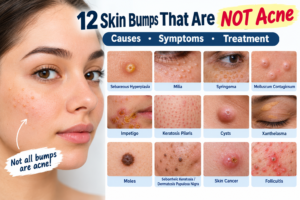
This guide explains 12 common types of non-acne skin bumps, their causes, available treatments, and the warning signs you should never ignore.
1. Sebaceous Hyperplasia
Sebaceous hyperplasia develops when oil-producing glands in the skin become enlarged. It commonly appears as small, soft, yellowish, or skin-colored bumps on the forehead, cheeks, and nose.
These bumps often have a tiny indentation in the center, which can help distinguish them from ordinary pimples. They are more common in middle-aged and older adults.
Causes: Age-related hormonal changes and individual skin characteristics can contribute to sebaceous hyperplasia.
Treatment: These bumps are generally harmless and may not need treatment. If they cause cosmetic concerns, a dermatologist may recommend laser treatment, electrosurgery, cryotherapy, or another appropriate procedure.
Because sebaceous hyperplasia can resemble certain skin cancers, have an uncertain or changing bump examined rather than attempting to remove it yourself.
2. Milia
Milia are tiny, firm, white or yellowish bumps that commonly appear around the eyes, cheeks, and nose. They develop when keratin, a protein found in the skin, becomes trapped beneath its surface.
Unlike acne whiteheads, milia are not typically caused by clogged pores filled with oil and bacteria. They usually do not become inflamed or painful.
Causes: Milia can develop naturally, after skin irritation or injury, or following the use of certain heavy skincare products. They are also common in newborns.
Treatment: Many cases disappear without treatment. Adults may benefit from suitable topical retinoids or gentle exfoliating products, depending on their skin type.
Avoid squeezing milia, especially around the eyes. A dermatologist can remove persistent bumps safely and reduce the risk of scarring or infection.
Youtube Video
3. Syringoma
Syringomas are small, noncancerous growths that develop from sweat ducts. They usually appear as clusters of firm, skin-colored, yellowish, or light-brown bumps, particularly beneath the eyes and on the upper cheeks.
These bumps are generally painless and may remain unchanged for years. They are more common in adults but can begin during adolescence.
Causes: The exact cause is not fully understood. Genetics and other biological factors may contribute.
Treatment: Syringomas usually do not require medical treatment. However, if their appearance bothers you, a dermatologist may discuss laser therapy, electrosurgery, or other procedures.
Complete removal can be challenging, and some treatments may cause pigmentation changes or scarring. Professional assessment is important before choosing a procedure.
4. Molluscum Contagiosum
Molluscum contagiosum is a viral skin infection that causes small, smooth, rounded bumps. They may be pink, white, brown, or similar to your natural skin color. A small central indentation is common.
The bumps can appear in groups and sometimes become itchy or irritated. This condition is particularly common in children but can also affect adults.
Causes: The infection spreads through direct skin contact, shared contaminated items, and sometimes sexual contact.
Treatment: Molluscum contagiosum often clears on its own, although this may take several months or longer. A healthcare professional may recommend treatments such as cantharidin, cryotherapy, or curettage when appropriate.
Avoid scratching the bumps or sharing towels. Seek medical advice if they multiply rapidly, become painful, or occur near the eyes or genital area.
5. Impetigo
Impetigo is a contagious bacterial skin infection that often begins with small red sores or fluid-filled blisters. These may break open and develop characteristic honey-colored crusts.
Although impetigo is most common in children, adults can develop it as well. It frequently affects the area around the nose and mouth, particularly when the skin has been scratched or damaged.
Causes: Bacteria, commonly Staphylococcus aureus or Streptococcus pyogenes, enter the skin and cause an infection.
Treatment: A healthcare professional may prescribe a topical antibiotic for limited infections or oral antibiotics for more widespread cases. The appropriate treatment depends on the severity and local medical guidance.
Keep the affected area clean, avoid touching the sores, wash your hands regularly, and do not share towels. Prompt treatment helps reduce the risk of spreading the infection to others.
6. Keratosis Pilaris
Keratosis pilaris is a common skin condition that produces tiny, rough bumps. Often called chicken skin, it typically affects the upper arms and thighs but can also appear on the cheeks.
The bumps may be red, pink, brown, purple, or close to your natural skin color. They usually feel dry or sandpaper-like rather than smooth.
Causes: Keratosis pilaris occurs when keratin builds up and blocks hair follicles. Genetics and a history of eczema may increase the likelihood of developing it.
Treatment: Although there is no permanent cure, regular moisturizing can improve skin texture. Products containing urea, lactic acid, or other gentle keratolytic ingredients may help reduce roughness.
Avoid aggressive scrubbing, which can increase irritation. Consistent, gentle skincare often produces better results than harsh exfoliation.
7. Skin Cysts
Skin cysts are rounded lumps that develop beneath the skin. They may feel soft or firm and can range from tiny bumps to larger growths. Some have a small opening in the center.
Cysts are usually harmless, but they can become swollen, red, tender, or painful if inflamed or infected.
Causes: Common types, such as epidermoid cysts, may develop when skin cells become trapped beneath the surface. Skin injuries and other factors can also contribute.
Treatment: Small, uncomplicated cysts may not need treatment. A dermatologist can assess persistent or bothersome cysts and may recommend surgical removal.
Do not squeeze, puncture, or cut a cyst at home. Doing so can cause infection, inflammation, and scarring. Seek medical advice if the lump becomes painful, rapidly enlarges, or starts draining.
8. Xanthelasma
Xanthelasma appears as flat, soft, yellowish patches around the eyelids. These growths consist of cholesterol-rich deposits in the skin and are usually painless.
They are more noticeable in some adults and may occur on the upper or lower eyelids.
Causes: Xanthelasma can be associated with elevated cholesterol levels, diabetes, and certain inherited lipid disorders. However, some people develop it despite having normal cholesterol levels.
Treatment: A healthcare professional may recommend blood tests to evaluate cholesterol and other relevant health factors. If removal is desired, options may include laser treatment, chemical peels, or surgical procedures.
The deposits can return after treatment. Addressing underlying cholesterol abnormalities is important for overall health, even if it does not eliminate the existing patches.
9. Moles
Moles are common skin growths formed by clusters of pigment-producing cells called melanocytes. They may be flat or raised and can appear brown, black, pink, red, or skin-colored.
Most moles are harmless. However, a new or changing mole can sometimes indicate melanoma, a serious form of skin cancer.
Causes: Genetics and ultraviolet radiation from sunlight or tanning beds may influence the development of moles.
Treatment: Stable, ordinary moles generally do not need removal. A dermatologist should evaluate moles that show concerning changes.
Remember the ABCDE warning signs:
- A — Asymmetry: One half looks different from the other.
- B — Border: The edges are irregular or poorly defined.
- C — Color: The mole contains multiple or uneven colors.
- D — Diameter: The spot is larger than approximately 6 mm, although melanomas can be smaller.
- E — Evolving: The mole changes in size, shape, color, or appearance.
A mole that bleeds, becomes persistently itchy, or develops a sore should also be checked. Never attempt to remove a mole yourself.
10. Seborrheic Keratosis and Dermatosis Papulosa Nigra
Seborrheic keratoses are common, noncancerous skin growths that often develop with age. They can look waxy, rough, or slightly raised and may appear tan, brown, or nearly black.
Dermatosis papulosa nigra is a related benign condition characterized by multiple small, dark bumps, especially on the cheeks and around the eyes. It is more common in people with darker skin tones.
Causes: Genetics and aging appear to play important roles, although the exact cause is not fully understood.
Treatment: These growths usually do not require treatment. A dermatologist can remove them if they become irritated or cause cosmetic concerns.
Because some growths resemble skin cancer, avoid assuming that a new or unusual spot is harmless without an appropriate examination.
11. Skin Cancer
Some skin cancers initially resemble small pimples, shiny bumps, sores, or scaly patches. Basal cell carcinoma is a common type that often develops on sun-exposed areas, including the face, ears, and neck.
It may appear as a pearly or skin-colored bump, a pink growth, a brown spot, or a sore that repeatedly crusts or bleeds. Other skin cancers can have different appearances, particularly across different skin tones.
Causes: Ultraviolet radiation from sunlight and tanning beds is a major risk factor for several types of skin cancer.
Treatment: Treatment depends on the type, size, location, and stage of the cancer. Options may include surgical removal, prescription treatments for selected cases, or other specialist procedures.
Seek prompt medical evaluation for a bump that grows, repeatedly bleeds, changes color, or does not heal. Early assessment can help identify skin cancer before it progresses.
12. Folliculitis
Folliculitis occurs when hair follicles become inflamed or infected. It commonly produces small red, pink, brown, or purple bumps, sometimes with pus-filled centers.
These bumps may resemble acne and can develop on the face, scalp, neck, chest, back, or other hair-bearing areas. Shaving-related folliculitis often appears around recently shaved skin.
Causes: Possible triggers include bacterial or fungal infections, friction, shaving irritation, blocked follicles, and certain skin conditions.
Treatment: Mild cases may improve when you stop shaving temporarily, avoid friction, and use gentle cleansing products. Some infections require prescription medication, depending on the cause.
Avoid squeezing the bumps or sharing razors. Consult a healthcare professional if the condition spreads, becomes increasingly painful, or fails to improve.
How to Tell the Difference Between Acne and Other Skin Bumps
Although acne and other skin conditions can look similar, several features may help you distinguish them.
Acne commonly includes:
- Whiteheads, blackheads, and inflamed pimples appearing together.
- Red or pus-filled bumps that may be tender.
- Breakouts affecting the forehead, cheeks, chin, chest, or back.
- Lesions that change over time and often improve with appropriate acne treatment.
Other skin bumps may:
- Remain unchanged for months or years.
- Appear as firm white cysts, waxy growths, or yellow patches.
- Form smooth bumps with a central indentation.
- Occur in clusters around the eyes or along hair follicles.
- Persist despite using ordinary acne products.
These clues are not enough to diagnose a skin condition with certainty. A dermatologist can examine the skin and recommend testing or treatment when necessary.
How to Care for Skin With Small Bumps
The best skincare routine depends on what is causing the bumps. Using too many active ingredients or attempting to remove growths at home can make the problem worse.
Follow these basic tips:
- Use a gentle cleanser: Wash your face without harsh scrubbing or abrasive brushes.
- Moisturize regularly: Choose a non-comedogenic moisturizer if you are prone to acne.
- Protect your skin from the sun: Apply broad-spectrum SPF 30 or higher sunscreen daily.
- Avoid picking or squeezing: This can cause inflammation, infection, and permanent scars.
- Introduce active ingredients carefully: Retinoids and exfoliating acids may help certain conditions but can irritate sensitive skin.
- Avoid unnecessary treatments: Do not use acne medication on every bump without understanding its likely cause.
- Monitor changes: Pay attention to new growths, unusual colors, bleeding, or persistent sores.
If the bumps continue despite gentle skincare, professional assessment is safer than repeatedly switching products.
When Should You See a Dermatologist?
Most small skin bumps are not dangerous, but certain changes deserve medical attention. Arrange an appointment if a bump:
- Does not disappear or improve after several weeks.
- Grows quickly or changes shape.
- Develops irregular borders or multiple colors.
- Bleeds repeatedly or forms a sore that does not heal.
- Becomes increasingly painful, swollen, or warm.
- Produces spreading redness, pus, or other signs of infection.
Seek urgent medical care if a skin infection is accompanied by fever, rapidly spreading redness, or severe pain.
Do not wait for every warning sign to appear before having a suspicious growth checked.
Frequently Asked Questions
1. What causes small bumps on the face that are not acne?
Small facial bumps may result from milia, sebaceous hyperplasia, syringomas, folliculitis, keratosis pilaris, cysts, or other skin conditions. The cause depends on the bump’s appearance, location, symptoms, and duration.
2. What are the tiny white bumps on my face?
Tiny white bumps may be milia, which form when keratin becomes trapped beneath the skin. They are common around the eyes and cheeks. Avoid squeezing them, as this can damage delicate skin.
3. Can stress cause small bumps on the skin?
Stress may worsen certain inflammatory skin conditions, including acne and eczema, in some people. However, many skin bumps have other causes, such as blocked hair follicles, cysts, or viral infections.
4. How can I get rid of small skin bumps naturally?
Gentle cleansing, moisturizing, sun protection, and avoiding skin irritation can support healthy skin. However, there is no single home remedy that treats every type of bump. Avoid applying irritating substances or trying to remove growths yourself.
5. Are small skin bumps a sign of cancer?
Most small skin bumps are benign, but some skin cancers can resemble pimples or ordinary growths. A bump that grows, changes color, bleeds, or fails to heal should be examined by a dermatologist.
6. Should I pop small bumps on my face?
No. Popping or squeezing bumps can cause infection, inflammation, pigmentation changes, and scarring. Some growths, such as milia and cysts, require different treatments from acne.
Conclusion
Small bumps on the skin are not always caused by acne. Conditions such as milia, syringoma, keratosis pilaris, folliculitis, cysts, and seborrheic keratosis can all produce bumps that look similar to pimples.
Identifying the underlying cause is the first step toward choosing appropriate treatment. Gentle skincare may help manage some conditions, while others require professional procedures or prescription medication.
Pay attention to persistent or changing skin growths. If a bump grows rapidly, changes color, bleeds, or does not heal, consult a dermatologist for an accurate diagnosis and appropriate care.
Medical disclaimer: This article is for educational purposes only and is not a substitute for professional medical advice, diagnosis, or treatment.