
Introduction
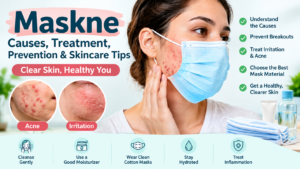
Face masks can help reduce exposure to certain airborne infections, but wearing them for extended periods may also affect your skin. Some people experience pimples, redness, dryness, itching, or irritation in areas covered by a mask. These symptoms are commonly known as maskne, a term used to describe acne and acne-like breakouts associated with mask use.
Maskne can develop when friction, sweat, moisture, and oil accumulate against the skin. People with acne-prone or sensitive skin may be particularly vulnerable, although anyone can experience mask-related irritation.
The good news is that a few practical changes to your skincare routine can help reduce discomfort and prevent new breakouts. In this guide, you’ll learn what causes maskne, how to treat different skin problems, which mask materials may feel gentler, and when to seek professional advice.
What Is Maskne?
Maskne is an informal term for breakouts that develop or worsen in areas covered by a face mask. These areas commonly include the chin, cheeks, jawline, and skin around the nose.
Maskne does not always involve ordinary acne. Some people develop clogged pores and pimples, while others experience contact dermatitis, chafing, or inflammation around hair follicles.
Understanding the type of skin problem you’re experiencing is important because different conditions may require different treatments.
Common symptoms of maskne include:
- Whiteheads and blackheads
- Red or inflamed pimples
- Tender bumps around the chin and jawline
- Dryness, flaking, or peeling
- Itching, burning, or redness
- Irritated skin around the nose and cheeks
If the affected area becomes increasingly painful, warm, swollen, or develops pus, a skin infection may be possible and should be evaluated by a healthcare professional.
What Causes Maskne?
Several factors can contribute to mask-related acne and irritation. Often, more than one factor is involved.
1. Friction and Skin Irritation
A face mask repeatedly rubs against the skin when you talk, breathe, walk, or adjust its position. This friction may weaken the skin’s protective barrier and cause redness, sensitivity, or small areas of irritation.
The bridge of the nose, cheeks, chin, and areas behind the ears are particularly susceptible to rubbing.
A poorly fitting mask can make this problem worse. Choosing a mask that fits securely without unnecessary pressure may help reduce friction.
2. Trapped Heat and Moisture
Warm, humid conditions can develop inside a mask as you breathe. Sweat and moisture may accumulate, particularly during exercise, outdoor activities, or long working hours.
Excess moisture and heat can aggravate existing acne and contribute to irritation. In some cases, they may also encourage inflammation around hair follicles.
Taking appropriate breaks from mask use when it is safe and permitted can help your skin recover.
Youtube Video
3. Blocked Pores and Excess Oil
Oil, dead skin cells, and sweat can accumulate in areas covered by a mask. When pores become blocked, whiteheads, blackheads, and inflammatory pimples may develop.
People with naturally oily skin may notice more breakouts, but dry and combination skin types can also experience maskne.
4. Sensitive Skin and Contact Dermatitis
Some people react to materials, dyes, elastic straps, fragrances, or residues from laundry products. This reaction may cause itching, redness, burning, or a rash rather than typical acne.
If your symptoms repeatedly appear after wearing a particular mask, consider whether its material or detergent could be contributing to the problem.
5. Existing Acne Conditions
If you already have acne, rosacea, eczema, or another inflammatory skin condition, prolonged mask use may aggravate your symptoms.
Maskne can also resemble folliculitis, which involves inflammation of hair follicles and may be associated with bacteria or yeast. Folliculitis can look similar to acne, so persistent or unusual bumps should be assessed by a dermatologist.
8 Tips to Prevent Maskne
Preventing maskne usually starts with gentle skincare, proper mask hygiene, and reducing unnecessary friction.
1. Cleanse Your Face Before Wearing a Mask
Wash your face with a gentle cleanser before putting on your mask, especially if you have been sweating or using skincare products.
Choose a cleanser suited to your skin type. Fragrance-free formulas are often helpful for sensitive skin.
Use lukewarm water rather than hot water, and avoid vigorous scrubbing. Excessive cleansing can strip natural oils from the skin and make irritation worse.
For many people, washing twice daily and after heavy sweating is sufficient.
2. Use a Lightweight Moisturizer
A suitable moisturizer helps maintain the skin barrier and reduce friction between your skin and the mask.
Look for products labeled non-comedogenic, meaning they are formulated to be less likely to clog pores. Ingredients such as ceramides, glycerin, and hyaluronic acid can help support hydration.
If you have oily skin, try a lightweight lotion or gel moisturizer. If your skin is dry, you may benefit from a richer cream.
Apply moisturizer before wearing your mask and allow it to absorb before putting the mask on.
3. Minimize Makeup Under the Mask
Heavy foundation and multiple layers of cosmetic products can contribute to buildup and may worsen breakouts for some people.
Consider skipping makeup on areas covered by your mask while your skin is irritated. If you choose to wear makeup, select products labeled non-comedogenic and remove them gently at the end of the day.
Avoid trying several new cosmetic products at once, as this can make it harder to identify the source of irritation.
4. Keep Reusable Masks Clean
Reusable masks can collect sweat, skin oils, saliva, and environmental debris. Regular washing helps maintain hygiene and reduces the buildup of irritants.
Wash fabric masks according to their care instructions and allow them to dry completely before reuse.
Keep a clean spare mask available if you need to change one during the day. Avoid sharing masks with other people.
5. Choose Gentle Laundry Products
Laundry detergent, fragrance, and fabric softener residues can irritate sensitive facial skin.
Use a fragrance-free detergent when washing reusable masks. Follow the manufacturer’s washing instructions and rinse thoroughly to remove detergent residue.
If a particular fabric repeatedly causes itching or redness, consider switching to a different suitable mask.
6. Follow Instructions for Disposable Masks
Disposable medical and respirator masks should be used according to the manufacturer’s instructions. Many are designed for single use and should not be washed or reused.
A damp, damaged, visibly dirty, or poorly fitting mask should be replaced when appropriate.
Never sacrifice the protective function of a mask simply to make it more comfortable for your skin.
7. Reduce Friction Around Your Ears
Elastic straps can rub against the skin behind your ears, leading to tenderness, redness, or small sores.
Choose a properly fitting mask with comfortable straps. Where appropriate, a compatible strap extender or headband attachment may reduce pressure on your ears.
Make sure any adjustment maintains a secure fit and does not interfere with the mask’s protective function.
8. Avoid Overusing Strong Skincare Products
Ingredients such as retinoids, benzoyl peroxide, and exfoliating acids can help treat certain types of acne, but they may also cause dryness and irritation.
Using too many active ingredients while your skin is already irritated can make maskne worse.
If you use acne treatments, introduce them gradually and follow product instructions. Consider reducing their frequency if your skin becomes dry or uncomfortable.
Do not automatically stop a prescribed treatment without consulting your healthcare professional, particularly if you use it for a diagnosed skin condition.
How to Treat Maskne at Home
If breakouts or irritation have already developed, focus on calming your skin and avoiding additional damage.
Treatment for Dryness and Peeling
Dryness, tightness, and flaking may indicate that your skin barrier has become irritated.
To help your skin recover:
- Wash with a mild, fragrance-free cleanser.
- Apply a moisturizer suitable for sensitive skin.
- Avoid exfoliating scrubs and harsh cleansing brushes.
- Temporarily reduce nonessential products that cause stinging.
- Apply a thin layer of plain petrolatum to small, dry, irritated areas if appropriate for your skin.
Petrolatum can help reduce water loss and protect damaged skin. However, some people with acne-prone skin may find heavy occlusive products uncomfortable when applied over large areas.
If peeling is severe, painful, or persistent, consult a healthcare professional.
Treatment for Redness and Swelling
Redness may result from friction, contact dermatitis, or another inflammatory condition.
A cool compress applied for several minutes can help soothe discomfort. Wrap a cold pack in a clean cloth and never place ice directly on your skin.
Avoid rubbing the affected area or applying multiple treatments at the same time.
Over-the-counter hydrocortisone may help certain inflammatory skin conditions, but it is not a routine treatment for acne. Facial use requires particular caution because corticosteroids can worsen acne, cause skin thinning, and aggravate some conditions, including rosacea or perioral dermatitis.
Ask a pharmacist or healthcare professional before using hydrocortisone on your face, particularly near your eyes or around your mouth. Do not apply it beneath a mask unless a healthcare professional has advised you to do so.
Seek medical advice if swelling is significant or symptoms continue to worsen.
Treatment for Chafing and Broken Skin
Repeated friction can sometimes produce cracks, abrasions, or small areas of broken skin.
To protect the affected area:
- Clean it gently with water and a mild cleanser.
- Avoid scrubbing or using alcohol-based products on the damaged skin.
- Apply a thin layer of plain petrolatum if suitable.
- Reduce unnecessary pressure and rubbing.
- Ask a healthcare professional about an appropriate dressing if the area remains exposed to friction.
Hydrocolloid dressings may be useful for selected superficial wounds or individual pimples, but they should not be used indiscriminately over infected or extensive skin damage.
If you notice spreading redness, increasing pain, warmth, or drainage, seek prompt medical assessment.
Treatment for Pimples and Acne Breakouts
If maskne resembles ordinary acne, a simple, consistent routine may help.
Start with a gentle cleanser and lightweight, non-comedogenic moisturizer. Avoid squeezing pimples, as this can increase inflammation and the risk of scarring.
Depending on your skin type and the nature of your acne, an acne treatment containing benzoyl peroxide or salicylic acid may be helpful. Start with one active ingredient at a low strength and use it according to its label.
These products can cause dryness, burning, or peeling. If you wear a mask for long periods, pay particular attention to irritation where the product and mask come into contact with your skin.
Glycolic acid and sulfur products may help selected skin concerns, but they are not necessary for everyone. Combining several exfoliating or acne treatments can make sensitive skin worse.
If your acne is painful, deep, widespread, or leaving scars, consult a dermatologist rather than relying solely on home remedies.
Which Face Mask Material Is Best for Sensitive Skin?
The best mask depends on the purpose for which it is being worn, its fit, and your skin’s sensitivity.
For reusable fabric masks, a soft, tightly woven cotton material may feel more comfortable for some people than rough or irritating fabrics. However, fabric type alone does not determine how effectively a mask protects you from airborne particles.
Consider the following factors when choosing a mask:
- Comfort: Select a material that does not scratch or rub excessively.
- Fit: The mask should fit securely without unnecessary pressure.
- Breathability: Choose a mask appropriate for your activity and intended level of protection.
- Cleanliness: Reusable masks should be washed regularly and dried completely.
- Skin sensitivity: Avoid materials or products that repeatedly trigger itching or redness.
Rough fabrics such as coarse canvas or denim may irritate facial skin. Scarves and loose bandanas should not be assumed to provide the same protection as a properly designed medical mask or respirator.
If you need a medical mask or respirator for work, healthcare, or infection prevention, prioritize the recommended level of protection and fit. Do not replace necessary protective equipment with a less protective fabric solely to address acne.
A Simple Daily Skincare Routine for Maskne
A consistent routine can help keep your skin comfortable without exposing it to too many products.
Morning Routine
- Cleanse with a gentle face wash.
- Apply a lightweight, non-comedogenic moisturizer.
- Apply broad-spectrum SPF 30 or higher sunscreen to exposed skin.
- Allow skincare products to absorb before wearing your mask.
- Put on a clean, properly fitting mask.
Evening Routine
- Remove your mask and wash your hands.
- Cleanse your face gently to remove sweat, oil, sunscreen, and makeup.
- Apply moisturizer to support the skin barrier.
- Use an acne treatment only if needed and tolerated.
- Avoid scrubs, picking, and unnecessary product layering.
If your skin is very irritated, temporarily simplify your routine to cleansing and moisturizing while you seek advice about persistent symptoms.
Common Skincare Mistakes That Can Make Maskne Worse
Some habits may prolong breakouts or increase irritation.
Scrubbing the skin too hard: Rough cleansing can damage the skin barrier and worsen redness.
Using several acne products together: Combining retinoids, exfoliating acids, and benzoyl peroxide without a suitable plan may cause excessive dryness.
Applying thick products immediately before wearing a mask: Some heavy products may feel uncomfortable or contribute to buildup in acne-prone skin.
Wearing a damp or dirty mask: Moisture, residue, and friction may aggravate skin problems.
Picking pimples: Squeezing lesions can increase inflammation and the risk of scars or dark marks.
Assuming every rash is acne: Contact dermatitis, rosacea, and folliculitis can resemble maskne but may require different treatment.
When Should You See a Dermatologist?
Mild mask-related irritation often improves when friction is reduced and a gentle skincare routine is introduced. However, professional advice is important if your symptoms do not improve.
Consider seeing a dermatologist if:
- Acne persists despite several weeks of appropriate skincare.
- You develop painful or deep pimples.
- Breakouts leave scars or persistent dark marks.
- Your skin repeatedly burns, itches, or peels.
- You develop a rash that spreads beyond the mask-covered area.
- You suspect folliculitis, an allergic reaction, or another skin condition.
Seek prompt medical care if redness spreads rapidly, the skin becomes increasingly warm or painful, or you develop pus, fever, or significant swelling. These symptoms may indicate an infection or another condition requiring treatment.
Frequently Asked Questions About Maskne
1. What is the fastest way to get rid of maskne?
Start by reducing friction, cleansing gently, using a suitable moisturizer, and keeping masks clean. Appropriate acne treatments may help, but results take time. Severe or persistent breakouts may need professional treatment.
2. Can wearing a face mask cause acne?
Yes. Friction, trapped heat and moisture, and the accumulation of oil and dead skin cells may contribute to breakouts. Masks can also aggravate existing acne or cause skin irritation that resembles acne.
3. Is moisturizer good for maskne?
Yes, a suitable moisturizer can help protect the skin barrier and reduce dryness. People with acne-prone skin may prefer lightweight, non-comedogenic formulas.
4. Should I stop using benzoyl peroxide if I wear a mask?
Not necessarily. Benzoyl peroxide can help treat acne, but it may cause dryness and irritation. Use it according to the product instructions and consider reducing its frequency if irritation develops. Ask a healthcare professional if symptoms persist.
5. Can maskne cause dark spots?
Inflamed pimples and skin irritation can leave post-inflammatory hyperpigmentation, particularly in people prone to dark marks. Avoid picking lesions, manage inflammation, and use sunscreen on exposed skin to help reduce the risk of persistent discoloration.
6. Are cotton masks better for acne-prone skin?
Soft cotton may feel gentler for some people, particularly when it is clean and properly fitted. However, the appropriate mask depends on the required level of protection. Choose suitable protective equipment rather than relying on fabric type alone.
7. How long does maskne take to improve?
Mild irritation may begin to settle within days after the trigger is reduced. Acne often takes several weeks to improve with consistent care. Persistent, painful, or worsening symptoms should be assessed by a healthcare professional.
8. Should I use hydrocortisone for maskne?
Hydrocortisone is not a standard treatment for acne and can worsen some facial skin conditions. Ask a healthcare professional before using it on your face, especially under a mask or near your eyes.
Conclusion
Maskne can develop when friction, trapped moisture, clogged pores, and sensitive skin interact during prolonged mask use. Although these problems can be uncomfortable, a gentle and consistent skincare routine may help reduce breakouts and irritation.
Cleanse your face gently, choose a suitable moisturizer, wash reusable masks regularly, and avoid overusing harsh skincare products. Make sure your mask fits correctly and continues to provide the protection you need.
If your skin becomes severely irritated or acne does not improve, a dermatologist can help identify the cause and recommend an appropriate treatment.
Disclaimer: This article is for educational purposes only and does not replace personalized medical advice, diagnosis, or treatment.