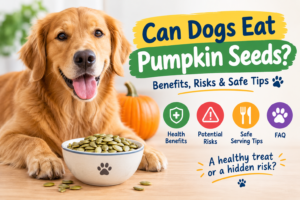

Can Dogs Eat Pumpkin Seeds? Benefits, Risks, and Safe Feeding Tips
Key Takeaways
- Pumpkin seeds can be an occasional treat for dogs when prepared correctly and served in small amounts.
- They contain fiber, protein, healthy fats, and minerals that support general health.
- Eating too many pumpkin seeds may cause digestive problems, including diarrhea and stomach discomfort.
- Whole seeds can pose a choking risk, particularly for small dogs.
- Plain, unsalted, shelled pumpkin seeds are generally the safest option.
- Pumpkin seeds should never replace your dog’s balanced daily diet or veterinarian-recommended parasite treatment.
Introduction
Pumpkin seeds are a popular snack for people because they contain several important nutrients. However, if you have a dog at home, you may wonder whether sharing a few seeds with your furry companion is safe.
The good news is that dogs can eat pumpkin seeds in moderation, provided the seeds are prepared properly and served without salt, spices, or other potentially harmful ingredients. These seeds contain nutrients that can contribute to your dog’s overall well-being.
However, pumpkin seeds are not suitable for every dog in the same form or quantity. Their size, texture, fat content, and fiber content can create problems when they are served incorrectly or in excessive amounts.
In this guide, you will learn about the potential benefits of pumpkin seeds for dogs, possible side effects, appropriate serving methods, and important precautions to follow before adding them to your pet’s diet.
Are Pumpkin Seeds Good for Dogs?
Yes, plain pumpkin seeds can be a nutritious occasional treat for many healthy dogs. They contain protein, dietary fiber, unsaturated fats, and minerals such as magnesium, zinc, and iron.
These nutrients contribute to normal body functions, including muscle activity, skin maintenance, and general metabolic health. Nevertheless, pumpkin seeds should be considered a supplementary food rather than a treatment for a specific health problem.
Dogs that eat a complete and balanced commercial diet usually receive the nutrients they need. Adding pumpkin seeds is optional and is not necessary for every dog.
Before offering them, consider your dog’s size, age, health conditions, and usual diet. If your dog has a sensitive stomach, pancreatitis, food allergies, or another medical condition requiring dietary restrictions, ask your veterinarian whether pumpkin seeds are appropriate.
Youtube Video
Health Benefits of Pumpkin Seeds for Dogs
Pumpkin seeds offer several nutritional benefits when included in a dog’s diet in small quantities. Their effects depend on the amount eaten and the dog’s overall nutritional needs.
1. They Provide Essential Minerals
Pumpkin seeds contain minerals such as magnesium, zinc, and iron. These nutrients play different roles in maintaining normal body functions.
Zinc supports healthy skin and coat maintenance, while magnesium contributes to muscle and nerve function. Iron is important for producing hemoglobin, which helps transport oxygen throughout the body.
Although pumpkin seeds contain these minerals, they should not be used as a substitute for a balanced dog food or a veterinarian-prescribed supplement.
2. They Contain Dietary Fiber
Dietary fiber can support normal digestive function and help maintain regular bowel movements.
However, the amount of fiber a dog needs depends on its diet and individual digestive health. Too much fiber from treats may lead to loose stools, gas, or abdominal discomfort.
Pumpkin seeds should not be confused with plain pumpkin flesh, which is often used in small amounts as a source of fiber for dogs. Both foods have different nutritional profiles.
3. They Provide Healthy Fats
Pumpkin seeds contain unsaturated fats that provide energy and contribute to normal cellular functions.
Dietary fats are an important part of a dog’s nutrition, but pumpkin seeds are relatively calorie-dense. Giving too many may add unnecessary calories to your pet’s daily intake.
Dogs with pancreatitis or a history of fat-sensitive digestive problems may need a carefully controlled diet. Consult your veterinarian before introducing high-fat treats to these dogs.
4. They Contain Antioxidants
Pumpkin seeds contain compounds with antioxidant activity. Antioxidants help protect cells from oxidative damage as part of the body’s normal biological processes.
However, it is important not to overstate their benefits. Eating pumpkin seeds has not been established as a way to prevent or treat cancer in dogs.
The best approach is to provide a balanced diet, regular veterinary examinations, exercise, and appropriate preventive care.
5. They Add Variety to Your Dog’s Treats
Some dogs enjoy the taste and texture of pumpkin seeds. When prepared safely, a small quantity can provide variety alongside their usual treats.
Nevertheless, dogs do not need a wide variety of snacks to remain healthy. If your dog does not enjoy pumpkin seeds or experiences digestive discomfort after eating them, there is no reason to continue offering them.
Can Pumpkin Seeds Be Harmful to Dogs?
Pumpkin seeds are not generally considered toxic to dogs when plain and properly prepared. However, they can still cause problems if fed incorrectly.
Digestive Upset
Pumpkin seeds contain fiber and fat, both of which can affect digestion when consumed in large quantities.
Possible symptoms include:
- Diarrhea or loose stools
- Gas and bloating
- Vomiting
- Reduced appetite
- Abdominal discomfort
If you notice these symptoms after feeding pumpkin seeds, stop offering them and monitor your dog. Contact a veterinarian if symptoms are severe, persistent, or accompanied by unusual tiredness, repeated vomiting, or signs of pain.
Choking Risk
Whole pumpkin seeds may be difficult for some dogs to chew and swallow safely. Small breeds, puppies, and dogs that gulp their food may be at greater risk.
To reduce this risk, remove the shells and grind the seeds into a fine powder or crush them thoroughly. Mix a small amount into your dog’s regular food rather than offering whole seeds.
Even crushed seeds should be introduced gradually.
Intestinal Blockage
Although uncommon, improperly chewed food and large quantities of indigestible material may contribute to digestive complications.
Seed shells are harder to digest than the inner kernels. For this reason, shelled pumpkin seeds are preferable.
Seek veterinary care immediately if your dog develops repeated vomiting, a swollen or painful abdomen, severe lethargy, or difficulty passing stool after eating seeds.
Excess Calories and Fat
Pumpkin seeds contain concentrated energy. Large servings can contribute to unwanted weight gain and may cause digestive problems in dogs sensitive to dietary fat.
Treats, including pumpkin seeds, should generally account for no more than 10% of a dog’s daily calorie intake. The remaining calories should come from complete and balanced food.
How Many Pumpkin Seeds Can a Dog Eat?
There is no single serving size that is appropriate for every dog. A suitable amount depends on the dog’s body weight, health, normal diet, and tolerance of new foods.
If your dog has never eaten pumpkin seeds before, start with a very small quantity. For a healthy dog, one or two finely crushed seeds can be a cautious introduction.
Observe your dog for digestive changes before considering another small serving on a different occasion.
Use the following as a general starting guide rather than a prescribed daily serving:
- Small dogs: Begin with a tiny amount of crushed seed, and consider whether the treat is necessary at all.
- Medium-sized dogs: Introduce a small pinch of crushed seeds and monitor their response.
- Large dogs: A slightly larger portion may be manageable, but excessive amounts can still cause stomach upset.
Do not assume that a large dog can safely eat a full handful. Pumpkin seeds are calorie-dense, and individual tolerance varies.
If you want to feed pumpkin seeds regularly, ask your veterinarian to help determine an appropriate portion based on your dog’s calorie requirements.
How to Prepare Pumpkin Seeds for Dogs Safely
Proper preparation helps reduce unnecessary risks and makes pumpkin seeds easier to incorporate into your dog’s food.
1. Choose Plain Pumpkin Seeds
Use pumpkin seeds without salt, sugar, spices, garlic, onion powder, or flavoring. Seasoned human snacks may contain ingredients that are unsuitable or harmful to dogs.
2. Remove the Outer Shells
Shelled pumpkin seeds, also called pumpkin kernels or pepitas, are generally a better choice than whole seeds with their hard outer coverings.
Removing the shells reduces the amount of tough material your dog needs to digest.
3. Crush or Grind the Seeds
Grind the kernels into a fine powder or crush them thoroughly before feeding. This is especially important for small dogs and pets that tend to swallow food quickly.
4. Avoid Added Oil and Salt
If you prefer roasted pumpkin seeds, prepare them without salt, oil, butter, or seasonings. Allow them to cool completely before serving.
Plain, unsalted seeds are preferable to heavily processed snack products.
5. Mix a Small Amount With Regular Food
Sprinkle a little crushed pumpkin seed over your dog’s normal meal. This can make portion control easier and help you introduce the ingredient gradually.
Do not introduce several new foods at once. If your dog develops an upset stomach, introducing one new ingredient at a time makes it easier to identify the possible cause.
Can Pumpkin Seeds Help Dogs Get Rid of Worms?
Pumpkin seeds are sometimes promoted as a natural remedy for intestinal worms because they contain compounds that have been investigated for possible antiparasitic effects.
However, there is not enough reliable clinical evidence to recommend pumpkin seeds as a proven deworming treatment for dogs.
Intestinal parasites require an accurate diagnosis and appropriate treatment. The correct medication depends on the type of parasite, your dog’s age, health, and other factors.
Never replace veterinarian-recommended deworming medication with pumpkin seeds. If you suspect your dog has worms, contact your veterinarian about stool testing and suitable treatment.
Do Pumpkin Seeds Help Dogs Poop?
Pumpkin seeds contain dietary fiber, which plays a role in digestive health. However, they are not a guaranteed remedy for constipation.
Plain pumpkin flesh is a different food and is commonly discussed as a source of fiber for dogs. Its suitability and serving size still depend on the individual animal.
If your dog is straining to pass stool, has not passed stool normally, or seems uncomfortable, do not rely on seeds as a treatment. Constipation can have several causes, and some require veterinary attention.
Seek advice promptly if your dog repeatedly strains without producing stool, vomits, or develops abdominal pain.
Can Pumpkin Seeds Make a Dog Sick?
Yes. Although plain pumpkin seeds are generally safe in small amounts, some dogs may develop digestive upset after eating them.
The risk may be higher when a dog eats too many seeds, consumes the shells, or has an underlying digestive condition.
Seasoned pumpkin seeds can present additional risks because of their added ingredients. Always check the label if you are using a packaged product.
If your dog accidentally eats a large quantity, contact your veterinarian for advice, especially if the seeds were heavily salted, seasoned, or consumed with their shells. Do not induce vomiting unless a veterinary professional specifically instructs you to do so.
Which Parts of a Pumpkin Are Safe for Dogs?
Plain, cooked pumpkin flesh is generally safe for many dogs when served in moderation. Plain pumpkin puree can also be an occasional addition to a dog’s meal, provided it does not contain added sugar, spices, or other unsuitable ingredients.
Pumpkin seeds require more preparation because of their texture and calorie content.
Avoid allowing your dog to chew on pumpkin stems, hard pieces of rind, or decorative pumpkins that may be moldy or contaminated. These materials can cause choking, digestive irritation, or other problems.
If your dog eats an unfamiliar part of a pumpkin and develops symptoms, contact your veterinarian.
Frequently Asked Questions
Can dogs eat raw pumpkin seeds?
Dogs may tolerate small amounts of plain raw pumpkin kernels, but the seeds should be shelled and crushed or ground to reduce choking risks. Roasting without salt, oil, or seasonings is another option. Introduce any new food gradually.
Are roasted pumpkin seeds safe for dogs?
Yes, plain roasted pumpkin seeds can be suitable for many healthy dogs when the shells are removed and the seeds are crushed. Avoid salted, buttered, spicy, or flavored varieties.
Can puppies eat pumpkin seeds?
Puppies have different nutritional needs from adult dogs, and whole seeds can be a choking hazard. It is generally best to avoid offering whole pumpkin seeds to puppies. Ask your veterinarian before adding them to a puppy’s diet.
Can dogs eat pumpkin seeds every day?
Daily feeding is not necessary. If your veterinarian agrees that pumpkin seeds are suitable, keep portions small and include their calories in your dog’s daily treat allowance. A complete and balanced diet should remain the priority.
Are pumpkin seeds better than pumpkin puree for dogs?
Neither option is automatically better for every dog. Pumpkin seeds contain more concentrated fats and calories, while plain pumpkin flesh provides a different nutritional profile. The best choice depends on your dog’s dietary needs and the reason you want to introduce pumpkin.
What should I do if my dog eats too many pumpkin seeds?
Remove any remaining seeds and monitor your dog for vomiting, diarrhea, abdominal discomfort, or changes in appetite. Contact your veterinarian if your dog ate a large amount, swallowed many shells, or develops concerning symptoms.
Final Thoughts
Pumpkin seeds can be an occasional treat for dogs when they are plain, unsalted, shelled, and served in small quantities. They contain protein, fiber, healthy fats, and minerals that contribute to normal nutrition.
However, too many seeds can cause digestive upset, add unnecessary calories, or create choking risks when served whole. Introduce them gradually, prepare them carefully, and pay attention to your dog’s individual response.
Remember that pumpkin seeds are not a substitute for balanced dog food, veterinary care, or proven parasite treatments. If your dog has an underlying health condition or you are unsure about an appropriate serving size, consult your veterinarian before adding pumpkin seeds to its diet.