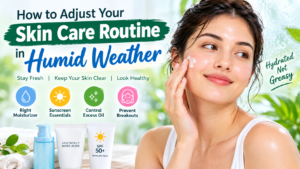

How to Adjust Your Skin Care Routine in Humid Weather: 11 Expert Tips
Humid weather can make your skin feel oily, sticky, and uncomfortable. High temperatures, sweat, and excess oil may contribute to clogged pores, breakouts, and skin irritation. If your usual skincare products suddenly feel too heavy, it may be time to adjust your daily routine.
The good news is that you do not need to replace all your skincare products. Choosing a lightweight moisturizer, using a gentle cleanser, applying sunscreen, and avoiding excessive exfoliation can help maintain healthy-looking skin in humid conditions.
In this guide, you will learn how to adjust your skincare routine in humid weather, which ingredients to choose, and how to care for oily, dry, sensitive, and acne-prone skin.
Why Does Humid Weather Affect Your Skin?
Humidity describes the amount of moisture in the air. When humidity is high, sweat may evaporate more slowly, leaving your skin feeling damp and sticky.
Several factors can affect your skin during humid weather:
- Excess oil: Your skin may feel greasier in hot conditions.
- Sweat buildup: Sweat mixed with skincare products can contribute to discomfort and clogged pores.
- Acne breakouts: Heat, friction, and certain heavy products may aggravate acne-prone skin.
- Skin irritation: Sweat and rubbing can cause redness and itching.
- Heavy product buildup: Thick creams and makeup may feel uncomfortable in humid conditions.
Humidity does not automatically cause acne. Your skin type, personal sensitivity, hygiene habits, and product choices also influence how your skin responds.
Youtube Video
1. Use a Gentle Facial Cleanser
Cleansing helps remove sweat, excess oil, sunscreen, makeup, and dirt from your skin.
For oily and combination skin, a gentle gel cleanser or mild foaming cleanser may be a good choice. If you have dry or sensitive skin, consider a fragrance-free cream or lotion cleanser.
How to Cleanse Your Face
- Wash your face in the morning and before bed.
- Cleanse after heavy sweating or exercise when necessary.
- Use lukewarm water instead of hot water.
- Massage the cleanser gently without scrubbing.
- Pat your face dry with a clean towel.
Avoid washing your face repeatedly throughout the day. Excessive cleansing can irritate your skin and cause dryness.
2. Choose a Lightweight Moisturizer
A heavy moisturizer may feel sticky when combined with sweat and natural skin oils. Switching to a lighter formula can make your skincare routine more comfortable.
Look for gel moisturizers, gel-creams, or lightweight lotions. Useful ingredients include glycerin, hyaluronic acid, and ceramides, which help support skin hydration and the skin barrier.
Choose a moisturizer according to your skin type:
- Oily skin: Lightweight gel or oil-free lotion.
- Dry skin: Hydrating lotion or light cream.
- Combination skin: Lightweight gel-cream.
- Sensitive skin: Fragrance-free moisturizer with gentle ingredients.
Do not skip moisturizer simply because your face feels oily. Instead, choose a formula that hydrates without feeling too heavy.
3. Never Skip Sunscreen
Sunscreen is essential throughout the year, including humid and cloudy days. Ultraviolet radiation can contribute to sunburn, premature skin aging, and skin cancer.
Choose a broad-spectrum sunscreen with SPF 30 or higher. Lightweight fluid, lotion, and gel formulas may feel more comfortable on oily skin.
Sunscreen Tips for Humid Weather
- Apply sunscreen as the last step of your morning skincare routine before makeup.
- Cover all exposed skin adequately.
- Reapply approximately every two hours while outdoors.
- Reapply after swimming, heavy sweating, or towel drying according to the label.
- Wear a hat and seek shade when possible.
If sunscreen makes your face feel greasy, try a different formula rather than skipping sun protection. Water-resistant sunscreen may be helpful during exercise, but no sunscreen is completely waterproof.
4. Exfoliate Without Overdoing It
Exfoliation helps remove dead skin cells and may improve rough texture. However, excessive exfoliation can damage the skin barrier and cause redness, dryness, and irritation.
Some common exfoliating ingredients include:
- Salicylic acid: Helps unclog pores and may benefit oily, acne-prone skin.
- Glycolic acid: Helps exfoliate the skin’s surface.
- Lactic acid: Helps improve rough texture and attracts moisture.
Start with one exfoliating product and follow its instructions. Depending on the product and your skin’s tolerance, once or twice a week may be a reasonable starting point.
Avoid combining multiple exfoliants with retinol or other irritating treatments unless advised by a qualified professional.
5. Adjust Your Routine for Oily and Acne-Prone Skin
Heat, sweat, friction, and certain skincare products can aggravate acne in some individuals. If your skin becomes oilier in humid weather, focus on gentle cleansing and lightweight hydration.
Try these habits:
- Use a gentle cleanser twice daily.
- Choose non-comedogenic skincare products.
- Apply a lightweight moisturizer.
- Avoid products that consistently trigger breakouts.
- Clean makeup brushes regularly.
- Avoid picking or squeezing pimples.
Salicylic acid and benzoyl peroxide can help certain types of acne, but both may cause irritation. Introduce acne treatments gradually and follow the product instructions.
If your acne is painful, leaves scars, or does not improve, consult a dermatologist for personalized treatment.
6. Follow a Simple Morning Skincare Routine
You do not need many products to maintain healthy-looking skin in humid weather. A simple routine may be more comfortable and easier to follow consistently.
Your Morning Routine
Step 1: Cleanser
Wash away overnight oil and sweat using a gentle cleanser suited to your skin type.
Step 2: Moisturizer
Apply a lightweight moisturizer to help maintain hydration.
Step 3: Sunscreen
Finish with broad-spectrum SPF 30 or higher. Allow it to settle before applying makeup.
Avoid layering several unnecessary products. Add a serum or treatment only when it serves a specific skincare purpose.
7. Improve Your Nighttime Skincare Routine
Your nighttime routine helps remove sunscreen, makeup, sweat, and dirt accumulated throughout the day.
Start by removing makeup and sunscreen with a suitable makeup remover or cleansing balm if needed. Follow with a gentle facial cleanser.
Next, apply any treatment products you already tolerate. Finish with a moisturizer that keeps your skin comfortable overnight.
Can You Use Retinol in Humid Weather?
Yes, many people can continue using retinol in humid weather if their skin tolerates it. Retinol may help improve certain signs of skin aging and acne, depending on the formulation.
Introduce it gradually and avoid combining too many irritating products. If you experience persistent redness, burning, or peeling, reduce use and seek professional advice.
Topical retinoids should generally be avoided during pregnancy unless specifically advised otherwise by a qualified clinician.
8. Select Comfortable Makeup Products
Heavy makeup can feel uncomfortable when sweat and oil accumulate on the skin. Lightweight foundation, tinted moisturizer, or breathable makeup may be more comfortable alternatives.
Follow these simple tips:
- Apply thin layers instead of heavy coverage.
- Choose non-comedogenic products if you are acne-prone.
- Use blotting papers to absorb excess oil.
- Clean makeup brushes and sponges regularly.
- Remove makeup before going to bed.
If you use face powder, blot away excess sweat first to avoid an uneven finish.
9. Take Care of Your Body Skin
Humid weather can also affect your neck, chest, back, underarms, and skin folds.
Shower after heavy sweating or exercise, change out of damp clothes, and wear breathable fabrics when possible.
If you experience body breakouts, use gentle cleansing products and avoid harsh scrubbing.
Keep skin folds clean and dry without using irritating soaps or fragrances. Persistent itching, spreading redness, or painful bumps may indicate a condition that requires medical assessment.
10. Avoid Common Humid-Weather Skincare Mistakes
Some skincare habits may make your skin more uncomfortable.
Skipping Moisturizer
Oily skin still needs hydration. Choose a lighter formula rather than skipping moisturizer entirely.
Overwashing Your Face
Frequent washing can irritate your skin. Cleanse gently and wash after heavy sweating when necessary.
Using Too Many Active Ingredients
Combining several acids, retinol, and acne treatments can increase irritation. Introduce new products one at a time.
Using Harsh Home Remedies
Lemon juice, abrasive scrubs, and undiluted essential oils can irritate the skin. Avoid using them as facial treatments.
Skipping Sunscreen
Do not sacrifice sun protection because your sunscreen feels greasy. Find a lightweight formula that suits your skin.
Treating Every Rash as Acne
Heat rash, contact dermatitis, and folliculitis can resemble acne. If a rash persists or worsens, seek professional advice instead of repeatedly changing products.
11. Best Humid-Weather Skincare Routine for Each Skin Type
| Skin type | Recommended skincare |
|---|---|
| Oily skin | Gentle gel cleanser, lightweight moisturizer, non-comedogenic sunscreen |
| Dry skin | Mild cleanser, hydrating cream or lotion, sunscreen |
| Combination skin | Lightweight moisturizer with extra hydration on dry areas |
| Sensitive skin | Fragrance-free products and fewer active ingredients |
| Acne-prone skin | Gentle cleanser, suitable acne treatment, moisturizer, sunscreen |
Your skincare needs may change as temperatures and humidity levels change. Introduce one new product at a time to identify what works best for your skin.
Frequently Asked Questions
Should I moisturize my face in humid weather?
Yes. Humidity does not replace the need for moisturizer. Choose a lightweight formula that suits your skin type.
Is gel moisturizer better than cream in humid weather?
Gel moisturizers may feel lighter and more comfortable for oily skin. Dry skin may still need a lotion or cream for sufficient hydration.
How often should I wash my face in humid weather?
For most people, morning and evening cleansing is sufficient. Cleanse after heavy sweating when necessary, but avoid excessive washing.
Can humid weather cause acne?
Humidity alone does not directly cause acne. However, heat, sweat, friction, and certain products can contribute to breakouts in susceptible individuals.
Which sunscreen is best for humid weather?
Choose broad-spectrum SPF 30 or higher that feels comfortable on your skin. Lightweight, water-resistant formulas may be useful for outdoor activities.
Should I stop using retinol during summer?
Not necessarily. You can generally continue using retinol if your skin tolerates it. Reduce use if irritation develops and maintain daily sun protection.
Conclusion
Adjusting your skincare routine in humid weather does not need to be complicated. Focus on gentle cleansing, lightweight hydration, consistent sunscreen use, and careful exfoliation.
Choose products based on your skin type rather than following every seasonal trend. Lightweight gels may suit oily skin, while dry and sensitive skin may require more nourishing formulas.
With a simple, consistent routine, you can help maintain comfortable, healthy-looking skin throughout humid weather.