
Introduction
Taking care of your dog’s nails is an important part of maintaining their overall health, comfort, and mobility. Long nails can make walking uncomfortable, affect your dog’s posture, and sometimes cause painful injuries. Although professional grooming services are available, many pet owners can safely perform basic dog nail care at home with the right tools, preparation, and techniques.
In addition to saving time and money, learning how to cut your dog’s nails at home will make your pet more at ease with routine grooming. However, using the incorrect tools or cutting too many nails at once can result in bleeding, discomfort, and anxiety. Maintaining your dog’s composure and safety requires knowing the proper protocol.
In this guide, you will learn how to trim dog nails safely, recognize when nails are too long, choose the right nail-trimming tools, avoid common mistakes, and maintain a healthy nail-care routine.
Why Is Dog Nail Care Important?
Regular dog nail care helps protect your pet’s paws and supports comfortable movement. A dog’s nails naturally wear down through walking on suitable surfaces, but this does not always happen enough to keep them at a healthy length.
When nails become too long, they may touch the ground while your dog stands. This can place extra pressure on the toes and change the way your dog distributes its weight. Over time, excessively long nails may contribute to discomfort and difficulty walking.
Long nails can also snag on carpets, bedding, or outdoor surfaces, potentially causing cracks or painful breaks. In severe cases, a nail may curl into the paw pad and create a wound that requires veterinary treatment.
Regular trimming helps prevent these problems and allows you to inspect your dog’s paws for swelling, redness, damaged nails, or other abnormalities.
How Often Should You Trim Your Dog’s Nails?
There is no single trimming schedule that works for every dog. Nail growth depends on breed, age, activity level, walking surfaces, and individual differences.
Many dogs need nail trimming approximately every three to four weeks, while others may require more frequent care. Dogs that regularly walk on rough pavement may naturally wear down some of their nails. However, the dewclaws, located higher on the legs, often receive less contact with the ground and may grow longer than the other nails.
Check your dog’s nails every week. If they touch the floor when your dog stands naturally, click against hard flooring while walking, or begin to curve, they may need trimming.
The goal is to keep the nails short enough for comfortable movement without cutting into the sensitive tissue inside them.
Tools You Need for Dog Nail Care at Home
Choosing suitable tools makes nail trimming easier and safer. Before starting, prepare everything you need so you do not have to leave your dog unattended during the process.
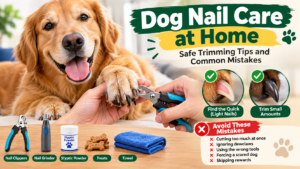
1. Dog nail clippers: Scissor-style and guillotine-style clippers are common options. Select a size appropriate for your dog’s nails. Large dogs usually need stronger clippers, while small dogs may be easier to manage with compact models.
2. Pet nail grinder: An electric grinder gradually files the nail instead of cutting it. Some dogs tolerate grinding better, although the sound and vibration may frighten others. Introduce it slowly.
3. Styptic powder: Keep a pet-appropriate styptic product nearby in case you accidentally cut a nail too short. Follow the product instructions.
4. Treats: Small, favorite treats can reward calm behavior and help your dog develop a positive association with nail care.
5. Good lighting: Bright lighting helps you identify the quick in light-colored nails and judge where to trim.
6. A non-slip surface: A stable mat or towel can help your dog feel secure while standing or sitting.
Keep your equipment clean and in good working condition. Never use dull or damaged clippers that crush the nail rather than cutting it cleanly.
Step-by-Step Guide to Trimming Dog Nails Safely
Step 1: Choose a Calm Environment
Choose a quiet room where your dog feels comfortable. Avoid trimming nails immediately after a stressful event or when your pet is highly excited.
Allow your dog to explore the tools before you begin. Give treats and praise to encourage a relaxed response. If your dog is nervous, start with short sessions that involve touching the paws without actually trimming the nails.
Step 2: Help Your Dog Become Comfortable With Paw Handling
Gently touch your dog’s shoulder, leg, and paw before holding individual toes. Apply light pressure to extend a nail, then release it and reward your dog.
Repeat this process gradually over several sessions if necessary. Do not force your dog to remain still if it is frightened or struggling intensely. A calm, gradual approach is safer than trying to finish every nail in one sitting.
Step 3: Identify the Quick
The quick is the sensitive tissue inside the nail that contains blood vessels and nerves. Cutting into it can cause pain and bleeding.
In light-colored nails, the quick may appear as a pink area inside the nail. Dark nails are more difficult because the quick is not easily visible.
For dark nails, remove very small amounts at a time. After each cut, examine the newly exposed nail surface. A dry, chalky-looking center generally indicates that you can continue cautiously, while a darker or moist-looking central area may indicate that you are approaching the quick. These visual signs are not foolproof, so stop early if you are uncertain.
Step 4: Trim Small Sections
Hold the paw gently but securely. Position the clippers so you remove only a small tip of the nail rather than making one large cut.
Trim at a suitable angle that follows the natural shape of the nail. Avoid cutting across too much of the nail at once, especially if your dog has dark nails or has not had a trim recently.
For very long nails, gradual trimming over multiple sessions is often safer. The quick may extend farther into an overgrown nail, so immediately cutting the nail to a short length can cause injury.
Step 5: Smooth the Edges
After clipping, use a pet nail grinder or suitable nail file to smooth sharp edges if your dog tolerates it.
Keep the grinder moving and avoid holding it against one nail for too long. Friction can generate heat and cause discomfort. Take breaks if the tool becomes warm or your dog shows signs of stress.
Step 6: Reward Your Dog
Offer praise and a treat after each successful nail or short session. You do not have to trim every nail at once.
For a nervous dog, completing one or two nails calmly may be more useful than struggling through all four paws. Gradually increase the amount of grooming as your dog becomes more comfortable.
How to Trim Black Dog Nails
Black nails require extra care because the quick is usually hidden from view. Avoid making deep cuts based only on the apparent length of the nail.
Instead, remove a tiny portion of the tip and inspect the cut surface after each trim. Work slowly and stop well before reaching tissue that looks different from the surrounding dry nail.
If the nails are extremely long, damaged, or difficult to position safely, ask a veterinarian or experienced professional groomer to demonstrate the correct technique. You can then maintain the nails at home once you feel confident.
Common Dog Nail Trimming Mistakes to Avoid
Cutting Too Much Nail at Once
One of the most common mistakes is removing a large portion of the nail in a single cut. This increases the chance of cutting the quick, particularly in dogs with dark or overgrown nails.
Better approach: Trim small amounts and inspect the nail after every cut.
Ignoring the Dewclaws
Dewclaws do not always touch the ground, so they may become overgrown even when the other nails look normal. Some dogs have dewclaws on their hind legs as well.
Better approach: Include every dewclaw in your regular paw inspection, but avoid pulling or twisting it during trimming.
Using the Wrong Tools
Human nail clippers may not be suitable for many dogs, especially those with thick nails. Inappropriate or blunt tools can split or crush the nail.
Better approach: Use sharp, appropriately sized pet nail clippers or a pet-specific grinder.
Forcing a Frightened Dog
Holding a struggling dog down can increase fear and make future grooming more difficult. Sudden movements also increase the risk of accidental injury.
Better approach: Stop when your dog becomes highly distressed. Work on paw handling and tool desensitization gradually, or seek professional help.
Forgetting Nail Trimming Rewards
If nail care consistently involves restraint and discomfort, your dog may begin hiding, pulling away, or growling when the tools appear.
Better approach: Pair gentle handling with treats, breaks, and praise.
Neglecting Nail Problems
Cracked nails, swelling, persistent licking, and unusual nail discoloration may indicate injury or disease rather than simple overgrowth.
Better approach: Ask your veterinarian to examine persistent or painful nail problems instead of trying to solve them through trimming alone.
What to Do If You Cut Your Dog’s Nail Too Short
Accidentally cutting the quick can cause bleeding and pain. Stay calm and prevent your dog from running or struggling, as this can make it harder to manage the injury.
Apply pet-appropriate styptic powder according to its instructions, using gentle pressure if needed. If you do not have styptic powder, use clean gauze and steady pressure while seeking veterinary advice if bleeding continues.
Do not apply harsh household chemicals or attempt to burn or seal the nail yourself.
Contact your veterinarian if bleeding does not stop after several minutes of consistent pressure, the nail is badly split, your dog has significant pain, or you are concerned about the injury. Persistent bleeding or severe damage needs prompt veterinary attention.
Natural Ways to Help Maintain Healthy Dog Nails
Routine activity can support nail maintenance, but it does not replace regular inspections or trimming when needed.
Walking on suitable paved surfaces may gradually wear down some nails. However, avoid excessively rough or hot surfaces that can damage paw pads. Puppies, older dogs, and pets with mobility problems may not wear their nails down sufficiently through walking.
A balanced, complete diet supports normal nail growth and general health. Do not give calcium, biotin, or other supplements solely for nail problems unless your veterinarian recommends them. Excess supplementation may be unnecessary or harmful.
Check your dog’s paws after outdoor activities, particularly if your pet walks on rocky trails, rough ground, or areas where debris may become trapped between the toes.
When Should You Visit a Veterinarian or Professional Groomer?
Home nail trimming is not suitable for every situation. Professional assistance is recommended if your dog becomes aggressive or extremely frightened during grooming, has very long nails, or has nails that are thick, twisted, broken, or painful.
Seek veterinary care if you notice swelling, bleeding that will not stop, discharge, a foul smell, persistent limping, or repeated licking of the paws. These signs may indicate infection, trauma, or another medical condition.
Dogs with certain medical conditions, mobility difficulties, or a history of painful nail injuries may benefit from a veterinarian-guided nail-care plan.
If your dog cannot be handled safely, ask your veterinarian about appropriate options rather than attempting to restrain the animal yourself.
Frequently Asked Questions About Dog Nail Care
Can I trim my dog’s nails at home?
Yes. Many dogs can have their nails trimmed safely at home when owners use suitable tools, understand the location of the quick, and work gradually. Seek professional help if your dog is distressed or you are uncertain about the technique.
How short should a dog’s nails be?
The nails should be short enough to allow comfortable standing and walking without excessive contact with the floor. The ideal length varies between dogs, and you should never cut into the quick to achieve a particular length.
Is a nail grinder better than clippers?
Neither option is best for every dog. Clippers are quick and convenient, while grinders can provide greater control over the final length. Some dogs dislike the sound or vibration of a grinder, so choose the method your pet tolerates safely.
Should I trim my dog’s nails if they are black?
Yes, if you can do so safely. Trim tiny amounts at a time and inspect the nail after each cut. If you cannot judge where the quick is located, ask a professional groomer or veterinarian for assistance.
What if my dog refuses to let me touch its paws?
Begin with brief, gentle paw handling and rewards without using clippers. Increase the duration gradually over several sessions. If fear remains severe or your dog may bite, seek help from a veterinarian or qualified professional.
Conclusion
Dog nail care at home is an important part of responsible pet ownership. Regular inspections, suitable trimming tools, good lighting, and a patient approach can help prevent painful overgrown nails and make grooming more comfortable for your dog.
The most important rule is to trim gradually and avoid cutting the quick. Remember to check the dewclaws, reward calm behavior, and stop if your dog becomes highly distressed. If you notice bleeding that will not stop, a damaged nail, swelling, or signs of infection, contact your veterinarian.
With consistency and gentle handling, nail trimming can become a manageable part of your dog’s routine and help support healthy paws, comfortable movement, and overall well-being.