
Introduction
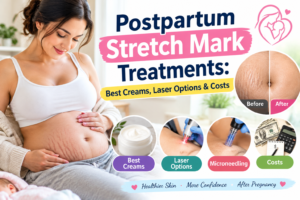
Pregnancy is a beautiful life-changing experience, but it can also bring noticeable changes to the skin. One of the most common concerns for new mothers is postpartum stretch marks. These lines may appear on the abdomen, hips, thighs, breasts, and other areas where the skin stretches during pregnancy. Although stretch marks are harmless and do not usually require medical treatment, many women look for ways to make them less visible and improve their skin’s appearance after childbirth.
The good news is that there are a number of postpartum stretch mark treatments available, from expert techniques like laser therapy and microneedling to inexpensive moisturisers and topical lotions. However, no treatment can ensure total elimination, and the outcome is dependent on a number of variables, including the age of the stretch marks, skin type, type of treatment, and personal healing process. In order to assist new mothers in selecting a strategy that meets their requirements and financial constraints, we will examine the top creams for postpartum stretch marks, expert treatment alternatives, anticipated expenses, and useful skincare advice.
What Are Postpartum Stretch Marks?
Postpartum stretch marks are narrow lines or streaks that develop when the skin stretches rapidly during pregnancy. Their medical name is striae distensae. They commonly appear as pink, red, purple, brown, or darker lines, depending on a person’s skin tone and how recently the marks developed.
During pregnancy, hormonal changes and the rapid expansion of the abdomen can affect the skin’s collagen and elastin fibers. These fibers help the skin maintain its strength and flexibility. When the skin stretches beyond its ability to adapt, small changes occur in the deeper layers, producing visible lines.
After childbirth, stretch marks may gradually become lighter and less noticeable. Newer marks are often more colorful, while older marks may appear pale, silvery, or slightly indented.
It is important to understand that postpartum stretch marks are not a sign of poor skincare or inadequate self-care. They are a common physical change associated with pregnancy, and their appearance varies from person to person.
Can Postpartum Stretch Marks Be Removed Completely?
Many women wonder whether stretch marks can disappear entirely after delivery. The answer is that existing stretch marks usually cannot be removed completely with creams or cosmetic procedures.
However, several treatments may improve their appearance by reducing color differences, smoothing uneven texture, or encouraging collagen production. Newer stretch marks may respond differently from older, lighter marks.
Consistency also matters. Moisturizers can improve dryness and make the skin feel softer, while professional treatments may provide more noticeable changes in texture or color. Some women experience significant improvement, whereas others see only modest results.
A realistic goal is to make stretch marks less noticeable rather than expecting perfectly smooth skin without any visible lines.
Best Creams for Postpartum Stretch Marks
Topical skincare products are often the first choice for women who want an affordable, convenient way to care for postpartum skin. Although most creams cannot erase established stretch marks, they may improve hydration, softness, and the overall appearance of the skin.
1. Hyaluronic Acid Creams
Hyaluronic acid is a moisturizing ingredient that helps the skin attract and retain water. Well-hydrated skin often appears smoother and feels more comfortable, especially after the physical changes associated with pregnancy.
A moisturizer containing hyaluronic acid may be helpful for dry or tight skin around the abdomen, hips, and thighs. It can be used as part of a daily skincare routine, following the instructions on the product label.
Hyaluronic acid does not remove deep stretch marks, but it can support skin hydration and improve the appearance of dryness.
Best for: Dry skin, improving hydration, and everyday postpartum skincare.
2. Centella Asiatica Creams
Centella asiatica is a plant-derived ingredient commonly used in skincare products designed to support the skin barrier. Some formulations contain related compounds that have been investigated for their potential role in skin repair and collagen-related processes.
Products containing centella asiatica may be considered by women seeking a gentle moisturizer. However, evidence that these products substantially reduce established postpartum stretch marks remains limited.
Choose a product formulated for sensitive skin, especially if your skin is prone to irritation after pregnancy.
Best for: General skin conditioning and moisturizing.
3. Cocoa Butter and Shea Butter
Cocoa butter and shea butter are popular ingredients in stretch mark creams and body lotions. They help soften the skin and reduce moisture loss, making the skin feel smoother and more comfortable.
These ingredients can be useful for dry areas, particularly when applied after bathing. However, there is insufficient evidence that cocoa butter or shea butter can reliably prevent or eliminate stretch marks.
Their main benefit is moisturization rather than the removal of deeper changes in the skin.
Best for: Affordable daily hydration and dry skin.
4. Silicone-Based Moisturizers
Silicone ingredients, such as dimethicone, are used in many skincare products to form a protective layer that reduces moisture loss. They can help soften the skin and improve its surface feel.
Silicone products are better known for certain types of scars than for stretch marks. Evidence supporting their effectiveness for established postpartum stretch marks is limited, so they should not be considered a guaranteed treatment.
Best for: Supporting the skin barrier and reducing dryness.
5. Retinoid Creams: Important Safety Considerations
Retinoids, including tretinoin, are vitamin A derivatives that may improve some early stretch marks by influencing skin cell turnover and collagen production. Research suggests that prescription tretinoin may help selected people with newer stretch marks, although results are variable.
Redness, dryness, peeling, and inflammation are all possible side effects of retinoids. They shouldn’t be used while pregnant and aren’t appropriate for everyone. Before contemplating topical retinoids, especially for big treatment areas or regions where your infant may come into touch with the substance, speak with your healthcare provider if you are nursing.
Whether a retinoid is suitable for your skin type and situation can be assessed by a dermatologist. Don’t use prescription-strength products without a doctor’s advice.
Ideal for: When a doctor suggests therapy for specific, more recent stretch marks.
Best Professional Treatments for Postpartum Stretch Marks
For women who want more noticeable improvement, professional cosmetic treatments may be worth discussing with a qualified dermatologist. These procedures typically cost more than creams and may require several sessions.
Results vary, and no procedure guarantees complete removal.
1. Laser Treatment for Stretch Marks
Laser treatments use controlled light or heat to target particular structures in the skin. Different laser technologies are used for different concerns.
Vascular lasers may help reduce the redness of newer stretch marks. Fractional lasers, including some fractional ablative and non-ablative devices, may help improve the texture and appearance of established marks by stimulating collagen remodeling.
The most appropriate option depends on the color and age of the stretch marks, skin tone, medical history, and the experience of the treating professional.
Potential side effects include temporary redness, swelling, discomfort, and changes in skin pigmentation. Some laser procedures can cause burns or scarring when performed incorrectly. People with darker skin tones should seek a clinician experienced in treating their skin type because certain devices and settings carry a higher risk of pigmentation changes.
Several sessions may be recommended, with intervals between treatments to allow the skin to recover.
Best for: Selected red, purple, or mature stretch marks where a dermatologist believes laser treatment is appropriate.
2. Microneedling
Microneedling uses fine needles to create controlled, tiny injuries in the skin. The healing response may encourage collagen and elastin remodeling, which can gradually improve the appearance of some stretch marks.
A treatment plan may involve multiple sessions. The number depends on the depth and extent of the marks, the device used, and the individual’s response.
Temporary redness, swelling, tenderness, and pinpoint bleeding can occur. Less common complications include infection, scarring, and pigmentation changes.
Professional treatment is generally preferable to attempting aggressive procedures at home. Avoid unsterile devices, and do not apply unapproved active ingredients to freshly treated skin.
Best for: Improving the texture of selected stretch marks.
3. Radiofrequency Treatments
Radiofrequency procedures deliver energy into the skin to generate controlled heat. Some devices are used to support collagen remodeling and improve skin texture.
Radiofrequency microneedling combines radiofrequency energy with small needles, while other devices deliver energy without needles. Their benefits and risks differ, and evidence specifically for postpartum stretch marks varies by device and treatment protocol.
Possible side effects include discomfort, redness, swelling, burns, scarring, and changes in pigmentation. Rare but serious complications have been reported with certain energy-based devices.
Discuss the exact device, expected benefits, alternatives, and possible complications with a qualified clinician before treatment.
Best for: Selected cases where texture improvement is a priority and a professional recommends the procedure.
4. Microdermabrasion
Microdermabrasion exfoliates the outermost layer of the skin using a specialized device. It may improve surface smoothness, but stretch marks develop deeper in the skin, so microdermabrasion is unlikely to produce dramatic changes.
It may be considered for general skin texture concerns, but stronger evidence supports other approaches for selected stretch marks.
Best for: Mild surface texture concerns rather than deep or extensive stretch marks.
5. Chemical Peels
Chemical peels use carefully selected acids to exfoliate the skin. Their effectiveness for stretch marks is limited, and deeper peels may create unnecessary risks without providing reliable improvement.
Aggressive peels can cause irritation, burns, infection, and long-lasting pigmentation changes. They should not be used on the abdomen or other areas for stretch marks without professional assessment.
Best for: Specific skin concerns identified by a dermatologist, rather than as a first-line stretch mark treatment.
Postpartum Stretch Mark Treatment Costs
The cost of postpartum stretch mark treatment depends on the country, clinic, practitioner, technology, treatment area, and number of sessions required.
The following figures are broad illustrative estimates in US dollars, not verified current prices or guaranteed quotes. Actual costs may be lower or higher, especially when comparing countries and clinic types.
| Treatment | Estimated cost |
|---|---|
| Basic body moisturizer | $5–$20 |
| Specialized stretch mark cream | $10–$50 |
| Hyaluronic acid body lotion | $10–$40 |
| Dermatologist consultation | $50–$250 |
| Microneedling session | $100–$400 |
| Laser treatment session | $200–$1,000+ |
| Radiofrequency session | $200–$800 |
| Microdermabrasion session | $75–$200 |
These estimates represent possible costs per product or session, not the total cost of a complete treatment plan. Professional procedures may require multiple appointments, so the overall expense can be considerably higher.
How Much Does a Full Treatment Plan Cost?
A basic moisturizing routine may cost approximately $10–$50 per month, depending on the products selected and how frequently they are used.
A professional plan involving three to six sessions of microneedling or laser treatment could cost several hundred to several thousand dollars. The final amount depends on the procedure, the size of the treatment area, and the number of sessions needed.
Before committing to a procedure, ask the clinic for a written estimate covering consultation fees, treatment sessions, follow-up appointments, and any additional charges.
It is also reasonable to ask whether the expected improvement justifies the expense. Stretch marks are harmless, and choosing not to pursue professional treatment is a perfectly valid option.
A Simple Postpartum Skincare Routine
A gentle, consistent skincare routine can support skin comfort while stretch marks gradually mature.
Morning Routine
Step 1: Cleanse gently. Use lukewarm water and a mild cleanser when necessary. Avoid harsh scrubs that can irritate sensitive skin.
Step 2: Apply moisturizer. Choose a fragrance-free lotion or cream containing ingredients such as glycerin, ceramides, or hyaluronic acid.
Step 3: Protect exposed skin. Apply broad-spectrum SPF 30 or higher sunscreen to exposed areas. Sun protection helps reduce tanning and the contrast between stretch marks and surrounding skin.
Evening Routine
Step 1: Clean the skin gently. Avoid excessive rubbing, especially if the skin is dry or irritated.
Step 2: Apply a nourishing moisturizer. A body cream containing shea butter, glycerin, or ceramides can help maintain hydration.
Step 3: Introduce treatments cautiously. If you are considering a medicated product, ask a healthcare professional whether it is appropriate after childbirth and during breastfeeding.
Consistency is more useful than using many products at once. Introduce one new product at a time, and discontinue it if you develop significant irritation.
Natural Ways to Support Skin Health After Pregnancy
Some simple habits can support general skin health, although they will not erase existing stretch marks.
Stay hydrated. Drink fluids regularly according to your thirst and individual needs, particularly if you are breastfeeding.
Eat a balanced diet. Include protein sources, fruits, vegetables, whole grains, and healthy fats. Nutrients such as vitamin C, zinc, and protein contribute to normal tissue maintenance and healing.
Allow time for recovery. Skin changes after pregnancy do not resolve overnight. Newer marks often become less noticeable over months, although some lines may remain permanently visible.
Avoid rapid weight changes when possible. Gradual, sustainable changes may reduce additional stretching, but stretch marks can occur regardless of weight or lifestyle.
Be gentle with your skin. Avoid harsh home remedies, abrasive scrubs, and unverified products that promise instant results.
Lemon juice, strong acids, and other irritating household ingredients should not be applied to stretch marks. They can damage the skin and may increase the risk of discoloration.
When Can You Start Stretch Mark Treatments After Delivery?
The right time to start depends on the type of treatment, your recovery, and whether you have had a vaginal birth or cesarean delivery.
Gentle moisturizers can usually be incorporated into everyday skincare as soon as you feel comfortable using them, provided the product is appropriate for the area and does not irritate the skin.
For laser treatments, microneedling, radiofrequency, and other procedures, wait until you have recovered sufficiently and a qualified healthcare professional confirms that treatment is appropriate. A cesarean incision or another healing wound should never be treated as ordinary stretch-marked skin.
If you are breastfeeding, tell your clinician before using prescription creams or undergoing cosmetic procedures. Product choice, treatment location, and the possibility of a baby’s contact with treated skin may affect the recommendation.
There is no universal waiting period that applies to every treatment and every postpartum patient.
How to Choose the Best Stretch Mark Treatment
Selecting a treatment is easier when you consider the appearance of your stretch marks and your expectations.
- For newer red or purple marks: A dermatologist may consider selected topical treatments or vascular laser options.
- For older white or silvery marks: Microneedling or certain fractional laser procedures may improve texture, but results are variable.
- For dry or uncomfortable skin: A simple fragrance-free moisturizer may be sufficient.
- For a limited budget: Begin with gentle skincare and realistic expectations before spending money on expensive treatments.
- For sensitive or darker skin: Seek individualized advice about irritation and pigmentation risks before choosing an active ingredient or procedure.
Do not select a treatment based only on dramatic before-and-after photographs. Lighting, camera angles, editing, and differences in skin tone can make results appear more impressive than they are.
Ask about the practitioner’s qualifications, the evidence supporting the proposed procedure, possible complications, and the likely degree of improvement.
Common Myths About Postpartum Stretch Marks
Myth 1: Stretch Mark Creams Remove Every Mark
Most moisturizers improve hydration rather than remove the deeper structural changes responsible for stretch marks. Some active ingredients may help selected newer marks, but complete removal is unlikely.
Myth 2: Stretch Marks Mean Your Skin Is Unhealthy
Stretch marks are common and usually harmless. They can develop in people with different body types, skin colors, and fitness levels.
Myth 3: Expensive Products Always Work Better
Price does not guarantee effectiveness. A basic moisturizer with well-tolerated ingredients may be a sensible choice for daily care, even if it does not eliminate stretch marks.
Myth 4: Professional Treatments Work After One Session
Collagen remodeling takes time, and multiple sessions are often recommended. Even after completing a treatment plan, some marks may remain visible.
Myth 5: Stretch Marks Can Always Be Prevented
No cream, oil, or supplement can guarantee prevention. Genetics, hormonal factors, and the degree of skin stretching all play a role.
Frequently Asked Questions
What is the best cream for postpartum stretch marks?
A moisturizer containing glycerin, ceramides, or hyaluronic acid is a practical option for improving hydration. For newer stretch marks, a dermatologist may discuss prescription treatments, but suitability and expected results vary.
How long do postpartum stretch marks take to fade?
Many marks become lighter over several months to a year or longer. The timeline varies, and some stretch marks remain visible even after they have matured.
Are laser treatments worth the cost?
Laser treatment may improve color or texture in selected cases. Whether it is worth the expense depends on the expected benefit, the treatment area, your budget, and your tolerance for possible side effects.
Can I treat stretch marks while breastfeeding?
Gentle moisturizers are often suitable, but medicated creams and professional procedures require individual assessment. Consult a healthcare professional before using retinoids or other prescription treatments.
Do oils prevent postpartum stretch marks?
Oils can moisturize the skin, but evidence that they reliably prevent stretch marks is limited. Keeping skin hydrated may improve comfort without changing the underlying marks.
Are postpartum stretch marks permanent?
Stretch marks often fade over time, but they may not disappear completely. Treatments can sometimes make them less noticeable, although results vary.
When should I see a dermatologist?
Consider an appointment if you want to explore professional treatment, have persistent skin irritation, or are uncertain which products are appropriate for your skin. Seek medical assessment for sudden, unusual, or rapidly developing skin changes, particularly if accompanied by other symptoms.
Conclusion
Postpartum stretch marks are a common part of the physical changes associated with pregnancy. Although they may affect confidence, they are harmless in most cases and do not require treatment unless you want to improve their appearance.
The ideal postpartum stretch mark therapy is determined by your skin type, the age of the markings, your financial situation, and your individual objectives. Hydration can be supported by moisturizers that include hyaluronic acid, glycerin, or ceramides, and certain prescription treatments, laser procedures, and microneedling may provide further benefits for certain individuals.
No lotion or technique will ensure total eradication, and professional treatments might be costly. Before spending money on more potent treatments, start with gentle skincare, shield exposed skin from the sun, and speak with a licensed dermatologist.
Most importantly, give yourself time to recover after childbirth. Your skin has undergone a significant physical change, and you can care for it without expecting it to return to exactly how it looked before pregnancy.
Medical disclaimer: This article is for general educational purposes and does not replace personalized medical advice, diagnosis, or treatment. Consult a qualified healthcare professional before starting prescription skincare products or cosmetic procedures, especially during pregnancy recovery or breastfeeding.