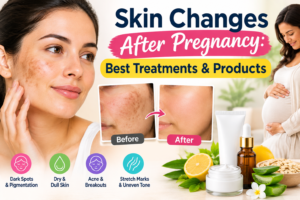

Skin Changes After Pregnancy: Best Treatments & Skincare Products
Introduction
Pregnancy brings many changes to a woman’s body, and the skin is no exception. After childbirth, some women notice dark patches on their face, acne breakouts, stretch marks, dry skin, or changes in skin texture. These changes are common and may occur because of hormonal fluctuations, stretching of the skin, sleep deprivation, and the physical demands of caring for a newborn.
These skin issues eventually go away for a lot of new mothers. Some changes, though, might not go away for months or could need medical attention.
The good news is that after pregnancy, a basic skincare regimen can support healthy skin. The comfort and appearance of skin can be enhanced by selecting mild cleansers, moisturisers, sunscreen, and appropriate treatments.
The most frequent postpartum skin changes, their causes, practical remedies, suggested skincare products, and safety measures for nursing mothers are all covered in this book.
What Causes Skin Changes After Pregnancy?
Hormone levels change significantly after childbirth. Estrogen and progesterone levels fall, while other hormonal and physical changes may influence oil production, pigmentation, and skin hydration.
Several factors can contribute to postpartum skin concerns.
1. Hormonal Changes
Hormonal fluctuations can trigger acne, changes in skin sensitivity, and alterations in pigmentation. Some women experience oilier skin, while others develop dryness or irritation.
These changes vary from person to person and may take several months to settle.
2. Melanin Production
Pregnancy can stimulate melanin production, leading to darker patches on the cheeks, forehead, upper lip, and other areas. This condition is known as melasma.
Sun exposure can make these patches darker and more noticeable.
3. Stretching of the Skin
As the abdomen, breasts, hips, and thighs expand during pregnancy, the skin stretches. This can produce stretch marks, which may initially appear red, purple, pink, or brown before gradually becoming lighter.
4. Lack of Sleep and Stress
New mothers often experience interrupted sleep and increased stress. These factors may make the skin appear tired and can worsen existing inflammatory skin conditions.
5. Changes in Skin Hydration
Some women experience dry, tight, or sensitive skin after childbirth. Frequent bathing, harsh cleansers, environmental conditions, and hormonal changes may contribute to this problem.
Common Skin Changes After Pregnancy
1. Dark Spots and Melasma
Melasma appears as brown or gray-brown patches, particularly on the face. It is often associated with pregnancy-related hormonal changes and ultraviolet exposure.
Although melasma may fade after delivery, it does not always disappear completely.
Best treatments:
- Broad-spectrum sunscreen with SPF 30 or higher.
- Gentle skincare products that do not irritate the skin.
- Azelaic acid, when appropriate.
- Dermatologist-recommended treatments for persistent pigmentation.
Sun protection is one of the most important steps in managing melasma. Consider wearing a wide-brimmed hat and seeking shade when outdoors.
Avoid aggressive scrubs and unverified skin-lightening creams because irritation can make pigmentation worse.
2. Postpartum Acne
Some women develop pimples after childbirth, even if their skin was relatively clear during pregnancy. Hormonal fluctuations may contribute to increased oil production and clogged pores.
Acne may appear on the forehead, cheeks, chin, jawline, chest, or back.
Useful skincare ingredients:
- Benzoyl peroxide for inflammatory pimples.
- Azelaic acid for acne and post-acne marks.
- Salicylic acid for clogged pores, when suitable.
- A gentle cleanser and non-comedogenic moisturizer.
Introduce acne treatments gradually to reduce irritation. If acne is painful, severe, or leaving scars, consult a dermatologist.
Breastfeeding mothers should discuss medication choices with a healthcare professional, especially before using prescription treatments.
3. Stretch Marks
Stretch marks develop when the skin stretches rapidly and supporting structures in the skin change. They are common during pregnancy and may appear on the abdomen, breasts, thighs, hips, and buttocks.
After delivery, stretch marks often become less noticeable and gradually change in color. However, they may not disappear completely.
Treatment options include:
- Regular use of a fragrance-free moisturizer.
- Products containing hyaluronic acid for hydration.
- Dermatologist-performed microneedling or certain laser procedures.
- Professional assessment of persistent or prominent stretch marks.
Moisturizers can help relieve dryness and improve skin softness, but they cannot reliably remove established stretch marks. Professional treatments may improve their appearance, although results vary.
Avoid using retinoid creams on stretch marks while pregnant. During breastfeeding, ask your clinician before considering retinoids or other prescription treatments.
4. Dry and Sensitive Skin
After pregnancy, some women experience tightness, flaking, itching, or increased skin sensitivity. Products that previously worked well may suddenly cause discomfort.
Recommended skincare products:
- Fragrance-free cleansers.
- Moisturizers containing ceramides.
- Creams with glycerin or hyaluronic acid.
- Petrolatum-based products for very dry areas.
Apply moisturizer after washing while the skin is still slightly damp. Avoid hot water, rough exfoliation, and strongly fragranced products.
If dryness is severe, persistent, or accompanied by a widespread rash, seek medical advice.
5. Dark Underarms and Other Body Areas
Some women notice darker skin around the underarms, neck, inner thighs, or other body areas after pregnancy. Hormonal changes, friction, and pre-existing pigmentation can contribute.
Use gentle cleansing, reduce friction where possible, and moisturize regularly. Avoid bleaching agents or strong exfoliating acids without professional guidance.
If dark, thickened skin develops around the neck or underarms, a healthcare professional can check whether an underlying condition, such as insulin resistance, may be contributing.
6. Hairline and Skin Texture Changes
Although hair shedding is not itself a skin condition, many women notice changes in their hair and scalp after childbirth. Postpartum hair shedding commonly develops several months after delivery because of changes in the hair-growth cycle.
The scalp may also feel dry or irritated. Use a gentle shampoo and avoid harsh chemical treatments if your scalp is sensitive.
Seek medical advice if hair loss is severe, occurs in distinct patches, or continues without improvement.
Best Skincare Products for New Mothers
A simple routine is often the most practical choice for new mothers who have limited time.
1. Gentle Facial Cleanser
Choose a mild cleanser that removes dirt, sweat, and sunscreen without stripping the skin. Fragrance-free formulas may be preferable if your skin is sensitive.
Wash your face in the morning and evening, and avoid excessive cleansing.
2. Moisturizer with Ceramides
Ceramides help support the skin’s protective barrier. A moisturizer containing ceramides and glycerin can help reduce dryness and improve comfort.
Select a lightweight lotion for oily skin or a richer cream for dry skin.
3. Broad-Spectrum Sunscreen
Sunscreen is essential for managing melasma and protecting skin from sun damage.
Choose SPF 30 or higher and reapply according to the product instructions, particularly after swimming, sweating, or prolonged outdoor activity.
Mineral sunscreens containing zinc oxide or titanium dioxide can be good options for people with sensitive skin.
4. Azelaic Acid
Azelaic acid may help improve acne, inflammation, and uneven pigmentation. It is often considered a useful option for people dealing with both breakouts and dark marks.
Ask a healthcare professional whether the product and concentration are appropriate for your circumstances, particularly if you are breastfeeding.
5. Hyaluronic Acid
Hyaluronic acid is a moisturizing ingredient that helps the skin retain water. It may improve the appearance of dryness and temporarily make the skin look smoother and plumper.
Apply it as directed and follow with moisturizer if needed.
6. Vitamin C
Vitamin C is an antioxidant used in skincare products to support a brighter-looking complexion and help reduce the appearance of uneven pigmentation.
Some formulas may irritate sensitive skin. Start with a suitable product and discontinue use if you experience persistent burning, redness, or swelling.
Safe Postpartum Skincare Routine
Morning Routine
- Cleanse with a gentle facial cleanser.
- Apply a moisturizer suitable for your skin type.
- Use broad-spectrum SPF 30 or higher sunscreen.
- Wear a hat or seek shade during prolonged outdoor exposure.
Night Routine
- Remove makeup and sunscreen.
- Cleanse gently.
- Apply one suitable treatment for acne or pigmentation if needed.
- Finish with a moisturizer.
Avoid introducing several active ingredients at once. A simple routine makes it easier to identify which products help and which cause irritation.
Which Skincare Ingredients Should Breastfeeding Mothers Avoid?
Breastfeeding mothers should consider both the ingredients used and how the product is applied.
Topical treatments are not all the same, and their suitability depends on concentration, body area, absorption, and the possibility of a baby coming into contact with treated skin.
Important precautions:
- Oral isotretinoin: It is not compatible with breastfeeding.
- Topical retinoids: Seek professional advice before use while breastfeeding; avoid applying them where the baby could contact or ingest the product.
- Hydroquinone: Long-term use during breastfeeding is generally approached cautiously because safety information is limited.
- Strong chemical peels: Discuss the procedure with a qualified dermatologist before treatment.
- Unregulated skin-lightening products: Avoid products with unknown ingredients or undeclared steroids or mercury.
Never apply medicated skincare products to the nipple or breast area where a nursing baby could ingest them unless specifically directed by a qualified healthcare professional.
If you are pregnant again, planning pregnancy, or breastfeeding, discuss acne and pigmentation treatments with your doctor before starting medication.
How Long Does It Take for Postpartum Skin to Improve?
The recovery timeline depends on the type of skin change and individual factors.
Mild acne may improve over several weeks to months with appropriate treatment. Melasma may fade gradually, but some patches persist and need ongoing sun protection. Stretch marks usually become lighter over time, although they rarely disappear entirely.
Dryness may improve within days or weeks after using suitable moisturizers and avoiding irritating products.
Be patient with your skin. Rapidly switching products or using harsh treatments can cause irritation and may make pigmentation more noticeable.
When Should You See a Dermatologist?
Seek professional advice if pigmentation persists, acne becomes painful, or stretch marks are a major concern.
Arrange a medical assessment for a new or rapidly spreading rash, severe itching, painful swelling, pus, or signs of infection. Seek urgent care if a skin problem is accompanied by fever or you feel seriously unwell.
A clinician can also assess sudden skin changes that occur alongside other symptoms, including significant hair loss, unusual fatigue, or unexplained changes in weight.
Frequently Asked Questions
1. Will skin changes after pregnancy disappear naturally?
Many postpartum skin changes gradually improve as hormones settle. However, melasma, acne, and stretch marks may persist and sometimes require treatment.
2. What is the best treatment for dark spots after pregnancy?
Daily sunscreen is essential. Azelaic acid may help some people, while persistent melasma may benefit from dermatologist-guided treatment.
3. Can I use vitamin C serum after pregnancy?
Vitamin C skincare products are generally considered compatible with breastfeeding when used as directed on the skin. Choose a suitable formula and stop if irritation develops.
4. How can I reduce stretch marks after childbirth?
Moisturizers can improve dryness and softness, while some professional procedures may reduce the appearance of stretch marks. No cream can guarantee complete removal.
5. Is postpartum acne permanent?
No. Many cases improve over time, but some women continue to experience acne. Suitable treatments can help control breakouts and reduce the risk of scarring.
6. Can breastfeeding cause skin problems?
Breastfeeding itself does not cause every postpartum skin change. Hormonal fluctuations, stress, sleep disruption, and other factors may contribute. Treatment choices should account for breastfeeding safety.
7. Which skincare routine is best for new mothers?
A gentle cleanser, moisturizer, and broad-spectrum sunscreen form a practical foundation. Add a targeted treatment only when needed and appropriate.
Conclusion
Skin changes after pregnancy are common, and every woman’s recovery is different. Melasma, acne, stretch marks, and dry skin may gradually improve, but some concerns require targeted treatment.
Start with a gentle skincare routine, protect your skin from sunlight, and choose products suited to your skin type. Avoid harsh home remedies and unverified skin-lightening products. If you are breastfeeding, check the safety of medicated treatments before using them.
With patience and appropriate care, you can support your skin’s recovery while making time for your own health and well-being.
Medical Disclaimer: This article is for educational purposes only and does not replace personalized medical advice. Consult a qualified healthcare professional before starting prescription medication, undergoing cosmetic procedures, or using treatments during pregnancy or breastfeeding.