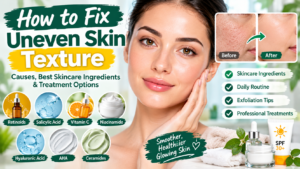

How to Fix Uneven Skin Texture: Causes, Best Skincare Ingredients & Treatment Options
Smooth, healthy-looking skin does not always come naturally. Many people notice that their skin feels rough, bumpy, flaky, or uneven even when they do not have severe acne. Uneven skin texture can develop because of clogged pores, dry skin, acne scars, sun damage, aging, dehydration, or an irritated skin barrier.
The good news is that uneven skin texture can often be improved with the right skincare routine and consistent habits. Among the substances that can help treat different causes of rough or bumpy skin are retinoids, salicylic acid, hyaluronic acid, niacinamide, and alpha hydroxy acids. Professional treatments may also be beneficial when skincare products are insufficient.
This guide explains how to fix uneven skin texture, what causes it, which skincare ingredients can help, and when professional treatment may be worth considering.
What Is Uneven Skin Texture?
Uneven skin texture refers to a skin surface that does not feel or look smooth and consistent. Instead of a soft, even surface, the skin may have small bumps, rough patches, enlarged pores, flaky areas, or shallow acne scars.
Common signs of uneven skin texture include:
- Small bumps on the face
- Rough or dry patches
- Enlarged or noticeable pores
- Flaky skin
- Acne scars and shallow depressions
- Blackheads and clogged pores
- Uneven skin surface
- Fine lines that make the skin appear rough
- Dull-looking skin
Uneven texture can affect any skin type, including oily, dry, combination, and sensitive skin.
What Causes Uneven Skin Texture?
Before choosing skincare products, it is important to understand what may be causing the problem.
1. Dead Skin Cell Buildup
The skin naturally sheds dead cells. When dead skin cells accumulate on the surface, they can make the complexion appear dull and rough.
Gentle exfoliation can help remove excess surface buildup and improve the appearance of smoother skin.
2. Clogged Pores
Excess oil, dead skin cells, and other debris can accumulate inside pores. This can result in blackheads, whiteheads, and small bumps.
People with oily or combination skin may be more likely to experience clogged pores, although anyone can develop them.
3. Dry or Dehydrated Skin
When the skin lacks moisture, its surface may feel rough, tight, or flaky. Dehydration can also make fine lines and texture more noticeable.
Using a suitable moisturizer and gentle cleanser can help support the skin barrier.
4. Acne and Acne Scars
Active acne can cause inflammation, while previous breakouts may leave behind changes in texture.
Post-acne scars can include shallow depressions or raised areas that are more difficult to improve with ordinary skincare products.
5. Sun Damage
Long-term UV exposure can affect collagen and elastin, contribute to uneven pigmentation, and make the skin surface appear rougher.
Daily sunscreen is therefore one of the most important steps for maintaining smoother-looking skin.
6. Aging
As the skin ages, collagen production gradually decreases and cell turnover may slow. Fine lines, loss of firmness, and changes in texture can become more noticeable.
7. Irritated Skin Barrier
Using too many strong products can damage the skin barrier. Excessive exfoliation, harsh cleansers, or combining multiple active ingredients may cause redness, dryness, burning, and roughness.
Sometimes, improving skin texture starts with doing less rather than adding more products.
Best Skincare Ingredients for Uneven Skin Texture
The best ingredient depends on the cause of the uneven texture. A simple routine with carefully selected ingredients is usually more beneficial than using many products at once.
1. Retinoids and Retinol
Retinoids are among the most widely used ingredients for improving signs of aging, uneven texture, and clogged pores.
Retinol, an over-the-counter retinoid, can encourage skin cell turnover and support collagen-related processes. With consistent use, it may help improve the appearance of fine lines, roughness, and some forms of acne.
Because retinoids can cause irritation, beginners should introduce them gradually.
Use a small amount at night and start only a few times per week. Increase frequency slowly as your skin becomes accustomed to the product.
2. Salicylic Acid
Salicylic acid is a beta hydroxy acid (BHA) that can penetrate into oily pores.
It is particularly useful for people experiencing:
- Blackheads
- Whiteheads
- Clogged pores
- Oily skin
- Small bumps
A salicylic acid cleanser can be a convenient option for beginners. Leave-on products may provide stronger exfoliation but can also be more irritating.
3. Alpha Hydroxy Acids
Alpha hydroxy acids (AHAs), including glycolic acid and lactic acid, work mainly on the surface of the skin.
They can help loosen dead skin cells and improve the appearance of rough texture, dullness, and uneven tone.
Lactic acid is often considered a gentler option, while glycolic acid can provide stronger exfoliation.
Avoid using strong exfoliating acids too frequently, particularly if you have sensitive skin.
4. Niacinamide
Niacinamide, also known as vitamin B3, is a versatile skincare ingredient.
It can help support the skin barrier and may improve the appearance of pores, uneven tone, and excess oil.
Because it is generally well tolerated, niacinamide can be a useful ingredient for people who want a relatively gentle addition to their routine.
5. Hyaluronic Acid
Hyaluronic acid is a humectant that helps attract water to the skin.
It does not physically remove bumps or scars, but improving hydration can make the skin appear smoother and more supple.
For best results, apply a hydrating product and follow it with a moisturizer to help reduce moisture loss.
6. Ceramides
Ceramides are naturally occurring lipids that help maintain the skin barrier.
Skincare products containing ceramides can be especially useful when uneven texture is related to dryness, irritation, or over-exfoliation.
A healthy skin barrier is an important foundation for any skincare routine.
7. Vitamin C
Vitamin C is an antioxidant that can help protect the skin from oxidative stress and improve the appearance of uneven skin tone.
Although it is not primarily an exfoliating ingredient, a well-formulated vitamin C product can complement an overall routine focused on healthier-looking skin.
How to Fix Uneven Skin Texture With a Simple Routine
You do not need a complicated routine to improve your skin texture.
Morning Routine
A simple morning routine can include:
- Gentle cleanser
- Vitamin C or niacinamide serum
- Hydrating moisturizer
- Broad-spectrum SPF 30 or higher
Sunscreen is especially important because UV exposure can contribute to collagen breakdown and rough, uneven-looking skin.
Evening Routine
At night, consider:
- Gentle cleanser
- Retinol or another appropriate treatment
- Moisturizer
If clogged pores are your primary concern, salicylic acid may be incorporated into your routine instead of, or carefully alongside, other active ingredients.
However, using several strong treatments simultaneously can increase irritation.
How Often Should You Exfoliate?
Exfoliation should be based on your skin type and tolerance.
Some people can use a mild exfoliating product several times per week, while sensitive skin may need much less frequent exfoliation.
Signs that you are exfoliating too much include:
- Burning
- Persistent redness
- Peeling
- Tightness
- Increased sensitivity
- Stinging when applying basic skincare products
If these symptoms occur, stop or reduce exfoliating products and focus on gentle cleansing and moisturizing until the skin becomes comfortable again.
Professional Treatments for Uneven Skin Texture
When uneven texture is caused by acne scars, significant sun damage, or deeper changes in the skin, professional treatments may provide more noticeable results.
Chemical Peels
Chemical peels use exfoliating solutions to remove damaged outer layers of skin.
Depending on the type and strength, peels may help improve:
- Rough texture
- Mild acne
- Uneven pigmentation
- Fine lines
- Dull-looking skin
The appropriate peel depends on your skin type and specific concern.
Microneedling
Microneedling uses tiny needles to create controlled micro-injuries in the skin. This stimulates the body’s natural healing response and may encourage collagen production.
It is commonly used to improve the appearance of acne scars, fine lines, and uneven texture.
Several sessions may be required, and results usually develop gradually.
Laser Skin Resurfacing
Laser treatments can target different skin concerns, including texture, pigmentation, and signs of photoaging.
There are different types of lasers, ranging from gentler treatments to more intensive resurfacing procedures.
Because some laser treatments can increase pigmentation risk in certain skin types, treatment should be selected by an appropriately qualified professional.
Microdermabrasion
Microdermabrasion mechanically exfoliates the outer layer of the skin.
It may temporarily improve dullness and superficial roughness. However, it may not provide the same results as treatments designed to stimulate deeper collagen remodeling.
Chemical Exfoliation Treatments
Professional exfoliating treatments can be stronger than many home products. A dermatologist or qualified skincare professional can determine whether they are appropriate based on your skin condition and sensitivity.
Uneven Texture Caused by Acne Scars
If your uneven skin texture is primarily caused by acne scars, ordinary skincare products may have limitations.
Topical retinoids can support skin renewal and may improve mild textural changes over time, but deeper depressed scars often require professional procedures.
Depending on the scar type, dermatologists may consider treatments such as:
- Microneedling
- Laser resurfacing
- Chemical peels
- Subcision
- Other scar-specific procedures
The best treatment depends on whether the scars are rolling, boxcar, ice-pick, or raised.
How Long Does It Take to Improve Uneven Skin Texture?
Skin texture does not usually change overnight.
Hydrating products may make skin feel softer relatively quickly, while exfoliating ingredients and retinoids often require several weeks of consistent use.
Professional treatments may produce more noticeable changes, but results can continue developing for months as the skin heals and remodels.
Consistency is more important than constantly changing products.
Common Mistakes That Can Make Skin Texture Worse
Over-Exfoliating
Using multiple acids, scrubs, and retinoids at the same time can irritate the skin and make texture appear worse.
Using Harsh Scrubs
Physical scrubs with rough particles can cause irritation, especially when used aggressively.
Picking at Bumps
Squeezing blackheads, whiteheads, or acne can increase inflammation and potentially contribute to scarring.
Skipping Sunscreen
UV exposure can worsen signs of aging and interfere with efforts to improve skin texture.
Changing Products Too Often
Give skincare products enough time to work unless they cause irritation or an allergic reaction.
Ignoring Moisturizer
Even oily and acne-prone skin needs hydration. Choose a lightweight, non-comedogenic moisturizer if you are prone to clogged pores.
When Should You See a Dermatologist?
Consider professional advice if your uneven skin texture:
- Does not improve with a consistent routine
- Includes significant acne scars
- Causes persistent redness or irritation
- Is associated with painful or severe acne
- Develops suddenly
- Includes unusual skin changes
- Continues despite stopping irritating products
A dermatologist can determine whether the problem is caused by acne, dermatitis, dryness, sun damage, scarring, or another skin condition.
Final Thoughts
Learning how to fix uneven skin texture starts with identifying the underlying cause. Dryness, clogged pores, acne scars, sun exposure, aging, and an impaired skin barrier can all contribute to a rough or uneven complexion.
Over time, skin can look better with a straightforward regimen that includes a mild cleanser, moisturizer, sunscreen, and carefully chosen active ingredients like retinol, salicylic acid, AHAs, niacinamide, or vitamin C.
Professional procedures like microneedling, chemical peels, or laser resurfacing may offer further improvement for deeper acne scars or notable textural changes.
Above all, prioritize consistency over aggressive skincare. Rather than overnight fixes, healthy-looking skin typically takes months of proper care.
Frequently Asked Questions
Can uneven skin texture be completely fixed?
Mild uneven texture can often be significantly improved with appropriate skincare and sun protection. Deeper acne scars or structural changes may require professional treatments and may not disappear completely.
What is the best ingredient for uneven skin texture?
Retinoids are among the most useful ingredients for overall texture, while salicylic acid can be particularly helpful for clogged pores and AHAs can help with surface roughness.
Does vitamin C improve skin texture?
Vitamin C primarily supports antioxidant protection and can improve the appearance of uneven tone. It can complement other ingredients used specifically for texture.
Is exfoliation good for uneven skin texture?
Gentle exfoliation can help remove excess dead skin cells and improve surface smoothness. However, over-exfoliation can damage the skin barrier and make texture worse.
Does sunscreen help with uneven texture?
Yes. Consistent sun protection helps reduce UV-related skin damage, which can contribute to roughness, pigmentation, fine lines, and premature aging.