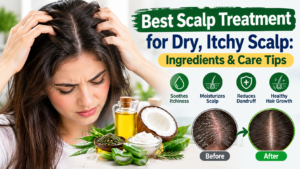

Best Scalp Treatment for Dry, Itchy Scalp: Ingredients, Products & Care Tips
A dry, itchy scalp can be uncomfortable, distracting, and sometimes embarrassing. You may notice itching, white flakes, tightness, irritation, or small areas of redness. While a dry scalp is often caused by weather, overwashing, or irritating hair products, persistent itching can also be linked to dandruff, seborrheic dermatitis, eczema, psoriasis, or other scalp conditions.
The underlying cause of a dry, itchy scalp determines the best scalp treatment. For simple dryness, a mild moisturizing regimen might be sufficient, but an anti-dandruff shampoo containing an active ingredient like ketoconazole, selenium sulfide, salicylic acid, or zinc pyrithione might be necessary for dandruff or seborrheic dermatitis. Instead of treating every itchy scalp as dry skin, dermatologists advise tailoring your treatment to your symptoms.
In this guide, you will learn the common causes of a dry, itchy scalp, the best ingredients to look for, product types that may help, home-care tips, mistakes to avoid, and when you should see a dermatologist.
What Causes a Dry and Itchy Scalp?
A dry, itchy scalp can have several different causes. Identifying the possible trigger is important because the wrong treatment may make irritation worse.
1. Dry Skin
Simple dryness occurs when the scalp loses too much moisture. Cold weather, low humidity, hot showers, and harsh shampoos can contribute to dry skin.
A dry scalp commonly feels tight and itchy and may produce small, dry flakes. Switching to a gentle, non-medicated shampoo can help when the main problem is dryness rather than dandruff.
2. Dandruff
Dandruff is one of the most common causes of an itchy, flaky scalp. It can produce white or yellowish flakes and may be associated with itching.
Dandruff can be related to oily skin, hair-care habits, and seborrheic dermatitis. It is not simply a sign of poor hygiene.
3. Seborrheic Dermatitis
Seborrheic dermatitis can cause itching, scaling, and inflammation. It commonly affects the scalp but can also appear around the ears, eyebrows, nose, beard, or other oily areas.
Unlike simple dandruff, seborrheic dermatitis may cause noticeable inflammation and discoloration.
4. Hair Product Irritation
Hair dyes, fragrances, styling products, shampoos, and other products can irritate the scalp or cause an allergic reaction.
Even shampoo that is not completely rinsed away can irritate the scalp and contribute to itching.
5. Psoriasis or Eczema
Scalp psoriasis and eczema can also cause persistent itching and scaling. These conditions usually need a more specific treatment plan.
If your scalp is very inflamed, painful, cracked, bleeding, or develops thick scales, it is better to get a professional diagnosis rather than repeatedly trying different home remedies.
Best Ingredients for a Dry, Itchy Scalp
Choosing the right active ingredient can make a significant difference. The best ingredient depends on whether your scalp is simply dry or you have dandruff or another condition.
1. Ketoconazole
Ketoconazole is an antifungal ingredient commonly used for dandruff and seborrheic dermatitis.
It can help reduce the yeast associated with seborrheic dermatitis and may improve itching, scaling, and inflammation. Some ketoconazole products are available over the counter, while stronger formulations may require medical advice.
If you have persistent dandruff, a ketoconazole shampoo may be worth discussing with a pharmacist or dermatologist.
2. Selenium Sulfide
Selenium sulfide is another commonly used anti-dandruff ingredient. It can help control the scalp problems associated with dandruff and seborrheic dermatitis.
Follow the product directions carefully because medicated shampoos can sometimes irritate or dry the scalp if they are overused.
3. Salicylic Acid
Salicylic acid helps loosen and remove scales from the scalp. It may be particularly useful when you have visible buildup or thick flakes.
However, salicylic acid can sometimes increase dryness, so it may not be the best choice for someone whose scalp is already extremely dry and sensitive.
4. Zinc Pyrithione
Zinc pyrithione is another ingredient found in dandruff shampoos. It can help control dandruff and reduce scalp flaking.
When choosing an anti-dandruff shampoo, check the active ingredients and follow the instructions on the specific product.
5. Sulfur
Sulfur can be included in dandruff treatments and may help with scaling. However, it can have a noticeable smell and may not be suitable for everyone with a sensitive or very dry scalp.
6. Gentle Moisturizing Ingredients
If your problem is primarily dryness rather than dandruff, look for gentle, fragrance-free hair-care products rather than strong medicated treatments.
Moisturizing ingredients commonly used in skin care include glycerin, hyaluronic acid, dimethicone, mineral oil, petrolatum, and shea butter.
For the scalp, however, choose products specifically designed for scalp or hair use and stop using anything that causes burning, increased itching, or irritation.
Best Scalp Treatment Routine for Dry, Itchy Scalp
A consistent routine can help calm a dry scalp and prevent repeated irritation.
Step 1: Choose a Gentle Shampoo
If your scalp is dry without significant dandruff, start with a mild, fragrance-free shampoo.
Avoid products that leave your scalp feeling extremely tight after washing.
If you have dandruff, choose a medicated dandruff shampoo instead. Common active ingredients include ketoconazole, selenium sulfide, salicylic acid, sulfur, zinc pyrithione, and coal tar.
Step 2: Apply Shampoo to the Scalp
The shampoo should mainly be applied to the scalp rather than aggressively scrubbed through the entire length of your hair.
Use your fingertips and gently massage the scalp. Avoid scratching with your fingernails because this can create small injuries and increase irritation.
Step 3: Give Medicated Shampoo Enough Contact Time
Some dandruff shampoos need to remain on the scalp for several minutes before rinsing.
Always follow the instructions on the bottle because contact time varies between products.
Step 4: Rinse Thoroughly
Leaving shampoo or other products on your scalp can cause irritation.
Rinse thoroughly with comfortable-temperature water rather than very hot water.
Step 5: Use Conditioner on Hair Lengths
If your hair becomes dry after shampooing, apply conditioner mainly to the lengths and ends.
People with curly, coily, or textured hair may need additional conditioning because some dandruff treatments can be drying to the hair.
How Often Should You Wash an Itchy Scalp?
There is no single washing schedule that works for everyone.
People with oily scalps may need to wash more frequently, while people with coarse, curly, or coily hair may wash less often.
If you are using an anti-dandruff shampoo, follow its instructions rather than automatically using it every day. Dermatologists may recommend dandruff shampoo several times per week for some people and less frequently for others depending on hair type and symptoms.
Once dandruff is controlled, some people continue using a medicated shampoo periodically to help prevent flare-ups.
Home Care Tips for a Dry, Itchy Scalp
Small changes in your daily routine can make a big difference.
Avoid Very Hot Showers
Hot water can strip moisture from the skin and may worsen dryness and irritation. Use lukewarm water instead.
Avoid Scratching
Scratching may provide temporary relief but can damage the scalp and make irritation worse.
Instead, gently massage the scalp with your fingertips when washing.
Reduce Fragranced Products
Fragrances can irritate sensitive skin. If your scalp is easily irritated, consider fragrance-free products.
Dermatologists also recommend avoiding irritating hair and skin products when managing seborrheic dermatitis.
Be Careful With Hair Dye
If itching begins after using hair dye, stop using the suspected product and consider discussing the reaction with a dermatologist.
Protect Your Scalp From Harsh Weather
Cold, dry weather can contribute to scalp dryness and may trigger flare-ups of some scalp conditions. Wearing appropriate head protection outdoors may help.
Manage Stress
Stress may contribute to flare-ups of seborrheic dermatitis. Regular exercise, adequate sleep, relaxation techniques, and other healthy stress-management habits may help some people.
What About Natural Remedies for an Itchy Scalp?
Many natural ingredients are promoted online for dry scalp, including coconut oil, olive oil, aloe vera, apple cider vinegar, and essential oils.
However, natural does not automatically mean safe or effective. Essential oils and strongly acidic ingredients can irritate sensitive skin.
If you want to try a home remedy, test a small amount first and stop immediately if you experience burning, redness, swelling, or increased itching.
If your scalp is affected by dandruff or seborrheic dermatitis, treating the underlying condition is usually more useful than simply adding oil or moisture.
Common Mistakes That Can Make an Itchy Scalp Worse
Avoid these common mistakes:
- Scratching the scalp with fingernails
- Washing with extremely hot water
- Using harsh shampoos too frequently
- Leaving shampoo or styling products on the scalp
- Using too many treatments at the same time
- Applying undiluted essential oils
- Frequently changing products before giving a treatment enough time
- Ignoring severe or persistent symptoms
If a shampoo causes burning, stinging, or worsening itching, stop using it. Mayo Clinic also recommends stopping a dandruff shampoo if it causes significant itching, burning, or stinging.
When Should You See a Dermatologist?
A dry, itchy scalp often improves with appropriate home care, but persistent symptoms should not be ignored.
See a dermatologist if:
- Itching is severe or persistent
- Your scalp is bleeding or developing open sores
- You have painful areas or significant swelling
- Thick scales continue to develop
- You notice hair loss in affected areas
- Your scalp develops pus or signs of infection
- Over-the-counter dandruff treatments do not help
- Symptoms repeatedly return
- You are unsure whether you have dandruff, eczema, psoriasis, or another condition
A dermatologist can examine your scalp and determine whether the problem is simple dryness, dandruff, seborrheic dermatitis, psoriasis, eczema, fungal infection, or another condition.
Frequently Asked Questions
What is the best treatment for a very dry and itchy scalp?
For simple dryness, start with a gentle, fragrance-free shampoo and avoid hot water and irritating products. If you also have persistent flakes or dandruff, an anti-dandruff shampoo may be more appropriate.
Is ketoconazole good for an itchy scalp?
Ketoconazole can be helpful when itching is related to dandruff or seborrheic dermatitis because it has antifungal activity. It is not necessarily the right treatment for every cause of scalp itching.
How can I stop scalp itching naturally?
Avoid hot water, scratching, harsh shampoos, and irritating fragrances. Keep your routine simple and gentle. If itching continues, identify the underlying cause instead of relying only on home remedies.
Should I oil a dry, itchy scalp?
Oil may make some dry hair feel softer, but it is not a universal treatment for an itchy scalp. If your itching is caused by dandruff or seborrheic dermatitis, oil alone may not address the underlying problem.
How long does it take for an itchy scalp to improve?
Simple irritation may improve after removing the trigger. Dandruff and seborrheic dermatitis may require several weeks of consistent treatment. If symptoms do not improve despite appropriate care, see a dermatologist.
Conclusion
The best scalp treatment for a dry, itchy scalp depends on why your scalp is irritated. Simple dryness may improve with a gentle, fragrance-free shampoo, lukewarm water, less frequent use of harsh products, and better scalp-care habits. Dandruff and seborrheic dermatitis may require targeted ingredients such as ketoconazole, selenium sulfide, salicylic acid, sulfur, or zinc pyrithione.
Avoid scratching and aggressive scalp treatments, and always follow the directions for medicated shampoos. If itching is severe, persistent, painful, or associated with sores, hair loss, or thick scaling, professional evaluation is important.
With the right diagnosis and a consistent scalp-care routine, many causes of dryness and itching can be effectively managed.
SEO Information
SEO Title: Best Scalp Treatment for Dry, Itchy Scalp: Ingredients & Care Tips
Meta Description: Discover the best scalp treatment for dry, itchy scalp, including effective ingredients, dandruff shampoos, home-care tips, product advice, and when to see a dermatologist.
Focus Keyword: best scalp treatment for dry itchy scalp
Secondary Keywords:
- dry itchy scalp treatment
- itchy scalp remedies
- best shampoo for dry scalp
- scalp treatment for dandruff
- dry scalp care tips
- itchy scalp causes
- ketoconazole shampoo for itchy scalp
- scalp moisturizing treatment
- dandruff treatment
- healthy scalp care
Suggested URL Slug:
/best-scalp-treatment-dry-itchy-scalp/
Suggested Image Alt Text:
Best scalp treatment for dry itchy scalp with gentle hair care products
Suggested Featured Image Title:
Best Scalp Treatment for Dry, Itchy Scalp