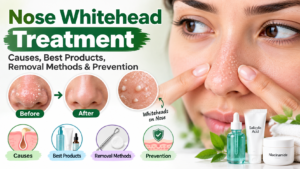

Nose Whitehead Treatment: Causes, Best Products, Removal Methods & Prevention
Whiteheads on the nose are one of the most common types of clogged pores. They can make the skin look uneven, bumpy, or rough, especially around the nose and the sides of the nostrils. Although whiteheads are usually harmless, they can be frustrating when they keep coming back despite regular cleansing.
The good news is that using the proper acne-fighting ingredients and maintaining a regular skincare routine can often improve nose whiteheads. Understanding what causes them is also important because simply squeezing or scrubbing the skin may make irritation worse.
The causes of whiteheads on the nose, the best products and ingredients, safe removal techniques, at-home care advice, preventative techniques, and when to consult a dermatologist are all covered in this guide.
What Are Whiteheads on the Nose?
Whiteheads are a type of non-inflammatory acne called closed comedones. They develop when oil, dead skin cells, and other debris accumulate inside a hair follicle or pore.
Unlike blackheads, which have an open surface and appear dark because of oxidation, whiteheads remain covered by a thin layer of skin. This gives them a small white, flesh-colored, or slightly raised appearance.
The nose contains many sebaceous glands, which produce natural oil called sebum. Because of this, the nose can be particularly prone to clogged pores and whiteheads.
What Causes Whiteheads on the Nose?
Several factors can contribute to whiteheads around the nose.
1. Excess Oil Production
Sebaceous glands produce sebum to help protect and lubricate the skin. However, excessive oil can combine with dead skin cells and block pores.
People with oily or combination skin may therefore notice more whiteheads around the nose, forehead, and chin.
2. Dead Skin Cell Buildup
Skin naturally sheds dead cells. If these cells accumulate inside pores instead of shedding normally, they can mix with oil and form a plug.
This is why gentle exfoliation can be useful for people who frequently develop clogged pores.
3. Comedogenic Skincare Products
Some heavy creams, oils, makeup products, or sunscreens may contribute to clogged pores in people who are acne-prone.
This does not mean every oily or moisturizing product causes acne. Instead, look for products labeled non-comedogenic when you are prone to whiteheads.
4. Hormonal Changes
Hormonal fluctuations can increase oil production and contribute to acne. Whiteheads may become more noticeable during puberty, menstrual cycles, pregnancy, or other periods of hormonal change.
5. Poor Makeup Removal
Leaving makeup, sunscreen, sweat, and excess oil on the skin for long periods may contribute to clogged pores.
Proper cleansing at the end of the day is especially important if you regularly wear makeup.
6. Excessive Touching
Frequently touching or rubbing the nose can transfer oil, dirt, and bacteria to the skin. Picking at whiteheads can also cause inflammation and increase the risk of marks.
7. Over-Exfoliation
Scrubbing the nose aggressively does not necessarily remove whiteheads faster. In fact, harsh scrubs and excessive use of acids can irritate the skin barrier and make the area red and sensitive.
Best Ingredients for Nose Whitehead Treatment
The most useful skincare ingredients for clogged pores are generally those that help remove excess oil, improve cell turnover, or prevent pore blockage.
Salicylic Acid
Salicylic acid is one of the most commonly recommended ingredients for clogged pores and acne-prone skin.
It is a beta hydroxy acid (BHA) that can penetrate into oily pores and help loosen dead skin cells and excess oil.
A gentle salicylic acid cleanser or leave-on product may be useful for treating whiteheads on the nose.
Retinoids
Retinoids, including over-the-counter retinol products, can help improve skin cell turnover and reduce the formation of clogged pores.
They can be effective for recurring comedonal acne, but they should be introduced gradually because irritation and dryness can occur.
If you are considering a prescription retinoid, speak with a dermatologist.
Niacinamide
Niacinamide is a form of vitamin B3 that can support the skin barrier and may help reduce the appearance of excess oil.
It is often well tolerated and can be combined with other acne-friendly ingredients.
Benzoyl Peroxide
Benzoyl peroxide is more commonly used for inflammatory acne because it helps reduce acne-causing bacteria. It may be useful when whiteheads occur alongside red pimples.
However, it can cause dryness and irritation, so it may not be necessary if your main concern is simple clogged pores.
Azelaic Acid
Azelaic acid can be helpful for acne-prone skin and may also improve the appearance of post-acne discoloration.
It can be an option for people who want an ingredient that addresses both breakouts and uneven-looking skin.
How to Remove Whiteheads From the Nose Safely
It can be tempting to squeeze whiteheads as soon as you notice them. However, manually squeezing them at home can damage the skin.
Here are safer approaches.
1. Use a Gentle Cleanser
Wash your face with a mild cleanser once or twice daily, depending on your skin type.
Avoid aggressive scrubbing because irritation can make your skin feel rougher and more sensitive.
2. Try Salicylic Acid
A salicylic acid cleanser or leave-on treatment can help unclog pores over time.
Start slowly, particularly if you have sensitive skin. Using too many exfoliating products simultaneously can cause irritation.
3. Consider a Retinoid
For persistent whiteheads, a retinoid may be more effective than repeatedly using physical scrubs.
Introduce it gradually and use moisturizer to reduce dryness. During the day, apply sunscreen because protecting the skin is an important part of an acne-care routine.
4. Professional Comedone Extraction
A dermatologist or qualified skincare professional can perform professional extraction when appropriate.
Professional extraction is generally safer than using fingernails or metal tools at home because improper pressure can cause inflammation, skin injury, or infection.
5. Avoid Squeezing
If a whitehead does not come out easily, do not force it.
Repeated squeezing can lead to:
- Redness
- Swelling
- Skin irritation
- Scabbing
- Dark marks
- Possible scarring
Best Skincare Routine for Nose Whiteheads
A simple routine is often more useful than using many different acne products.
Morning Routine
Step 1: Gentle cleanser
Clean your face with a mild cleanser designed for your skin type.
Step 2: Niacinamide or another lightweight treatment
If your skin tolerates it, a niacinamide serum can be added to your routine.
Step 3: Lightweight moisturizer
Choose a non-comedogenic moisturizer, especially if your skin becomes dry easily.
Step 4: Sunscreen
Apply broad-spectrum SPF 30 or higher every morning. Sunscreen helps protect the skin from UV exposure and can be particularly important if you are using exfoliating or retinoid products.
Night Routine
Step 1: Remove makeup and sunscreen
Cleanse thoroughly but gently.
Step 2: Acne treatment
Depending on your routine, this could include salicylic acid or a retinoid.
Avoid starting several strong active ingredients at the same time.
Step 3: Moisturizer
Finish with a gentle moisturizer to support the skin barrier.
Home Remedies for Nose Whiteheads
Many DIY remedies are promoted online for removing whiteheads, but not all are safe for the skin.
Avoid Lemon Juice
Lemon juice can irritate the skin and may increase sensitivity to sunlight. It is not necessary for treating clogged pores.
Avoid Baking Soda
Baking soda can be harsh and may disrupt the skin’s natural barrier. It is not a recommended acne treatment.
Be Careful With Toothpaste
Toothpaste is designed for teeth, not facial skin. Applying it to whiteheads can cause irritation, dryness, or burning.
Warm Compress
A comfortably warm, clean compress may soften surface debris and provide a soothing experience. However, it does not physically remove deep whiteheads.
For persistent clogged pores, evidence-based skincare ingredients are generally a better choice than harsh DIY treatments.
Whiteheads vs. Sebaceous Filaments on the Nose
Not every tiny white or gray dot on the nose is a whitehead.
Sebaceous filaments are normal structures that help move sebum through pores. They are particularly noticeable on the nose because this area contains many oil glands.
Whiteheads are usually raised clogged pores, while sebaceous filaments tend to appear as tiny, uniform dots.
Sebaceous filaments cannot be permanently eliminated because they are a normal part of the skin. However, their appearance may be reduced with ingredients such as salicylic acid and a consistent skincare routine.
How to Prevent Whiteheads on the Nose
Prevention focuses on keeping pores clear without damaging the skin barrier.
Cleanse Regularly
Wash your face consistently, especially after sweating. Avoid repeatedly washing throughout the day because excessive cleansing can cause dryness and irritation.
Choose Non-Comedogenic Products
Look for skincare and makeup products labeled non-comedogenic if your skin is prone to clogged pores.
Don’t Pick Your Skin
Picking and squeezing can turn a small clogged pore into an inflamed lesion and may leave a dark mark.
Change Pillowcases Regularly
Keeping pillowcases clean can help reduce the accumulation of oil, sweat, makeup, and skincare residue that comes into contact with your face.
Clean Makeup Tools
Wash makeup brushes and sponges regularly. Dirty tools can accumulate oil, makeup residue, and microorganisms.
Avoid Heavy Layering
Using multiple thick products on the nose may make some people more prone to congestion. A simple routine can be easier to tolerate and maintain.
How Long Does It Take to Get Rid of Nose Whiteheads?
Whiteheads usually do not disappear overnight.
With consistent skincare, some people may notice improvements within several weeks, while persistent or recurring comedonal acne may require longer treatment.
The goal should be gradual improvement rather than trying to remove every pore or bump immediately.
If a product causes significant burning, swelling, or persistent redness, stop using it and consider speaking with a healthcare professional.
When Should You See a Dermatologist?
Consider professional advice if:
- Whiteheads continue despite several weeks of consistent skincare
- You develop painful or deep acne
- Breakouts are spreading beyond the nose
- You are developing acne scars or persistent dark marks
- Your skin becomes very irritated from acne products
- You are unsure whether the bumps are whiteheads, sebaceous filaments, or another skin condition
A dermatologist can determine the type of acne and recommend appropriate treatment based on your skin and medical history.
Frequently Asked Questions
Can I squeeze whiteheads on my nose?
It is better not to squeeze them yourself. Squeezing can cause inflammation, skin damage, and post-acne marks.
What is the fastest way to treat nose whiteheads?
There is no instant cure. A consistent routine containing ingredients such as salicylic acid or a suitable retinoid can help improve clogged pores over time.
Is salicylic acid good for nose whiteheads?
Yes. Salicylic acid is commonly used for clogged pores because it helps exfoliate inside the pore and remove accumulated oil and dead skin cells.
Why do I keep getting whiteheads on my nose?
Recurring whiteheads can be related to oil production, dead skin buildup, hormones, skincare products, genetics, or a combination of factors.
Can toothpaste remove whiteheads?
Toothpaste is not recommended for treating whiteheads. It can irritate facial skin and cause dryness or burning.
Are all white dots on the nose whiteheads?
No. Some small dots are sebaceous filaments, which are normal structures within pores. They can look similar to whiteheads but are not the same thing.
Final Thoughts
Nose whiteheads are usually caused by clogged pores containing oil and dead skin cells. Although squeezing them may seem like the quickest solution, aggressive extraction can irritate the skin and increase the risk of marks.
A better approach is to follow a simple, consistent skincare routine. Salicylic acid, retinoids, niacinamide, gentle cleansing, non-comedogenic products, moisturizer, and daily sunscreen can all play a role in maintaining clearer-looking skin.
If whiteheads are persistent, severe, painful, or leaving scars, professional dermatology advice can help identify the underlying cause and provide an appropriate treatment plan.