
Acne Around the Mouth: Causes, Treatment, Skincare Tips & Prevention
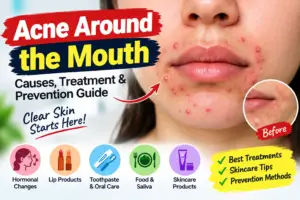
Acne around the mouth is a common skin concern that can cause red bumps, whiteheads, blackheads, pimples, and irritation around the lips and chin. Because the skin in this area can be sensitive, treating mouth-area acne requires a gentle and consistent skincare routine.
Acne around the mouth can be caused by a number of things, such as clogged pores, hormones, skincare products, cosmetics, friction, and lifestyle choices. Bumps around the mouth can occasionally be caused by conditions like perioral dermatitis rather than acne.
The causes of oral acne, practical remedies, skincare advice, ways to avoid it, and when to consult a dermatologist are all covered in this guide.
What Causes Acne Around the Mouth?
Acne develops when hair follicles become clogged with oil, dead skin cells, and bacteria. When this happens around the mouth and chin, pimples can develop just like acne on other areas of the face.
However, the area around the mouth has some unique triggers.
1. Hormonal Changes
Hormonal fluctuations are one of the most common causes of acne, particularly around the lower face, chin, and jawline. Changes in hormones can increase oil production and contribute to clogged pores.
Hormonal acne may become more noticeable during puberty, menstrual cycles, pregnancy, or periods of hormonal fluctuation.
2. Lip Products
Lip balms, lipsticks, glosses, and heavy lip moisturizers can sometimes contribute to clogged pores around the lips. Ingredients that are rich or occlusive may spread onto the surrounding skin and potentially trigger breakouts in people who are acne-prone.
If you notice small pimples appearing repeatedly around your lips, consider whether a recently introduced lip product could be contributing.
3. Toothpaste and Oral-Care Products
Toothpaste itself does not cause acne for everyone, but certain ingredients in oral-care products can irritate the skin around the mouth.
If you frequently develop redness, burning, or small bumps around the lips, pay attention to whether symptoms appear or worsen after brushing your teeth. Avoid allowing toothpaste to remain on the surrounding skin and gently rinse the area afterward.
4. Food and Saliva
Food residue, saliva, and frequent licking of the lips can irritate the skin around the mouth. This can be particularly noticeable in people with sensitive or dry skin.
Wiping the area gently after eating and avoiding repeated lip licking may help reduce irritation.
5. Friction and Touching
Frequent touching, rubbing, shaving, or friction from masks and clothing can irritate the skin and contribute to breakouts.
Hands can also transfer oil, dirt, and microorganisms to the face. Try to avoid squeezing or repeatedly touching pimples around the mouth.
6. Comedogenic Skincare Products
Some moisturizers, sunscreens, makeup products, and oils may contribute to clogged pores in acne-prone individuals.
Look for products labeled non-comedogenic or formulated specifically for acne-prone skin.
Is It Really Acne Around the Mouth?
Not every bump around the mouth is acne.
A condition called perioral dermatitis can cause small red or skin-colored bumps around the mouth. It may also cause dryness, scaling, burning, or irritation.
Perioral dermatitis can sometimes resemble acne, but the treatment may be different. Using strong acne products or steroid creams without professional guidance can potentially make certain cases worse.
If your bumps are persistent, itchy, burning, very dry, or concentrated around the mouth and nose, consider seeing a dermatologist for an accurate diagnosis.
How to Treat Acne Around the Mouth
Treatment depends on the severity and type of acne. Mild breakouts can often be managed with an appropriate skincare routine, while persistent or severe acne may require professional treatment.
1. Use a Gentle Cleanser
Wash your face twice daily with a mild, fragrance-free cleanser. Avoid aggressive scrubbing because excessive friction can irritate the skin and potentially worsen inflammation.
After cleansing, pat your face dry rather than rubbing it.
2. Try Salicylic Acid
Salicylic acid is a commonly used acne-fighting ingredient that helps remove dead skin cells and unclog pores.
For sensitive skin around the mouth, start with a lower concentration and use it gradually. Avoid applying it directly to the lips because the lip tissue is more sensitive.
3. Consider Benzoyl Peroxide
Benzoyl peroxide can help reduce acne-causing bacteria and inflammation. It may be useful for inflammatory pimples.
Because the area around the mouth can be sensitive, use a small amount and avoid the lips. Benzoyl peroxide can also bleach fabrics, so take care with towels and clothing.
4. Use a Non-Comedogenic Moisturizer
Acne treatment can sometimes make the skin dry or irritated. A lightweight, non-comedogenic moisturizer can help support the skin barrier.
Look for ingredients such as ceramides, glycerin, or hyaluronic acid if your skin needs additional hydration.
5. Wear Sunscreen
Daily sunscreen is an important part of acne care. Inflammation from pimples can leave temporary dark marks, and sun exposure can make pigmentation more noticeable.
Choose a lightweight, non-comedogenic sunscreen with broad-spectrum protection.
6. Don’t Pick or Squeeze Pimples
Squeezing acne around the mouth can increase inflammation and raise the risk of scarring and post-inflammatory hyperpigmentation.
Instead, allow pimples to heal naturally or use an appropriate acne treatment.
Best Skincare Routine for Acne Around the Mouth
A simple routine is often more effective than using many different products.
Morning Routine
Step 1: Cleanse with a gentle facial cleanser.
Step 2: Apply a lightweight, non-comedogenic moisturizer.
Step 3: Apply broad-spectrum sunscreen.
If you use makeup, choose products labeled non-comedogenic and remove them thoroughly at night.
Night Routine
Step 1: Remove makeup and sunscreen.
Step 2: Cleanse gently.
Step 3: Apply your selected acne treatment, such as salicylic acid or another dermatologist-recommended ingredient.
Step 4: Finish with a moisturizer.
Avoid introducing several active ingredients at once. Using too many acne treatments can cause dryness and irritation, particularly around the mouth.
Home and Lifestyle Tips for Preventing Mouth-Area Acne
Good skincare habits can help reduce recurring breakouts.
Keep Your Phone Clean
Phones can accumulate oil, dirt, and other substances that come into contact with your face. Clean your phone regularly and avoid pressing it against areas with active acne.
Change Pillowcases Regularly
Oil, sweat, skincare products, and other residue can build up on pillowcases. Regularly washing bedding can support good facial hygiene.
Avoid Heavy Products Around the Mouth
If you frequently develop clogged pores around your lips, review your lip balms, makeup, moisturizers, and other products that come into contact with the area.
Keep Hair Products Away From Your Face
Hair oils, creams, gels, and styling products can sometimes contribute to clogged pores if they come into contact with facial skin.
Manage Stress
Stress does not directly cause every acne breakout, but it can influence hormones and behaviors that may contribute to acne in some people. Adequate sleep, regular physical activity, and stress-management techniques can support overall skin health.
What Not to Do for Acne Around the Mouth
Avoid harsh scrubs, frequent exfoliation, and aggressive cleansing. These practices can damage the skin barrier and increase irritation.
Also avoid applying random home remedies such as lemon juice, baking soda, toothpaste, or undiluted essential oils to pimples. These substances can irritate the skin and may make redness or inflammation worse.
Another important point is to avoid using topical steroid creams around the mouth unless they have been specifically recommended by a healthcare professional. Steroids can worsen or trigger perioral dermatitis in some people.
When Should You See a Dermatologist?
Consider professional medical advice if:
- Acne around the mouth continues despite several weeks of consistent skincare.
- Pimples are painful, deep, or cystic.
- You are developing acne scars.
- The area is severely itchy, burning, or scaly.
- Small bumps keep returning around the mouth and nose.
- You are unsure whether the condition is acne or perioral dermatitis.
- Over-the-counter products cause significant irritation.
- Acne is affecting your confidence or daily life.
A dermatologist can determine whether the bumps are acne, perioral dermatitis, folliculitis, irritation, or another skin condition and recommend appropriate treatment.
How Long Does Acne Around the Mouth Take to Clear?
The time required for acne to improve varies from person to person. Mild breakouts may improve with consistent skincare, while persistent hormonal or inflammatory acne can require longer-term treatment.
Consistency is more important than constantly changing products. Give a skincare routine enough time to work unless you experience significant irritation or your healthcare professional recommends a change.
Frequently Asked Questions
Why am I suddenly getting acne around my mouth?
Sudden acne around the mouth can be associated with hormonal changes, new skincare or makeup products, lip products, friction, irritation, or changes in your routine. If the bumps are persistent or unusual, a dermatologist can help identify the cause.
Can toothpaste cause acne around the mouth?
Toothpaste is not a universal cause of acne. However, some toothpaste ingredients may irritate sensitive skin around the mouth. Rinse the skin thoroughly after brushing and avoid leaving toothpaste residue around the lips.
Should I pop a pimple around my mouth?
No. Popping or squeezing pimples can increase inflammation and may lead to dark marks, infection, or scarring.
Is acne around the mouth hormonal?
It can be. Hormonal acne commonly affects the lower face, chin, and jawline, although acne in this area can have many other causes.
Can I use salicylic acid around my mouth?
Salicylic acid can be useful for acne-prone skin, but the skin around the lips can be sensitive. Use it carefully and avoid the lips themselves. Stop if significant irritation develops.
What is the difference between acne and perioral dermatitis?
Acne often includes blackheads, whiteheads, and inflamed pimples. Perioral dermatitis commonly causes clusters of small bumps, redness, dryness, scaling, burning, or irritation around the mouth. Because the conditions can look similar, persistent cases should be evaluated by a dermatologist.
Final Thoughts
Acne around the mouth can be caused by several factors, including hormonal changes, clogged pores, irritating products, friction, and skincare habits. The best approach is usually a simple, consistent routine that includes gentle cleansing, appropriate acne treatment, moisturizer, and daily sunscreen.
Avoid squeezing pimples and be cautious with harsh home remedies or excessive exfoliation. If the bumps are persistent, painful, itchy, burning, or don’t respond to basic acne care, professional evaluation is important because the condition may not actually be acne.
With the right diagnosis and a consistent skincare routine, most people can significantly improve breakouts and maintain healthier-looking skin around the mouth.
Acne around the mouth can have several causes, from hormones and clogged pores to irritating products. Learn the causes, treatments, skincare tips, and prevention methods.