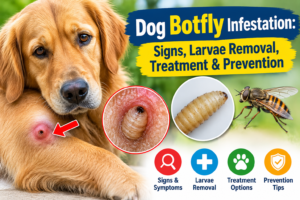

Dog Botfly Infestation: Signs, Larvae Removal, Treatment & Prevention
A dog botfly infestation can be alarming for pet owners, especially when a dog develops a swollen lump, a small breathing hole in the skin, or visible larvae. Botflies are parasitic flies whose larvae can live beneath the skin of dogs and other animals. Although some infestations may appear as a simple skin lump, untreated botfly larvae can cause irritation, inflammation, infection, and significant discomfort.
Understanding the signs of botfly infestation in dogs, how veterinarians remove botfly larvae, available treatment options, and ways to prevent reinfestation can help protect your pet. If you suspect that your dog has a botfly larva under its skin, professional veterinary examination is recommended rather than attempting removal at home.
What Is a Botfly Infestation in Dogs?
A botfly infestation occurs when the larval stage of a botfly enters or develops in a dog’s skin or tissues. The condition is commonly associated with outdoor exposure, particularly in areas where botflies are present.
When dogs come into touch with contaminated settings, botfly larvae may be deposited nearby or enter through tiny skin openings. A little hole may form beneath the skin as the larva grows.
A hard lump with a small center aperture is one of the most obvious symptoms. The larva may be able to breathe through the aperture. Owners may also see swelling, redness, movement, discharge, or heightened sensitivity in the vicinity of the afflicted area.
Veterinary diagnosis is crucial since the precise species and life cycle of botflies might differ by geographic location.
Common Signs of Botfly Larvae in Dogs
Recognizing the symptoms early can help prevent complications. Common botfly symptoms in dogs include:
1. Small Swollen Lump
A raised lump beneath the dog’s skin may be the first noticeable sign. It can resemble an abscess, cyst, insect bite, or other skin growth.
2. Small Breathing Hole
A tiny hole or opening in the center of the lump is a classic finding with certain botfly infestations. The opening may become more noticeable as the larva grows.
3. Redness and Skin Irritation
The skin surrounding the affected area may become red, swollen, or irritated. Dogs may repeatedly lick, scratch, or rub the location.
4. Visible Movement
In some cases, owners may see movement inside the opening. This can be disturbing, but it is an important reason to seek veterinary care promptly.
5. Discharge
The site may produce fluid, blood, or pus, particularly if secondary bacterial infection develops.
6. Pain or Tenderness
Some dogs become sensitive when the area is touched. Others may constantly lick or scratch the lump.
7. Behavioral Changes
A dog experiencing discomfort may become restless, less active, or unusually focused on one part of its body.
Where Do Botfly Larvae Usually Appear on Dogs?
Botfly larvae can occur in different areas depending on the species and how exposure happens. Possible locations include the:
- Head and neck
- Face
- Legs
- Chest
- Abdomen
- Back
- Areas around wounds or skin openings
A suspicious lump should not automatically be assumed to be a botfly infestation. Other conditions, including abscesses, cysts, tumors, foreign bodies, and infected wounds, can look similar.
A veterinarian may need to examine the lesion carefully to determine the cause.
How Are Botfly Larvae Removed From Dogs?
Botfly larvae removal should generally be performed by a veterinarian. The larva is located beneath the skin, and improper handling can cause injury or leave parts of the larva behind.
Veterinary removal may involve carefully enlarging or accessing the opening and extracting the larva intact. Depending on the location and the dog’s temperament, local anesthesia, sedation, or other pain-control measures may be appropriate.
The veterinarian may then clean the affected area and determine whether additional treatment is necessary.
Why You Should Not Squeeze a Botfly Larva
Pet owners may be tempted to squeeze the lump to force the larva out. This can be risky.
Forceful manipulation can potentially damage the larva and cause inflammation or other complications. The affected tissue may also become traumatized, increasing the risk of infection.
For this reason, do not attempt aggressive botfly removal at home.
Dog Botfly Treatment After Larvae Removal
Treatment depends on the dog’s condition and whether complications are present.
After the larva has been removed, a veterinarian may recommend cleaning the wound and monitoring it for infection. If significant inflammation, tissue damage, or secondary bacterial infection is present, additional veterinary treatment may be needed.
Treatment can include:
- Professional wound cleaning
- Appropriate pain management
- Monitoring for infection
- Veterinary-prescribed medication when indicated
- Follow-up examination
- Prevention of licking or scratching
Antibiotics are not automatically required for every botfly infestation. A veterinarian should determine whether bacterial infection is present and whether medication is appropriate.
Can Botfly Infestations Cause Serious Problems?
Many localized infestations can be successfully treated, but complications are possible.
Potential problems include:
Secondary bacterial infection: An open skin lesion can become contaminated with bacteria.
Tissue inflammation: The body’s immune response can produce swelling and irritation around the larva.
Persistent wound: The opening may require time to heal after the larva is removed.
Pain and discomfort: Some dogs may experience considerable irritation.
Multiple larvae: In areas with significant exposure, a dog may have more than one affected site.
The risk depends on factors such as the location of the infestation, duration, number of larvae, and the dog’s overall health.
Can Dogs Get Botflies From Other Dogs?
Botfly infestations are generally related to environmental exposure and the life cycle of the specific fly rather than ordinary dog-to-dog transmission.
If one dog in a household develops a botfly infestation, however, it is sensible to check other pets for unusual lumps, wounds, or skin lesions—particularly if they spend substantial time outdoors.
Environmental prevention is more important than simply treating one animal.
How to Prevent Botfly Infestation in Dogs
Preventing exposure can reduce the risk of future infestations.
Keep Your Dog’s Living Area Clean
Regularly clean bedding, sleeping areas, kennels, and outdoor spaces. Good hygiene can reduce exposure to insects and other parasites.
Limit Contact With High-Risk Outdoor Areas
Dogs that spend significant time in wooded, grassy, or rural environments may have greater exposure to insects. When practical, supervise outdoor activities and avoid areas with heavy insect activity.
Check Your Dog’s Skin Regularly
Routine grooming provides an excellent opportunity to examine the skin.
Look for:
- New lumps
- Small holes
- Redness
- Swelling
- Unusual discharge
- Excessive licking
- Areas of hair loss
Early detection can make veterinary treatment easier.
Maintain Routine Veterinary Care
Regular veterinary examinations can help identify unusual skin problems before they become more complicated.
Discuss your dog’s lifestyle with your veterinarian, particularly if your pet frequently hunts, explores rural environments, or spends time outdoors.
Botfly vs. Abscess: What Is the Difference?
A botfly lesion can sometimes be confused with a skin abscess.
An abscess is usually associated with a bacterial infection and may contain pus. It can develop after a bite, wound, foreign object, or other injury.
A botfly lesion may have a more distinctive central opening through which the larva obtains air.
However, appearance alone is not always enough to distinguish the two. A veterinarian should evaluate suspicious lumps rather than relying on photographs or home diagnosis.
When Should You Take Your Dog to a Veterinarian?
Contact your veterinarian if your dog develops an unexplained skin lump, especially if you notice an opening, movement, bleeding, discharge, swelling, or significant irritation.
Seek prompt veterinary attention if your dog has:
- Severe pain
- Rapidly increasing swelling
- Significant bleeding
- Pus or foul-smelling discharge
- Fever or marked lethargy
- Difficulty breathing
- A lesion near the eye, mouth, or another sensitive area
- Multiple suspicious lesions
A lesion close to the eyes, nose, mouth, or other delicate structures deserves particular caution because improper manipulation could cause additional injury.
Can You Remove a Botfly Larva at Home?
Although people may find online instructions for home extraction, attempting to remove a botfly larva yourself is not recommended.
The larva may be firmly positioned beneath the skin, and squeezing, cutting, or digging into the area can damage surrounding tissue. There is also a risk of incomplete removal or secondary infection.
The safest approach is to have the lesion evaluated and treated by a veterinarian.
Dog Botfly Infestation: Cost of Treatment
The cost of botfly removal in dogs varies considerably depending on your location, veterinary clinic, number of larvae, lesion location, and whether sedation or additional treatment is necessary.
A simple examination and removal may cost less than a complicated case involving multiple lesions, sedation, wound treatment, laboratory testing, or infection management.
Pet owners should ask the veterinary clinic for an estimate before treatment when possible. Pet insurance may cover some medically necessary veterinary services depending on the policy, exclusions, waiting periods, and whether parasite-related conditions are covered.
Frequently Asked Questions
What does a botfly larva look like on a dog?
A botfly infestation may appear as a raised skin lump with a small central opening. In some cases, the larva or movement may be visible through the opening.
Is a botfly infestation painful for dogs?
It can cause irritation, inflammation, tenderness, and discomfort. The severity varies between individual dogs and depends on the location and duration of the infestation.
Will a botfly larva leave a dog on its own?
Depending on the species and life cycle, the larva may eventually leave the host, but waiting for it to leave can expose the dog to continued irritation and potential complications. Veterinary evaluation is recommended.
Can botflies kill dogs?
A localized botfly infestation is not usually considered a fatal condition, but complications can occur. Multiple lesions, infection, sensitive locations, or other underlying problems may increase the seriousness of a case.
Can humans get botfly infestations?
Some botfly species can infest humans, but the risk depends on the species and geographic location. People should avoid handling larvae directly and seek medical advice if they develop a suspicious skin lesion after insect exposure.
Final Thoughts
A dog botfly infestation can look frightening, but prompt veterinary care can help manage the problem safely. A suspicious lump, central skin opening, discharge, redness, or visible movement should not be ignored.
The safest method of botfly larvae removal in dogs is professional extraction followed by appropriate wound care. Avoid squeezing, cutting, or digging into the lesion at home. Regular skin checks, good hygiene, responsible outdoor supervision, and routine veterinary care can also help reduce the risk of future problems.
If you notice an unusual lump or possible botfly larva on your dog, contact a veterinarian for an accurate diagnosis and treatment plan. Early professional care can help reduce discomfort and prevent avoidable complications.