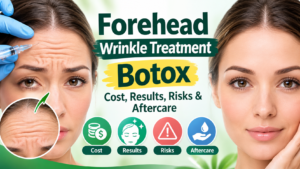

Forehead Wrinkle Treatment: Botox Cost, Results, Risks & Aftercare
One of the most prevalent indicators of facial aging is wrinkles on the forehead. They can start out as thin lines and progressively get deeper, particularly if you frown, raise your eyebrows, or make other facial expressions frequently. Many people search for treatments that can make their skin appear smoother and younger, even though forehead lines are a natural aspect of aging.
Botox is one of the most widely used treatments for wrinkles on the forehead. Botox helps lessen the appearance of horizontal forehead lines by momentarily relaxing certain facial muscles that cause dynamic wrinkles.
However, what is the price of forehead Botox? What is the duration of the results? What should you do following Botox treatment, and is it safe?
This guide explains everything you need to know about forehead wrinkle treatment, Botox cost, expected results, potential risks, and aftercare.
What Causes Forehead Wrinkles?
Forehead wrinkles develop due to a combination of natural aging, facial movements, and environmental factors.
Common causes include:
- Natural loss of collagen and elastin
- Repeated facial expressions
- Sun exposure
- Skin dehydration
- Smoking
- Environmental pollution
- Genetics
- Stress and lifestyle factors
- Normal aging of facial muscles and skin
When you repeatedly raise your eyebrows or move your forehead, the underlying muscles contract. Over time, repeated movement can create permanent-looking lines.
There are two main types of forehead wrinkles:
Dynamic Wrinkles
Dynamic wrinkles appear when you move your facial muscles. For example, forehead lines may become noticeable when you raise your eyebrows.
Botox is particularly useful for this type of wrinkle because it temporarily reduces muscle activity.
Static Wrinkles
Static wrinkles remain visible even when your face is relaxed. They can develop after years of repeated muscle movement and collagen loss.
Botox may soften these lines, but deeper static wrinkles may require additional treatments such as resurfacing, fillers in selected areas, or professional skin treatments.
What Is Botox for Forehead Wrinkles?
Botox is a purified form of botulinum toxin type A used medically and cosmetically. When injected into selected muscles, it temporarily reduces nerve signals that cause muscle contraction.
For forehead wrinkles, a qualified medical professional carefully injects small amounts into specific forehead muscles.
The goal is not to completely freeze the face. A properly planned treatment aims to reduce excessive muscle movement while maintaining a natural facial appearance.
Botox can also be used in combination with other cosmetic treatments depending on the individual’s skin condition and goals.
How Does Forehead Botox Work?
During treatment, a healthcare professional identifies the muscles responsible for creating forehead lines. A very small needle is then used to deliver Botox into selected areas.
The treatment usually takes only a short time, although the exact duration depends on the number of injection sites and the individual’s treatment plan.
Botox does not remove wrinkles instantly. Instead, muscle activity gradually decreases over the following days.
Most people begin noticing changes within several days, while the final effect may take around two weeks to become fully apparent.
Forehead Botox Cost
The cost of forehead Botox varies significantly depending on several factors.
Typical pricing may depend on:
- Geographic location
- Number of Botox units required
- Provider’s experience
- Clinic reputation
- Number of areas being treated
- Whether Botox is priced per unit or per treatment
- Additional treatments performed during the appointment
In the United States, cosmetic Botox is commonly priced per unit, and forehead treatment may require a varying number of units depending on the patient’s anatomy and treatment goals.
Some clinics advertise a flat treatment price, while others charge according to the number of units used.
Because pricing varies widely, it is better to obtain a consultation and personalized quote rather than relying on a single advertised price.
Is Cheap Botox Safe?
The cheapest option is not always the safest option.
Before choosing a clinic, consider:
- Provider qualifications
- Medical experience
- Clinic standards
- Product authenticity
- Hygiene practices
- Consultation quality
- Whether the provider explains potential risks
Avoid choosing a cosmetic injection provider solely because of a very low price.
How Long Does Forehead Botox Last?
Botox is temporary.
For many people, results last approximately 3 to 4 months, although the duration varies from person to person.
Some factors that may influence how long results last include:
- Muscle strength
- Individual metabolism
- Dosage
- Injection technique
- Treatment frequency
- Facial expression habits
Over time, muscle activity gradually returns and forehead lines may become visible again.
People who regularly receive Botox may choose maintenance treatments based on their provider’s recommendations.
When Will You See Botox Results?
Botox results develop gradually rather than immediately.
A general timeline may look like this:
First 24 hours:
There may be mild redness, swelling, or tenderness around injection sites.
2–4 days:
Some people begin noticing reduced muscle movement.
Around 1–2 weeks:
The treatment effect is usually more noticeable and closer to the final result.
Individual results can vary, so your provider may recommend a follow-up appointment if adjustments are necessary.
Benefits of Forehead Botox
Botox is popular because it can provide several cosmetic benefits.
1. Reduces Forehead Lines
Botox can soften horizontal forehead wrinkles caused by repeated muscle movement.
2. Quick Treatment
A typical appointment can be relatively short, making Botox convenient for people with busy schedules.
3. Minimal Downtime
Most people can return to normal daily activities soon after treatment, although specific aftercare instructions should be followed.
4. Temporary Results
Some people prefer Botox because the effects are not permanent. Muscle activity gradually returns as the treatment wears off.
5. Natural-Looking Results When Properly Performed
A skilled injector can use an appropriate amount of Botox to reduce wrinkles while preserving natural facial expressions.
Forehead Botox Risks and Side Effects
Although Botox is widely used, it is still a medical treatment and can cause side effects.
Common temporary effects may include:
- Redness
- Mild swelling
- Tenderness
- Bruising
- Headache
- Mild discomfort at injection sites
Less common complications can include unwanted muscle weakness or temporary drooping of nearby areas.
One concern associated with forehead injections is eyelid or eyebrow drooping. This can happen if the product affects nearby muscles.
Serious complications are uncommon when Botox is administered appropriately by a qualified professional, but patients should discuss potential risks before treatment.
Seek urgent medical attention if you experience serious symptoms such as difficulty breathing, swallowing, speaking, or significant generalized weakness after treatment.
Botox Aftercare: What Should You Do?
Following your provider’s instructions after Botox can help reduce irritation and potential complications.
Avoid Rubbing the Treated Area
Do not aggressively massage or rub the injection sites unless your healthcare professional specifically tells you to do so.
Follow Exercise Instructions
Your provider may recommend avoiding strenuous physical activity for a short period after treatment.
Avoid Excessive Heat
Some providers recommend avoiding very hot environments, such as saunas, immediately after treatment.
Be Gentle With Your Skin
Use gentle skincare products and avoid unnecessary irritation around the treated area.
Follow Your Provider’s Instructions
Aftercare recommendations can vary depending on the treatment and your medical history, so follow the specific instructions given by your injector.
Who Is a Good Candidate for Forehead Botox?
Adults who have dynamic forehead lines and want to reduce their appearance may be candidates for Botox.
However, Botox is not suitable for everyone.
You should discuss your medical history with your healthcare professional, particularly if you:
- Are pregnant or breastfeeding
- Have certain neuromuscular conditions
- Have an infection at the planned injection site
- Have allergies or previous reactions to botulinum toxin products
- Take certain medications that may affect treatment
A professional consultation is important before cosmetic injections.
Botox vs Other Forehead Wrinkle Treatments
Botox is not the only option for forehead wrinkles.
Retinoids
Prescription retinoids can support collagen production and improve the appearance of fine lines over time.
Sunscreen
Daily broad-spectrum sunscreen is one of the most important steps for preventing premature skin aging.
Chemical Peels
Chemical peels can improve skin texture and pigmentation and may reduce the appearance of certain fine lines.
Laser Skin Resurfacing
Laser treatments can target skin texture, pigmentation, and signs of aging. Different laser technologies are appropriate for different skin types and concerns.
Microneedling
Microneedling creates controlled micro-injuries in the skin to stimulate the body’s natural repair process. It may help improve skin texture and fine lines.
Skincare Products
Moisturizers, antioxidants, retinoids, and sunscreen can support healthier-looking skin. However, topical skincare generally cannot produce the same muscle-relaxing effect as Botox.
How to Prevent Forehead Wrinkles
Although you cannot completely stop natural aging, several habits can help reduce premature skin aging.
Wear Sunscreen Daily
UV radiation contributes significantly to premature skin aging. Use a broad-spectrum sunscreen and reapply as recommended.
Avoid Smoking
Smoking can accelerate skin aging and contribute to wrinkles.
Keep Skin Moisturized
A good moisturizer helps support the skin barrier and can make fine lines appear less noticeable.
Use Antioxidants
Ingredients such as vitamin C may help protect skin from environmental stressors and support a healthy skincare routine.
Avoid Excessive Sun Exposure
Protective clothing, shade, sunglasses, and sunscreen can all help reduce UV exposure.
Maintain a Healthy Lifestyle
Adequate sleep, balanced nutrition, hydration, and regular physical activity can support overall skin health.
Frequently Asked Questions
How much does forehead Botox cost?
The cost varies by location, provider, dosage, and clinic. Some providers charge per unit, while others offer a flat treatment price. A consultation is the best way to receive an accurate estimate.
How long does forehead Botox last?
Results commonly last around 3 to 4 months, but individual results can vary.
Does Botox completely remove forehead wrinkles?
Botox primarily targets wrinkles caused by muscle movement. It may soften dynamic lines but may not completely remove deeper static wrinkles.
Is forehead Botox painful?
Most people describe Botox injections as causing brief pinching or mild discomfort. The needles used are very small.
How quickly does Botox work?
Some changes may become noticeable within several days, with results generally developing over approximately two weeks.
Can Botox prevent forehead wrinkles?
Botox reduces muscle movement that contributes to dynamic wrinkles. However, it does not stop natural aging, sun damage, or collagen loss.
Can I wear makeup after Botox?
Your provider may give specific instructions about when to apply makeup. Generally, patients are advised to avoid unnecessary rubbing or pressure on freshly injected areas.
Final Thoughts
Forehead wrinkles are a normal part of facial aging, but several treatments can make them less noticeable. Forehead Botox is one of the most widely used cosmetic options for dynamic wrinkles because it temporarily reduces muscle activity and can create a smoother appearance.
The location, treatment area, provider experience, and quantity of units needed all affect the price. Usually lasting three to four months, the results are transient.
If you’re thinking about getting Botox, pick a licensed physician and schedule a consultation before beginning treatment. Talk about your expectations, medical background, possible adverse effects, and instructions for aftercare.
For long-term skin health, Botox can also be complemented by daily sunscreen, appropriate skincare, healthy lifestyle habits, and other professional treatments when necessary.