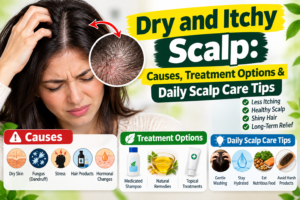

Dry and Itchy Scalp: Causes, Treatment Options & Daily Scalp Care Tips
A dry and itchy scalp can be uncomfortable, distracting, and frustrating. You may notice tightness, flaking, itching, redness, or small white flakes on your hair and clothing. While dry scalp is common and often improves with proper care, persistent itching can sometimes be related to dandruff, eczema, psoriasis, allergic reactions, or other scalp conditions.
When selecting the best course of action, it’s critical to distinguish between basic dryness and an underlying scalp issue. A healthy scalp can be supported by using a mild shampoo, avoiding irritating hair products, moisturizing the scalp, and adhering to a regular hair-care regimen.
The common causes of dry and itchy scalps, practical remedies, useful ingredients, daily scalp care advice, mistakes to avoid, and when it might be time to see a dermatologist are all covered in this guide.
What Causes a Dry and Itchy Scalp?
The scalp can become dry when it loses too much moisture or when its natural protective barrier becomes irritated. Several factors can contribute to scalp dryness and itching.
1. Cold and Dry Weather
Cold weather often brings lower humidity, which can cause moisture to evaporate from the skin more quickly. Indoor heating can also make the air dry.
As a result, the scalp may feel tight, rough, flaky, and itchy, particularly during winter.
Protecting your scalp from cold air and maintaining a gentle hair-care routine can help reduce seasonal dryness.
2. Frequent Hair Washing
Washing your hair too frequently may remove some of the natural oils that help keep the scalp comfortable.
This does not mean that you should stop washing your hair. Instead, choose a washing schedule appropriate for your scalp and use a gentle shampoo when possible.
People with oily scalps may need more frequent washing, while people with dry or sensitive scalps may benefit from washing less frequently.
3. Harsh Shampoos and Hair Products
Some shampoos, styling products, dyes, fragrances, and other hair-care products can irritate the scalp.
If your scalp becomes itchy, burning, red, or unusually dry after using a new product, that product may be contributing to the problem.
Switching to a fragrance-free or sensitive-scalp formula may help determine whether irritation is involved.
4. Dandruff
Dandruff is a common cause of an itchy, flaky scalp. Unlike simple dry skin, dandruff can be associated with excess oil and changes involving the scalp’s natural yeast population.
Dandruff often causes visible flakes and itching. It can become more noticeable during periods of stress or certain environmental conditions.
Anti-dandruff shampoos containing ingredients such as ketoconazole, selenium sulfide, zinc pyrithione, or salicylic acid may be used depending on the specific product and condition.
5. Eczema
Scalp eczema can cause itching, dryness, scaling, redness, and irritation. Some people may also experience eczema on other parts of the body.
If your scalp frequently becomes inflamed or symptoms return despite basic moisturizing and gentle shampoo, professional evaluation may be helpful.
6. Psoriasis
Scalp psoriasis can cause thick, raised patches covered with silvery or white scales. It can extend beyond the hairline and may cause significant itching or discomfort.
Because psoriasis requires different management from ordinary dry scalp, persistent thick scaling should be assessed by a healthcare professional.
7. Allergic or Irritant Contact Dermatitis
Hair dyes, shampoos, conditioners, fragrances, preservatives, and styling products can sometimes trigger an allergic or irritant reaction.
Symptoms may include itching, redness, burning, scaling, or swelling.
If symptoms appear after introducing a new hair product, stopping the suspected product and discussing the reaction with a dermatologist can be useful.
Dry Scalp vs. Dandruff: What Is the Difference?
Dry scalp and dandruff can look similar, but they are not always the same problem.
A dry scalp is usually associated with moisture loss and may produce small, dry flakes. The scalp may feel tight or uncomfortable.
Dandruff, on the other hand, can involve larger or more noticeable flakes and may occur with an oily or irritated scalp.
Because several scalp conditions can produce similar symptoms, persistent or severe flaking should not automatically be treated as simple dryness.
Best Treatment Options for Dry and Itchy Scalp
Treatment depends on the underlying cause. For mild dryness, simple changes to your hair-care routine may be enough.
Use a Gentle Shampoo
Choose a shampoo formulated for dry or sensitive scalps. Avoid products that consistently cause burning, itching, or excessive dryness.
When washing, gently massage the scalp with your fingertips rather than scratching with your fingernails.
Avoid Very Hot Water
Hot water can strip oils from the scalp and may increase dryness and irritation.
Use lukewarm water when washing your hair and rinse thoroughly to remove shampoo and conditioner residue.
Moisturize the Scalp Carefully
A dry scalp may benefit from appropriate moisturizing products. However, avoid applying heavy oils or creams without understanding the cause of your symptoms.
Some scalp conditions can become worse with certain products, particularly when excessive oil or product buildup is involved.
Use an Anti-Dandruff Shampoo When Appropriate
If itching and flakes are caused by dandruff, a medicated or anti-dandruff shampoo may be more appropriate than a basic moisturizing shampoo.
Follow the instructions on the specific product. Some treatments need to remain on the scalp for a short period before rinsing.
If an anti-dandruff shampoo causes severe irritation or does not improve symptoms, stop using it and seek professional advice.
Helpful Ingredients for an Itchy and Dry Scalp
When choosing scalp-care products, certain ingredients may be helpful depending on the cause.
Glycerin
Glycerin is a humectant that helps attract water and support skin hydration. It may be included in shampoos and scalp products designed for dry skin.
Panthenol
Panthenol, also known as provitamin B5, is commonly used in hair and skincare formulations. It can help condition the hair and support a comfortable skin feel.
Ceramides
Ceramides are naturally occurring lipids that help support the skin barrier. Products containing barrier-supporting ingredients may be useful for dry or sensitive skin.
Salicylic Acid
Salicylic acid can help loosen and remove scales and buildup. It is commonly included in products designed for dandruff and flaky scalp conditions.
However, it can be irritating when overused, particularly on a sensitive or damaged scalp.
Ketoconazole
Ketoconazole is an antifungal ingredient found in some medicated dandruff shampoos. It may be recommended for certain dandruff-related scalp conditions.
Use it according to the product instructions or healthcare professional’s advice.
Daily Scalp Care Routine for Dryness and Itching
A consistent routine can help reduce irritation and maintain scalp comfort.
Morning
If you wash your hair in the morning, use lukewarm water and a gentle shampoo. Avoid aggressively scratching the scalp.
Gently pat your hair dry with a towel instead of rubbing the scalp forcefully.
During the Day
Try not to scratch an itchy scalp. Scratching can damage the skin and create additional irritation.
Avoid excessive use of dry shampoo, styling sprays, gels, and other products if they contribute to buildup or itching.
Evening
Brush or comb your hair gently to avoid unnecessary pulling and irritation.
If your scalp is dry, follow your chosen scalp-care routine and use only products that are appropriate for your condition.
Home Remedies for Dry and Itchy Scalp
Many home remedies are promoted online for scalp dryness, but not all are safe or effective.
Avoid applying concentrated essential oils, lemon juice, vinegar, baking soda, or other acidic or alkaline substances directly to the scalp.
These ingredients can cause irritation or allergic reactions, especially when the scalp barrier is already damaged.
If you want to use a natural product, choose a simple, formulated product designed specifically for scalp use rather than applying kitchen ingredients directly to the skin.
What Should You Avoid If Your Scalp Is Itchy?
Several habits can make an itchy scalp worse.
Avoid scratching aggressively, washing with extremely hot water, and using harsh shampoos that leave your scalp feeling tight.
Do not repeatedly apply strong exfoliating treatments or multiple medicated products without guidance.
Avoid changing several hair-care products at the same time. Introducing one product at a time makes it easier to identify whether a particular ingredient is causing irritation.
If hair dye consistently causes itching or burning, avoid reusing the suspected product until you have discussed the reaction with a healthcare professional.
Can Stress Cause an Itchy Scalp?
Stress does not always directly cause a dry scalp, but it can influence some inflammatory skin conditions and may make itching feel more noticeable.
Stress can also lead to behaviors such as scratching or poor sleep, which may make scalp discomfort more difficult to manage.
Maintaining good sleep, staying physically active, eating a balanced diet, and using stress-management techniques may support overall skin and hair health.
Can Diet Affect Scalp Health?
A balanced diet provides nutrients needed for normal skin and hair function. Protein, vitamins, minerals, and healthy fats all contribute to overall nutritional health.
However, taking supplements is not automatically the solution to an itchy scalp. Unless you have a confirmed nutritional deficiency, excessive supplementation may not improve scalp symptoms.
If you experience persistent scalp problems along with hair loss, fatigue, or other unexplained symptoms, speak with a healthcare professional.
When Should You See a Dermatologist?
Mild scalp dryness may improve with simple home care, but persistent symptoms deserve professional attention.
See a dermatologist if you experience severe or ongoing itching, thick scales, significant redness, sores, bleeding, pus, swelling, or noticeable hair loss.
You should also seek medical advice if your scalp symptoms continue despite changing to gentle hair-care products.
A dermatologist can examine your scalp and determine whether the problem is dry skin, dandruff, eczema, psoriasis, contact dermatitis, fungal infection, or another condition.
How to Prevent Dry and Itchy Scalp
Prevention starts with protecting the scalp’s natural barrier.
Use a gentle shampoo appropriate for your scalp type and avoid washing with very hot water. Do not scratch or aggressively scrub your scalp.
Limit hair products that cause irritation and rinse shampoo thoroughly. During cold or very dry weather, protect your scalp from harsh environmental conditions.
If you color your hair, follow product instructions carefully and discontinue a product if it causes burning, swelling, or a significant rash.
Regularly cleaning brushes, combs, hats, and pillowcases can also help maintain good scalp hygiene.
Frequently Asked Questions
What is the best treatment for a dry and itchy scalp?
For mild dryness, use a gentle shampoo, lukewarm water, and a suitable moisturizing scalp-care product. If dandruff or another scalp condition is responsible, a targeted treatment may be more appropriate.
How can I stop my scalp from itching?
Avoid scratching, identify irritating hair products, use gentle shampoo, and keep the scalp comfortable and hydrated. Persistent itching may require evaluation by a dermatologist.
Is dandruff the same as dry scalp?
No. Dry scalp is generally related to moisture loss, while dandruff is a distinct scalp condition that can involve flaking and inflammation. They can look similar, so persistent symptoms should be evaluated if basic care does not help.
Should I oil a dry and itchy scalp?
Some people use hair oils for dryness, but oil is not appropriate for every scalp condition. Excessive oiling can contribute to buildup and may aggravate certain problems. If you have persistent itching or flaking, determine the cause before relying on scalp oils.
How often should I wash a dry scalp?
There is no single schedule that works for everyone. Washing frequency should depend on your scalp type, hair texture, activity level, and the underlying cause of the symptoms.
Can shampoo make my scalp itchy?
Yes. Certain shampoos can irritate sensitive skin or cause dryness, especially if they contain ingredients that you do not tolerate. If itching consistently begins after using a particular shampoo, consider switching to a gentler formula.
Final Thoughts
A dry and itchy scalp can have many causes, from cold weather and frequent washing to dandruff, eczema, psoriasis, and reactions to hair-care products. The most effective approach is to identify the cause instead of treating every itchy scalp in the same way.
For mild dryness, concentrate on using lukewarm water, gentle cleansing, routine but proper scalp care, and staying away from irritating products. An appropriate anti-dandruff shampoo might work better than a typical moisturizing shampoo if dandruff is the cause.
Steer clear of harsh home remedies like baking soda, concentrated essential oils, lemon juice, and harsh scalp scrubs. These may exacerbate symptoms by irritating the skin.
If itching is severe, persistent, painful, or accompanied by thick scales, sores, bleeding, swelling, or hair loss, consult a dermatologist. With the right diagnosis and consistent care, many causes of scalp dryness and itching can be effectively managed.