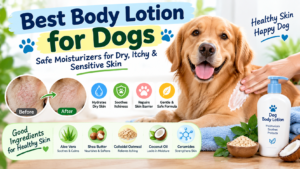

Best Body Lotion for Dogs: Safe Moisturizers for Dry, Itchy & Sensitive Skin
A dog’s skin is an important part of their overall health, but it can sometimes become dry, flaky, itchy, irritated, or sensitive. Cold weather, dry indoor air, frequent bathing, allergies, parasites, and certain skin conditions can all contribute to discomfort. When your dog has dry skin, you may wonder whether using a body lotion for dogs can help.
Fortunately, the skin barrier can be strengthened and mild dryness can be relieved with specially designed dog moisturizers. But not all human lotions are suitable for dogs. Products applied to a dog’s body may eventually be swallowed because they lick their skin. For this reason, selecting a safe moisturizer for dogs is crucial.
This guide explains how to choose the best body lotion for dogs, what ingredients to look for, which products to avoid, how to moisturize your dog’s skin safely, and when dry or itchy skin requires veterinary attention.
Can You Use Body Lotion on Dogs?
Yes, you can use a moisturizer on a dog, but it should ideally be specifically formulated for dogs. Canine skin has different characteristics from human skin, and dogs frequently lick their fur and skin after topical products are applied.
Rough elbows, flaky patches, irritated paw and nose areas, and mildly dry skin may all benefit from a dog-safe lotion or moisturizer. Lotion shouldn’t be used as a remedy for an underlying illness, though.
If your dog is constantly scratching, chewing their skin, developing redness, losing hair, producing an unusual odor, or developing sores, the problem may be caused by allergies, parasites, infection, or another condition that needs veterinary care.
Best Body Lotion for Dogs: What Should You Look For?
When choosing a dog body lotion for dry skin, look for products designed specifically for pets. A good moisturizer should be gentle, easy to apply, and appropriate for dogs.
1. Dog-Safe Moisturizing Ingredients
Some moisturizing ingredients commonly used in pet skin products can help support hydration. Depending on the product, you may find ingredients such as:
- Colloidal oatmeal
- Aloe vera formulated for pets
- Glycerin
- Ceramides
- Plant-based oils formulated for animals
- Shea butter in pet-safe formulations
- Vitamin E
- Fatty acids
These ingredients can help improve moisture retention and support the skin barrier.
Always read the complete ingredient label rather than assuming that a natural ingredient is automatically safe.
2. Fragrance-Free Formulas
For dogs with sensitive skin, fragrance-free products are often a better choice. Strong perfumes and unnecessary additives may irritate sensitive skin.
A simple, gentle formula is usually preferable to a heavily scented lotion.
3. Non-Greasy Texture
A lightweight moisturizer can be easier to use because dogs may be less likely to immediately lick a thin layer from their skin.
A greasy product can also collect dirt and make your dog’s coat feel uncomfortable.
4. Products Made Specifically for Dogs
The safest approach is to choose a product labeled for canine use. Pet-specific moisturizers are formulated with dogs’ behavior and skin needs in mind.
Best Moisturizer for Dogs With Dry Skin
Dry skin can appear as white flakes, rough patches, mild scaling, or a dull coat. Some dogs may also scratch more frequently than usual.
A moisturizer for dogs with dry skin can help restore hydration when dryness is caused by environmental factors or excessive bathing.
For example, winter weather and indoor heating can reduce humidity and contribute to dry skin. Frequent bathing with harsh shampoos can also remove natural oils from the skin.
A gentle dog moisturizer may be useful after bathing, especially when recommended by your veterinarian.
However, persistent dryness should not simply be covered with lotion. If your dog’s skin continues to become dry despite proper grooming and moisturizing, investigate the underlying cause.
Best Lotion for Itchy Dog Skin
Itchy skin is one of the most common reasons pet owners look for a dog lotion for itchy skin.
Mild itching may sometimes occur because of dry skin. However, itching can also result from:
- Fleas
- Mites
- Environmental allergies
- Food allergies
- Bacterial infections
- Yeast infections
- Contact irritation
- Skin inflammation
- Underlying medical conditions
Because these causes require different treatments, lotion alone may not solve the problem.
If your dog is scratching continuously or causing wounds by biting and chewing, contact a veterinarian. Treating the cause is more important than simply moisturizing the skin.
Dog Lotion for Sensitive Skin
Dogs with sensitive skin may react to certain grooming products, fragrances, detergents, or environmental substances.
When choosing a dog moisturizer for sensitive skin, look for a gentle formula with minimal unnecessary ingredients. Avoid products with strong fragrance or ingredients known to irritate your particular dog.
Before applying a new product over a large area, ask your veterinarian whether it is appropriate for your dog’s skin condition.
If irritation develops after application, stop using the product and seek veterinary advice if symptoms persist or worsen.
Can Human Body Lotion Be Used on Dogs?
Generally, it is better to avoid using ordinary human body lotion on dogs unless a veterinarian specifically recommends a particular product.
Human lotions may contain fragrances, preservatives, essential oils, or other ingredients that are not appropriate for dogs. Because dogs lick themselves, even a product that seems harmless when applied externally can become an ingestion concern.
Some human skincare products may also be too concentrated or unsuitable for canine skin.
Instead, choose a moisturizer made specifically for dogs or ask your veterinarian about a suitable alternative.
Ingredients to Avoid in Dog Lotion
Not every moisturizer labeled “natural” is necessarily safe for dogs. Certain ingredients can be irritating or harmful if swallowed.
Be especially cautious with products containing:
- Strong fragrances
- Essential oils
- Artificial additives that may irritate sensitive skin
- Ingredients intended specifically for human medicated skincare
- High concentrations of active ingredients
- Products containing potentially toxic substances for pets
Essential oils deserve particular caution because some oils can be harmful to dogs, especially when concentrated or improperly used.
Never assume that a product is safe simply because it is labeled natural or organic.
How to Apply Dog Body Lotion Safely
Using a dog moisturizer correctly can reduce the chance of irritation and licking.
Step 1: Check the Skin
Look closely at the area before applying anything. If you see open wounds, bleeding, pus, severe redness, swelling, or significant hair loss, speak with a veterinarian before using lotion.
Step 2: Clean the Area
If appropriate, gently clean the skin according to your veterinarian’s recommendations. Do not scrub irritated skin aggressively.
Step 3: Use a Small Amount
Apply a thin layer of dog-safe moisturizer. Using too much can make the coat greasy and encourage licking.
Step 4: Prevent Excessive Licking
Allow the product to absorb. If your dog immediately licks the area repeatedly, ask your veterinarian about safer application methods or alternative treatments.
Step 5: Monitor Your Dog
Watch for redness, swelling, increased itching, rash, or other signs of irritation. Discontinue the product if your dog’s skin becomes worse.
Dog Lotion for Dry Paws and Rough Skin
Although many people search for body lotion for dogs, dry skin is often especially noticeable on the paws.
Dogs’ paw pads can become rough or dry after walking on hot pavement, cold surfaces, rough terrain, or chemically treated areas.
A dog-specific paw balm or moisturizer may be more appropriate for paw pads than a general body lotion.
Avoid applying products to damaged paw pads without veterinary advice, particularly when cracks are deep or painful.
How Often Should You Moisturize Your Dog’s Skin?
There is no single schedule that works for every dog.
Some dogs may only need occasional moisturizing during particularly dry weather. Others may require a veterinarian-recommended skin-care routine.
Overusing lotions can sometimes cause problems, especially if a product is not appropriate for dogs. Follow the directions on the product and your veterinarian’s recommendations.
If your dog’s skin constantly requires moisturizer, consider why. Repeated dryness may be a sign that something else needs attention.
Other Ways to Help a Dog With Dry Skin
Moisturizer is only one part of maintaining healthy canine skin.
Use a Gentle Dog Shampoo
Avoid bathing your dog too frequently unless recommended by a veterinarian. Choose a gentle shampoo designed for dogs.
Provide Fresh Water
Adequate hydration supports overall health and contributes to normal skin function.
Feed a Balanced Diet
A complete and balanced diet provides nutrients needed for healthy skin and coat. Some dogs may benefit from specific dietary changes, but supplements should be discussed with a veterinarian.
Control Fleas and Parasites
Fleas and other parasites can cause intense itching and skin irritation. Keep your dog’s parasite prevention program up to date based on veterinary recommendations.
Maintain Healthy Grooming Habits
Regular brushing can help remove loose hair and distribute natural oils throughout the coat. The appropriate grooming routine depends on your dog’s breed and coat type.
When Should You See a Veterinarian?
Dry skin is not always a simple moisturizing problem.
Contact a veterinarian if your dog has:
- Severe or persistent itching
- Open sores
- Bleeding or crusting
- Hair loss
- Bad skin odor
- Pus or discharge
- Significant redness
- Swelling
- Repeated ear infections
- Constant licking or chewing
- Sudden skin changes
- Symptoms that do not improve
A veterinarian can determine whether allergies, parasites, infection, hormonal problems, or another condition is responsible.
Frequently Asked Questions
What is the best body lotion for dogs?
The best body lotion for a dog is a gentle moisturizer specifically formulated for canine skin. Look for a simple, pet-safe formula designed to support hydration without unnecessary fragrances or potentially irritating ingredients.
Can I use baby lotion on my dog?
It is generally better not to use baby lotion unless your veterinarian recommends it. Dogs lick their skin, and human products may contain ingredients that are inappropriate for pets.
What can I put on my dog’s dry skin?
A dog-specific moisturizer may help with mild dryness. However, persistent dryness, itching, redness, or skin damage should be evaluated by a veterinarian.
Is coconut oil good for a dog’s dry skin?
Coconut oil is sometimes used by pet owners, but it is not appropriate for every dog. It may cause gastrointestinal problems if consumed in large amounts and can make the coat greasy. Ask your veterinarian before using it as a skin treatment.
How can I moisturize my dog’s skin naturally?
The safest approach is not necessarily the most “natural” product. Choose a dog-specific moisturizer with ingredients considered appropriate for canine use. Natural ingredients can still cause irritation or toxicity in pets.
Can I put lotion on my dog’s itchy skin?
A dog-safe lotion may provide temporary moisture for dry skin, but itching can have many causes. If your dog is persistently itchy, the underlying cause should be diagnosed rather than relying only on moisturizer.
Final Thoughts
Choosing the best body lotion for dogs depends on why your dog’s skin is dry, itchy, or sensitive. For mild environmental dryness, a gentle dog-specific moisturizer may help support the skin barrier and improve comfort.
The most important rule is to avoid automatically using human skincare products. Dogs lick their skin, and ingredients that are acceptable for people may not be appropriate for pets.
Look for a simple, pet-specific formula, avoid unnecessary fragrances and potentially irritating ingredients, and monitor your dog’s reaction after application. Most importantly, remember that persistent itching, redness, hair loss, sores, odor, or inflammation can indicate an underlying health problem.
A healthy skin-care routine, appropriate bathing, good nutrition, parasite prevention, regular grooming, and timely veterinary care can all contribute to healthier skin and a happier dog.