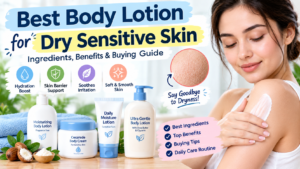

Particularly after taking a bath, dry and sensitive skin may feel tight, rough, itchy, flaky, or uncomfortable. The skin barrier can be harmed and moisture loss exacerbated by cold weather, hot showers, harsh soaps, fragrances, and frequent washing. Selecting the appropriate body lotion can help improve softness, lessen dryness, and shield delicate skin from irritation.
However, not every body lotion is suitable for sensitive skin. Some formulas contain strong fragrances, drying alcohols, essential oils, or unnecessary ingredients that may trigger redness and itching. The best body lotion for dry sensitive skin should provide long-lasting hydration while supporting the natural protective barrier.
This guide explains the best ingredients to look for, the benefits of using body lotion, how to choose a suitable product, and how to build a simple daily skincare routine.
What Causes Dry and Sensitive Skin?
Dry skin develops when the skin does not contain enough water or natural oils to maintain a healthy barrier. Sensitive skin may react easily to products, weather changes, friction, or environmental factors.
Common causes include:
1. Hot Showers
Hot water can remove natural oils from the skin. Although a hot shower may feel relaxing, it can leave the skin dry, tight, and irritated.
2. Harsh Cleansers
Soaps and body washes containing strong detergents may strip away protective oils. Frequent use can increase dryness and make sensitive skin more reactive.
3. Cold or Dry Weather
Low humidity and cold temperatures can increase moisture loss. Indoor heating may also make the air dry, leading to roughness and flaking.
4. Fragrance and Irritating Ingredients
Perfumes, essential oils, dyes, and certain preservatives may trigger irritation in sensitive skin. This does not mean every person will react, but fragrance-free products are often a safer choice.
5. Skin Conditions
Eczema, psoriasis, contact dermatitis, and other skin conditions can cause dryness, itching, redness, or scaling. Persistent symptoms may require assessment by a dermatologist.
Best Ingredients in Body Lotion for Dry Sensitive Skin
The most effective body lotions usually combine humectants, emollients, and occlusives. These ingredients work in different ways to hydrate and protect the skin.
1. Ceramides
Ceramides are naturally occurring lipids found in the skin barrier. They help keep moisture inside the skin and protect against environmental irritants.
Body lotions containing ceramides may be helpful for dry, sensitive, or eczema-prone skin. They are especially useful when the skin feels rough, tight, or easily irritated.
Best for: Damaged skin barrier, persistent dryness, and sensitive skin.
2. Glycerin
Glycerin is a humectant, meaning it attracts water and helps keep it in the outer layer of the skin. It is commonly used in gentle moisturizers because it provides hydration without being overly heavy.
Glycerin is suitable for many skin types and can help improve softness and comfort.
Best for: Everyday hydration and rough body skin.
3. Hyaluronic Acid
Hyaluronic acid attracts and holds water. In body lotions, it can help improve surface hydration and reduce the feeling of tightness.
It works well when combined with barrier-supporting ingredients such as ceramides, fatty acids, and cholesterol.
Best for: Dehydrated skin, tightness, and lightweight hydration.
4. Shea Butter
Shea butter is an emollient that helps soften rough skin and reduce moisture loss. It can be particularly helpful for very dry areas such as elbows, knees, hands, and heels.
People with sensitive skin should still choose a well-formulated product and patch test if they are prone to reactions.
Best for: Very dry, rough, or cracked skin.
5. Petrolatum
Petrolatum is an occlusive ingredient that forms a protective layer over the skin. It helps reduce water loss and can be useful for extremely dry or irritated areas.
It is often found in thicker creams, ointments, and intensive moisturizers.
Best for: Severe dryness, cracked skin, and overnight moisture protection.
6. Colloidal Oatmeal
Colloidal oatmeal can help soothe dry, itchy, and irritated skin. It supports the skin barrier and may be useful for people with eczema-prone or reactive skin.
Look for fragrance-free formulas containing colloidal oatmeal if your skin often feels itchy or uncomfortable.
Best for: Itching, irritation, and sensitive skin.
7. Squalane
Squalane is a lightweight emollient that helps soften the skin without creating a heavy or greasy feeling. It can be a good option for people who dislike thick body creams.
It is often included in moisturizing formulas designed for dry or sensitive skin.
Best for: Lightweight softness and daily use.
8. Urea
Urea helps attract water and soften thick, rough skin. Lower concentrations may be suitable for general dryness, while stronger formulas are often used for very rough areas such as heels, elbows, and knees.
Urea can sting when applied to cracked or inflamed skin, so use it carefully if your skin barrier is damaged.
Best for: Rough texture, thickened skin, and dry feet.
Benefits of Using Body Lotion Regularly
Using a suitable body lotion every day can provide several benefits.
Improves Hydration
A good lotion adds moisture and helps reduce water loss. With regular use, the skin may feel smoother, softer, and more comfortable.
Supports the Skin Barrier
Barrier-supporting ingredients such as ceramides, fatty acids, and cholesterol help protect the skin from irritants and environmental stress.
Reduces Roughness and Flaking
Moisturizers soften dry patches and can reduce visible flaking on the arms, legs, elbows, and knees.
Helps Relieve Tightness
Dry skin often feels stretched after bathing. Applying lotion while the skin is slightly damp can reduce this uncomfortable feeling.
May Reduce Itchiness
A fragrance-free moisturizer may help relieve itching caused by dryness. However, intense or persistent itching should be assessed by a healthcare professional.
Makes Skin Look Healthier
Well-moisturized skin usually appears smoother, more flexible, and more even in texture.
How to Choose the Best Body Lotion for Dry Sensitive Skin
When shopping for a body lotion, consider the following factors.
Choose Fragrance-Free Products
Fragrance-free is generally preferable to products labeled only “unscented.” Unscented products may still contain ingredients used to mask odors.
If your skin is reactive, avoid perfumes and essential oils until you know what your skin tolerates.
Look for Barrier-Supporting Ingredients
Ceramides, glycerin, petrolatum, shea butter, colloidal oatmeal, and squalane are useful ingredients for dry sensitive skin.
A formula does not need to contain every ingredient. A simple product with a few effective ingredients may be better than a heavily fragranced lotion with a long ingredient list.
Select the Right Texture
Lotions are lightweight and easy to spread. Creams are richer and may be more effective for very dry skin. Ointments are the most protective but can feel greasy.
- Light lotion: Suitable for normal to mildly dry skin.
- Rich cream: Better for dry, sensitive, or eczema-prone skin.
- Ointment: Useful for cracked or extremely dry areas.
Avoid Potential Irritants
If your skin is sensitive, be cautious with:
- Fragrance
- Essential oils
- Strong exfoliating acids
- Harsh alcohols
- Artificial dyes
- Strong cooling ingredients such as menthol
- Products that cause burning or persistent tingling
Consider Non-Comedogenic Formulas
If you experience body acne or clogged pores, choose a non-comedogenic moisturizer. Avoid very heavy products on areas that frequently develop breakouts.
Best Body Lotion Routine for Dry Sensitive Skin
A consistent routine is more important than using an expensive product.
Step 1: Use Lukewarm Water
Take short showers using lukewarm rather than hot water. Hot showers can worsen dryness by removing natural oils.
Step 2: Use a Gentle Cleanser
Choose a mild, fragrance-free body wash. Apply cleanser mainly to areas that need it, rather than aggressively washing the entire body several times a day.
Step 3: Pat the Skin Dry
Avoid rubbing the skin roughly with a towel. Gently pat the body dry and leave a little moisture on the surface.
Step 4: Apply Lotion Immediately
Apply body lotion within a few minutes of bathing. Moisturizing slightly damp skin helps trap water and improves hydration.
Step 5: Reapply to Dry Areas
Apply lotion again to the hands, elbows, knees, feet, or other areas that become dry during the day.
Step 6: Protect the Skin
Wear comfortable clothing, avoid harsh fabrics, and protect exposed skin from cold wind and excessive sun exposure.
Lotion, Cream, or Body Butter: Which Is Better?
The best texture depends on how dry your skin is.
Body Lotion
Body lotions are lightweight and spread easily. They are useful for everyday use, warm weather, and people who dislike greasy products.
Body Cream
Creams contain more oil than lotions and usually provide longer-lasting moisture. They are often a better choice for dry sensitive skin.
Body Butter
Body butters are thick and rich. They may be helpful for very dry areas, especially during winter, but they can feel heavy on the skin.
Body Ointment
Ointments provide strong protection against moisture loss. They are useful for cracked heels, dry hands, and severely dry patches.
Common Mistakes to Avoid
Applying Lotion Only When Skin Is Very Dry
Waiting until the skin becomes flaky or itchy can make recovery more difficult. Daily moisturizing is usually more effective.
Using Too Many Products
Layering several fragranced products can increase the chance of irritation. Start with a gentle cleanser and one reliable moisturizer.
Scrubbing Dry Skin
Rough exfoliation can damage the skin barrier and worsen sensitivity. Avoid abrasive scrubs, stiff brushes, and excessive exfoliating gloves.
Using Strong Acids Too Often
Lactic acid, glycolic acid, and salicylic acid may help certain concerns, but they can irritate dry sensitive skin if used too frequently.
Ignoring Burning or Redness
A product that causes persistent burning, itching, swelling, or redness should be discontinued. If symptoms continue, seek medical advice.
When to See a Dermatologist
Consult a dermatologist if your dry sensitive skin:
- Becomes painful or deeply cracked
- Develops bleeding or oozing
- Causes intense or persistent itching
- Has repeated redness or swelling
- Develops thick scales or plaques
- Does not improve with gentle skincare
- Interferes with sleep or daily activities
A healthcare professional can determine whether eczema, psoriasis, contact dermatitis, allergy, or another condition is responsible.
Frequently Asked Questions
What is the best body lotion for dry sensitive skin?
The best body lotion is usually fragrance-free and contains ingredients such as ceramides, glycerin, petrolatum, shea butter, or colloidal oatmeal. A rich cream may work better than a lightweight lotion for very dry skin.
Is fragrance-free lotion better for sensitive skin?
Yes, fragrance-free products are often a safer option because fragrance and essential oils can trigger irritation in some people. Always check the ingredient list and patch test new products.
Should I apply body lotion every day?
Yes. Applying lotion daily, especially after bathing, helps maintain hydration and supports the skin barrier.
Is body butter better than body lotion?
Body butter is richer and may be better for very dry skin. Body lotion is lighter and more convenient for everyday use. The best option depends on your skin’s needs and personal preference.
Can body lotion help itchy skin?
A gentle, fragrance-free moisturizer can help relieve itching caused by dryness. If itching is severe, persistent, or accompanied by a rash, consult a dermatologist.
Can I use face moisturizer on my body?
Yes, but face moisturizers are often more expensive and may not be rich enough for very dry body skin. A body cream may provide better value and longer-lasting hydration.
How long does it take for body lotion to improve dry skin?
Mild dryness may improve within a few days of consistent moisturizing. More severe dryness or barrier damage may require several weeks of regular care.
Final Thoughts
The best body lotion for dry sensitive skin should provide hydration, support the skin barrier, and avoid unnecessary irritants. Ingredients such as ceramides, glycerin, colloidal oatmeal, petrolatum, shea butter, and squalane can help improve dryness and comfort.
For the best results, use lukewarm water, choose a gentle cleanser, apply lotion immediately after bathing, and moisturize consistently. If dryness is severe, painful, or persistent, professional medical advice can help identify the underlying cause and guide treatment.