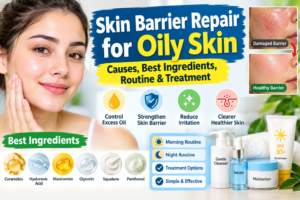

Skin Barrier Repair for Oily Skin: Causes, Best Ingredients, Routine & Treatment
Your skin barrier is not healthy just because you have oily skin. In fact, using harsh skincare products too frequently can cause oily skin to become dehydrated, irritated, sensitive, or damaged. Excessive oil production, redness, dryness, tightness, burning, breakouts, and rough skin texture can all be signs of a damaged skin barrier.
Your skin barrier may require additional attention if your face feels oily but also dry or irritated. The good news is that you can help restore your skin while controlling excess oil with the correct skincare regimen, mild products, and barrier-supporting ingredients.
This guide explains skin barrier repair for oily skin, including the common causes of barrier damage, the best ingredients to use, a simple skincare routine, treatment options, and mistakes to avoid.
What Is the Skin Barrier?
The skin barrier is the outermost protective layer of your skin. It helps keep moisture inside the skin while protecting it from environmental irritants, pollutants, bacteria, and other external factors.
A healthy skin barrier generally feels comfortable and balanced. When the barrier becomes damaged, the skin may lose water more easily and become more vulnerable to irritation.
People with oily skin may experience a damaged skin barrier when they repeatedly use strong exfoliants, aggressive acne treatments, alcohol-heavy products, or harsh cleansers.
A damaged barrier can make skincare more complicated because the skin may simultaneously appear oily and feel dry or uncomfortable.
What Causes Skin Barrier Damage in Oily Skin?
Several common skincare habits can weaken the skin barrier. Understanding the causes is the first step toward repairing it.
1. Over-Cleansing
Washing your face too frequently or using a harsh cleanser can remove too much oil from the skin. Although removing excess oil may seem helpful for oily skin, excessive cleansing can leave the skin dry and irritated.
A gentle cleanser is usually a better choice than repeatedly trying to remove every trace of oil.
2. Excessive Exfoliation
Chemical exfoliants such as salicylic acid, glycolic acid, and lactic acid can be useful when used appropriately. However, using exfoliating products too frequently may contribute to irritation and barrier damage.
Oily and acne-prone skin does not necessarily need daily exfoliation.
3. Overuse of Acne Treatments
Ingredients such as benzoyl peroxide and topical retinoids can be effective for acne, but they may initially cause dryness, peeling, or irritation. Using multiple strong acne products at the same time can increase the risk of irritation.
4. Using Very Hot Water
Hot water can increase dryness and irritation. Washing your face with lukewarm water is generally gentler on the skin.
5. Skipping Moisturizer
Many people with oily skin avoid moisturizer because they are afraid it will make their face greasy. However, oily skin still needs hydration.
Skipping moisturizer can leave the skin dehydrated and uncomfortable. A lightweight, non-comedogenic moisturizer can provide hydration without feeling excessively heavy.
6. Environmental Stress
Sun exposure, cold weather, dry air, pollution, and other environmental factors can also affect the skin barrier.
Daily sunscreen is especially important because ultraviolet radiation can contribute to skin damage and premature aging.
Signs of a Damaged Skin Barrier
A damaged skin barrier can look different from person to person. Common signs include:
- Increased sensitivity
- Redness or irritation
- Burning or stinging when products are applied
- Dry or flaky patches
- Rough skin texture
- Tightness after cleansing
- Increased dehydration
- More frequent breakouts
- Skin that feels oily but looks dry
- Increased sensitivity to previously tolerated products
If your skin suddenly reacts to products that previously worked well, it may be useful to simplify your skincare routine.
Best Ingredients for Skin Barrier Repair
Choosing the right ingredients is important when repairing a damaged skin barrier. You do not need a complicated routine with dozens of products.
Ceramides
Ceramides are lipids naturally found in the skin. They play an important role in maintaining the skin barrier and reducing moisture loss.
A moisturizer containing ceramides can be particularly useful for skin that feels dry, irritated, or tight.
Hyaluronic Acid
Hyaluronic acid is a humectant that helps attract and retain water. It can provide hydration without necessarily making oily skin feel greasy.
For best results, apply hydrating products to slightly damp skin and follow with a moisturizer.
Niacinamide
Niacinamide, also known as vitamin B3, is a versatile skincare ingredient. It can support the skin barrier and may also help improve the appearance of excess oil and uneven skin tone.
For sensitive or damaged skin, starting with a lower concentration may be more comfortable than immediately using a highly concentrated formula.
Glycerin
Glycerin is another effective humectant that helps attract water to the skin. It is commonly found in lightweight moisturizers and hydrating products.
Because it is generally lightweight, glycerin can be a useful ingredient for oily skin.
Squalane
Squalane is an emollient that helps soften the skin and reduce moisture loss. Lightweight formulations may work well for people who want barrier support without a heavy or greasy finish.
Panthenol
Panthenol, also known as provitamin B5, is commonly used in skincare products designed to moisturize and soothe the skin.
It can be a helpful ingredient when your skin feels dry, irritated, or uncomfortable.
Best Skin Barrier Repair Routine for Oily Skin
A simple routine is often better than using too many active ingredients.
Morning Routine
Use a mild cleanser first thing in the morning. Some people might prefer to just rinse with lukewarm water if their skin is not extremely oily when they wake up.
Next, if necessary, use a mild hydrating serum. It might be appropriate to use ingredients like glycerin, hyaluronic acid, or a mild niacinamide formula.
Apply a thin, non-comedogenic moisturizer afterward. Seek out goods with barrier-supporting components like panthenol, glycerin, or ceramides.
Broad-spectrum sunscreen should be the last step. Apply enough to completely cover exposed skin with an SPF of at least 30.
Night Routine
At night, cleanse your face gently to remove sunscreen, makeup, sweat, and dirt.
Apply a simple hydrating product if desired, followed by a barrier-supporting moisturizer.
If your skin is irritated or peeling, temporarily reducing strong active ingredients can help simplify your routine.
Should You Stop Salicylic Acid When Repairing Your Skin Barrier?
Salicylic acid can be helpful for oily and acne-prone skin because it can penetrate into pores and help remove excess oil and dead skin cells.
However, if your skin is currently burning, peeling, very dry, or unusually sensitive, frequent exfoliation may make the situation worse.
Consider reducing the frequency or temporarily stopping exfoliating products until your skin feels more comfortable. Once your barrier improves, you can gradually reintroduce actives based on your skin’s tolerance.
Can You Use Retinol With a Damaged Skin Barrier?
Retinoids can provide important benefits for acne, texture, and signs of skin aging, but they can also cause irritation, especially when introduced too quickly.
If your skin barrier is clearly irritated, it may be better to focus first on gentle cleansing, moisturizing, and sun protection.
When your skin has recovered, a retinoid can potentially be reintroduced gradually. People with significant irritation or persistent skin problems should discuss appropriate treatment with a dermatologist.
Treatment for a Damaged Skin Barrier
Skin barrier repair is usually about reducing irritation and supporting the skin rather than aggressively treating every problem at once.
A basic treatment approach includes:
Use a gentle cleanser: Avoid harsh scrubbing and very hot water.
Moisturize consistently: Apply a lightweight moisturizer after cleansing to help support hydration.
Reduce irritating actives: Temporarily decrease products that cause burning, excessive peeling, or dryness.
Wear sunscreen: Protect your skin from ultraviolet exposure every day.
Avoid picking: Picking pimples or irritated areas can increase inflammation and slow healing.
Keep your routine simple: Your skin may benefit from using fewer products while it recovers.
How Long Does Skin Barrier Repair Take?
The recovery time depends on how damaged the skin barrier is and what caused the irritation.
Mild irritation may improve after simplifying your routine and consistently moisturizing. More significant irritation can take longer.
Instead of constantly changing products, focus on consistency. If your skin continues to burn, peel, become increasingly red, or develop a persistent rash, professional medical advice may be appropriate.
Common Mistakes to Avoid
One of the biggest mistakes people with oily skin make is trying to eliminate all oil. Natural skin oils are not automatically bad. Your goal should be healthy, balanced skin rather than completely oil-free skin.
Avoid aggressive scrubbing, excessive exfoliation, frequent product switching, very hot water, and using multiple strong acne treatments simultaneously.
Another common mistake is assuming that oily skin does not need moisturizer. Hydration and oil production are different things. Skin can be oily and dehydrated at the same time.
Oily Skin vs. Dehydrated Skin
It is important to understand the difference between oily skin and dehydrated skin.
Oily skin is a skin type associated with increased sebum production.
Dehydrated skin is a temporary condition where the skin lacks sufficient water.
You can have oily and dehydrated skin at the same time. This may explain why your face becomes shiny during the day while also feeling tight or uncomfortable.
Supporting hydration while avoiding overly aggressive oil removal may help your skin feel more balanced.
When Should You See a Dermatologist?
A damaged skin barrier can often improve with gentle skincare, but not every skin problem is simply a barrier issue.
Consider seeing a dermatologist if you experience severe redness, swelling, persistent burning, painful acne, significant peeling, a spreading rash, signs of infection, or symptoms that do not improve with gentle skincare.
A dermatologist can determine whether another condition, such as eczema, contact dermatitis, rosacea, or acne, may be contributing to your symptoms.
Final Thoughts
Skin barrier repair for oily skin does not mean using heavy products or completely avoiding skincare. The key is to create a balanced routine that supports hydration while controlling excess oil gently.
Start with the fundamentals: daily sunscreen, a light moisturizer, and a mild cleanser. A healthy-looking skin barrier can be supported by substances like ceramides, niacinamide, glycerin, hyaluronic acid, panthenol, and squalane.
Reduce excessive exfoliation and potent active ingredients until your skin feels more comfortable if it is irritated. You can gradually reintroduce targeted products based on your skin’s needs once it has stabilized.
Consistency is the key to repairing your skin barrier. An aggressive routine is not necessary for healthy skin. A straightforward, mild, and well-rounded skincare regimen can be far more successful than continuously experimenting with different products.