
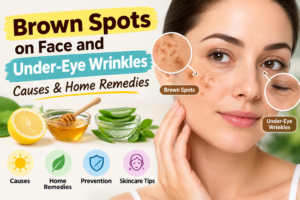

Brown Spots on Face and Under-Eye Wrinkles
Two typical skin issues that can become more apparent with age are wrinkles beneath the eyes and brown spots on the face. Sun exposure, heredity, hormone fluctuations, dehydration, lifestyle choices, and the ageing process can all have an impact on their appearance, even though they are usually harmless.
The good news is that pigmentation and fine wrinkles can be less noticeable with a regular skincare regimen and good daily practices. It’s crucial to realise that not all brown spots or wrinkles may be totally eliminated by home remedies.
In this guide, we will discuss the causes of brown spots on the face and under-eye wrinkles, effective home care tips, prevention strategies, and signs that mean you should consult a dermatologist.
What Causes Brown Spots on the Face?
Brown spots are areas of skin that appear darker than the surrounding skin. They develop when the skin produces or stores more melanin, the pigment responsible for skin color.
Some of the most common causes include:
1. Sun Exposure
One of the biggest causes of facial pigmentation is repeated exposure to ultraviolet (UV) radiation. UV exposure can stimulate melanin production and contribute to sun spots, uneven skin tone, and premature skin aging.
Brown spots may become more noticeable on areas that receive frequent sunlight, such as the forehead, cheeks, nose, and upper lip.
2. Hormonal Changes
Hormonal changes can contribute to a type of pigmentation called melasma. It may appear as brown or grayish patches, particularly on the cheeks, forehead, nose, and upper lip.
Hormonal fluctuations during pregnancy or while using certain hormonal medications can make pigmentation more noticeable.
3. Acne and Skin Inflammation
Dark marks can develop after pimples, cuts, insect bites, or other forms of skin inflammation. This is commonly called post-inflammatory hyperpigmentation.
These marks can gradually fade, but the process may take weeks or months.
4. Aging
As skin ages, cumulative sun exposure and changes in skin function can lead to age spots or uneven pigmentation. At the same time, collagen and elastin production gradually decline, making fine lines and wrinkles more visible.
5. Genetics
Some people naturally develop pigmentation more easily than others. Your skin type, genetics, and tendency to develop freckles or pigmentation can influence how brown spots appear.
6. Certain Medications or Skin Conditions
Some medications and skin conditions can contribute to changes in pigmentation. If new or unusual brown spots appear suddenly, it is best to discuss them with a healthcare professional.
What Causes Under-Eye Wrinkles?
The skin around the eyes is thinner and more delicate than much of the skin on the face. Because of this, fine lines can become visible relatively early.
Common causes include:
1. Natural Aging
With age, the skin gradually produces less collagen and elastin. The skin may become thinner and lose some of its firmness, making wrinkles and fine lines more noticeable.
2. Sun Damage
UV radiation can break down collagen and contribute to premature skin aging. Regular sun exposure can therefore make under-eye wrinkles appear earlier or become deeper.
3. Repeated Facial Expressions
Smiling, squinting, and other facial movements repeatedly fold the skin around the eyes. Over time, these movements can contribute to expression lines.
4. Dry Skin
Dehydrated or dry skin can make fine lines look more prominent. Although moisturizer does not permanently remove wrinkles, keeping the skin hydrated can temporarily make the surface appear smoother.
5. Smoking
Smoking can accelerate visible skin aging by affecting collagen and reducing healthy blood flow to the skin. It is associated with earlier development of wrinkles.
6. Lack of Sun Protection
Not protecting the delicate eye area from UV exposure can contribute to both pigmentation and premature wrinkles.
Brown Spots on Face and Under-Eye Wrinkles: Are They Connected?
Because they share a number of contributing elements, brown spots and wrinkles under the eyes can develop together.
For instance, prolonged exposure to the sun can cause wrinkles and collagen breakdown in addition to increasing pigmentation.
Aging can also cause both uneven pigmentation and fine lines. Lifestyle factors such as smoking, poor sun protection, and inadequate skincare may further contribute to these concerns.
However, brown spots and wrinkles are not necessarily caused by the same condition. Each skin concern should be evaluated individually if it is persistent, changing, or unusual.
Home Remedies for Brown Spots on the Face
There is no guaranteed home remedy that can instantly remove brown spots. However, gentle skincare and certain ingredients may help improve uneven skin tone over time.
1. Use Sunscreen Every Day
Sunscreen is one of the most important steps for preventing pigmentation from becoming darker and protecting against premature skin aging.
Choose a broad-spectrum sunscreen with SPF 30 or higher and apply it consistently during the day. Reapply when needed, especially during prolonged outdoor exposure.
2. Try Vitamin C
Vitamin C is an antioxidant commonly used in skincare products designed to brighten the appearance of uneven skin tone.
A well-formulated vitamin C serum may help improve the appearance of pigmentation over time. Start with a lower concentration if your skin is sensitive.
3. Consider Niacinamide
Niacinamide, a form of vitamin B3, is another popular skincare ingredient for uneven skin tone. It can be found in many serums and moisturizers.
Use it consistently rather than expecting overnight results.
4. Keep Your Skin Moisturized
A healthy skin barrier can help the skin tolerate active ingredients better. Use a gentle moisturizer suitable for your skin type.
If your skin is dry or sensitive, avoid using too many active ingredients at the same time.
5. Avoid Picking Pimples
Picking or squeezing acne can increase inflammation and raise the risk of dark marks.
Treat breakouts gently and avoid repeatedly touching your face.
Home Remedies for Under-Eye Wrinkles
Under-eye wrinkles cannot usually be completely removed with home remedies, but certain habits can make the skin look smoother and healthier.
1. Use a Gentle Eye-Area Moisturizer
Applying a gentle moisturizer around the eye area can help reduce dryness and temporarily improve the appearance of fine lines.
Avoid getting skincare products directly into the eyes.
2. Wear Sunglasses
Sunglasses can help protect the delicate eye area from sunlight and may also reduce frequent squinting in bright conditions.
3. Stay Hydrated
Drinking enough fluids supports overall health. Proper hydration may also help prevent the skin from appearing excessively dry.
4. Get Enough Sleep
Poor sleep can make the eye area appear tired, dry, or puffy. Maintaining a regular sleep schedule can support a healthier-looking complexion.
5. Avoid Rubbing Your Eyes
Frequent rubbing can irritate the delicate skin around the eyes. If your eyes are frequently itchy or irritated, consider discussing the cause with a healthcare professional.
Skincare Routine for Brown Spots and Under-Eye Wrinkles
A simple routine can help address both concerns without overwhelming your skin.
Morning Routine
- Use a gentle cleanser.
- Apply a vitamin C or niacinamide product if tolerated.
- Apply moisturizer.
- Apply broad-spectrum SPF 30 or higher.
- Wear sunglasses when outdoors.
Evening Routine
- Cleanse your face gently.
- Apply a suitable treatment product for pigmentation if recommended for your skin.
- Apply moisturizer.
- Use a gentle eye-area moisturizer if needed.
Introduce new products gradually. Using several strong products at once can irritate the skin and potentially make pigmentation worse.
Ingredients That May Help With Brown Spots
Several skincare ingredients are commonly used to improve the appearance of hyperpigmentation.
These include:
- Vitamin C
- Niacinamide
- Retinoids
- Azelaic acid
- Alpha hydroxy acids (AHAs)
- Kojic acid
Not every ingredient is suitable for every person. Stronger treatments can cause irritation, especially when used incorrectly.
Retinoids, for example, may improve skin texture and signs of photoaging but can initially cause dryness or irritation. If you have sensitive skin, introduce active ingredients slowly.
How to Prevent Brown Spots and Under-Eye Wrinkles
Prevention is often easier than trying to correct established skin changes.
Protect Your Skin From the Sun
Make sunscreen a daily habit, even when the weather is cloudy. Hats, sunglasses, shade, and protective clothing can provide additional protection.
Follow a Gentle Skincare Routine
Avoid harsh scrubs, aggressive rubbing, and excessive exfoliation. Skin irritation can worsen discoloration in some people.
Keep Skin Hydrated
Use a moisturizer regularly, particularly if your skin feels tight or dry.
Don’t Smoke
Avoiding smoking can help reduce premature skin aging and provides many other health benefits.
Eat a Balanced Diet
A diet containing fruits, vegetables, protein, whole grains, and healthy fats supports overall health and provides nutrients important for normal skin function.
Be Consistent
Most skincare products require regular use for several weeks or longer before visible improvement occurs. Consistency is more important than using many products.
When Should You See a Dermatologist?
Most common brown spots are harmless, but you should have a new or changing spot evaluated by a healthcare professional, especially if it:
- Changes in size, shape, or color
- Has an irregular border
- Contains multiple colors
- Bleeds or repeatedly crusts
- Becomes painful or itchy
- Looks significantly different from your other spots
- Develops rapidly
A dermatologist can determine whether a spot is simple pigmentation or needs further evaluation.
For persistent pigmentation, a dermatologist may recommend treatments such as prescription creams, chemical peels, laser procedures, or other professional treatments depending on the cause and your skin type.
Frequently Asked Questions
Can brown spots on the face disappear naturally?
Some pigmentation, especially marks left after inflammation, may gradually fade. However, sun spots and some forms of melasma may persist without treatment. Daily sunscreen can help prevent pigmentation from becoming darker.
What is the best home remedy for brown spots?
There is no single home remedy that works for everyone. Consistent sunscreen use is one of the most important steps. Ingredients such as vitamin C and niacinamide may also help improve uneven skin tone.
Can wrinkles under the eyes be removed naturally?
Home care cannot completely erase established wrinkles. Moisturizing, sun protection, healthy sleep habits, and gentle skincare can help improve the appearance of fine lines and protect the skin from further damage.
Does drinking water remove wrinkles?
Drinking enough water is important for overall health, but water alone cannot eliminate wrinkles. A complete skincare routine and sun protection are more important for managing visible signs of skin aging.
Can sunscreen help with both brown spots and wrinkles?
Yes. Regular sun protection can help prevent UV-related pigmentation and reduce ongoing photoaging, which contributes to wrinkles and loss of skin elasticity.
Final Thoughts
Brown spots on the face and under-eye wrinkles are common skin concerns that can develop due to sun exposure, aging, hormonal changes, inflammation, genetics, and lifestyle factors.
A regular skincare regimen can significantly improve the appearance and health of your skin, even though home cures cannot totally remove wrinkles or discolouration. Regular moisturising, gentle washing, daily sunscreen, and properly chosen substances like niacinamide and vitamin C can all be beneficial components of a program.
Most importantly, avoid harsh DIY treatments and excessive exfoliation. If a brown spot changes, bleeds, grows quickly, or looks unusual, consult a dermatologist rather than trying to treat it at home.
With patience, sun protection, and consistent skincare, you can help maintain a more even, healthy-looking complexion while reducing the visible effects of premature skin aging.