
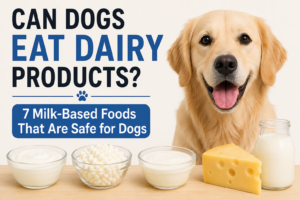

Many dog owners wonder, can dogs eat dairy products? The answer is yes, some dogs can enjoy small amounts of certain dairy foods, but dairy should not become a major part of a dog’s diet.
Dogs’ tolerance to lactose, the naturally occurring sugar in milk, varies. While some dogs may experience gas, diarrhoea, vomiting, or stomach pain, others may take a small amount of plain yoghurt or cheese without any issues.
This guide will explain seven milk-based foods that are healthy for dogs, as well as which dairy items to avoid, how much to give, and what symptoms to look out for when your dog consumes dairy.
Can Dogs Eat Dairy Products?
Yes, dogs can eat some dairy products in small amounts, provided the food is plain, free from harmful ingredients, and your dog tolerates it.
However, dairy isn’t necessary for a dog’s nutritional needs. Dogs can get the nutrients they need from a complete and balanced diet designed for their life stage.
The biggest concern with dairy is lactose intolerance. Dogs produce the enzyme lactase to digest lactose, but some dogs produce less lactase than others.
Because of this, a dairy product that is fine for one dog may cause digestive problems in another.
1. Plain Yogurt
Plain yogurt can be one of the better dairy choices for dogs when given in a small amount.
Some yogurts contain live cultures, although the amount and type of bacteria vary between products. Choose a yogurt that is:
- Plain and unsweetened
- Free from chocolate or flavorings
- Free from artificial sweeteners
- Free from xylitol
- Low in added sugar
A small spoonful can be mixed into your dog’s regular food as an occasional treat.
Can dogs eat Greek yogurt?
Yes, plain Greek yogurt for dogs can be given in small quantities if your dog tolerates dairy. Greek yogurt is generally thicker and often contains more protein than regular yogurt, but always check the ingredient label.
2. Cottage Cheese
Cottage cheese for dogs can be an occasional treat because it is relatively mild and provides protein and calcium.
Choose plain cottage cheese and avoid varieties containing added seasonings, onions, garlic, or excessive salt.
Start with a small amount to see how your dog reacts.
If your dog develops loose stools, gas, or vomiting, stop giving it.
3. Cheese
Many dogs love cheese, and a small amount of plain cheese can occasionally be used as a treat.
Examples include small pieces of:
- Mozzarella
- Cheddar
- Swiss cheese
- Mild cottage cheese
However, cheese can be relatively high in fat and calories. Too much may contribute to weight gain and digestive upset.
For this reason, cheese for dogs should be an occasional treat rather than a daily food.
Avoid cheeses containing toxic ingredients such as garlic, onions, chives, or certain strong seasonings.
4. Kefir
Plain, unsweetened kefir for dogs may be tolerated by some dogs.
Kefir is a fermented milk drink that contains various microorganisms. However, not every product is suitable for dogs.
If you want to offer kefir, choose a plain product without:
- Added sugar
- Artificial sweeteners
- Chocolate
- Flavoring
- Xylitol
Give only a small amount initially and monitor your dog for digestive changes.
5. Small Amounts of Milk
Can dogs drink milk? Some dogs can tolerate a small amount of milk, but many dogs don’t digest lactose well.
Milk is not necessary for adult dogs, so there is usually no nutritional reason to add it to their diet.
If you choose to give your dog milk, only offer a small amount and watch for signs of intolerance.
Regularly giving large amounts of milk can cause digestive problems and adds unnecessary calories to your dog’s diet.
6. Plain Frozen Yogurt Made for Dogs
Some dog-friendly frozen treats are made using yogurt or other dairy ingredients.
These can be useful as occasional treats, especially during warm weather.
However, don’t assume that ordinary human frozen yogurt is safe. Human products may contain large amounts of sugar or potentially dangerous sweeteners.
If buying a frozen dairy treat, check the ingredients carefully and choose a product specifically formulated for dogs.
You can also freeze a small amount of plain, dog-safe yogurt as an occasional homemade treat, provided your dog tolerates dairy.
7. Small Amounts of Cream Cheese
Plain cream cheese should not be a regular part of a dog’s diet, however they may occasionally eat tiny amounts of it.
Cream cheese may contain substances that are dangerous for dogs, and flavoured variations may be heavy in fat and calories.
If you serve it, limit the amount and use only simple cream cheese.
There might be better treat options for dogs with sensitive stomachs or those who are overweight.
What Dairy Products Should Dogs Avoid?
Not every milk-based food is safe for dogs.
Avoid giving dogs dairy products that contain potentially harmful ingredients or excessive amounts of sugar and fat.
Avoid these dairy foods:
- Chocolate ice cream
- Chocolate milk
- Sweetened yogurt
- Flavored dairy desserts
- Ice cream containing xylitol
- Dairy products containing raisins
- Dairy foods containing macadamia nuts
- Products containing onion or garlic
- Highly salted or heavily seasoned cheese
Xylitol is especially important to avoid. It is an artificial sweetener that can be extremely dangerous to dogs.
Always check the ingredient list before sharing human food with your pet.
Why Does Dairy Cause Problems for Some Dogs?
The main reason is lactose intolerance.
Lactose is a sugar naturally found in milk. Digestion of lactose requires an enzyme called lactase.
When a dog doesn’t produce enough lactase, lactose may not be properly digested. This can lead to gastrointestinal symptoms.
Common signs include:
- Gas
- Bloating
- Loose stool
- Diarrhea
- Vomiting
- Abdominal discomfort
The severity can depend on the individual dog and the amount of dairy consumed.
How Much Dairy Can Dogs Eat?
There isn’t one universal amount that is safe for every dog because tolerance varies by size, age, health, and individual sensitivity.
A good approach is to start with a very small amount.
For example, you might offer a tiny portion of plain yogurt or cheese as an occasional treat and monitor your dog for the next day.
If your dog has no digestive problems, you can continue to use small portions occasionally.
Treats, including dairy treats, should generally make up only a small portion of a dog’s daily calorie intake.
If you’re unsure about an appropriate amount for your dog’s size or health condition, ask your veterinarian.
Can Puppies Eat Dairy Products?
Puppies have different nutritional needs from adult dogs, so their main diet should be a complete puppy food appropriate for their age and size.
A small amount of a safe dairy product may be tolerated by some puppies, but dairy should not replace puppy food or become a major source of nutrition.
If a puppy develops vomiting or diarrhea after eating dairy, contact a veterinarian, especially if the symptoms are severe or persistent.
Young puppies can become dehydrated quickly.
Can Dogs Eat Dairy Every Day?
It is generally better not to make dairy a daily part of your dog’s diet.
Even if your dog tolerates dairy, many dairy foods contain extra fat and calories. Regularly feeding cheese, cream cheese, or other rich dairy products can contribute to excess calorie intake.
Plain yogurt or another suitable dairy food can occasionally be used as a treat, but a balanced dog food should remain the foundation of your pet’s diet.
What Should You Do If Your Dog Eats Too Much Dairy?
If your dog accidentally eats a large amount of dairy, monitor them for digestive symptoms.
Watch for:
- Repeated vomiting
- Severe diarrhea
- Significant abdominal pain
- Weakness
- Unusual behavior
- Signs of dehydration
If symptoms are severe, persistent, or your dog ate a dairy product containing a potentially toxic ingredient, contact your veterinarian promptly.
Do not induce vomiting unless a veterinary professional specifically tells you to do so.
Tips for Giving Dairy to Your Dog Safely
Follow these simple guidelines when offering dairy:
1. Start small
Give only a tiny portion the first time.
2. Choose plain products
Avoid added sugar, flavorings, and unnecessary ingredients.
3. Read the label
Check carefully for xylitol and other ingredients that can be dangerous to dogs.
4. Avoid high-fat products
Rich dairy foods can provide a lot of unnecessary calories.
5. Monitor your dog
Watch for diarrhea, gas, vomiting, or stomach discomfort.
6. Keep dairy occasional
Dairy should be a treat, not a replacement for balanced dog food.
Frequently Asked Questions
Can dogs eat yogurt?
Yes. Many dogs can tolerate small amounts of plain, unsweetened yogurt. Always check the ingredients and avoid products containing xylitol.
Can dogs eat cheese?
Yes, dogs can eat small pieces of plain cheese occasionally. Because cheese can be high in fat and calories, portions should remain small.
Can dogs drink milk?
Some dogs can tolerate small amounts of milk, but many have difficulty digesting lactose. Milk is not necessary for a dog’s diet.
Can dogs eat ice cream?
Regular ice cream is generally not a good choice for dogs because it can contain high amounts of sugar and fat. Some products may also contain ingredients that are dangerous to dogs.
Is Greek yogurt safe for dogs?
Plain, unsweetened Greek yogurt can be an occasional treat for dogs that tolerate dairy. Always check the ingredient list before feeding it.
What are the signs of lactose intolerance in dogs?
Common signs include gas, diarrhea, loose stool, bloating, vomiting, and abdominal discomfort after consuming dairy.
Can dogs eat cottage cheese?
Plain cottage cheese can be given in small amounts to some dogs. Choose a low-salt option when possible and monitor your dog for digestive problems.
Final Thoughts
So, can dogs eat dairy products? Yes, some dogs can safely enjoy small amounts of certain dairy foods.
Plain yogurt, cottage cheese, small pieces of cheese, plain kefir, limited milk, dog-friendly frozen yogurt treats, and small amounts of plain cream cheese can be options for dogs that tolerate dairy.
However, every dog is different. Dairy isn’t required for a healthy canine diet, and too much can cause digestive upset or add unnecessary calories.
The safest approach is to choose plain products, avoid toxic ingredients, start with tiny portions, and monitor your dog carefully. If your dog has a sensitive stomach, chronic digestive problems, or another health condition, talk with your veterinarian before adding dairy treats to their diet.