

Have you observed pimples, tiny white bumps, or pores that appear clogged on your dog’s skin?
Yes, dogs can get whitehead-like bumps and tiny pimples, though the underlying causes may differ from those of human acne. Canine acne is a condition that can cause pimples, pustules, blackheads, and other small bumps, particularly around the lips, muzzle, and chin.
But not all white pimples on a dog’s skin are whiteheads. Insect bites, allergies, infections, parasites, cysts, and other skin disorders can all have similar appearances.
Knowing the potential reasons can help you determine when your dog needs a veterinary examination and when basic at-home care is sufficient.
Can Dogs Get Whiteheads?
Yes, dogs can get whitehead-like pimples.
In dogs, these bumps are often associated with canine acne or follicular inflammation. They commonly develop when hair follicles become irritated, inflamed, or blocked.
Whiteheads may appear as:
- Small white or cream-colored bumps
- Tiny pimples
- Pus-filled spots
- Red bumps with a white center
- Small bumps around the chin or lips
They are especially common on areas with short hair, such as the muzzle and chin.
Although canine acne is often mild, some cases can become infected or painful.
What Causes Whiteheads on Dogs?
Several factors can contribute to whitehead-like bumps on a dog’s skin.
1. Canine Acne
One of the most common explanations is canine acne.
Canine acne is an inflammatory skin condition that can cause bumps, pustules, redness, and sometimes blackheads.
It is particularly common in younger dogs, although dogs of any age can develop acne-like skin problems.
The chin, lips, and muzzle are common areas for these lesions.
2. Dirty Food and Water Bowls
Food residue, saliva, and bacteria can remain on bowls and around the dog’s mouth.
If bowls are not cleaned regularly, they may contribute to skin irritation in some dogs.
Using clean bowls and washing them regularly is a simple way to support good hygiene.
3. Friction and Trauma
Repeated rubbing or pressure can irritate hair follicles.
For example, some dogs may develop bumps after:
- Rubbing their face on the ground
- Playing roughly
- Scratching
- Using certain types of collars
- Coming into contact with rough surfaces
Repeated irritation can contribute to inflammation around the hair follicles.
4. Allergies
Allergies can cause itching, redness, and inflammation. When a dog repeatedly scratches or rubs its face, secondary bumps may develop.
Common allergy triggers can include environmental allergens, food ingredients, flea bites, and other substances.
If your dog is constantly itchy as well as developing bumps, allergies may need to be considered.
5. Bacterial Infection
A bacterial infection can sometimes cause red bumps or pus-filled lesions that look similar to whiteheads.
Signs may include:
- Pus
- Redness
- Crusting
- Swelling
- Hair loss
- Bad odor
- Tenderness
An infection may require veterinary treatment, so it is important not to assume every pus-filled bump is simple acne.
6. Parasites
Certain parasites can cause skin inflammation, hair loss, itching, and bumps.
For this reason, persistent skin problems should be evaluated if they do not improve with basic care.
7. Hormonal or Other Health Problems
Some skin conditions can be associated with underlying health issues.
If your dog’s skin problems are persistent, widespread, or accompanied by other symptoms, a veterinarian may recommend additional testing to determine the cause.
Where Do Dogs Usually Get Whiteheads?
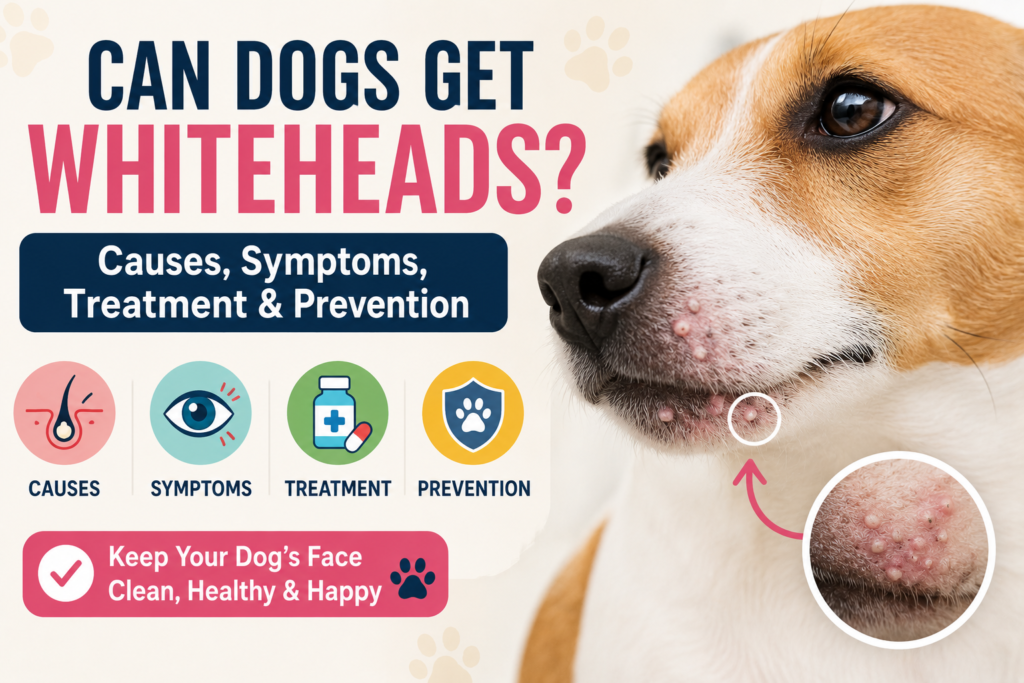
Whitehead-like bumps can occur anywhere on a dog’s body, but canine acne commonly affects the:
- Chin
- Lower lip
- Muzzle
- Around the mouth
- Face
Other skin conditions can cause bumps on the back, belly, paws, ears, or other areas.
The location of the bumps can provide useful clues, but it is not enough to diagnose the problem by itself.
What Do Whiteheads Look Like on Dogs?
A dog with mild acne may have several small bumps that look like pimples.
They may appear as:
- White-tipped bumps
- Red pimples
- Small blackheads
- Pustules
- Crusty spots
- Slightly swollen hair follicles
Some dogs may have only a few bumps, while others may develop a larger affected area.
If the skin becomes severely swollen, painful, ulcerated, or starts bleeding, the condition may be more serious than simple canine acne.
Symptoms That May Occur With Whiteheads
Besides visible bumps, your dog may show other symptoms.
Watch for:
- Redness
- Swelling
- Itching
- Scratching
- Licking
- Hair loss
- Crusting
- Pus
- Skin odor
- Tenderness
- Pain when touched
Mild acne may cause little discomfort, but infected or inflamed lesions can be painful.
Can You Pop a Whitehead on Your Dog?
No. It is best not to pop or squeeze your dog’s whiteheads.
Although squeezing a pimple may seem like an easy solution, doing this can damage the skin and introduce bacteria into the area.
Popping bumps can potentially lead to:
- More inflammation
- Pain
- Infection
- Bleeding
- Scarring
- Delayed healing
Instead, keep the area clean and monitor it.
If your dog has numerous pimples or the bumps appear infected, consult your veterinarian.
How Are Whiteheads on Dogs Treated?
Treatment depends on the underlying cause.
For mild canine acne, a veterinarian may recommend appropriate topical care and good hygiene.
Possible approaches can include:
Gentle cleansing
The affected area may need gentle cleaning with a veterinary-recommended product.
Veterinary topical treatments
Depending on the diagnosis, a veterinarian may recommend a medicated cleanser or topical treatment.
Treatment for infection
If a bacterial infection is present, your veterinarian may prescribe appropriate medication.
Allergy management
If allergies are contributing to the skin problem, treatment may focus on identifying and managing the trigger.
Parasite treatment
If parasites are responsible, appropriate veterinary parasite control may be necessary.
Do not apply human acne medication to your dog’s skin unless your veterinarian specifically tells you to do so.
Can You Treat Dog Whiteheads at Home?
Some mild cases can improve with simple hygiene and avoiding irritation, but the correct approach depends on the cause.
At home, you can:
- Keep food and water bowls clean.
- Gently clean visible dirt around the mouth.
- Keep bedding clean.
- Avoid squeezing bumps.
- Prevent excessive rubbing or scratching.
- Use only dog-safe grooming products.
- Monitor the affected area for changes.
If the condition gets worse or does not improve, professional evaluation is recommended.
Why You Should Avoid Human Acne Products
It may be tempting to use your own acne cream on your dog’s pimples.
However, human skincare products are not automatically safe for dogs.
Products may contain ingredients that can irritate your dog’s skin or cause problems if your dog licks them.
Avoid using products such as:
- Human acne creams
- Benzoyl peroxide products without veterinary guidance
- Salicylic acid products without veterinary guidance
- Alcohol-based treatments
- Essential oils
- Harsh scrubs
- Fragranced skincare products
Your veterinarian can recommend a product that is appropriate for your dog’s skin.
How to Prevent Whiteheads and Dog Acne
You cannot prevent every case of canine acne, especially when genetics or other factors are involved. However, good hygiene can help reduce unnecessary irritation.
1. Wash Food and Water Bowls Regularly
Clean your dog’s bowls frequently to prevent buildup of food, saliva, and debris.
Stainless steel or other easy-to-clean bowls may be convenient for maintaining good hygiene.
2. Clean Your Dog’s Face After Messy Meals
If food gets stuck around your dog’s mouth, gently wipe the area with a clean, damp cloth.
Avoid vigorous rubbing.
3. Keep Bedding Clean
Wash your dog’s bedding regularly, particularly if your dog spends a lot of time sleeping on it.
4. Avoid Harsh Grooming Products
Choose grooming products designed specifically for dogs.
If your dog has sensitive skin, ask your veterinarian about appropriate products.
5. Reduce Facial Friction
If you notice bumps developing where a collar or other object repeatedly rubs the skin, consider whether the equipment needs adjustment.
6. Prevent Excessive Scratching
If your dog is constantly scratching or rubbing its face, investigate the underlying reason instead of simply treating the bumps.
Itching can be caused by allergies, parasites, infections, or other problems.
Can Puppies Get Whiteheads?
Yes. Puppies can develop canine acne, particularly around the chin and muzzle.
Hormonal changes during adolescence may contribute to canine acne in some young dogs.
Mild cases may resolve as the dog matures, but persistent or severe lesions should still be checked by a veterinarian.
Are Whiteheads on Dogs Contagious?
Canine acne itself is not generally considered contagious.
However, some conditions that look like whiteheads can be caused by infectious organisms.
If several pets in your household suddenly develop similar skin problems, or if your dog has significant itching, hair loss, crusting, or spreading lesions, veterinary evaluation is a good idea.
When Should You Take Your Dog to the Vet?
A few small bumps may not be an emergency, but you should contact your veterinarian if you notice concerning changes.
Seek veterinary advice if:
- The bumps are spreading quickly.
- There is significant swelling.
- Your dog appears to be in pain.
- The area produces a lot of pus.
- There is a strong unpleasant odor.
- Your dog is constantly scratching or rubbing the area.
- Hair loss is developing.
- The skin is bleeding or ulcerated.
- The problem keeps coming back.
- Home care does not improve the condition.
A veterinarian can examine the lesions and determine whether they are actually acne or another skin problem.
Whiteheads vs. Other Skin Bumps in Dogs
Not every bump is a pimple.
Other possibilities include:
| Skin Problem | Common Appearance |
|---|---|
| Canine acne | Small pimples, pustules, redness |
| Allergic reaction | Red, itchy, irritated skin |
| Insect bite | Small swollen or red bump |
| Cyst | Round lump under or within the skin |
| Infection | Redness, pus, crusting, odor |
| Parasites | Itching, hair loss, irritated skin |
| Tumor or growth | Persistent lump that may change over time |
This is why it is important not to diagnose a skin lump based only on appearance.
Frequently Asked Questions
Can dogs really get whiteheads?
Yes. Dogs can develop whitehead-like pimples and pustules, particularly as part of canine acne. However, similar-looking bumps can have many other causes.
How do I get rid of whiteheads on my dog?
Keep the area clean, avoid squeezing the bumps, and use only dog-safe products. If the bumps persist, spread, or become infected, consult a veterinarian.
Can I pop my dog’s pimples?
No. Popping or squeezing pimples can cause additional inflammation, introduce bacteria, and increase the risk of infection or scarring.
What causes dog acne?
Canine acne may be associated with inflammation around hair follicles. Factors such as age, genetics, friction, trauma, and skin irritation may contribute.
Can I use human acne cream on my dog?
Do not use human acne treatments on your dog unless a veterinarian specifically recommends them. Dogs may lick topical products, and some ingredients can be inappropriate for pets.
Why does my dog have white bumps on its chin?
White bumps on the chin can be caused by canine acne, but allergies, infections, parasites, irritation, or other skin conditions can look similar.
Will dog acne go away on its own?
Mild cases, particularly in young dogs, may improve over time. However, persistent, severe, painful, or infected lesions should be evaluated by a veterinarian.
Final Thoughts
Indeed, whitehead-like pimples can occur in dogs, and small white or red bumps around the chin and muzzle may be caused by canine acne. Keeping your dog’s face and bowls clean and avoiding needless irritation may help in mild cases.
But not every lump is a whitehead. Similar-looking symptoms can be caused by bacterial infections, allergies, parasites, cysts, and other skin conditions.
Avoiding popping the bumps and never using human acne products without veterinary advice is the safest course of action. See a veterinarian if your dog’s skin starts to hurt, swell, get infected, or doesn’t get better.
Maintaining your dog’s comfort and health can be greatly aided by routine grooming, proper hygiene, clean bowls, and attention to skin changes.