
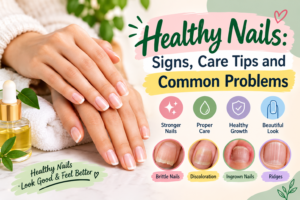

Healthy nails are more than just a beauty feature. Your fingernails and toenails protect the sensitive tissues underneath and can sometimes show visible changes when something is affecting the nail itself.
Strong, smooth nails usually benefit from good hygiene, proper nutrition, gentle nail care, and protection from excessive moisture or chemicals. On the other hand, brittle nails, discoloration, ridges, swelling, or changes in nail shape can occur for many different reasons.
In this guide, you’ll learn what healthy nails look like, how to keep your nails strong, common nail problems, and when nail changes should be checked by a healthcare professional.
What Do Healthy Nails Look Like?
Healthy nails can naturally vary in color, thickness, and shape from person to person. However, healthy nails generally have several common characteristics.
Healthy fingernails are typically:
- Smooth or relatively even in texture
- Firm but slightly flexible
- Consistent in color
- Free from significant swelling
- Free from unexplained pain
- Attached securely to the nail bed
- Growing normally
The nail plate is usually pale pink or flesh-colored because of the blood vessels underneath it. A small white half-moon, called the lunula, may be visible near the base of some nails.
Minor vertical ridges can also occur naturally, particularly as people get older, and do not necessarily indicate a health problem.
10 Simple Tips for Healthy Nails
1. Keep Your Nails Clean and Dry
Good nail hygiene is one of the easiest ways to maintain healthy nails.
Wash your hands regularly and clean underneath your nails gently. After washing, dry your hands thoroughly.
Keeping nails dry is especially important because prolonged exposure to moisture can contribute to problems around the nails and can make the skin more vulnerable to irritation.
If your hands are frequently exposed to water, detergents, or cleaning products, consider wearing protective gloves.
2. Moisturize Your Nails and Cuticles
Nails and the surrounding skin can become dry, especially during cold weather or after frequent handwashing.
Applying a moisturizing cream or cuticle-friendly moisturizer can help keep the skin around your nails comfortable and reduce dryness.
Pay particular attention to:
- Cuticles
- Nail folds
- Fingertips
- The skin around the nails
Avoid aggressively cutting or removing your cuticles because they help protect the area between the nail and surrounding skin.
3. Trim Nails Regularly
Keeping your nails at a comfortable length can reduce accidental breaks and injuries.
For fingernails, use clean nail clippers or scissors and trim them regularly. Avoid cutting them extremely short.
Toenails require special attention. Cutting toenails too short or rounding the corners deeply can increase the risk of painful ingrown toenails.
A good approach is to trim toenails relatively straight across while avoiding excessively short cuts.
4. File Rough Edges Gently
After trimming your nails, use a nail file to smooth sharp or uneven edges.
File gently in one direction rather than aggressively sawing back and forth.
If your nails are already weak or splitting, avoid excessive filing because repeated mechanical stress can make them more fragile.
5. Avoid Biting Your Nails
Nail biting can damage both the nails and surrounding skin.
Frequent biting may cause:
- Broken nails
- Sore fingertips
- Damaged cuticles
- Small skin wounds
- Increased exposure to germs
- Irritation around the nails
If nail biting is a habit, keeping nails neatly trimmed and finding another activity for your hands may help.
6. Don’t Use Your Nails as Tools
Your nails are not designed to open cans, scrape surfaces, remove labels, or pry objects apart.
Using your nails as tools can cause cracks, splitting, or injuries to the nail bed.
Whenever possible, use the appropriate tool instead of your fingernails.
7. Protect Nails From Harsh Chemicals
Frequent exposure to detergents, cleaning products, solvents, and some nail products can contribute to dryness and irritation.
If you regularly use household cleaning products, wear suitable protective gloves.
Give your nails a break if they become unusually dry, thin, or damaged after repeated manicures or artificial nail applications.
8. Choose Nail Products Carefully
Nail polish and other cosmetic products can be part of a normal nail-care routine, but excessive use or harsh removal techniques may contribute to dryness or damage.
When using nail polish:
- Avoid peeling polish off
- Use a gentle remover when possible
- Don’t aggressively scrape the nail surface
- Give damaged nails time to recover
- Keep nail tools clean
Artificial nails and gel manicures can also cause nail damage in some people, particularly if the nail is filed aggressively or the products are removed improperly.
9. Eat a Balanced Diet
Healthy nails require adequate nutrition because nails are made primarily of keratin, a protein.
A balanced diet should provide sufficient:
- Protein
- Iron
- Zinc
- Vitamin B12
- Folate
- Other essential vitamins and minerals
Good food choices can include eggs, fish, poultry, beans, lentils, nuts, seeds, vegetables, fruits, and whole grains.
Supplements are not automatically necessary for healthy nails. Taking high doses of certain supplements without a documented deficiency may be unhelpful or harmful.
If your nails have changed significantly and you also have other symptoms, speak with a healthcare professional before starting supplements.
10. Don’t Ignore Nail Changes
Most nail changes are not emergencies, but persistent or unusual changes deserve attention.
Watch for:
- Sudden discoloration
- Significant thickening
- Persistent pain
- Swelling
- Separation from the nail bed
- Repeated splitting
- Changes affecting several nails
- Dark streaks that are new or changing
Getting unusual nail changes evaluated can help identify the cause and ensure appropriate treatment.
Common Nail Problems
Even with good nail care, nail problems can occur. Understanding common conditions can help you recognize when something may need attention.
1. Brittle or Splitting Nails
Brittle nails may break, peel, or split easily.
Common contributors include:
- Frequent handwashing
- Repeated exposure to water
- Dry weather
- Harsh chemicals
- Nail polish remover
- Aging
- Repeated manicures
Protecting your hands, moisturizing regularly, and avoiding excessive chemical exposure may help.
Persistent brittle nails should be evaluated if the problem continues despite good nail care.
2. Ingrown Toenails
An ingrown toenail occurs when the edge of the toenail grows into the surrounding skin.
It commonly affects the big toe and can cause:
- Pain
- Redness
- Swelling
- Tenderness
- Sometimes drainage
Wearing shoes that are too tight and cutting toenails incorrectly can contribute to ingrown toenails.
For prevention, wear comfortable footwear and avoid cutting toenails excessively short.
If an ingrown toenail becomes severely painful, swollen, or infected, seek professional medical care.
3. Fungal Nail Infections
Fungal nail infections can cause nails to become:
- Thick
- Brittle
- Discolored
- Crumbly
- Distorted
Toenails are commonly affected because fungi thrive in warm, moist environments.
Treatment depends on the severity and location of the infection. Some cases require prescription medication, while certain mild cases may be treated with topical antifungal products.
Because other nail conditions can look similar to fungal infections, a healthcare professional may need to confirm the diagnosis.
4. Nail Discoloration
Nail color can change for many reasons.
Yellow nails, white spots, brown areas, or other discoloration may result from:
- Nail polish staining
- Trauma
- Fungal infection
- Certain skin conditions
- Other medical causes
A small white spot on a nail is often related to minor trauma and usually grows out naturally.
However, a new, persistent, or unexplained discoloration should be evaluated, particularly if it affects only one nail.
5. Nail Ridges
Vertical ridges are common and can become more noticeable with age.
Horizontal grooves or depressions, however, can sometimes develop after an interruption in nail growth, such as illness, injury, or significant physical stress.
If you notice sudden or pronounced ridges across multiple nails, discuss them with a healthcare professional.
6. Nail Biting and Picking
Repeated biting or picking can damage the nail and surrounding skin.
The habit can create small openings in the skin, potentially increasing the risk of irritation or infection.
Keeping nails short, applying moisturizer, and finding ways to keep your hands occupied can help reduce the habit.
How to Build a Simple Healthy Nail Care Routine
You don’t need a complicated routine to maintain healthy nails.
Daily
- Wash hands and nails gently.
- Dry thoroughly.
- Apply hand and nail moisturizer when needed.
- Avoid biting or picking.
- Protect hands from harsh chemicals.
Weekly or As Needed
- Trim nails to a comfortable length.
- File rough edges gently.
- Clean nail tools.
- Check your nails for unusual changes.
Consistency is more important than using expensive nail products.
Do Nail Growth Products Really Work?
Many products claim to make nails grow faster or stronger. Results vary depending on the product and the reason for weak nails.
Nails naturally grow at different rates, and fingernails generally grow faster than toenails. A healthy diet and gentle nail care provide a strong foundation for normal nail growth.
If your nails suddenly become weak, slow-growing, or significantly different from their usual appearance, it’s more useful to identify the underlying cause than simply relying on a nail-growth product.
When Should You See a Doctor?
Consider seeing a healthcare professional or dermatologist if you experience:
- Persistent nail pain
- Significant swelling around the nail
- Pus or drainage
- Severe nail thickening
- A nail separating from the nail bed
- A new dark streak or spot
- Major changes in nail shape
- Nail changes affecting multiple nails
- Repeated infections
- Nail problems that don’t improve with basic care
A professional can examine the nail and determine whether the problem is caused by injury, infection, a skin condition, medication, nutritional deficiency, or another issue.
Final Thoughts
Maintaining healthy nails doesn’t require an expensive routine. Simple habits such as keeping nails clean and dry, moisturizing regularly, trimming them correctly, protecting your hands from chemicals, avoiding nail biting, and eating a balanced diet can make a significant difference.
Common problems such as brittle nails, ingrown toenails, fungal infections, discoloration, and ridges can have many different causes. While some changes are harmless, persistent or unusual nail changes should not be ignored.
Your nails naturally change over time, so focus on keeping them clean, protected, and comfortable rather than trying to achieve a perfect appearance. With consistent care and attention to unusual changes, you can support stronger and healthier-looking nails.