
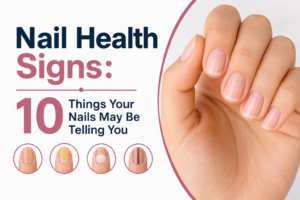

What Can Your Nails Tell You About Your Health?
Healthy fingernails are usually smooth, evenly colored, and relatively strong. The nail plate should not normally have major changes in color, shape, or texture.
However, nails can change for many reasons. Nutritional deficiencies, infections, skin conditions, injuries, medications, aging, and certain health conditions may sometimes affect nail appearance.
It is important to remember that nail changes alone cannot diagnose a medical condition. A healthcare professional may need to examine your nails and consider other symptoms before determining the cause.
Here are 10 nail health signs you should know.
1. Brittle or Easily Breaking Nails
If your nails constantly split, peel, or break, they may be telling you that they need more protection.
Frequent exposure to water, cleaning products, nail polish remover, and harsh chemicals can weaken nails. Repeated manicures or using nails as tools can also contribute to breakage.
Dry nails may become particularly fragile.
How to Protect Brittle Nails
- Keep nails at a comfortable length.
- Wear gloves when using cleaning chemicals.
- Moisturize your hands and nails regularly.
- Avoid excessive use of acetone-based nail polish remover.
- Do not bite or pick your nails.
- Give your nails breaks between intensive manicures.
If severe nail brittleness continues despite proper care, speak with a healthcare professional to look for an underlying cause.
2. Vertical Nail Ridges
Vertical ridges are lines that run from the base of the nail toward the tip. They are common and often become more noticeable with age.
In many people, these ridges are simply a normal part of aging. Dryness can also make them more visible.
However, if nail ridges suddenly appear or occur together with other unusual nail changes, it is reasonable to have them evaluated.
Nail Care Tip
Regularly moisturizing your nails and cuticles may help reduce dryness and improve their appearance.
3. Horizontal Lines Across the Nails
Horizontal grooves or lines across the nail are sometimes called Beau’s lines. They can develop when nail growth temporarily slows or stops.
Possible causes include significant illness, injury to the nail, severe physical stress, or certain medical treatments.
The position of the groove may sometimes provide clues about when the nail growth interruption occurred because fingernails grow gradually.
If several nails develop deep horizontal grooves, especially without an obvious explanation, talk to a healthcare professional.
4. Yellow Nails
Yellow nails can have several possible causes.
Nail polish, especially darker shades, can temporarily stain the nail surface. Smoking can also cause yellow discoloration.
However, yellow, thickened, crumbly, or distorted nails may be associated with a fungal nail infection.
Fungal infections are more common in toenails but can also affect fingernails.
Common Signs of Nail Fungus
- Yellow or white discoloration
- Thickened nails
- Brittle or crumbly nails
- Changes in nail shape
- Nail debris underneath the nail
- Nail separation from the nail bed
If you suspect a fungal infection, professional evaluation can help confirm the cause and determine appropriate treatment.
5. White Spots on Nails
Small white spots on nails are extremely common. They are often caused by minor trauma to the nail, such as bumping or hitting it.
These spots usually grow out naturally as the nail grows.
A common misconception is that every white spot means you have a calcium deficiency. That is not necessarily true.
However, widespread or unusual nail discoloration should be evaluated if it does not improve or is accompanied by other symptoms.
6. Spoon-Shaped Nails
If the center of the nail becomes depressed while the edges curve upward, the nail may develop a spoon-like appearance. This is known as koilonychia.
Spoon-shaped nails can have different causes. In some cases, they may be associated with iron deficiency or other health conditions.
If your nails gradually become thin, flat, or spoon-shaped, especially when this change affects several nails, discuss it with a healthcare professional.
Do not assume the cause is a nutritional deficiency without proper evaluation.
7. Nails That Become Thick or Deformed
Nails can become thick for several reasons, including fungal infections, repeated trauma, certain skin conditions, and aging.
Toenails are particularly vulnerable to thickening because of pressure from shoes and repeated injuries.
If a nail becomes significantly thicker, changes shape, becomes painful, or develops unusual discoloration, it should be checked.
Avoid trying to aggressively cut or scrape away a severely thickened nail because this can cause additional injury.
8. Nail Separation From the Nail Bed
Sometimes a nail begins to lift away from the skin underneath it. This condition is called onycholysis.
It may happen after trauma, excessive exposure to water or chemicals, certain nail treatments, or an infection. Some skin and systemic conditions can also contribute.
The separated part of the nail may appear white because air gets underneath it.
What to Do
Keep the affected nail trimmed and protect it from further injury. Avoid picking underneath the nail because this can increase the risk of infection.
If nail separation has no obvious cause, keeps spreading, or affects multiple nails, seek professional medical advice.
9. Dark Lines or Unusual Dark Pigmentation
A dark brown or black line underneath a nail can have several possible explanations, including trauma or increased pigment production.
One condition doctors may consider is melanonychia, which causes brown or black pigmentation in the nail.
Most nail pigmentation is not dangerous, but a new or changing dark streak should not automatically be ignored.
Seek medical evaluation if you notice:
- A new dark streak on one nail
- A streak that becomes wider or darker
- Pigment spreading onto the surrounding skin
- Significant changes in the nail
- A dark mark that develops without an obvious injury
A dermatologist can examine the nail and determine whether further testing is necessary.
10. Clubbing or Changes in Nail Shape
Nail clubbing occurs when the fingertips become enlarged and the nails curve more than usual around the fingertips.
This is different from normal nail curvature.
Clubbing can sometimes be associated with underlying heart, lung, digestive, or other medical conditions. It should therefore be evaluated by a healthcare professional, particularly if it develops gradually or is accompanied by other symptoms.
Never rely on nail appearance alone to diagnose a disease.
What Do Healthy Nails Look Like?
Healthy nails are generally:
- Smooth or relatively even
- Firm but not extremely hard
- Uniform in color
- Free from major swelling or pain
- Attached normally to the nail bed
- Growing gradually
- Without significant unexplained discoloration
Small imperfections are normal. Nails can also naturally vary from person to person.
The important thing is to pay attention to new, persistent, or rapidly changing nail abnormalities.
7 Simple Tips for Better Nail Health
Taking care of your nails does not have to be complicated. Simple habits can help protect them from damage.
1. Keep Nails Clean and Dry
Clean and dry nails can reduce the chance of irritation and some infections.
2. Moisturize Regularly
Apply hand cream or moisturizer to your hands, nails, and cuticles, particularly after washing your hands.
3. Avoid Biting Your Nails
Nail biting can damage the nail and surrounding skin and may increase the risk of irritation or infection.
4. Wear Gloves for Household Cleaning
Cleaning chemicals and prolonged contact with water can contribute to dry, weak nails. Protective gloves can reduce exposure.
5. Do Not Use Nails as Tools
Opening cans, scratching surfaces, or removing objects with your nails can cause cracks and injuries.
6. Maintain a Balanced Diet
Nails need adequate nutrients for normal growth. Instead of relying on unnecessary supplements, focus on a balanced diet containing adequate protein, fruits, vegetables, whole grains, and other nutrient-rich foods.
If you suspect a nutritional deficiency, talk with a healthcare professional before taking supplements.
7. Be Careful With Manicures
Avoid aggressive cuticle cutting and excessive filing. Give damaged nails time to recover and avoid products that cause irritation.
When Should You See a Doctor About Your Nails?
Not every nail change requires medical attention. However, you should consider professional advice if you notice a nail change that is:
- New and unexplained
- Getting worse
- Painful
- Associated with swelling or redness
- Causing the nail to separate
- Affecting several nails
- Associated with significant color changes
- Not improving with basic nail care
A dermatologist or healthcare professional can examine your nails and determine whether further testing is needed.
Frequently Asked Questions About Nail Health
What are the most common signs of unhealthy nails?
Common signs include persistent brittleness, major discoloration, thickening, nail separation, unusual ridges, changes in shape, swelling, and unexplained dark pigmentation.
Can nails show signs of nutritional deficiencies?
Certain nail changes can sometimes occur with nutritional deficiencies, but nails cannot reliably diagnose a deficiency on their own. A healthcare professional may recommend testing when appropriate.
Are vertical ridges on nails normal?
Vertical ridges are often normal, particularly as people get older. Dryness can make them more noticeable.
Are white spots on nails dangerous?
Small white spots are usually harmless and commonly result from minor nail trauma. They generally grow out naturally.
Why are my nails turning yellow?
Yellow nails can result from nail polish staining, smoking, aging, or fungal infections. Thick, crumbly yellow nails may require evaluation for a fungal infection.
Can healthy nails grow faster?
Nail growth varies from person to person. Good nutrition, avoiding nail damage, and protecting the nail from harsh chemicals can support normal nail growth.
Final Thoughts
Your nails can provide useful clues about changes happening in your body, but they should not be treated as a diagnostic tool. Brittle nails, ridges, yellow discoloration, white spots, nail separation, dark streaks, and changes in nail shape can have many different causes.
The most important nail health habit is to pay attention to changes that are new, persistent, painful, or unexplained. Maintaining good nail hygiene, moisturizing regularly, avoiding unnecessary damage, protecting your hands from chemicals, and eating a balanced diet can help support healthy nails.
If you notice a significant or unusual nail change, especially a new dark streak, severe thickening, nail separation, or changes affecting multiple nails, consider speaking with a qualified healthcare professional.