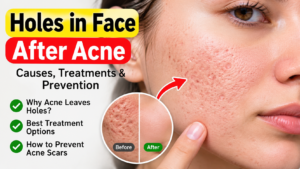

Acne can disappear, but sometimes it leaves something behind: small holes, dents, or depressions in the skin. These marks are commonly called pitted acne scars or atrophic acne scars. They can make the skin look uneven and may be especially noticeable under bright light.
If you have noticed holes in your face after acne, you are not alone. Moderate to severe acne can damage the deeper layers of the skin and affect collagen production. When the skin heals, it may not rebuild the tissue evenly, resulting in permanent or long-lasting indentations.
The good news is that acne holes can often be improved significantly with the right treatment. The best option depends on the type, depth, and number of scars, as well as your skin type.
What Are Holes in the Face After Acne?
“Holes” in the face after acne usually refer to depressed acne scars. Unlike dark spots left after pimples, these scars cause a physical change in the skin’s texture.
They occur when inflammation from acne damages collagen beneath the skin. During healing, the body may produce too little collagen in the damaged area. This can leave a depression or indentation.
Acne scars are different from temporary acne marks.
- Dark spots: Changes in skin color without a change in texture.
- Red marks: Temporary discoloration that can remain after acne heals.
- Pitted scars: Depressions or holes caused by damage to deeper skin tissue.
- Raised scars: Areas where excess scar tissue has formed.
Understanding the difference is important because creams that fade pigmentation may not remove deep acne scars.
What Causes Holes in the Face After Acne?
Several factors can increase the risk of developing pitted acne scars.
1. Severe or Cystic Acne
Large, painful pimples, nodules, and cysts can cause inflammation deep inside the skin. The deeper the inflammation, the greater the possibility of collagen damage and permanent scarring.
2. Picking or Squeezing Pimples
Picking acne can push inflammation deeper and injure the surrounding skin. It can also introduce bacteria and increase the risk of infection.
Repeatedly squeezing pimples is one of the habits worth avoiding if you want to reduce the risk of acne scars.
3. Delayed Acne Treatment
Long-lasting or untreated inflammatory acne can continue damaging the skin. Getting acne under control early may help reduce the chance of developing severe scars.
4. Genetics
Some people naturally develop acne scars more easily than others. Genetics can influence how the skin responds to inflammation and how it produces collagen during healing.
5. Repeated Inflammation
Frequent breakouts in the same area can repeatedly damage the skin. This can contribute to uneven texture and more noticeable scarring.
Types of Acne Holes and Pitted Scars
Not all acne holes look the same. Dermatologists generally classify depressed acne scars into several types.
Ice Pick Scars
Ice pick scars are small but deep openings that extend into the skin. They often look like tiny punctures and can be difficult to treat with ordinary skincare products.
Boxcar Scars
Boxcar scars are wider depressions with relatively defined edges. They can be shallow or deep and are often found on the cheeks and temples.
Rolling Scars
Rolling scars create a wavy or uneven appearance. They are usually broader and shallower than ice pick scars and may become more visible when the skin is stretched.
Knowing your scar type can help determine which professional treatment is most appropriate.
Can Acne Holes Go Away Naturally?
Some shallow acne scars may become less noticeable over time as the skin continues remodeling. However, deep pitted acne scars usually do not disappear completely on their own.
Healthy skincare can support the skin barrier and improve overall texture, but deep depressions often require professional treatment to create a meaningful change.
It is also important to remember that acne scars can take months or even years to improve. Patience is essential.
Best Treatments for Holes in the Face After Acne
The most effective treatment depends on the type and depth of your scars. A dermatologist can examine your skin and recommend an appropriate combination.
1. Retinoids
Topical retinoids can help increase skin cell turnover and support collagen production. They are also useful for preventing new acne, which is important because new breakouts can create additional scars.
Retinoids can cause dryness and irritation, especially when you first start using them. Introduce them gradually and follow professional advice, particularly if you have sensitive skin.
2. Microneedling
Microneedling uses tiny needles to create controlled micro-injuries in the skin. This stimulates the body’s wound-healing response and encourages collagen production.
It is commonly used for certain types of depressed acne scars and may require several sessions.
Professional microneedling is generally safer and more controlled than attempting aggressive procedures at home.
3. Fractional Laser Treatment
Fractional laser treatments create microscopic treatment zones in the skin while leaving surrounding tissue intact. The healing process can stimulate collagen remodeling and improve uneven texture.
Laser treatment can be effective for acne scars, but the appropriate laser and settings depend on the individual’s skin type and scar characteristics.
People with darker skin tones should discuss the risk of post-inflammatory hyperpigmentation with a qualified dermatologist before laser treatment.
4. Chemical Peels
Certain professional chemical peels can improve skin texture and the appearance of some acne scars. They work by removing controlled layers of damaged skin and stimulating skin renewal.
The strength and type of peel should be selected by a qualified professional. Strong chemical peels should not be performed casually at home because burns, pigmentation changes, and additional scarring are possible.
5. Subcision
Subcision is a procedure used particularly for rolling acne scars. A dermatologist inserts a specialized needle beneath the scar to release fibrous bands pulling the skin downward.
Once those bands are released, the depression may become less noticeable. Subcision is sometimes combined with other scar treatments.
6. Dermal Fillers
Some depressed acne scars can be temporarily improved with injectable dermal fillers. Fillers add volume beneath the depressed area, making the surface appear smoother.
Results vary depending on the scar type and filler used. Because injections carry risks, they should only be performed by a qualified medical professional.
7. Punch Techniques
For certain deep ice pick or boxcar scars, dermatologists may use punch excision or related surgical techniques. The scar tissue is removed or modified and the area is allowed to heal.
These procedures are usually considered when individual scars are deep and clearly defined.
Skincare Routine for Acne-Prone Skin With Scars
A simple skincare routine can help protect your skin while you work on acne and uneven texture.
Morning
- Use a gentle cleanser.
- Apply a lightweight moisturizer.
- Apply broad-spectrum sunscreen with SPF 30 or higher.
Evening
- Cleanse gently.
- Use an acne or skin-renewing treatment recommended for your skin.
- Apply moisturizer.
Avoid using several strong active ingredients at once. Over-exfoliating can irritate the skin and potentially make discoloration more noticeable.
Why Sunscreen Is Important for Acne Scars
Daily sunscreen is one of the most important steps for people with acne-prone skin and scars.
UV exposure can worsen post-acne discoloration and make uneven skin tone more noticeable. Using broad-spectrum sunscreen can help protect healing skin and reduce the chance that dark marks become more persistent.
Choose a sunscreen that feels comfortable enough to use every day. Consistency matters more than choosing the most expensive product.
Can Home Remedies Remove Acne Holes?
Home remedies such as aloe vera, honey, or natural oils may help moisturize the skin, but there is limited evidence that they can remove deep pitted acne scars.
Be cautious with harsh DIY treatments such as lemon juice, baking soda, undiluted essential oils, or abrasive scrubs. These can irritate or damage the skin and may make discoloration worse.
If your main concern is a physical indentation, professional assessment is usually more useful than trying increasingly aggressive home remedies.
How to Prevent Holes After Acne
Prevention is easier than treating established scars. Consider these habits:
Don’t Pick or Squeeze Pimples
Allow blemishes to heal without repeatedly touching them. If a pimple is painful, use an appropriate acne treatment rather than squeezing it.
Treat Acne Early
If acne is frequent, painful, or leaving scars, consider seeing a dermatologist instead of waiting for it to become severe.
Protect Your Skin From the Sun
Use sunscreen regularly to help prevent post-acne discoloration and protect the skin.
Avoid Over-Exfoliation
Scrubbing acne-prone skin aggressively can increase irritation. Gentle cleansing is usually better than harsh physical exfoliation.
Maintain a Consistent Routine
Switching products constantly can irritate your skin. Give appropriate treatments enough time to work unless they cause significant irritation.
When Should You See a Dermatologist?
Consider professional advice if:
- You have deep holes or noticeable dents after acne.
- New acne keeps appearing and causing scars.
- Over-the-counter products have not improved your skin.
- Your acne is painful or cystic.
- Scars are affecting your confidence.
- You are considering laser, microneedling, chemical peels, or injections.
A dermatologist can determine whether you have ice pick, boxcar, rolling, or another type of scar and create a treatment plan accordingly.
Frequently Asked Questions
Are holes in the face after acne permanent?
Deep pitted acne scars can be permanent without treatment, although their appearance may improve naturally over time. Professional treatments can often make them significantly less noticeable.
What is the best treatment for acne holes?
There is no single best treatment for everyone. Microneedling, laser resurfacing, subcision, chemical peels, fillers, and scar-removal techniques may be appropriate depending on the scar type.
Can vitamin C remove acne holes?
Vitamin C can help improve uneven pigmentation and support overall skin health, but it generally cannot fill deep physical depressions caused by acne scars.
Can retinol get rid of acne holes?
Retinoids may improve skin texture and stimulate collagen over time, especially for mild scarring. However, deep acne holes often require professional procedures.
Does microneedling remove acne scars permanently?
Microneedling can improve the appearance of many depressed acne scars by stimulating collagen remodeling, but results vary. Multiple treatments may be needed, and scars may not disappear completely.
Final Thoughts
Holes in the face after acne are usually pitted acne scars caused by damage to collagen and deeper skin tissue. They can develop after severe inflammation, cystic acne, picking, or repeated breakouts.
The right treatment depends on the scar type and severity. Gentle skincare, acne control, and daily sunscreen can help protect your skin, while professional options such as microneedling, laser treatment, chemical peels, subcision, fillers, or surgical techniques may improve established scars.
If your acne holes are deep or bothersome, a dermatologist can help you choose a safe treatment plan. Most importantly, avoid picking your pimples and focus on controlling active acne early—preventing new scars is one of the best ways to maintain smoother, healthier-looking skin.