
best dog ear cleaner, dog ear infection cleaner, dog ear cleaner for yeast infection, dog ear wash, dog ear cleaning solution, dog ear infection treatment, ear cleaner for dogs, dog ear care
Dog ear infections are common, uncomfortable, and sometimes difficult to manage. A dog with an ear problem may shake their head, scratch their ears, develop redness, produce an unpleasant odor, or have visible wax and discharge.
Choosing the best dog ear cleaner for ear infections can help remove wax and debris and support healthy ear hygiene. However, an important distinction should be made: an ear cleaner is not always the same thing as an infection treatment.
Ear infections can involve yeast, bacteria, parasites, allergies, or a combination of problems. Your veterinarian may need to examine the ear and determine the underlying cause before recommending medication. Veterinary sources also caution against using inappropriate household products inside a dog’s ears.
This complete buying guide explains what to look for when shopping for a dog ear cleaner for infection, which ingredients may be useful, and when professional veterinary care is necessary.
Can Dog Ear Cleaners Treat Ear Infections?
A good ear cleaner can remove wax, debris, and excess moisture, but cleaning alone may not cure an established infection.
For example, yeast and bacterial infections may require targeted medication prescribed or recommended by a veterinarian. Chronic or recurring infections can also have underlying causes such as allergies or anatomical problems.
That means the right product depends on your dog’s situation.
A routine ear-cleaning solution may be appropriate for maintenance, while a medicated or antimicrobial cleanser may be recommended as part of a veterinary treatment plan.
If your dog’s ear is very painful, swollen, bleeding, or producing significant discharge, don’t rely on an OTC cleaner alone.
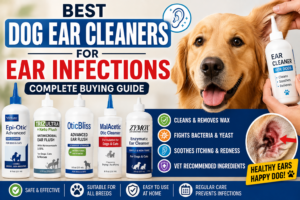
1. Virbac Epi-Otic Advanced Ear Cleaner
Best for: Routine cleaning and maintenance
Virbac Epi-Otic Advanced is one of the better-known dog ear-cleaning solutions and is commonly used for cleaning ear canals and removing excess wax and debris.
Current retailer information describes it as a non-irritating cleanser designed for routine cleansing and for use in dogs with chronic external ear inflammation.
Why consider it?
- Designed specifically for dogs and cats
- Helps remove wax and debris
- Useful for routine ear cleaning
- Can help dry the ear canal
- Available in different bottle sizes
It may be particularly useful for dogs that regularly develop wax buildup or need veterinarian-directed maintenance cleaning.
2. TrizULTRA + Keto Flush
Best for: Yeast and mixed ear-care situations under veterinary guidance
TrizULTRA + Keto Flush is an antimicrobial ear and skin cleanser containing 0.15% ketoconazole, an antifungal ingredient.
Current product information describes it as an antibacterial and antifungal cleanser for pets prone to infections involving yeast and bacteria.
This makes it a product to discuss with your veterinarian when yeast is suspected or has already been identified.
Key features:
- Contains ketoconazole
- Antifungal properties
- Antibacterial cleansing support
- Fragrance-free
- Designed for dogs, cats, and horses
It should not be viewed as a universal substitute for veterinary diagnosis or prescription treatment.
3. Vetnique Labs OticBliss Advanced Ear Flush
Best for: Dogs needing antibacterial and antifungal ear-flush support
OticBliss Advanced is marketed as a veterinary-strength antibacterial and antifungal ear flush for dogs and cats.
It appears among current dog ear-care product listings and is designed for owners looking for a broader ear-cleaning formula.
Potential advantages:
- Antibacterial and antifungal positioning
- Liquid flush format
- Designed for dogs and cats
- Useful for cleaning wax and debris
- Convenient for regular ear-care routines when recommended
If your dog already has an active infection, ask your veterinarian whether a cleanser like this is appropriate before using it.
4. MalAcetic Otic Cleanser
Best for: Dogs with recurring ear-care needs when recommended by a veterinarian
MalAcetic Otic Cleanser is another product frequently included in veterinary-focused dog ear-cleaner recommendations.
Vetstreet lists it as an option for bacterial ear-care situations and notes that it contains acetic acid and boric acid, ingredients used in ear-cleaning formulations.
It may be useful when the goal is to clean the ear canal and help maintain an environment less favorable to certain microorganisms.
However, it should not be assumed that every red or smelly ear is a bacterial infection. Proper diagnosis matters.
5. Dechra EpiKlean Ear Cleanser
Best for: General cleansing and drying
EpiKlean is designed as an ear cleanser for dogs and cats and is another option for owners looking for a dedicated veterinary ear-care product.
Current product listings show ingredients including salicylic acid, glycerin, propylene glycol, and SD Alcohol 40.
Because formulations containing drying or active ingredients can be irritating to some dogs, follow the product label and veterinary advice carefully.
This type of product may be more appropriate for routine cleansing than for treating an established painful infection.
6. Veterinary Formula Clinical Care Ear Therapy
Best for: Budget-conscious routine ear cleaning
Veterinary Formula Clinical Care Ear Therapy is another dog-and-cat ear-cleaning option currently sold through major pet retailers.
It is positioned as a general ear-care product and may appeal to pet parents looking for a more affordable option.
When choosing a budget ear cleaner, don’t focus only on price. Check:
- Active ingredients
- Intended purpose
- Directions
- Whether it is suitable for your dog’s age
- Whether your veterinarian approves it for your dog’s specific condition
A cheaper product is not necessarily better if it irritates the ear or isn’t appropriate for the problem.
7. Pet MD Tris Flush
Best for: General ear flushing
Pet MD Tris Flush is another option available for dogs and cats.
It is designed as an ear-cleaning flush and can be useful for removing debris when used appropriately.
However, just like other OTC ear cleaners, it should not be used as a substitute for veterinary treatment when a dog has a painful or severe infection.
8. Zymox Enzymatic Ear Cleanser
Best for: Routine enzymatic ear cleaning
Zymox offers an enzymatic ear cleanser for dogs and cats.
Current retailer listings describe the cleanser as an ear-care product, separate from some of Zymox’s medicated ear-infection products.
This distinction is important when shopping online.
Always read the label carefully because an ear cleanser, ear flush, and medicated ear-infection product are not necessarily interchangeable.
9. Vetoquinol Ear Cleaning Solution
Best for: Basic ear-cleaning routines
Vetoquinol’s ear-cleaning solution is another established option for dogs and cats.
It may be considered for routine ear hygiene when a veterinarian recommends regular cleaning.
Routine maintenance can be particularly useful for dogs that are predisposed to ear problems because of factors such as floppy ears, moisture exposure, or recurrent wax accumulation.
What Ingredients Should You Look for in a Dog Ear Cleaner?
The ingredients you want depend on the reason for cleaning.
Cleansing ingredients
These help loosen and remove wax, dirt, and debris.
Drying ingredients
Drying agents can be useful for dogs that frequently get moisture in their ears, including some dogs that swim regularly.
Acidifying ingredients
Some ear cleaners use acids to alter the ear environment and support ear hygiene.
Antifungal ingredients
Ingredients such as ketoconazole may be included in products designed to address fungal or yeast-related problems. TrizULTRA + Keto Flush, for example, contains ketoconazole.
Antibacterial ingredients
Some veterinary ear products contain ingredients intended to provide antibacterial activity.
However, the presence of an antimicrobial ingredient does not mean the product is appropriate for every infection.
What Should You NOT Put in Your Dog’s Ears?
This is one of the most important parts of dog ear care.
Avoid experimenting with household ingredients or human ear products unless your veterinarian specifically tells you to use them.
Veterinary guidance recommends avoiding substances such as hydrogen peroxide and alcohol because they can irritate the ear canal. Essential oils should also not be used as DIY ear treatments.
Avoid:
- Hydrogen peroxide
- Rubbing alcohol
- Essential oils
- Vinegar mixtures unless specifically directed by your veterinarian
- Human ear medications
- Undiluted household cleaners
- Cotton swabs inserted deep into the ear canal
Merck Veterinary Manual specifically advises against inserting objects that push debris deeper into the ear canal and recommends cotton balls rather than cotton swabs.
How to Clean a Dog’s Ears Safely
If your veterinarian has recommended routine ear cleaning, use the following general approach.
Step 1: Prepare your supplies
Have your dog ear cleaner, cotton balls, towel, and treats ready.
Step 2: Keep your dog calm
Choose a comfortable location and reward calm behavior.
Step 3: Apply the cleaner
Follow the product’s label instructions or your veterinarian’s instructions.
Step 4: Massage the ear base
Gently massage the base of the ear to distribute the solution and loosen debris.
Step 5: Let your dog shake
Dogs often shake their heads after ear cleaning. This helps move loosened material outward.
Step 6: Wipe the visible area
Use cotton balls to gently remove loosened debris from the accessible parts of the ear.
Do not push cotton swabs deep into the canal.
Step 7: Reward your dog
A treat can help create a positive association with future ear cleaning.
How Often Should You Clean Your Dog’s Ears?
There is no universal schedule.
Some dogs need regular cleaning because of recurrent wax, allergies, swimming, or ear anatomy. Others may rarely need their ears cleaned.
Over-cleaning can irritate the ear canal.
Your veterinarian can recommend the appropriate frequency based on your dog’s individual needs. Merck notes that cleaning schedules may be more frequent during treatment and then reduced for maintenance.
Signs Your Dog May Have an Ear Infection
A dog ear infection may cause:
- Frequent head shaking
- Scratching at the ears
- Redness
- Swelling
- Bad odor
- Excessive wax
- Brown or yellow discharge
- Sensitivity when the ear is touched
- Head tilting
- Changes in balance
These symptoms can have different causes, so don’t assume that a particular discharge automatically means yeast or bacteria.
A veterinarian may need to examine the ear and perform testing to identify the organism and choose appropriate treatment.
When Should You See a Veterinarian?
See your veterinarian promptly if your dog has:
- Significant ear pain
- Severe swelling
- Bleeding
- Pus-like discharge
- Strong persistent odor
- Head tilt
- Balance problems
- Hearing changes
- Repeated ear infections
- Symptoms that aren’t improving
A particularly important warning is a suspected ruptured eardrum. Do not put an ear-cleaning product into an ear when the eardrum may be damaged unless your veterinarian has specifically approved it.
For chronic ear infections, identifying the underlying cause is especially important.
Best Dog Ear Cleaners: Quick Comparison
| Product | Best For | Main Consideration |
|---|---|---|
| Virbac Epi-Otic Advanced | Routine cleaning | Good general-purpose option |
| TrizULTRA + Keto Flush | Yeast/fungal support | Contains ketoconazole |
| OticBliss Advanced | Antibacterial/antifungal cleansing | Veterinary-strength positioning |
| MalAcetic Otic | Certain bacterial/ear-care needs | Acidifying formula |
| EpiKlean | Cleaning and drying | Contains drying/cleansing ingredients |
| Veterinary Formula Clinical Care | Budget cleaning | Check suitability for your dog |
| Pet MD Tris Flush | General flushing | Best for appropriate routine use |
| Zymox Enzymatic Cleanser | Enzymatic cleaning | Distinguish cleanser from medicated products |
| Vetoquinol Ear Cleaning Solution | Routine hygiene | Useful when regular cleaning is recommended |
Frequently Asked Questions
What is the best dog ear cleaner for an infection?
There is no single best product for every infection. The appropriate cleaner depends on whether the problem involves yeast, bacteria, excessive wax, moisture, allergies, or another condition. A veterinarian can help determine the most appropriate product.
What is the best dog ear cleaner for yeast infections?
Products containing antifungal ingredients may be useful when yeast has been identified. TrizULTRA + Keto Flush, for example, contains ketoconazole. However, an active infection may require additional veterinary treatment.
Can I use dog ear cleaner every day?
Not necessarily. Frequency should depend on your dog’s condition and your veterinarian’s recommendation. Excessive cleaning can irritate sensitive ears.
Can I use hydrogen peroxide to clean my dog’s ears?
It is generally not recommended as a DIY ear cleaner because it can irritate the ear canal. Veterinary sources recommend using an appropriate dog ear-cleaning product instead.
Can I use Q-tips or cotton swabs?
Do not insert cotton swabs deep into your dog’s ear canal. They can push debris deeper or injure delicate structures. Cotton balls can be used to wipe accessible areas when cleaning is appropriate.
Final Thoughts
Choosing the best dog ear cleaner for ear infections starts with understanding the difference between routine ear hygiene and actual infection treatment.
For general maintenance, products such as Virbac Epi-Otic Advanced may be useful. For specific yeast or antimicrobial concerns, products such as TrizULTRA + Keto Flush may be considered when appropriate and ideally with veterinary guidance. Other options include OticBliss, MalAcetic, EpiKlean, Pet MD Tris Flush, Zymox, and Vetoquinol.
The most important rule is not to treat every smelly or dirty ear the same way. Ear infections can have different causes, and chronic infections may require investigation of allergies or other underlying problems.
If your dog’s ear is painful, swollen, bleeding, producing significant discharge, or associated with head tilt or balance problems, contact a veterinarian instead of trying multiple OTC cleaners.
The right ear cleaner can support healthy ears—but the right diagnosis is what makes effective treatment possible.