
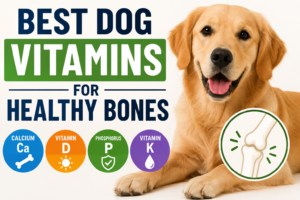

Strong bones are essential for every dog, from growing puppies to active adult dogs and senior pets. Bones provide structural support, protect vital organs, and work together with muscles and joints to help dogs walk, run, jump, and play.
While a complete and balanced diet should provide most dogs with the nutrients they need, some dogs may require additional nutritional support because of age, health conditions, dietary restrictions, or specific nutritional deficiencies.
If you’re searching for the best dog vitamins for healthy bones, it’s important to understand which nutrients actually matter and when a supplement may be appropriate. Calcium and vitamin D are well known for supporting bone health, but other nutrients—including phosphorus, magnesium, vitamin K, and adequate protein—also play important roles.
This guide explains the essential vitamins and minerals for canine bone health, signs of possible nutritional problems, how to choose a dog bone supplement, and mistakes pet owners should avoid.
Why Bone Health Is Important for Dogs
A dog’s skeletal system provides the framework that supports its entire body. Healthy bones also work closely with muscles, cartilage, ligaments, and joints.
Bone health is particularly important during puppyhood because young dogs experience rapid skeletal growth. Large- and giant-breed puppies require especially careful nutrition because excessive or unbalanced mineral intake can interfere with normal skeletal development.
Bone health remains important throughout adulthood and becomes increasingly relevant as dogs age.
Senior dogs may experience changes in mobility, muscle mass, and joint function, making proper nutrition an important part of an overall wellness plan.
Do Dogs Need Vitamins for Strong Bones?
Most healthy dogs eating a nutritionally complete and balanced commercial diet do not automatically need extra vitamins or minerals.
This is an important point because giving a dog additional calcium, vitamin D, or other nutrients without veterinary guidance can sometimes cause nutritional imbalances.
Supplements may be appropriate when a veterinarian identifies a deficiency, recommends nutritional support for a specific condition, or determines that a dog’s diet needs supplementation.
Therefore, the goal should not be to give your dog as many vitamins as possible. Instead, the goal is to provide the right nutrients in the right amounts.
Best Vitamins and Nutrients for Dog Bone Health
Several nutrients contribute to normal bone development and maintenance.
1. Calcium
Calcium is one of the most important minerals for maintaining the structure and strength of bones.
It also plays important roles in muscle contraction, nerve function, and other biological processes.
Dogs obtain calcium primarily through their diet. Commercial complete-and-balanced dog foods are formulated to provide appropriate levels for the life stage indicated on the label.
Can Dogs Have Too Much Calcium?
Yes.
More calcium is not necessarily better.
Excessive calcium intake can be particularly concerning in growing large- and giant-breed puppies because it may interfere with normal skeletal development.
For this reason, avoid adding calcium supplements to a puppy’s food unless your veterinarian specifically recommends them.
2. Vitamin D
Vitamin D helps regulate calcium and phosphorus metabolism and is essential for normal bone development and maintenance.
Unlike humans, dogs do not rely on sunlight as their primary source of vitamin D. They obtain it through their diet.
A deficiency can interfere with normal bone mineralization, while excessive supplementation can also be harmful.
This is why vitamin D supplements should only be given to dogs under appropriate veterinary guidance.
3. Phosphorus
Phosphorus works closely with calcium to support normal bones and teeth.
It is also involved in energy metabolism and cellular functions.
The balance between calcium and phosphorus is particularly important during growth. Simply adding one mineral without considering the overall diet can create an imbalance.
A complete commercial diet should provide appropriate amounts for the dog’s life stage.
4. Magnesium
Magnesium contributes to numerous biological processes, including normal muscle and nerve function and bone metabolism.
Although magnesium is not usually the first nutrient pet owners think about when considering bone health, adequate dietary intake is part of a balanced nutritional program.
Healthy dogs eating a complete diet generally obtain enough magnesium from their food.
5. Vitamin K
Vitamin K plays an important role in normal blood clotting and also participates in bone-related processes.
Leafy vegetables and other foods can contain vitamin K, but supplementation is not generally necessary for healthy dogs eating a balanced diet.
Never assume that adding multiple vitamins will improve bone health. A veterinarian should determine whether supplementation is actually needed.
6. Protein
Protein is not a vitamin, but it is extremely important for maintaining healthy muscles and supporting the overall musculoskeletal system.
Muscles help support the skeleton and allow dogs to move normally.
Growing puppies have particularly high nutritional requirements, so their food should be formulated specifically for growth rather than simply supplemented at home.
Best Dog Vitamins for Puppies’ Bone Development
Puppies require carefully balanced nutrition because their bones are developing rapidly.
Large- and giant-breed puppies need especially careful nutritional management.
A puppy’s diet should provide appropriate levels of:
- Calcium
- Phosphorus
- Vitamin D
- Protein
- Essential fatty acids
- Other vitamins and minerals
A common mistake is assuming that a growing puppy needs additional calcium because puppies are building bones.
In reality, excessive supplementation can be harmful.
Instead of automatically giving a puppy a calcium or multivitamin supplement, choose a complete-and-balanced puppy food appropriate for the puppy’s size and life stage.
If your puppy has an unusual diet, poor growth, digestive problems, or another medical concern, ask your veterinarian whether nutritional testing or supplementation is necessary.
Dog Bone Supplements for Senior Dogs
As dogs age, owners often become more interested in supplements that support bones, joints, and mobility.
However, bone health and joint health are not exactly the same thing.
A senior dog with stiffness may have osteoarthritis or another orthopedic condition rather than a vitamin deficiency.
A veterinarian can help determine whether the problem involves bones, joints, muscles, or another underlying condition.
Senior dogs may benefit from an overall nutritional plan that includes:
- Appropriate protein
- Essential vitamins and minerals
- Healthy body weight
- Adequate exercise
- Joint-support strategies when appropriate
- Regular veterinary examinations
Supplements should complement—not replace—proper veterinary care.
What About Glucosamine for Dogs?
Glucosamine is commonly included in canine joint supplements.
It is not a vitamin and does not directly replace calcium or vitamin D.
Instead, glucosamine is marketed primarily for joint and cartilage support.
Some products combine glucosamine with ingredients such as chondroitin or omega-3 fatty acids.
If your dog’s main problem is stiffness or reduced mobility, speak with your veterinarian before choosing a supplement. The appropriate product depends on the dog’s age, weight, health status, medications, and underlying condition.
How to Choose the Best Dog Vitamin Supplement
If your veterinarian recommends a supplement, don’t choose one simply because it has the longest ingredient list.
Look for products designed specifically for dogs and carefully check the label.
1. Choose a Dog-Specific Product
Human vitamin supplements may contain ingredients or nutrient concentrations that are inappropriate for dogs.
Always use products formulated for canine use unless your veterinarian specifically advises otherwise.
2. Check the Ingredients
Look for clearly listed amounts of vitamins and minerals.
Avoid products that make exaggerated claims such as “cures weak bones” or “guarantees stronger bones.”
3. Consider Quality Control
Choose products from reputable manufacturers with transparent labeling and appropriate quality-control practices.
Your veterinarian may also be able to recommend suitable brands.
4. Consider Your Dog’s Diet
Before adding a supplement, look at what your dog already eats.
If the food is complete and balanced, adding another multivitamin may provide unnecessary nutrients.
5. Ask Your Veterinarian
Your veterinarian can determine whether your dog actually needs supplementation and what dose is appropriate.
This is especially important for puppies, pregnant or nursing dogs, dogs with kidney or liver disease, and dogs taking medications.
Signs Your Dog May Have a Nutritional or Bone Problem
Vitamin deficiencies are not the only cause of bone or mobility problems.
Contact your veterinarian if you notice:
- Difficulty standing
- Trouble climbing stairs
- Limping
- Reluctance to walk
- Pain when moving
- Unusual gait
- Weakness
- Poor growth in puppies
- Abnormal bone development
- Frequent fractures
- Significant changes in activity
- Persistent stiffness
These signs can have many possible causes, including orthopedic disease, injury, metabolic problems, nutritional issues, and age-related conditions.
A veterinarian may recommend a physical examination and, when necessary, diagnostic tests or X-rays.
Can Vitamins Fix Weak Bones in Dogs?
Vitamins can help correct a nutritional deficiency when one is present, but they are not a universal treatment for weak bones.
If a dog has a medical condition affecting the bones, simply giving a multivitamin may not address the underlying problem.
For example, a dog with an orthopedic disorder may need a completely different treatment approach.
Similarly, a dog with poor nutrition may need its entire diet evaluated rather than receiving one isolated nutrient.
The most effective strategy is to identify the cause first.
Foods That Support Healthy Bones
A complete-and-balanced dog food should be the foundation of your dog’s nutrition.
Depending on the diet and your veterinarian’s advice, nutritious foods may include appropriate sources of:
- High-quality protein
- Calcium
- Phosphorus
- Vitamin D
- Magnesium
- Essential fatty acids
However, adding large quantities of human foods or homemade ingredients can unintentionally disrupt the nutritional balance of a dog’s diet.
If you want to feed a homemade diet long term, work with a veterinarian or qualified veterinary nutrition professional to ensure that the diet is properly formulated.
Common Mistakes When Giving Dog Vitamins
Giving Human Vitamins
Human supplements can contain inappropriate doses or ingredients for dogs.
Adding Calcium Without Advice
Extra calcium can be particularly problematic for growing puppies.
Using Multiple Supplements Together
Combining a multivitamin, bone supplement, joint supplement, and other products can lead to unnecessary nutrient intake.
Assuming More Is Better
Nutrients have optimal ranges. Excessive amounts of certain vitamins and minerals can be harmful.
Replacing Veterinary Care With Supplements
A supplement should never be used as a substitute for diagnosing persistent pain, weakness, lameness, or abnormal growth.
Best Bone Health Routine for Dogs
Supporting strong bones involves much more than vitamins.
Feed a Balanced Diet
Provide a complete-and-balanced food appropriate for your dog’s life stage.
Maintain a Healthy Weight
Excess body weight places additional stress on the musculoskeletal system.
Provide Appropriate Exercise
Regular, age-appropriate physical activity helps maintain muscle strength and overall mobility.
Puppies should receive exercise appropriate for their developmental stage, particularly large breeds.
Schedule Veterinary Checkups
Regular examinations can help identify nutritional, orthopedic, and mobility problems early.
Avoid Unnecessary Supplements
Only supplement when there is a clear reason and appropriate veterinary guidance.
Frequently Asked Questions
What are the best vitamins for dogs’ bones?
Important nutrients include calcium, vitamin D, phosphorus, magnesium, and vitamin K. However, healthy dogs eating a complete-and-balanced diet generally do not need additional supplementation unless a veterinarian identifies a specific need.
Can I give my dog calcium supplements?
Do not give calcium supplements without veterinary guidance. Excess calcium can be harmful, particularly in growing puppies.
Is vitamin D good for dogs’ bones?
Vitamin D is essential for calcium and phosphorus regulation and normal bone health. However, excessive vitamin D can be toxic, so supplementation should be carefully controlled.
Do senior dogs need bone vitamins?
Not necessarily. Senior dogs may have different nutritional needs, but supplements should be based on the dog’s diet and health status rather than age alone.
What is the best supplement for puppy bones?
For most puppies, the best approach is a complete-and-balanced puppy diet formulated for the appropriate life stage and size. Additional calcium or vitamin supplements should only be used when recommended by a veterinarian.
Can vitamins make my dog’s bones stronger?
Vitamins and minerals support normal bone development and maintenance, but supplements cannot automatically strengthen bones if there is no deficiency. The correct diet, healthy weight, exercise, and veterinary care are all important.
Final Thoughts
The best dog vitamins for healthy bones are not necessarily the supplements with the most ingredients. Healthy bones depend on balanced nutrition, appropriate amounts of calcium and phosphorus, adequate vitamin D, sufficient protein, normal body weight, exercise, and good overall health.
For most healthy dogs, a complete-and-balanced diet provides the essential nutrients needed for normal bone development and maintenance. Adding extra calcium, vitamin D, or multivitamins without professional guidance can create nutritional imbalances and may be harmful.
Puppies—especially large- and giant-breed puppies—require particularly careful nutrition during growth. Senior dogs may also benefit from individualized nutritional and mobility plans.
If your dog has weak bones, persistent lameness, difficulty walking, unusual growth, pain, or repeated injuries, don’t rely on vitamins alone. A veterinarian can determine the underlying cause and recommend the safest treatment.