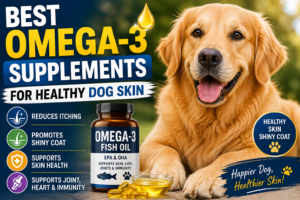

Healthy skin is one of the clearest signs that your dog is thriving. If your furry friend suffers from dry skin, constant itching, excessive shedding, or a dull coat, adding an omega-3 supplement to their diet may help. Omega-3 fatty acids are essential nutrients that support skin health, reduce inflammation, and promote a soft, shiny coat.
Because dogs cannot produce enough omega-3s on their own, they must get these healthy fats through food or supplements. Today, there are many high-quality fish oil products, krill oil supplements, and algae-based omega-3 options designed specifically for dogs.
In this guide, you’ll learn why omega-3s matter, how they improve skin health, what ingredients to look for, and the best omega-3 supplements available for dogs.
What Are Omega-3 Fatty Acids?
Omega-3 fatty acids are healthy fats that support many body functions, including:
- Skin health
- Coat quality
- Joint mobility
- Brain development
- Heart health
- Immune function
- Eye health
The three most important omega-3 fatty acids for dogs are:
EPA (Eicosapentaenoic Acid)
EPA helps reduce inflammation caused by allergies, arthritis, and skin irritation.
DHA (Docosahexaenoic Acid)
DHA supports brain development, vision, and nervous system health while also contributing to healthier skin.
ALA (Alpha-Linolenic Acid)
ALA is found in plant sources like flaxseed. Dogs convert only a small amount of ALA into EPA and DHA, so marine sources are generally more effective.
Benefits of Omega-3 for Dog Skin
Many veterinarians recommend omega-3 supplements for dogs with chronic skin problems because they provide several important benefits.
1. Reduces Itching
Omega-3 fatty acids help reduce inflammation caused by allergies, making dogs less likely to scratch, lick, or chew their skin.
2. Improves Coat Shine
A healthy coat depends on proper skin nutrition. Dogs receiving omega-3 supplements often develop softer, shinier fur.
3. Helps Dry Skin
Dry, flaky skin may improve with consistent omega-3 supplementation, especially during colder months.
4. Supports Allergy Management
Although omega-3s are not a cure for allergies, they can reduce inflammation and improve comfort in dogs with environmental or food allergies.
5. Reduces Excessive Shedding
Healthy skin supports stronger hair follicles, which may help reduce excessive shedding in some dogs.
6. Promotes Faster Skin Healing
Omega-3 fatty acids support the body’s natural healing process, helping minor wounds and irritated skin recover more efficiently.
Signs Your Dog May Need an Omega-3 Supplement
Consider speaking with your veterinarian if your dog has:
- Dry skin
- Constant scratching
- Excessive shedding
- Hot spots
- Dull coat
- Seasonal allergies
- Recurrent ear infections
- Skin inflammation
- Cracked paw pads
These symptoms may indicate your dog could benefit from additional omega-3s as part of a comprehensive treatment plan.
Best Sources of Omega-3 for Dogs
Not all omega-3 supplements are the same. The source of the fatty acids matters.
Fish Oil
Fish oil is one of the most effective and widely used omega-3 sources for dogs.
Common fish include:
- Salmon
- Sardines
- Anchovies
- Mackerel
Pros:
- High in EPA and DHA
- Easy to digest
- Supports skin and coat health
Krill Oil
Krill oil is derived from tiny marine crustaceans and contains omega-3s in a highly absorbable form.
Benefits:
- Excellent absorption
- Rich in antioxidants
- May cause fewer digestive issues in some dogs
Algae Oil
Algae oil is a plant-based source of DHA and is suitable for owners looking for a fish-free option.
Advantages:
- Sustainable
- Fish-free
- Rich in DHA
Green-Lipped Mussel
This natural supplement contains omega-3 fatty acids along with other compounds that may support joint and skin health.
Top Omega-3 Supplements for Healthy Dog Skin
1. Nordic Naturals Omega-3 Pet
Best For: Overall skin and coat health
Features
- Made from wild-caught fish
- High EPA and DHA content
- Third-party purity tested
- Suitable for dogs of all sizes
Pros
- High-quality ingredients
- Easy liquid formula
- Supports skin, joints, and heart health
2. Zesty Paws Wild Alaskan Salmon Oil
Best For: Dry skin and shedding
Features
- Rich in EPA and DHA
- Easy pump bottle
- Suitable for everyday use
Benefits
- Promotes shiny coats
- Supports immune health
- Helps maintain healthy skin
3. Grizzly Salmon Plus Oil
Best For: Dogs with seasonal allergies
Made from sustainably sourced salmon and pollock oil, this supplement provides a balanced blend of omega-3 and omega-6 fatty acids.
Benefits
- Supports healthy skin
- Reduces itching
- Improves coat texture
4. Nutramax Welactin Omega-3 Supplement
Best For: Dogs with allergies and sensitive skin
Nutramax is a trusted veterinary brand known for producing high-quality pet supplements. Welactin Omega-3 provides concentrated EPA and DHA to support healthy skin, coat, joints, and the immune system.
Key Features
- Veterinary-recommended formula
- High concentration of EPA and DHA
- Available in liquid and softgel forms
- Suitable for dogs of all life stages
Pros
- Supports healthy skin and coat
- Helps reduce inflammation
- Manufactured under strict quality standards
5. PetHonesty Omega-3 Fish Oil
Best For: Daily skin and coat maintenance
PetHonesty offers a premium fish oil supplement made with wild-caught fish and purified ingredients to minimize contaminants.
Benefits
- Reduces dry, flaky skin
- Supports shiny fur
- Promotes joint health
- Helps maintain immune function
Why Pet Owners Like It
- Easy-to-use pump bottle
- Appealing taste for most dogs
- Suitable for daily use
6. Plano Paws Wild Caught Omega-3 Fish Oil
Best For: Budget-friendly premium option
Plano Paws combines salmon, anchovy, herring, and sardine oil to provide a broad range of omega-3 fatty acids.
Features
- Sustainably sourced
- No artificial preservatives
- Rich in EPA and DHA
Benefits
- Supports healthy skin
- Helps reduce excessive shedding
- Encourages a glossy coat
How to Choose the Best Omega-3 Supplement for Your Dog
Not every supplement is created equal. Consider these important factors before buying.
1. Look for EPA and DHA
The most beneficial omega-3 fatty acids for dogs are EPA and DHA. Choose products that clearly list the amount of each per serving.
2. Choose High-Quality Fish Sources
Look for supplements made from:
- Wild-caught salmon
- Sardines
- Anchovies
- Mackerel
These fish naturally contain high levels of omega-3 fatty acids.
3. Check for Purity Testing
Quality supplements should be tested for contaminants such as:
- Mercury
- Lead
- PCBs
- Other heavy metals
Third-party testing provides extra confidence in product safety.
4. Pick the Right Form
Omega-3 supplements come in several forms:
- Liquid oil
- Soft chews
- Capsules
- Softgels
Liquid oils are often easiest to mix into food, while chews may work well for picky eaters.
5. Avoid Unnecessary Additives
Choose supplements without:
- Artificial colors
- Artificial flavors
- Excess sugar
- Low-quality fillers
Simple ingredient lists are usually the best choice.
How Much Omega-3 Does a Dog Need?
The ideal dosage depends on your dog’s:
- Body weight
- Age
- Health condition
- Diet
- Veterinary recommendations
Always follow the dosage instructions on the product label or consult your veterinarian. Dogs receiving omega-3s for medical conditions such as allergies or arthritis may require different amounts than those taking supplements for general wellness.
Can Dogs Get Too Much Omega-3?
Yes. While omega-3 fatty acids are generally safe, excessive amounts may cause side effects.
Possible side effects include:
- Loose stools
- Vomiting
- Weight gain
- Fishy breath
- Oily coat
- Delayed blood clotting at very high doses
Start with the recommended serving and monitor your dog’s response. Contact your veterinarian if side effects occur.
Natural Food Sources of Omega-3
In addition to supplements, certain foods naturally contain omega-3 fatty acids.
Examples include:
- Cooked salmon (boneless)
- Sardines packed in water
- Mackerel
- Anchovies
- Green-lipped mussels
These foods should be fed in moderation and prepared safely. Avoid raw fish or fish containing bones, as they may pose health risks.
Tips for Maintaining Healthy Dog Skin
Omega-3 supplements work best when combined with good overall care.
- Feed a balanced, high-quality diet.
- Brush your dog’s coat regularly.
- Use a gentle dog-specific shampoo.
- Keep flea and tick prevention up to date.
- Schedule routine veterinary checkups.
- Ensure your dog has access to clean, fresh water.
- Address allergies and infections promptly.
- Maintain a healthy body weight through proper nutrition and exercise.
Frequently Asked Questions (FAQ)
What is the best omega-3 supplement for dogs?
High-quality fish oil supplements containing EPA and DHA from trusted manufacturers are generally considered the best choice for supporting healthy skin and coat.
How long does it take for omega-3 supplements to work?
Many dogs begin to show improvements in skin and coat condition within 4 to 8 weeks of consistent daily use, although results vary by individual.
Can puppies take omega-3 supplements?
Yes, many puppies can benefit from omega-3 fatty acids, particularly DHA, which supports healthy brain and eye development. Always use a product designed for puppies or follow your veterinarian’s guidance.
Is salmon oil better than fish oil?
Salmon oil is an excellent source of omega-3s, but fish oil made from a blend of species such as sardines, anchovies, and mackerel may also provide high levels of EPA and DHA. The quality and purity of the product are more important than the specific fish source.
Final Thoughts
Omega-3 supplements are one of the most effective ways to support healthy skin, reduce itching, improve coat quality, and promote overall wellness in dogs. Whether your dog struggles with seasonal allergies, dry skin, excessive shedding, or simply needs nutritional support, a high-quality omega-3 supplement can make a noticeable difference over time.
When choosing a supplement, prioritize products with clearly labeled EPA and DHA content, sustainably sourced ingredients, and third-party purity testing. Combine supplementation with a nutritious diet, regular grooming, and routine veterinary care to keep your dog looking and feeling its best.