
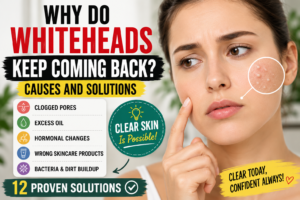

Whiteheads are one of the most frustrating forms of acne because they often disappear only to return days or weeks later. You may clear your skin with a new skincare routine, only to wake up with another cluster of tiny white bumps on your forehead, nose, chin, or cheeks.
The reason is simple: whiteheads don’t usually return because of one single cause. Instead, they develop from a combination of excess oil, clogged pores, dead skin cells, hormones, and everyday skincare habits.
The good news is that recurring whiteheads can often be controlled with the right routine and healthy lifestyle choices. In this guide, we’ll explain why whiteheads keep coming back, what triggers them, and the best solutions to help prevent future breakouts.
What Are Whiteheads?
Whiteheads are a type of closed comedone, which forms when a pore becomes clogged with:
- Excess oil (sebum)
- Dead skin cells
- Bacteria
- Dirt and debris
Unlike blackheads, the pore remains closed, trapping the material beneath the skin’s surface and creating a small white or flesh-colored bump.
Whiteheads most commonly appear on:
- Forehead
- Nose
- Chin
- Jawline
- Cheeks
- Chest
- Back
Why Do Whiteheads Keep Coming Back?
Recurring whiteheads usually happen because the factors causing clogged pores haven’t been fully addressed.
Below are the most common reasons.
1. Excess Oil Production
One of the biggest causes of recurring whiteheads is oily skin.
Your sebaceous glands naturally produce sebum to protect your skin. However, when too much oil mixes with dead skin cells, pores become blocked.
People with oily skin often notice whiteheads appearing repeatedly in the same areas, especially the T-zone.
Solution
- Use an oil-free cleanser twice daily.
- Choose lightweight, non-comedogenic moisturizers.
- Apply blotting papers instead of overwashing your face.
2. Dead Skin Cell Buildup
Your skin naturally sheds dead cells every day. If these cells aren’t removed properly, they accumulate inside pores and combine with oil.
This creates the perfect environment for whiteheads.
Solution
Use gentle chemical exfoliants such as:
- Salicylic acid (BHA)
- Lactic acid (AHA)
- Glycolic acid
Exfoliate 1–3 times weekly, depending on your skin type. Avoid harsh scrubs that can irritate the skin.
3. Hormonal Changes
Hormones can increase oil production, making whiteheads more likely.
Hormonal fluctuations often occur during:
- Puberty
- Menstrual cycles
- Pregnancy
- Menopause
- High stress levels
Solution
Maintain a consistent skincare routine. If hormonal acne is severe or persistent, consult a dermatologist for personalized treatment options.
4. Using the Wrong Skincare Products
Heavy creams, thick sunscreens, or oil-based makeup can clog pores.
Products that aren’t labeled non-comedogenic may increase the risk of whiteheads.
Solution
Choose products labeled:
- Oil-free
- Non-comedogenic
- Lightweight
- Gel-based
These are less likely to block pores.
5. Inadequate Cleansing
Sleeping with makeup, sunscreen, or excess oil on your skin allows impurities to build up overnight.
Solution
Always cleanse your face:
- Every morning
- Before bedtime
- After heavy sweating
Double cleansing in the evening may be helpful if you wear makeup or water-resistant sunscreen.
6. Overwashing Your Face
Many people try to eliminate oil by washing their face multiple times a day.
Unfortunately, this strips the skin’s natural moisture and may trigger even more oil production.
Solution
Wash your face only twice daily using a gentle cleanser.
7. Touching Your Face Frequently
Your hands transfer bacteria, dirt, and oil to your skin.
Touching or picking at whiteheads can worsen inflammation and increase the risk of scarring.
Solution
Avoid resting your face on your hands and resist the urge to squeeze blemishes.
8. Dirty Makeup Brushes and Pillowcases
Makeup tools and bedding can collect oil, bacteria, and dead skin cells over time.
Solution
- Wash makeup brushes weekly.
- Replace beauty sponges regularly.
- Change pillowcases every few days, especially if you have oily skin.
9. Diet and Lifestyle Factors
While no single food causes whiteheads, some people find that high-sugar or highly processed diets contribute to breakouts.
Poor sleep and chronic stress may also affect skin health.
Solution
Support your skin by:
- Eating plenty of fruits and vegetables
- Choosing whole grains
- Drinking enough water
- Exercising regularly
- Getting 7–9 hours of sleep each night
10. Genetics
If one or both of your parents had oily or acne-prone skin, you may naturally produce more sebum.
Although genetics can’t be changed, a consistent skincare routine can help manage the condition effectively.
Best Ingredients to Prevent Whiteheads
Choosing the right ingredients is key to preventing clogged pores.
Salicylic Acid
- Penetrates pores
- Dissolves excess oil
- Helps prevent whiteheads and blackheads
Niacinamide
- Helps regulate oil production
- Improves skin barrier
- Reduces redness
Retinoids
Retinoids increase skin cell turnover and help prevent clogged pores.
They can be highly effective but should be introduced gradually to minimize irritation.
Benzoyl Peroxide
- Helps reduce acne-causing bacteria
- Can be useful if whiteheads occur alongside inflamed pimples
Hyaluronic Acid
Provides lightweight hydration without adding oil, helping maintain a healthy skin barrier.
Daily Skincare Routine for Whitehead-Prone Skin
Morning
- Gentle cleanser
- Niacinamide serum (optional)
- Lightweight moisturizer
- Broad-spectrum sunscreen (SPF 30 or higher)
Evening
- Cleanser
- Salicylic acid or retinoid (as tolerated)
- Lightweight moisturizer
Consistency is more important than using many products at once.
Natural Remedies That May Help
Some natural ingredients can complement your routine, though results vary from person to person.
Aloe Vera
- Soothes irritated skin
- Provides lightweight hydration
Green Tea
Rich in antioxidants and may help calm oily skin.
Honey
Acts as a natural humectant, helping skin retain moisture.
Clay Masks
Kaolin or bentonite clay can absorb excess oil and temporarily reduce shine.
Use once or twice a week.
Common Mistakes That Make Whiteheads Worse
Avoid these habits:
- Popping whiteheads
- Skipping moisturizer
- Sleeping with makeup on
- Using harsh scrubs
- Overusing acne treatments
- Applying heavy creams
- Frequently touching your face
These mistakes can damage the skin barrier and contribute to recurring breakouts.
When Should You See a Dermatologist?
Seek professional advice if:
- Whiteheads are severe or widespread
- Over-the-counter products haven’t helped after several weeks
- You develop painful cystic acne
- Acne leaves scars or dark spots
A dermatologist can recommend prescription treatments tailored to your skin.
Frequently Asked Questions
Why do whiteheads come back in the same place?
Recurring whiteheads often develop in pores that are repeatedly clogged by excess oil and dead skin cells.
Can moisturizer cause whiteheads?
Heavy or pore-clogging moisturizers can contribute to whiteheads. Choosing a lightweight, non-comedogenic moisturizer is a better option for acne-prone skin.
How long does it take to clear recurring whiteheads?
Many people notice improvement within 6–12 weeks of following a consistent skincare routine, though results vary.
Should I pop whiteheads?
No. Squeezing whiteheads can increase inflammation, introduce bacteria, and lead to scarring.
Is salicylic acid good for whiteheads?
Yes. Salicylic acid penetrates pores, helps dissolve excess oil, and is one of the most effective ingredients for preventing whiteheads.
Final Thoughts
If you’re wondering why whiteheads keep coming back, the answer usually lies in ongoing pore congestion caused by excess oil, dead skin cells, hormones, or skincare habits. Fortunately, most recurring whiteheads can be managed with a consistent routine that includes gentle cleansing, non-comedogenic products, lightweight hydration, and targeted ingredients like salicylic acid and niacinamide.
Healthy lifestyle choices—such as managing stress, eating a balanced diet, and avoiding the temptation to pick at blemishes—can also support clearer skin over time. With patience and the right approach, you can reduce recurring whiteheads and maintain a smoother, healthier complexion.