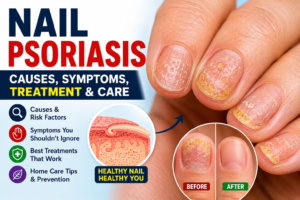

Nail psoriasis is a common condition that affects people living with psoriasis. While many people associate psoriasis with red, scaly skin patches, it can also affect fingernails and toenails. Nail psoriasis may cause discoloration, pitting, thickening, crumbling, and even separation of the nail from the nail bed.
Although nail psoriasis is not contagious, it can significantly impact daily life, making simple tasks like writing, typing, or walking uncomfortable. Fortunately, early diagnosis and proper treatment can help improve nail appearance and reduce symptoms.
In this complete guide, you’ll learn everything about nail psoriasis, including its causes, symptoms, treatment options, home remedies, and prevention strategies.
What Is Nail Psoriasis?
Nail psoriasis is an autoimmune condition that affects the fingernails or toenails. It occurs when the immune system mistakenly attacks healthy skin cells around the nail, causing abnormal nail growth.
Studies suggest that approximately 50% of people with psoriasis develop nail psoriasis at some point, while the percentage rises to nearly 80% among people with psoriatic arthritis.
The condition may affect one nail or multiple nails simultaneously.
What Causes Nail Psoriasis?
The exact cause is not fully understood, but experts believe several factors contribute.
1. Autoimmune Response
The immune system speeds up skin cell production, causing changes beneath and around the nail.
2. Genetics
People with a family history of psoriasis have a higher risk.
3. Nail Injury
Minor trauma, frequent manicures, or repeated pressure can trigger nail psoriasis.
4. Stress
Emotional stress often worsens psoriasis flare-ups.
5. Infections
Some bacterial or viral infections may trigger psoriasis symptoms in genetically susceptible individuals.
Common Symptoms of Nail Psoriasis
Symptoms vary from person to person.
Nail Pitting
Tiny dents or pits appear on the nail surface.
Yellow or Brown Discoloration
The nail develops yellow, brown, or reddish patches known as the “oil drop sign.”
Thickened Nails
The nails become thicker than normal and difficult to trim.
Nail Separation (Onycholysis)
The nail begins separating from the nail bed.
Crumbling Nails
The nail becomes brittle and breaks apart easily.
White Spots
Small white patches may develop on the nail surface.
Splinter Hemorrhages
Tiny dark red or black lines appear beneath the nail.
Pain
Some people experience discomfort, especially while walking if toenails are affected.
Who Is Most at Risk?
You may be more likely to develop nail psoriasis if you:
- Have skin psoriasis
- Have psoriatic arthritis
- Have a family history of psoriasis
- Frequently injure your nails
- Experience chronic stress
- Smoke regularly
Nail Psoriasis vs Nail Fungus
Many people confuse nail psoriasis with fungal nail infections.
| Nail Psoriasis | Nail Fungus |
|---|---|
| Autoimmune disease | Fungal infection |
| Not contagious | Contagious |
| Nail pitting common | Rare |
| Oil-drop discoloration | Yellow thick nails |
| Often linked with skin psoriasis | Usually affects toenails |
| Requires psoriasis treatment | Requires antifungal medicine |
Sometimes both conditions occur together, so laboratory testing may be needed.
How Doctors Diagnose Nail Psoriasis
A dermatologist usually diagnoses nail psoriasis by:
- Physical examination
- Medical history
- Skin examination
- Nail scraping
- Fungal culture
- Nail biopsy (rare cases)
Early diagnosis helps prevent permanent nail damage.
Best Medical Treatments for Nail Psoriasis
Treatment depends on severity.
1. Topical Corticosteroids
Steroid creams reduce inflammation around the nail.
Examples include:
- Clobetasol
- Betamethasone
2. Vitamin D Analogues
These medications help slow abnormal skin growth.
Examples include:
- Calcipotriol
- Calcitriol
3. Corticosteroid Injections
Doctors may inject medication beneath the affected nail for severe cases.
4. Oral Medications
For moderate to severe psoriasis:
- Methotrexate
- Cyclosporine
- Acitretin
5. Biologic Drugs
Modern biologic medicines target the immune system directly.
Examples:
- Adalimumab
- Secukinumab
- Ustekinumab
- Ixekizumab
These often improve both skin and nail psoriasis.
6. Phototherapy
UV light treatment may help some patients with nail involvement.
Home Remedies That May Help
Home care cannot cure nail psoriasis but may reduce discomfort.
Keep Nails Short
Trim nails regularly to reduce injury.
Moisturize Daily
Apply fragrance-free moisturizer several times daily.
Wear Gloves
Protect nails while washing dishes or cleaning.
Avoid Nail Trauma
Don’t bite nails or pick cuticles.
Coconut Oil
May help keep nails moisturized.
Aloe Vera Gel
Can soothe surrounding skin irritation.
Tea Tree Oil
May help only if a fungal infection is also present. It does not treat psoriasis itself.
Foods That May Support Nail Health
An anti-inflammatory diet may help some people manage psoriasis.
Recommended foods include:
- Salmon
- Sardines
- Walnuts
- Olive oil
- Blueberries
- Spinach
- Broccoli
- Avocados
- Oats
- Green tea
Stay hydrated and maintain a balanced diet.
Foods to Limit
Some people notice flare-ups after eating:
- Sugary drinks
- Processed foods
- Fried foods
- Excess alcohol
- Processed meats
Keeping a food diary may help identify personal triggers.
Nail Care Tips
Healthy nail habits can reduce flare-ups.
- Keep nails clean
- Moisturize after washing hands
- Avoid harsh chemicals
- Wear comfortable shoes
- Don’t use nails as tools
- Avoid artificial nails during active flare-ups
- Use gentle nail files
Can Nail Psoriasis Be Cured?
Currently, there is no permanent cure for nail psoriasis.
However, many treatments can successfully control symptoms and improve nail appearance.
Since nails grow slowly, noticeable improvement may take 3–6 months, and toenails may require 6–12 months.
Patience and consistent treatment are essential.
Possible Complications
Without treatment, nail psoriasis may lead to:
- Permanent nail deformity
- Pain while walking
- Secondary fungal infections
- Difficulty performing daily tasks
- Reduced self-confidence
Early treatment reduces these risks.
When Should You See a Doctor?
Consult a dermatologist if you notice:
- Sudden nail discoloration
- Thickening nails
- Nail separation
- Persistent pain
- Bleeding beneath the nail
- Signs of infection such as swelling or pus
Prompt medical care helps protect long-term nail health.
Frequently Asked Questions (FAQs)
Is nail psoriasis contagious?
No. Nail psoriasis cannot spread from person to person.
Can nail psoriasis affect only one nail?
Yes. It may affect one nail or several nails.
Does nail psoriasis go away on its own?
Usually not. Treatment is often needed to manage symptoms.
Is nail psoriasis painful?
Some people experience no pain, while others have discomfort, especially if the nail separates or thickens.
Can stress make nail psoriasis worse?
Yes. Stress is a common trigger for psoriasis flare-ups.
Does nail polish make nail psoriasis worse?
Nail polish is generally safe for many people, but harsh removers, artificial nails, and frequent manicures may worsen symptoms.
Final Thoughts
Nail psoriasis is more than a cosmetic concern—it can affect comfort, confidence, and everyday activities. Recognizing early symptoms such as pitting, discoloration, thickening, or nail separation allows for earlier treatment and better outcomes. While there is no permanent cure, a combination of medical therapy, proper nail care, and healthy lifestyle habits can significantly improve symptoms and help prevent complications.
If you suspect nail psoriasis, consult a dermatologist for an accurate diagnosis and a personalized treatment plan. With consistent care and patience, many people achieve healthier-looking nails and better long-term control of the condition.