
Introduction
Everyone dreams of having clear, smooth, and radiant skin. While skincare products play an important role, what you eat can have a significant impact on your skin’s overall appearance. A balanced diet rich in vitamins, minerals, antioxidants, and healthy fats provides your skin with the nutrients it needs to maintain a healthy-looking complexion.
Although no single food can guarantee perfect skin or treat medical skin conditions, eating a variety of nutrient-dense foods can support your body’s normal skin functions, hydration, and collagen production. Combined with a consistent skincare routine, sun protection, and healthy lifestyle habits, the right foods may help your face look fresher and more vibrant.
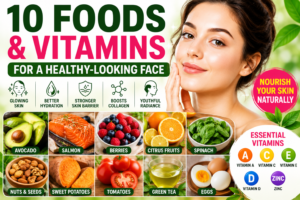
In this guide, we’ll explore the 10 foods and vitamins for a healthy-looking face, explain how they support skin health, and share practical tips for adding them to your daily diet.
Why Nutrition Matters for Skin Health
Your skin is your body’s largest organ, and it constantly renews itself. To maintain this process, your body requires a steady supply of nutrients.
A healthy diet may help:
- Support the skin barrier
- Maintain hydration
- Protect against oxidative stress
- Support normal collagen formation
- Promote an even-looking complexion
- Support wound healing
- Maintain healthy hair and nails
Pairing good nutrition with proper skincare gives your skin the best opportunity to look healthy.
1. Avocados
Avocados are rich in healthy monounsaturated fats that help support skin hydration and flexibility.
Key Nutrients
- Vitamin E
- Vitamin C
- Healthy fats
- Potassium
- Folate
Benefits for Your Face
Healthy fats help support the skin barrier, reducing moisture loss and leaving the skin feeling softer and smoother. Vitamin E also acts as an antioxidant that helps protect skin from environmental stress.
Easy Ways to Eat
- Add to salads
- Spread on whole-grain toast
- Blend into smoothies
- Make homemade guacamole
2. Salmon
Salmon is one of the best sources of omega-3 fatty acids, which help support healthy skin.
Key Nutrients
- Omega-3 fatty acids
- Vitamin D
- Protein
- Selenium
- Vitamin B12
Benefits
Omega-3 fats help maintain skin hydration and support the skin’s natural barrier. Salmon also provides high-quality protein, which supplies amino acids needed for healthy skin structure.
Aim to eat fatty fish two times per week as part of a balanced diet.
3. Citrus Fruits
Oranges, lemons, grapefruits, and other citrus fruits are packed with vitamin C.
Why Vitamin C Matters
Vitamin C is essential for normal collagen production, helping maintain skin firmness and supporting the body’s natural healing process.
Examples
- Oranges
- Lemons
- Limes
- Grapefruit
- Mandarins
Benefits
- Supports collagen formation
- Provides antioxidant protection
- Helps maintain healthy-looking skin
4. Berries
Blueberries, strawberries, raspberries, and blackberries are rich in antioxidants that help protect the skin from oxidative stress.
Nutrients
- Vitamin C
- Anthocyanins
- Fiber
- Manganese
Benefits
Antioxidants help protect skin cells from free radical damage caused by pollution and UV exposure.
Enjoy berries as a snack, in yogurt, or blended into smoothies.
5. Spinach
Leafy green vegetables like spinach provide essential vitamins and minerals for skin health.
Nutrients
- Vitamin A
- Vitamin C
- Vitamin E
- Iron
- Folate
Benefits
Spinach supports overall skin health while contributing antioxidants that help maintain a healthy complexion.
6. Nuts and Seeds
Almonds, walnuts, sunflower seeds, chia seeds, and flaxseeds are nutrient-rich additions to a healthy diet.
Nutrients
- Vitamin E
- Zinc
- Selenium
- Healthy fats
- Plant protein
Benefits
Vitamin E helps protect skin from oxidative damage, while zinc supports normal skin repair.
A small handful makes a nutritious daily snack.
7. Sweet Potatoes
Sweet potatoes are rich in beta-carotene, which the body converts into vitamin A.
Benefits
Vitamin A supports normal skin cell turnover and helps maintain healthy skin.
Sweet potatoes are also high in fiber and antioxidants.
8. Tomatoes
Tomatoes contain lycopene, a powerful antioxidant.
Nutrients
- Lycopene
- Vitamin C
- Potassium
Benefits
Lycopene helps protect the skin from environmental stress and supports a healthy-looking complexion.
Cooked tomatoes may provide more easily absorbed lycopene than raw tomatoes.
9. Green Tea
Green tea is rich in polyphenols, especially EGCG, known for their antioxidant properties.
Benefits
- Supports healthy skin
- Helps protect against oxidative stress
- Promotes a refreshed appearance
Replace sugary beverages with unsweetened green tea for a healthier option.
10. Eggs
Eggs provide high-quality protein along with several essential vitamins and minerals.
Nutrients
- Protein
- Biotin
- Vitamin D
- Selenium
- Vitamin B12
Benefits
Protein supplies amino acids needed for maintaining healthy skin structure, while biotin supports skin and hair health.
Essential Vitamins for a Healthy-Looking Face
Vitamin A
Supports normal skin cell renewal.
Sources:
- Sweet potatoes
- Carrots
- Spinach
Vitamin C
Essential for collagen formation.
Sources:
- Citrus fruits
- Strawberries
- Kiwi
- Bell peppers
Vitamin E
Provides antioxidant protection.
Sources:
- Almonds
- Sunflower seeds
- Avocados
Vitamin D
Supports overall skin health.
Sources:
- Fatty fish
- Eggs
- Fortified foods
Zinc
Helps support skin repair.
Sources:
- Pumpkin seeds
- Chickpeas
- Seafood
- Lean meat
Best Daily Diet Plan for a Healthy-Looking Face
A balanced diet filled with nutrient-rich foods can help support healthy skin from the inside out. While no meal plan can guarantee flawless skin, consistently choosing whole foods provides your body with vitamins, minerals, healthy fats, and protein needed for normal skin function.
Breakfast
Start your day with foods rich in antioxidants and protein.
Example Meal:
- Oatmeal topped with blueberries and strawberries
- One boiled egg
- A handful of almonds
- Green tea
Benefits
- Provides vitamin C
- Supports healthy collagen production
- Offers healthy fats
- Delivers antioxidants
Mid-Morning Snack
Choose a light snack rich in nutrients.
Options
- Apple slices with peanut butter
- Greek yogurt with berries
- Mixed nuts
- Orange
Lunch
Build a colorful plate.
Example Meal
- Grilled salmon
- Brown rice
- Steamed broccoli
- Spinach salad
- Avocado slices
Benefits
- Omega-3 fatty acids
- Lean protein
- Vitamin A
- Vitamin C
- Healthy fats
Afternoon Snack
Healthy snack ideas include:
- Carrot sticks
- Hummus
- Pumpkin seeds
- Kiwi fruit
Dinner
Example Meal
- Grilled chicken breast
- Sweet potato
- Mixed vegetables
- Leafy green salad
This meal provides protein, fiber, antioxidants, and essential vitamins for healthy skin.
Foods to Avoid for Better Skin
Although everyone’s skin responds differently to food, limiting highly processed foods may support overall skin health.
Sugary Drinks
Excess sugar may contribute to inflammation and can affect collagen over time.
Limit:
- Soft drinks
- Sweetened juices
- Energy drinks
Replace them with:
- Water
- Green tea
- Herbal tea
Highly Processed Foods
These foods often contain excess sodium, unhealthy fats, and added sugars.
Examples include:
- Chips
- Candy
- Fast food
- Packaged snacks
Whole foods are generally a better choice for overall health.
Excess Alcohol
Alcohol may contribute to dehydration, making skin appear dull and dry.
Drink alcohol in moderation and stay hydrated.
Fried Foods
Deep-fried foods are often high in unhealthy fats and calories.
Choose grilled, baked, or steamed options whenever possible.
Hydration Tips for Glowing Skin
Water plays a vital role in maintaining healthy skin.
Drink Enough Water
Most adults benefit from regular fluid intake throughout the day, though individual needs vary based on age, activity level, and climate.
Eat Water-Rich Foods
Examples include:
- Watermelon
- Cucumbers
- Oranges
- Tomatoes
- Lettuce
Limit Sugary Beverages
Replacing sugary drinks with water or unsweetened tea may support overall health.
Lifestyle Habits That Support Healthy Skin
Healthy skin is influenced by more than diet.
Get Enough Sleep
Aim for 7–9 hours of sleep each night to support your body’s natural repair processes.
Exercise Regularly
Regular physical activity improves circulation, helping deliver oxygen and nutrients throughout the body.
Examples include:
- Walking
- Cycling
- Swimming
- Yoga
Manage Stress
Long-term stress may affect skin health.
Helpful stress-management techniques include:
- Meditation
- Deep breathing
- Journaling
- Spending time outdoors
Protect Your Skin from the Sun
UV exposure is one of the leading causes of premature skin aging.
Protect your skin by:
- Using sunscreen with SPF 30 or higher
- Wearing sunglasses
- Using a wide-brimmed hat
- Seeking shade during peak sunlight hours
Follow a Consistent Skincare Routine
A simple routine can make a noticeable difference.
Daily steps include:
- Gentle cleansing
- Moisturizing
- Sunscreen
- Removing makeup before bed
Common Nutrition Mistakes That Affect Skin
Avoid these common habits if you want healthier-looking skin.
Skipping Fruits and Vegetables
Fruits and vegetables provide vitamins, minerals, and antioxidants that support normal skin function.
Aim to include a variety of colorful produce every day.
Eating Too Little Protein
Protein supplies amino acids needed to maintain healthy skin, hair, and nails.
Healthy protein sources include:
- Fish
- Eggs
- Chicken
- Beans
- Lentils
- Greek yogurt
Ignoring Healthy Fats
Healthy fats help support the skin barrier.
Good sources include:
- Avocados
- Olive oil
- Nuts
- Seeds
- Fatty fish
Following Restrictive Diets
Very restrictive diets may lead to nutrient deficiencies that can affect skin health.
A balanced, varied diet is usually the best approach.
Not Drinking Enough Water
Hydration supports overall health and helps maintain the skin’s natural moisture balance.
Can Supplements Help?
If your diet lacks certain nutrients, a healthcare professional may recommend supplements. However, food should generally be your primary source of vitamins and minerals.
Always consult a healthcare provider before starting supplements, especially if you have a medical condition or take prescription medications.
Frequently Asked Questions (FAQs)
Which vitamin is best for glowing skin?
Vitamin C is essential for normal collagen production and helps protect skin cells from oxidative stress. Vitamins A and E also support healthy skin.
Which foods are best for a healthy-looking face?
Excellent choices include:
- Avocados
- Salmon
- Berries
- Citrus fruits
- Spinach
- Tomatoes
- Sweet potatoes
- Green tea
- Eggs
- Nuts and seeds
Can food improve skin naturally?
A balanced diet supports overall skin health by providing nutrients needed for normal skin function. Results vary depending on genetics, lifestyle, and existing skin conditions.
How much water should I drink for healthy skin?
Hydration needs vary by person. Drink enough fluids to stay well hydrated, and increase intake during hot weather or physical activity.
Are collagen supplements better than food?
Collagen supplements may benefit some people, but a nutrient-rich diet containing protein, vitamin C, and antioxidants also supports the body’s natural collagen production.
How long does it take to notice changes?
Visible improvements may take several weeks to months of consistent healthy eating and skincare habits.
Conclusion
Healthy, radiant skin begins with a combination of good nutrition, proper skincare, and healthy lifestyle choices. By including the 10 foods and vitamins for a healthy-looking face—such as avocados, salmon, berries, citrus fruits, spinach, sweet potatoes, tomatoes, eggs, green tea, and nuts—you provide your body with nutrients that support hydration, antioxidant protection, and normal collagen production.
Remember that there is no single “superfood” for perfect skin. Consistency is what matters most. Pair a balanced diet with regular exercise, quality sleep, daily sun protection, and a gentle skincare routine for the best chance of maintaining a naturally healthy-looking complexion.