
Every dog owner wants their furry companion to live a long, healthy, and joyful life. While regular vet visits are essential, your dog’s overall well-being depends on the daily care and attention you provide at home. A Dog Wellness Checklist helps you stay organized and ensures that no important aspect of your dog’s health is overlooked.
From proper nutrition and hydration to exercise, grooming, and preventive care, small daily habits can make a significant difference in your dog’s quality of life. Whether you have a playful puppy, an energetic adult dog, or a senior companion, following a wellness checklist can reduce the risk of illness and improve overall health.
In this guide, you’ll discover the essential daily wellness practices every dog owner should follow.
Table of Contents
- Why Dog Wellness Matters
- What Is a Dog Wellness Checklist?
- Daily Dog Wellness Checklist
- Nutrition Checklist
- Hydration Checklist
- Exercise Checklist
- Mental Stimulation Basics
- Signs of a Healthy Dog
- Common Wellness Mistakes
Why Dog Wellness Matters
Dogs rely on their owners for everything, including food, exercise, medical care, and emotional support. A healthy lifestyle helps prevent many common health issues such as obesity, dental disease, joint problems, digestive disorders, and skin conditions.
A consistent wellness routine offers several benefits:
- Supports a strong immune system
- Helps maintain a healthy weight
- Reduces the risk of chronic diseases
- Improves digestion
- Keeps joints and muscles strong
- Promotes healthy skin and a shiny coat
- Reduces stress and anxiety
- Increases life expectancy
Instead of waiting until your dog becomes sick, preventive care focuses on keeping them healthy year-round.
What Is a Dog Wellness Checklist?
A dog wellness checklist is a simple routine that covers all the essential aspects of your dog’s health. It serves as a reminder to complete daily, weekly, monthly, and yearly care tasks.
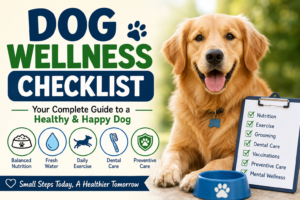
A complete wellness checklist includes:
- Balanced nutrition
- Fresh drinking water
- Daily exercise
- Mental enrichment
- Grooming
- Dental care
- Parasite prevention
- Vaccinations
- Routine veterinary checkups
- Weight monitoring
- Behavioral observation
Following this checklist helps you detect health problems early and keeps your dog feeling their best.
Daily Dog Wellness Checklist
Here are the essential daily habits every responsible dog owner should follow.
Feed a Balanced Diet
Nutrition is the foundation of good health. Feeding a complete and balanced diet ensures your dog receives the nutrients needed for growth, energy, and overall wellness.
Choose food that is appropriate for your dog’s:
- Age
- Breed
- Size
- Activity level
- Medical conditions
Look for foods that provide:
- High-quality protein
- Healthy fats
- Vitamins
- Minerals
- Fiber
Avoid feeding excessive table scraps or foods that are toxic to dogs, such as chocolate, grapes, raisins, onions, garlic, xylitol, and cooked bones.
Healthy Feeding Tips
- Feed measured portions.
- Maintain a regular feeding schedule.
- Avoid overfeeding.
- Introduce new foods gradually.
- Monitor your dog’s weight regularly.
Keep Fresh Water Available
Hydration is just as important as nutrition. Water supports digestion, circulation, temperature regulation, and organ function.
Your dog should always have access to clean, fresh water.
Replace the water daily and wash the bowl regularly to prevent bacteria buildup.
Watch for signs of dehydration, including:
- Dry gums
- Sunken eyes
- Excessive panting
- Lethargy
- Loss of skin elasticity
Dogs may need more water during hot weather, after exercise, or when eating dry food.
Daily Exercise Checklist
Exercise is essential for maintaining a healthy weight, supporting joint health, and preventing boredom.
The amount of exercise your dog needs depends on factors such as breed, age, and overall health.
Exercise Ideas
- Daily walks
- Running
- Fetch
- Hiking
- Swimming (if appropriate)
- Tug games
- Obstacle courses
Exercise provides benefits such as:
- Strong muscles
- Healthy joints
- Better cardiovascular health
- Weight management
- Improved behavior
- Reduced anxiety
Lack of exercise can contribute to obesity, destructive behavior, and excessive barking.
Mental Stimulation Is Just as Important
Physical activity alone isn’t enough. Dogs also need mental challenges to stay happy and engaged.
Mental enrichment can help reduce boredom and stress.
Try activities like:
- Puzzle toys
- Treat-dispensing toys
- Hide-and-seek games
- Basic obedience training
- Learning new tricks
- Scent games
- Rotating toys regularly
Even 10–15 minutes of mental stimulation each day can make a positive difference.
Check Your Dog’s Body Every Day
A quick daily health check allows you to spot potential problems early.
Look for:
Eyes
Healthy eyes should appear clear and bright without excessive discharge or redness.
Ears
Check for unpleasant odor, redness, swelling, or excessive wax.
Nose
A healthy nose can vary from moist to dry, but persistent discharge or bleeding should be evaluated.
Teeth and Gums
Healthy gums are generally pink, and teeth should be free of excessive tartar or damage.
Skin and Coat
Look for:
- Excessive shedding
- Bald patches
- Fleas or ticks
- Redness
- Lumps
- Rashes
- Dry skin
Paws
Inspect paw pads for cuts, cracks, burns, or objects lodged between the toes.
Regular observation helps detect problems before they become more serious.
Signs of a Healthy Dog
Knowing what a healthy dog looks like makes it easier to notice when something changes.
Common signs include:
- Bright, alert eyes
- Clean ears
- Fresh breath
- Healthy appetite
- Regular bowel movements
- Shiny coat
- Healthy skin
- Normal energy level
- Comfortable movement
- Steady weight
- Interest in play and interaction
If you notice sudden changes in behavior, appetite, or energy, it’s a good idea to contact your veterinarian.
Common Dog Wellness Mistakes
Even caring owners can make mistakes that affect a dog’s health.
Avoid these common issues:
Overfeeding
Extra treats and oversized meals can lead to obesity, diabetes, and joint problems.
Skipping Daily Exercise
Insufficient activity can contribute to weight gain and behavioral issues.
Forgetting Fresh Water
Always provide clean drinking water throughout the day.
Ignoring Small Symptoms
Persistent itching, limping, vomiting, diarrhea, or changes in appetite should not be ignored.
Feeding Unsafe Human Foods
Some foods that are safe for people can be dangerous or even life-threatening for dogs.
Lack of Routine
Dogs thrive on consistency. Regular feeding, exercise, and sleep schedules help support both physical and emotional well-being.
Conclusion
Building a daily wellness routine is one of the best investments you can make in your dog’s health. Proper nutrition, clean water, regular exercise, mental stimulation, and simple daily health checks can help prevent many common problems and improve your dog’s quality of life.
A wellness checklist isn’t just about avoiding illness—it’s about helping your dog enjoy a longer, happier, and more active life.