
Hair loss in dogs, also called alopecia, is a common problem that can affect dogs of any breed, age, or size. While some shedding is completely normal, excessive hair loss, bald patches, or thinning fur may indicate an underlying health issue that needs attention.
Understanding the dog hair loss causes is the first step toward helping your pet regain a healthy coat. In this guide, we’ll explain the most common causes, symptoms, and treatment options recommended by veterinarians.
Is Hair Loss in Dogs Normal?
Dogs naturally shed old hair throughout the year, and many breeds shed heavily during seasonal changes.
Normal shedding usually:
- Happens evenly across the body
- Doesn’t create bald spots
- Doesn’t cause redness or itching
- Allows new hair to grow back normally
If your dog develops bald patches, inflamed skin, or persistent scratching, it’s time to investigate the cause.
Signs of Abnormal Hair Loss

Watch for these warning signs:
- Bald patches
- Excessive shedding
- Constant scratching
- Red or inflamed skin
- Scabs or sores
- Dry, flaky skin
- Thickened skin
- Bad skin odor
- Excessive licking or chewing
- Broken or brittle hair
These symptoms often suggest an underlying medical condition rather than normal shedding.
15 Common Dog Hair Loss Causes
1. Flea Allergies
One of the most common causes of hair loss is flea allergy dermatitis.
Some dogs are highly allergic to flea saliva, and even a single flea bite can trigger intense itching.
Symptoms
- Hair loss near the tail
- Constant scratching
- Red skin
- Scabs
Treatment includes effective flea prevention and medications prescribed by a veterinarian.

2. Mites (Mange)
Mange is caused by microscopic mites.
There are two main types:
- Demodectic mange
- Sarcoptic mange (highly contagious among dogs)
Symptoms
- Patchy hair loss
- Thick skin
- Intense itching
- Crusting
Veterinary treatment is required.
3. Ringworm
Despite its name, ringworm is a fungal infection, not a worm.
Symptoms
- Circular bald patches
- Dry skin
- Broken hairs
- Mild itching
Ringworm can spread to other animals and people, so prompt diagnosis and treatment are important.
4. Allergies
Dogs may develop allergies to:
- Food ingredients
- Environmental allergens (pollen, dust mites, mold)
- Certain shampoos
- Cleaning products
- Grass
Common Signs
- Hair loss
- Ear infections
- Itchy paws
- Excessive licking
- Red skin
Managing the underlying allergy often improves the coat.
5. Bacterial Skin Infections
Bacteria can infect damaged skin, especially after excessive scratching.
Symptoms
- Hair loss
- Pus-filled bumps
- Redness
- Bad odor
- Crusting
Antibiotics or medicated shampoos may be prescribed by your veterinarian.
6. Yeast Infections
Yeast naturally lives on a dog’s skin, but overgrowth can cause problems.
Symptoms
- Greasy skin
- Hair thinning
- Strong odor
- Itching
- Darkened skin
Treatment often includes antifungal medications and medicated shampoos.
7. Poor Nutrition
A poor-quality diet may affect skin and coat health.
Dogs need adequate amounts of:
- Protein
- Omega-3 fatty acids
- Zinc
- Biotin
- Vitamins A and E
Nutritional deficiencies may contribute to dull coats and increased hair loss.
8. Hormonal Disorders
Several hormonal conditions can affect hair growth.
Common examples include:
Hypothyroidism
Symptoms:
- Hair thinning
- Weight gain
- Low energy
- Dry skin
Cushing’s Disease
Symptoms:
- Hair loss
- Increased thirst
- Pot-bellied appearance
- Thin skin
Blood tests help diagnose these conditions, and treatment depends on the underlying disorder.
9. Stress and Anxiety
Just like people, dogs may lose hair during periods of stress.
Common stress triggers include:
- Moving to a new home
- Loud fireworks
- Separation anxiety
- New pets
- Changes in routine
Reducing stress and providing enrichment can help improve coat health.
10. Pressure Sores
Large dogs that spend long periods lying on hard surfaces may develop hair loss over pressure points.
Common areas include:
- Elbows
- Hips
- Hocks
Providing soft bedding can help reduce pressure.
11. Excessive Grooming or Licking
Some dogs lick or chew themselves excessively because of:
- Allergies
- Pain
- Anxiety
- Skin irritation
Over time, this behavior can create bald patches.
12. Sunburn
Dogs with thin or light-colored coats can develop sunburn after prolonged exposure to sunlight.
Repeated sun damage may contribute to skin irritation and hair loss.
13. Genetics
Some breeds are genetically more prone to alopecia.
Examples include:
- Dachshunds
- Chihuahuas
- Pomeranians
- Greyhounds
- Doberman Pinschers
Inherited hair loss often develops gradually and should still be evaluated by a veterinarian.
14. Contact Irritation
Hair loss may occur after exposure to:
- Harsh shampoos
- Household cleaners
- Lawn chemicals
- Certain fabrics
Avoiding the trigger usually helps the skin recover.
15. Aging
As dogs grow older, their hair may become thinner naturally.
While mild thinning can be age-related, sudden or extensive hair loss should always be assessed by a veterinarian.
When Should You Visit a Veterinarian?
Contact your veterinarian if your dog has:
- Rapid hair loss
- Bald patches
- Severe itching
- Bleeding skin
- Open sores
- Unpleasant odor
- Weight loss
- Loss of appetite
- Persistent skin redness
Early diagnosis can help prevent complications and improve treatment outcomes.
Dog Hair Loss Diagnosis
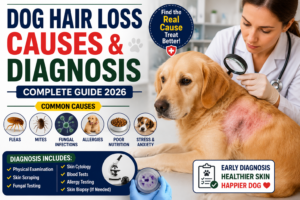
Diagnosing the cause of hair loss in dogs requires a thorough veterinary examination because many different conditions can produce similar symptoms. A veterinarian will evaluate your dog’s medical history, examine the skin and coat, and may recommend diagnostic tests to identify the underlying problem.
1. Physical Examination
The veterinarian will examine:
- The location of hair loss
- Skin redness or inflammation
- Flakes or dandruff
- Scabs or sores
- Fleas or flea dirt
- Skin odor
- Ear condition
- Overall body condition and weight
The pattern of hair loss often provides important clues about the underlying cause.
2. Medical History
Your veterinarian may ask questions such as:
- When did the hair loss begin?
- Is your dog scratching or licking excessively?
- Has your dog recently changed food?
- Is flea prevention used regularly?
- Have there been any recent environmental or lifestyle changes?
- Is your dog taking any medications?
- Have other pets in the home developed similar symptoms?
These answers help narrow down possible causes.
3. Skin Scraping
A skin scraping is commonly performed to check for microscopic mites that cause conditions such as demodectic or sarcoptic mange.
This test is:
- Quick
- Minimally invasive
- Commonly performed in veterinary clinics
4. Fungal Testing
If ringworm is suspected, your veterinarian may perform:
- Fungal culture
- Microscopic hair examination
- Wood’s lamp examination (for some fungal species)
These tests help confirm or rule out fungal infections.
5. Skin Cytology
A sample from the skin is examined under a microscope to look for:
- Bacteria
- Yeast
- Inflammatory cells
This helps determine whether a bacterial or yeast infection is contributing to the hair loss.
6. Blood Tests
Blood work may be recommended to identify internal conditions that affect the skin and coat.
Blood tests can help diagnose:
- Hypothyroidism
- Cushing’s disease
- Nutritional deficiencies
- Chronic illness
- Other metabolic disorders
7. Allergy Testing
If allergies are suspected, your veterinarian may recommend:
- An elimination diet trial for food allergies
- Intradermal skin testing
- Blood tests for environmental allergens
These tests can help identify triggers and guide long-term management.
8. Skin Biopsy
If the diagnosis remains unclear or a more serious skin disease is suspected, a small skin biopsy may be collected and examined by a veterinary pathologist.
A biopsy can help diagnose:
- Autoimmune skin diseases
- Certain cancers
- Chronic inflammatory conditions
- Rare skin disorders
Why Early Diagnosis Matters
Prompt diagnosis increases the chances of successful treatment and helps prevent complications such as secondary infections, persistent itching, and long-term skin damage.
If your dog develops bald patches, severe itching, redness, sores, or hair loss that continues to worsen, schedule a veterinary examination as soon as possible. Early treatment often leads to faster recovery and healthier skin and coat.