

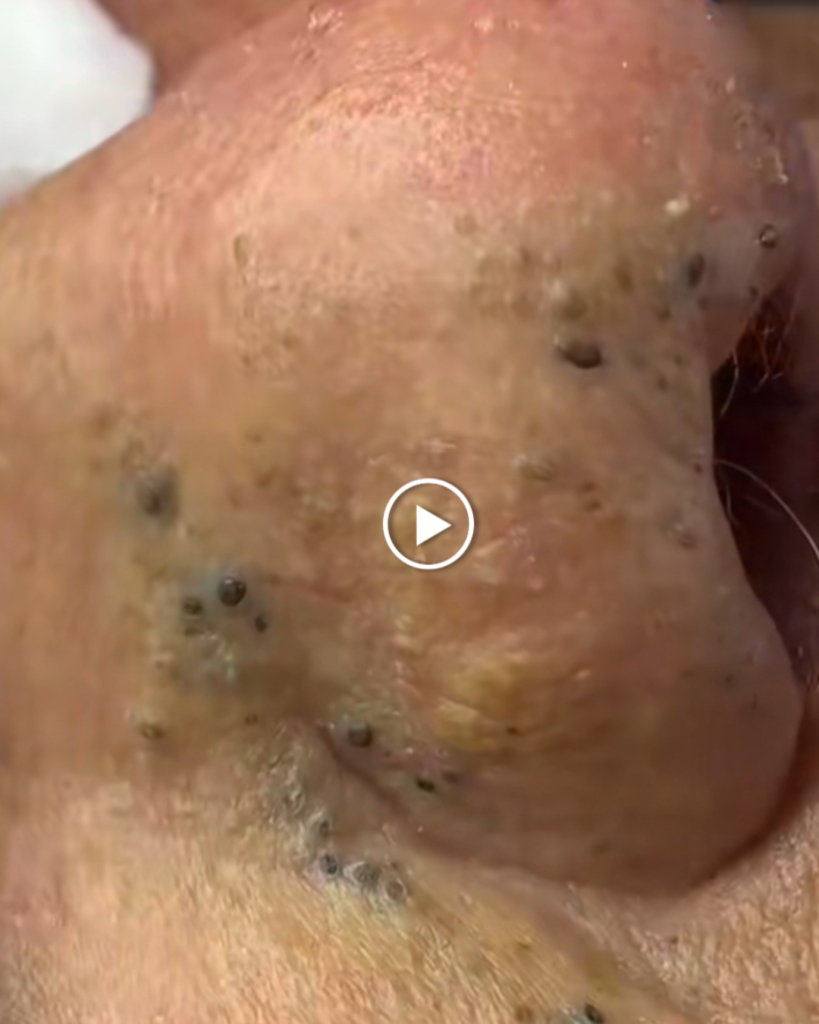
The image before us is difficult to look at—not because it is rare, but because it is tragically common. It shows the severe skin condition of a dog whose body bears the unmistakable signs of prolonged neglect, untreated disease, and silent suffering. The inflamed, thickened skin, scattered dark lesions, crusting, and visible irritation are not merely dermatological symptoms; they are evidence of a life lived without care, medical attention, or compassion.
Across streets, villages, and cities around the world, countless dogs endure similar conditions every single day. Their pain often goes unnoticed, dismissed as “normal” for strays, or ignored due to lack of awareness. Yet skin diseases like the one visible in this image are not harmless or superficial—they are painful, debilitating, and potentially life-threatening if left untreated.
Understanding What We See: More Than Just a Skin Problem
Severe skin conditions in dogs are often caused by parasitic infestations such as mange (sarcoptic or demodectic), chronic bacterial or fungal infections, flea and tick overload, or untreated allergies. In advanced stages, these conditions cause:
- Intense itching and pain
- Hair loss and thickened, cracked skin
- Open wounds prone to infection
- Weakening of the immune system
- Malnutrition due to constant stress and discomfort
The darkened nodules and crusted areas visible in the image suggest long-term inflammation and secondary infection. This is not something that developed overnight—it is the result of weeks or months without treatment.
For a dog, this level of skin disease is not only physically painful but mentally exhausting. Constant itching, burning sensations, and discomfort rob them of rest, appetite, and trust in their surroundings.
Why Stray Dogs Are Most at Risk
Stray and abandoned dogs are particularly vulnerable to skin diseases due to a combination of factors:
- Lack of Veterinary Care
Without access to basic medical treatment, minor skin irritations quickly escalate into severe conditions. - Poor Nutrition
Malnutrition weakens the immune system, making it harder for the body to fight infections and parasites. - Harsh Living Conditions
Exposure to extreme weather, dirty environments, and parasites worsens skin problems. - Human Neglect or Fear
Many people avoid dogs with visible skin disease, assuming they are dangerous or contagious, further isolating the animal from help.
This cycle of neglect allows treatable conditions to become chronic and disfiguring.
The Pain We Don’t Hear
Dogs cannot describe their pain in words. Instead, they communicate through behavior—scratching until they bleed, becoming withdrawn, aggressive, or lethargic. Often, people misinterpret these signs as “bad behavior,” when in reality the dog is simply overwhelmed by constant pain.
A dog suffering from severe skin disease may:
- Avoid human contact due to discomfort
- Lose interest in food
- Sleep poorly or not at all
- Become weak and vulnerable to other illnesses
In extreme cases, untreated skin disease can lead to systemic infections, organ failure, or death.
The Good News: These Conditions Are Treatable
One of the most heartbreaking aspects of cases like this is that most severe skin diseases in dogs are treatable and reversible with proper care.
With timely intervention, recovery often includes:
- Anti-parasitic treatment (for mange, fleas, ticks)
- Antibiotics or antifungals for secondary infections
- Medicated baths and topical ointments
- Nutritional support and supplements
- Safe shelter and rest
Many dogs who once looked beyond hope go on to make full recoveries, regrowing their fur and rediscovering their playful, trusting nature.
The transformation is not just physical—it is emotional. A dog that was once withdrawn and fearful often becomes affectionate, energetic, and deeply loyal once the pain subsides.
Why Awareness Matters
Images like this are uncomfortable, but they are necessary. They force us to confront a reality that is often hidden from view. Raising awareness about canine skin diseases helps in several crucial ways:
- Encouraging early intervention
- Reducing stigma around diseased animals
- Educating communities about prevention
- Motivating people to support rescue efforts
When people understand that these conditions are medical—not a sign of “dirty” or “hopeless” animals—they are more likely to help instead of turning away.
What You Can Do to Help
You don’t need to be a veterinarian or rescuer to make a difference. Small actions can save lives.
- Report and Support
If you see a dog suffering from severe skin disease, report it to local animal welfare organizations or municipal helplines. - Support Rescues
Donate, volunteer, or foster through organizations that specialize in treating injured and diseased animals. - Share Awareness
Sharing posts, articles, and images spreads visibility. One share can reach someone who knows how to help. - Educate Others
Help dispel myths about mange and skin diseases being untreatable or always contagious. - Show Compassion
Even offering clean water, food, or shade can ease a suffering animal’s burden while help arrives.
A Reflection on Responsibility
Dogs did not choose to live on the streets. They did not choose disease, hunger, or neglect. In many cases, they are the result of human abandonment, uncontrolled breeding, or lack of community responsibility.
The condition shown in the image is not just a veterinary issue—it is a social one. It reflects how societies treat their most vulnerable beings.
Compassion is not measured by how we treat what is beautiful and healthy, but by how we respond to suffering.
A Life Worth Saving
Behind every diseased body is a life that wants to heal, to feel relief, to trust again. The dog in the image may look broken, but with care, it could still experience comfort, safety, and love.
