

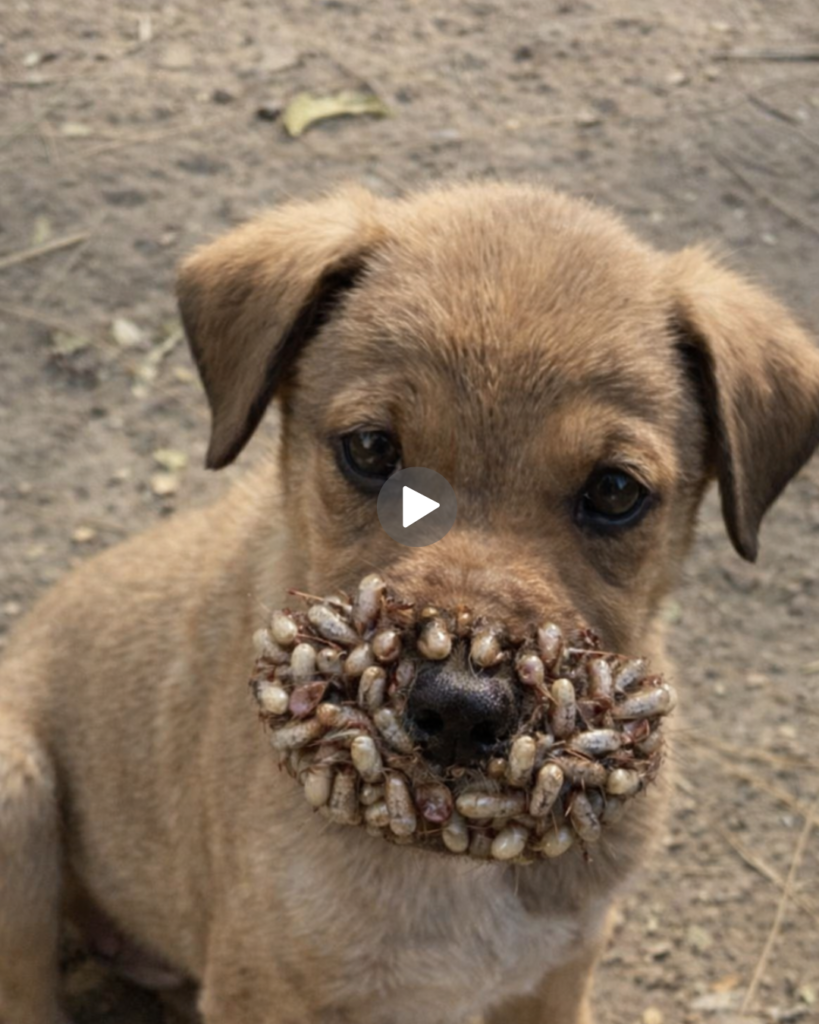
At first glance, the image shows a calm, brown dog lying on a rough concrete surface. Its posture is relaxed, eyes half-closed, as if resting peacefully in the middle of a quiet street. But a closer look reveals a disturbing and heartbreaking detail on the dog’s neck—a large, inflamed wound filled with pale, swollen larvae. This single image tells a powerful story of pain, neglect, survival, and the urgent need for compassion toward street animals.
Street dogs are a common sight in many parts of the world, especially in developing countries. They live among humans, sharing the same roads, neighborhoods, and dangers, yet they often remain invisible when it comes to care and empathy. This photograph exposes one of the harsh realities of life on the streets: untreated injuries can quickly turn into severe infections. What may have started as a small wound on this dog’s neck likely worsened over time due to lack of medical attention, leading to infestation and intense suffering.
Despite the seriousness of the injury, the dog does not appear aggressive or panicked. Instead, it lies quietly, possibly exhausted from pain or simply accustomed to enduring discomfort in silence. This calmness is not a sign that the dog is fine—it is a reflection of how animals often adapt to suffering when no help arrives. Unlike humans, animals cannot ask for assistance. They rely entirely on the kindness and awareness of people around them.
The wound itself is a stark reminder of how quickly neglect can escalate into a life-threatening condition. Open injuries attract flies, which lay eggs that hatch into larvae, feeding on living tissue. Without intervention, such conditions can lead to severe infections, blood loss, and even death. Yet, with timely treatment, these wounds are often manageable. This contrast highlights a painful truth: many street animals suffer not because their injuries are untreatable, but because they are unnoticed.
This image also raises important questions about human responsibility. Street dogs did not choose their circumstances. Many are born on the streets, abandoned, or lost. They survive on scraps, face traffic dangers, weather extremes, and human cruelty. When society turns away from their suffering, it silently accepts it. However, change does not always require large organizations or resources. Sometimes, it starts with one person noticing, caring, and acting.
Awareness is the first step. Images like this are uncomfortable to look at, but they are necessary. They force us to confront realities we often ignore. By sharing such images and stories, people can learn to recognize signs of distress in animals and understand when urgent help is needed. Education about basic animal welfare can empower communities to respond instead of turning away.
Compassion is the next step. Compassion does not always mean adopting an animal or paying large veterinary bills. It can mean calling a local animal rescue, informing a welfare organization, or even providing temporary first aid until professional help arrives. Small acts, when multiplied, can save countless lives.
The image also reminds us of resilience. Despite the pain it is clearly enduring, the dog is still alive, still breathing, still trusting enough to remain close to humans. That trust should not be broken. Animals continue to live among us with quiet hope, even after being ignored or harmed. They deserve dignity, care, and protection.
In a broader sense, this photograph is not just about one dog—it represents thousands of animals suffering silently every day. It challenges us to reflect on our shared spaces and shared responsibilities. Streets are not only human environments; they are homes for countless voiceless beings. How we treat them reflects our values as a society.
In conclusion, this image is painful, but it is also powerful. It urges us to look beyond comfort and convenience and acknowledge the suffering that exists alongside us. By choosing empathy over indifference and action over avoidance, we can transform stories of pain into stories of survival. One kind response can be the difference between life and death for an animal that has no voice—but still feels every moment of pain.
