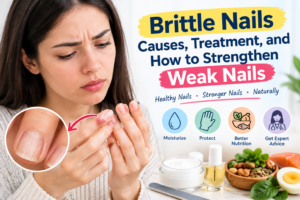

Brittle Nails: Causes, Treatment, and How to Strengthen Weak Nails Naturally
Key Takeaways
- Brittle nails are weak nails that split, peel, crack, or break more easily than normal.
- Common causes include aging, frequent handwashing, exposure to cleaning chemicals, nail treatments, iron deficiency, and certain medical conditions.
- Moisturizing your nails, wearing protective gloves, and following a gentle nail care routine may help improve nail strength.
- Biotin supplements may help some people with brittle nails, but scientific evidence remains limited.
- Persistent nail changes, discoloration, pain, or other symptoms may indicate an underlying condition that requires medical attention.
Introduction
Do your fingernails break while performing everyday activities? Have you noticed that your nails are becoming thinner, peeling at the edges, or splitting before they grow to your desired length? These problems are commonly associated with brittle nails.
Healthy nails are strong enough to withstand normal daily activities while remaining slightly flexible. When nails become weak or excessively dry, they may break easily, develop rough edges, or peel into thin layers.
Brittle nails can develop for several reasons. Frequent contact with water, harsh cleaning products, repeated manicures, and natural aging can all contribute to nail weakness. Sometimes, however, changes in nail strength may be related to nutritional deficiencies or medical conditions.
The good news is that several simple nail care habits can help protect fragile nails and support healthier growth. Understanding the underlying cause is the first step toward finding the right solution.
In this guide, we explain the common causes of brittle nails, practical ways to strengthen them, and the warning signs that should not be ignored.
What Are Brittle Nails?
Brittle nails are nails that become fragile and break, split, or peel more easily than usual. The condition can affect fingernails and toenails, although fingernails are frequently exposed to water, detergents, and other environmental stressors.
Your nails are primarily made of keratin, a structural protein also found in your hair and the outer layer of your skin. Nail cells form layers that gradually grow outward from the nail matrix, the area beneath the base of the nail.
The nail plate needs an appropriate balance of moisture and structural integrity to remain flexible and resistant to damage. When repeated exposure to water, chemicals, or physical stress weakens the nail plate, splitting and breakage may become more common.
Brittle nails may appear thin, rough, flaky, or uneven. Some people notice horizontal or vertical splits, while others find that the tips of their nails separate into layers.
These symptoms are not always caused by the same problem. Identifying other nail changes and considering your medical history can help determine the most appropriate treatment.
Youtube Video
What Causes Brittle Nails?
Several everyday habits and health-related factors can contribute to weak nails. The following are some of the most common causes.
1. Natural Aging
Nails can change as you get older. Nail growth may slow, and the nail plate may become more fragile or develop a different texture.
Hormonal changes associated with menopause may also influence nail moisture and quality in some women. Reduced moisture can contribute to dryness and splitting.
Although aging-related nail changes are common, severe or sudden changes should not automatically be attributed to age. Persistent weakness may have another explanation that deserves attention.
2. Frequent Handwashing and Water Exposure
Regular handwashing is essential for hygiene, but repeated cycles of wetting and drying can affect nail flexibility.
When nails absorb water, they may expand slightly. As they dry, they contract. Repeated exposure to this process can contribute to weakening and peeling over time.
People who wash their hands frequently for work, including healthcare workers, cleaners, and food-service employees, may be particularly affected.
Alcohol-based hand sanitizers can also dry the surrounding skin and cuticles. Although hand hygiene should not be neglected, moisturizing after washing can help reduce dryness.
Try these protective habits:
- Apply hand cream after washing your hands.
- Use a moisturizer around your nails and cuticles.
- Wear waterproof gloves when washing dishes or cleaning.
- Avoid keeping your hands submerged in water for extended periods.
- Dry your hands thoroughly after washing.
3. Exposure to Harsh Chemicals
Cleaning products, detergents, bleach, and other household chemicals can irritate the skin and weaken nails with repeated exposure.
Nail care products may also contribute to brittleness. Frequent gel manicures, acrylic extensions, aggressive filing, and repeated removal of artificial nails can damage the nail plate.
Some nail polish removers, particularly those containing acetone, can increase dryness when used frequently.
To reduce damage, wear gloves when handling household chemicals and avoid scraping or peeling artificial nail products from your nails.
If you regularly get manicures, consider taking breaks between treatments. Keeping your natural nails at a manageable length may also reduce the risk of splitting.
4. Low Iron Levels
Iron helps your body produce hemoglobin, a protein in red blood cells that carries oxygen throughout the body.
When iron levels become too low, iron-deficiency anemia may develop. Some people with iron deficiency experience nail changes, including thinning, increased brittleness, or spoon-shaped nails.
However, brittle nails alone do not confirm that you have an iron deficiency. Many other factors can produce similar symptoms.
If nail changes occur alongside unusual tiredness, weakness, dizziness, or shortness of breath, speak with a healthcare professional about whether testing is appropriate.
Avoid taking iron supplements without medical advice. Excessive iron intake can be harmful, and treatment should address the actual cause of any deficiency.
5. Fungal Nail Infections
A fungal nail infection can change the color, thickness, and texture of the nail.
Early symptoms may include white or yellow discoloration. As the infection progresses, the nail may become thicker, brittle, crumbly, or separated from the nail bed.
Fungal infections are more common in toenails, but fingernails can also be affected.
Not every thick, discolored, or brittle nail has a fungal infection. Psoriasis, injuries, and other nail conditions can produce similar changes.
A healthcare professional can help confirm the diagnosis and recommend appropriate antifungal treatment when necessary. Treating an infection early may help prevent further nail damage.
6. Medical Conditions
Certain health conditions can affect nail growth and structure.
Hypothyroidism: An underactive thyroid can contribute to dry skin, hair changes, and brittle nails. Other possible symptoms include fatigue, constipation, and sensitivity to cold.
Psoriasis: Nail psoriasis may cause pitting, discoloration, thickening, crumbling, or separation of the nail from its bed.
Eczema: Skin inflammation around the fingers and nails can damage the surrounding tissue and contribute to nail changes.
Other health problems: Some chronic illnesses and medications can influence nail growth or appearance.
If several nails change unexpectedly, or if nail problems occur alongside other symptoms, arrange a medical assessment rather than relying exclusively on cosmetic treatments.
How to Strengthen Brittle Nails
There is no instant solution for fragile nails. However, consistent care can help prevent additional damage while healthier nail growth gradually replaces the weakened portion.
1. Moisturize Your Nails Daily
Moisturizing is one of the simplest ways to care for dry, fragile nails.
Apply a rich hand cream to your fingers, nails, and cuticles after washing your hands. Products containing ingredients such as glycerin or urea can help attract and retain moisture, depending on the formulation.
Petroleum jelly can also help seal in moisture, particularly when applied to the nail plate and surrounding skin before bedtime.
For best results, make moisturizing part of your daily routine instead of waiting until your nails become visibly dry.
2. Keep Your Nails at a Practical Length
Long nails can catch on clothing, packaging, and other surfaces, increasing the chance of accidental breakage.
If your nails split frequently, trim them to a comfortable length while they recover.
Use clean nail clippers and smooth rough edges with a fine nail file. File gently in one direction rather than repeatedly moving the file back and forth.
Avoid cutting your nails too short, as this can cause discomfort and increase the risk of ingrown nails, especially on your toes.
3. Protect Your Hands During Cleaning
Household chores can expose your nails to moisture and chemicals that contribute to brittleness.
Wear suitable protective gloves when washing dishes, cleaning bathrooms, or handling detergents. Replace damaged gloves when necessary and allow your hands to dry thoroughly afterward.
If your work requires frequent handwashing, keep a moisturizer nearby so you can reapply it throughout the day.
These small adjustments can help reduce repeated exposure to the conditions that weaken nails.
4. Take Breaks From Gel and Acrylic Manicures
Gel polish, acrylic extensions, and aggressive nail preparation can damage the nail plate, especially when performed frequently or removed improperly.
If your nails are already weak, consider allowing them to grow without artificial extensions for a period of time.
Avoid peeling off gel polish or scraping away acrylic products yourself. Improper removal can strip away layers of the natural nail.
Ask a qualified nail technician about gentler removal methods, and avoid cutting or aggressively pushing back your cuticles. The cuticle area helps protect the nail from infection.
5. Use Nail Products Carefully
Some people use nail strengtheners to protect fragile nails. These products vary in their ingredients and effectiveness, so check the label and discontinue use if irritation develops.
Avoid assuming that a product labeled as a nail hardener is automatically beneficial. Excessive hardness can make some nails less flexible and more likely to break.
Choose products appropriate for your nail condition and avoid combining multiple treatments unnecessarily.
If your nails continue to split despite careful home care, a dermatologist can help identify the cause.
6. Eat a Balanced Diet
Your body needs adequate nutrition to support normal nail growth.
Include a variety of foods that provide protein, iron, zinc, and other essential nutrients. Examples include eggs, fish, lean meat, beans, lentils, nuts, seeds, and vegetables.
A balanced diet supports general health, but eating a particular food does not guarantee stronger nails. If a nutritional deficiency is suspected, professional assessment can help determine whether dietary changes or supplements are appropriate.
7. Consider Biotin Carefully
Biotin, also known as vitamin B7, is involved in several metabolic processes in the body. Biotin supplements are often marketed for hair and nail health.
Some small studies suggest that biotin may help certain people with brittle nails. However, the evidence is limited, and there is not enough high-quality research to establish that supplementation reliably improves nail strength in otherwise healthy people.
Biotin is available in foods such as eggs, salmon, meat, sweet potatoes, nuts, and seeds.
Before taking a supplement, discuss it with your healthcare professional. High-dose biotin can interfere with certain laboratory tests, including some tests used to assess thyroid function and heart-related conditions.
How Long Does It Take to Improve Brittle Nails?
Nail recovery takes time because the damaged portion of the nail must grow out.
Fingernails generally grow only a few millimeters per month, and a complete fingernail may take approximately four to six months to grow out. Toenails typically grow more slowly and may take a year or longer to replace completely.
The timeline depends on age, overall health, the affected nail, and the cause of the brittleness.
You may notice less breakage after improving your nail care habits, but visible improvement is gradual. Continue protecting your nails while the healthier portion grows.
If your nail condition is caused by a medical problem or fungal infection, treating that underlying cause may also be necessary.
When Should You See a Doctor for Brittle Nails?
Occasional nail breakage is common and does not always indicate a health problem. However, certain changes deserve professional attention.
Consult a healthcare professional if:
- Your nails suddenly become weak or continue getting worse.
- Several nails develop unusual changes at the same time.
- Your nails become thick, yellow, crumbly, or detached from the nail bed.
- You experience pain, swelling, redness, or discharge around a nail.
- Nail changes occur alongside fatigue, hair loss, dry skin, or unexplained weight changes.
- You notice a new or changing dark streak beneath a nail.
A dark streak does not necessarily indicate a serious condition, but a new or changing streak should be evaluated promptly to rule out important causes.
If you suspect a fungal infection, professional assessment can help distinguish it from other nail disorders before treatment begins.
Frequently Asked Questions
1. What Is the Main Cause of Brittle Nails?
There is no single cause. Frequent exposure to water, cleaning chemicals, nail treatments, and natural aging can contribute to brittle nails. Iron deficiency, fungal infections, and certain medical conditions may also be responsible.
2. Can Brittle Nails Become Strong Again?
Yes, many cases improve with appropriate nail care and protection from damaging exposures. However, improvement depends on the underlying cause. Medical conditions or infections may require specific treatment.
3. Does Moisturizer Help Weak Nails?
Moisturizers can help reduce dryness and support the surrounding skin and nail plate. Applying hand cream or petroleum jelly regularly may help minimize splitting associated with dryness, although it will not treat every cause of brittle nails.
4. Are Brittle Nails a Sign of Vitamin Deficiency?
Not necessarily. Brittle nails are often related to environmental exposure or nail damage. Iron deficiency can sometimes cause nail changes, while evidence supporting supplements for otherwise healthy people is limited. Testing and professional advice can help identify a genuine deficiency.
5. Is Biotin Good for Nail Growth?
Some limited research suggests that biotin may help selected individuals with brittle nails, but the evidence is not conclusive. Consult a healthcare professional before starting high-dose supplements because biotin can interfere with laboratory test results.
6. Why Do Nails Become Brittle With Age?
Nail growth and nail characteristics can change with age. Hormonal changes, reduced moisture, and years of exposure to water and chemicals may contribute to increased fragility.
7. Should I Wear Nail Polish if My Nails Are Weak?
You may choose to take a break from nail polish and artificial nail treatments while your nails recover. Nail polish itself is not clearly linked to brittleness in every case, but frequent removal, aggressive preparation, and gel or acrylic treatments can contribute to damage.
Conclusion
Brittle nails can develop because of everyday habits, environmental exposure, aging, nutritional problems, or underlying medical conditions. Although fragile nails can be frustrating, simple changes can help protect them from further damage.
Moisturize your nails regularly, wear gloves when cleaning, avoid aggressive manicures, and keep your nails at a practical length. A balanced diet can support normal nail growth, while supplements should be considered carefully rather than used automatically.
Most importantly, pay attention to persistent or unusual nail changes. If your nails continue breaking, become discolored, or change alongside other symptoms, seek medical advice to identify the underlying cause.
With consistent care and the right treatment when necessary, you can support healthier nail growth and reduce unnecessary breakage.
Medical Disclaimer: This article is for educational purposes only and does not replace professional medical advice, diagnosis, or treatment.