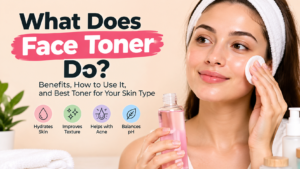

What Does Face Toner Do? Benefits, How to Use It, and Best Toner for Your Skin Type
Facial toner is a popular skincare product that can help address concerns such as excess oil, dryness, uneven texture, and acne-prone skin. However, many people are unsure whether toner is necessary or how to choose the right formula for their skin type.
Modern face toners are different from the harsh, alcohol-based products that were once commonly used to remove excess oil. Today, many formulas contain hydrating ingredients, gentle exfoliating acids, and skin-supporting ingredients designed to complement a daily skincare routine.
When used appropriately, a facial toner may help hydrate the skin, remove some remaining impurities, or deliver ingredients that target specific concerns. However, toner is not essential for everyone, and its benefits depend on the ingredients and your individual skin needs.
In this guide, you will learn what face toner does, its potential benefits, how to use it correctly, and how to select a suitable toner for oily, dry, acne-prone, or sensitive skin.
What Is Facial Toner?
Facial toner is a lightweight liquid skincare product generally applied after cleansing and before serum or moisturizer. Depending on its formulation, it may provide hydration, gently exfoliate the skin, reduce the appearance of excess oil, or help soothe dryness.
Older toners often contained high amounts of alcohol and astringent ingredients that could leave the skin feeling tight or dry. Modern formulas offer more options, including hydrating toners, exfoliating toners, and products designed for blemish-prone skin.
Some common toner ingredients include:
- Hyaluronic acid: Helps attract and retain moisture in the skin.
- Glycerin: A humectant that helps the skin maintain hydration.
- Niacinamide: May help support the skin barrier and improve the appearance of uneven skin tone.
- Salicylic acid: Helps exfoliate inside oil-filled pores and may benefit acne-prone skin.
- Glycolic acid: An exfoliating alpha hydroxy acid that can improve the appearance of rough texture.
- Ceramides: Help support the skin’s protective barrier.
Not every toner contains all these ingredients. Checking the product label can help you determine whether a formula suits your skincare goals.
Youtube Video
What Does Face Toner Do for Your Skin?
The benefits of facial toner depend on its ingredients. Some products focus on hydration, while others are designed to exfoliate or address excess oil.
1. Helps Hydrate the Skin
Hydrating toners contain ingredients such as glycerin and hyaluronic acid. These ingredients attract water and can help the skin feel softer and more comfortable.
This type of toner may be useful for people experiencing mild dryness or tightness after cleansing. However, toner should not replace a moisturizer, which helps reduce moisture loss and support the skin barrier.
For better results, apply a hydrating toner as directed and follow it with a suitable moisturizer.
2. Supports Acne-Prone Skin
Certain facial toners contain salicylic acid, an ingredient that helps loosen dead skin cells and clear material from pores. It may help reduce blackheads, whiteheads, and some types of acne.
However, an exfoliating toner is not a complete acne treatment for everyone. Using too much salicylic acid or combining several exfoliating products can cause dryness, redness, peeling, and irritation.
If you have persistent or severe acne, consult a dermatologist about an appropriate treatment plan.
3. Helps Remove Remaining Residue
After cleansing, a toner may help remove some remaining residue from makeup, sunscreen, or excess oil. However, toner should not be relied on to remove all impurities, and it is not a substitute for properly cleansing your face.
A gentle cleanser suited to your skin type is generally sufficient for everyday cleansing. If you wear long-lasting makeup or water-resistant sunscreen, you may need an appropriate makeup remover or cleansing oil before washing your face.
4. Improves the Appearance of Skin Texture
Some toners contain exfoliating ingredients, including glycolic acid or lactic acid. These ingredients help remove dead cells from the skin’s surface and may improve the appearance of roughness and uneven texture over time.
Exfoliating toners should be introduced gradually, particularly if you have sensitive skin. Excessive exfoliation can damage the skin barrier and make redness, dryness, and irritation worse.
Always follow the product instructions and use broad-spectrum sunscreen during the day.
5. Supports the Skin Barrier
The skin barrier helps retain moisture and protect against environmental irritants. A toner containing hydrating or barrier-supporting ingredients may complement a routine designed to maintain comfortable, healthy-looking skin.
Ingredients such as glycerin and ceramides can be useful in appropriate formulations. However, a toner containing fragrance or irritating ingredients may have the opposite effect on sensitive skin.
Choose products based on their complete formulation rather than relying on one ingredient alone.
Is Facial Toner Necessary for Everyone?
No. Facial toner is an optional skincare step rather than a requirement for healthy skin.
A basic routine consisting of a gentle cleanser, moisturizer, and sunscreen can be effective for many people. Adding toner may be helpful if you have a specific concern that the product is designed to address.
For example, a hydrating toner may suit someone who experiences dryness, while a salicylic acid toner may benefit certain people with oily, acne-prone skin.
If your current routine works well and your skin feels comfortable, you do not need to add toner simply because it is popular.
How to Choose the Best Face Toner for Your Skin Type
Selecting the right toner begins with understanding your skin’s needs. A product that works well for oily skin may not be suitable for someone with dryness or sensitivity.
Toner for Oily Skin
Oily skin produces more sebum, which can contribute to a shiny appearance and clogged pores.
Look for lightweight, non-comedogenic formulas. Ingredients such as niacinamide may help support the skin barrier and improve the appearance of oiliness, while salicylic acid may be useful for blackheads and clogged pores.
Avoid products that leave your face feeling excessively tight. A tight sensation can indicate irritation or excessive removal of skin oils rather than better oil control.
Toner for Dry Skin
Dry skin often benefits from formulas designed to maintain moisture.
Consider toners containing glycerin, hyaluronic acid, or other hydrating ingredients. Avoid harsh astringents and products that repeatedly cause stinging or flaking.
Follow toner with a moisturizer formulated for dry skin to help reduce moisture loss.
Toner for Sensitive Skin
Sensitive skin may react to fragrance, alcohol, exfoliating acids, and other ingredients, depending on the person.
Choose a simple, fragrance-free formula and introduce it gradually. Test a new product on a small area according to its instructions before applying it regularly to your face.
If you experience persistent burning, itching, swelling, or redness, stop using the product. Seek medical advice if the reaction is significant or does not settle.
Toner for Acne-Prone Skin
For acne-prone skin, a toner containing salicylic acid may help with clogged pores and certain types of blemishes.
Start with a low-strength product and use it according to the label. Avoid combining multiple strong exfoliating products at the beginning, as this can increase irritation.
Remember that acne can have several causes, and toner alone may not provide sufficient treatment for persistent breakouts.
Toner for Mature Skin
Mature skin may become drier or more sensitive over time. A hydrating toner containing glycerin or hyaluronic acid may help improve skin comfort and temporarily make fine lines associated with dryness less noticeable.
Exfoliating ingredients may help improve the appearance of uneven texture, but they should be used carefully. A moisturizer and daily sunscreen are generally more important foundations of an anti-aging skincare routine.
How to Use Facial Toner Correctly
Using toner properly can help you get the intended benefits without unnecessarily irritating your skin.
Step 1: Cleanse your face.
Wash your face with a gentle cleanser suitable for your skin type. Use lukewarm water rather than very hot water, which may increase dryness.
Step 2: Apply the toner.
Follow the product directions. Many toners can be applied with clean hands or a cotton pad. Patting a suitable toner gently onto the skin may reduce friction compared with rubbing.
Step 3: Allow the product to settle.
Give the toner time to absorb according to its instructions. You generally do not need to rinse off a leave-on toner unless the label specifically directs you to do so.
Step 4: Apply serum if needed.
If your routine includes a serum, apply it according to the instructions and your skin’s tolerance. Avoid layering several strong active ingredients without considering the possibility of irritation.
Step 5: Moisturize.
Apply a suitable moisturizer to help maintain hydration and support the skin barrier.
Step 6: Use sunscreen in the morning.
Finish your morning routine with broad-spectrum sunscreen with SPF 30 or higher. Sunscreen is especially important when using exfoliating acids that can increase sensitivity to sunlight.
Can You Use Face Toner Every Day?
Some gentle hydrating toners may be suitable for daily use, including morning and evening, if your skin tolerates them. Exfoliating toners containing salicylic acid or glycolic acid may need to be used less frequently.
If you are new to toner, begin with the frequency recommended on the label and observe how your skin responds. Do not assume that using more product will deliver better results.
Reduce use or discontinue the toner if you notice persistent dryness, peeling, burning, or increased redness. People with eczema, rosacea, or very sensitive skin may need professional guidance before using exfoliating formulas.
Common Mistakes to Avoid When Using Toner
Even a well-formulated toner can cause problems when used incorrectly.
- Choosing a toner only because it is popular: Ingredients and skin compatibility matter more than trends.
- Using too much exfoliating toner: Frequent exfoliation can irritate the skin and weaken its protective barrier.
- Ignoring fragrance and other potential irritants: Sensitive skin may react to particular ingredients.
- Skipping moisturizer: Toner does not necessarily provide enough moisture to replace a moisturizer.
- Expecting toner to cure every skin problem: Acne, eczema, and persistent pigmentation may require other treatments.
- Applying several active products at once: Introducing multiple products simultaneously makes it harder to identify the cause of irritation.
A simple, consistent routine is often easier to maintain than a complicated one.
Frequently Asked Questions
Does facial toner really work?
Facial toner can provide benefits when its ingredients address a specific need. Hydrating toners may improve skin comfort, while exfoliating formulas may help with clogged pores or uneven texture. Results vary, and toner is not essential for everyone.
Should I use toner before or after moisturizer?
Toner is generally applied after cleansing and before serum and moisturizer. Follow the instructions for your particular product, especially if it contains exfoliating or other active ingredients.
Is toner good for oily skin?
Some toners can benefit oily skin, particularly lightweight formulas containing ingredients such as niacinamide or salicylic acid. Avoid formulas that excessively dry or irritate your skin.
Can toner cause pimples?
A toner may contribute to breakouts or irritation if its formulation does not suit your skin. Heavy products, irritating ingredients, or excessive exfoliation may create problems for some users. Stop using a product that consistently worsens your skin.
Can I skip toner in my skincare routine?
Yes. You can maintain a healthy skincare routine without toner. Gentle cleansing, moisturizing, and daily sun protection are the main priorities for many people.
Is alcohol-free toner better for sensitive skin?
Alcohol-free formulas may be a useful starting point for sensitive skin, but the full ingredient list matters. Other ingredients, including fragrance and exfoliating acids, may also cause irritation. Not every ingredient described as an alcohol is drying, so consider the specific formulation.
Final Thoughts
Facial toner can be a useful addition to a skincare routine when it is chosen according to your skin type and concerns. Hydrating formulas may help relieve dryness, while products containing salicylic acid or glycolic acid may help address particular concerns such as clogged pores or uneven texture.
However, toner is not a necessary step for everyone, and using the wrong formula or exfoliating too frequently may cause irritation. Start with a product that suits your skin, introduce it gradually, and pay attention to how your skin responds.
For most people, a consistent routine built around gentle cleansing, an appropriate moisturizer, and daily sunscreen is a practical foundation for healthy-looking skin.